
Welcome to the 4th edition of the Our Manchester Newsletter.
As we enter Spring and enjoy the warmer, brighter days and the city being more open than in the last two years, it is important we continue to take the time to reflect on the progress towards making Manchester a world class city for all who live, work, study and play here.
We will only achieve the Our Manchester vision if everyone continues to work together to build on our city’s strong history of collaboration. Working in partnership has never been so important; finding new ways to meet the challenges our communities face has never been so vital; and our determination to create a shared future where all can live fulfilling, happy and healthy lives has never been so strong.
This newsletter showcases some of the fantastic work that takes place under the Our Manchester themes across the city, bringing you news and updates that you can share with your networks, communities and residents.
The fourth edition features some important work on making Manchester a fairer and more inclusive city, and a place that ensures our young people have the skills they need to make the most of the fantastic opportunities in the city.
If you would like to add any Our Manchester success stories, I would love to hear from you. Please get in touch by emailing: elena.tompkins@manchester.gov.uk.
Councillor Luthfur Rahman OBE, Deputy Leader of the Council
|

March 8th marked International Women’s Day (IWD) – a day to recognise the achievements of women across the globe, and a call to action for accelerating gender equality. The international theme this year was ‘Break the Bias’ – with a local focus on shining a light on women’s lives and experiences throughout the pandemic. In true Manchester style, we hosted a range of celebrations across the city.
We kicked things off in style with the return of our annual Walk for Women on Sunday 6th March, an event run in partnership by Manchester City Council and the IWD Steering Group. The walk brought together hundreds of people to walk the route along Deansgate from Castlefield to Manchester Cathedral, championing the rights and accomplishments of women. Lord Mayor Cllr Tommy Judge opened the event – recognising the impact of women across history, and acknowledging the barriers still facing them today. Musical interludes were provided by local musician Claire Mooney, with closing comments from MCC Leader Cllr Bev Craig. Councillor Sam Lynch, Co-Chair of the IWD Steering Group, perfectly captured what many were feeling that day - “we still have a way to go until we reach true equality” and “until the day that ends, we will never stop standing up to shout and challenge it”.
Amongst the many groups in attendance were staff and students from Loreto High School, who also recognised International Women’s Day on Tuesday 8th with a full day of activities. The Chorlton-based school invited Manchester women from a range of disciplines to deliver sessions in school, encouraging students to break the bias in their own lives. The school also ran a networking lunch, a cake sale and sold a range of badges, tote bags and postcards to celebrate the event and raise funds for their partner school Loreto Rumbek in South Sudan.
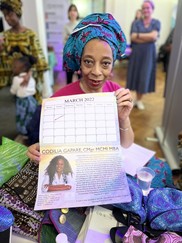
Local students also came together for an International Women’s Day Festival Event on Saturday March 12th at Manchester Central Library. Students from Access Creative College in Manchester performed, organised and provided technical support to the event, run by Manchester City Council and The Zebra Partnership. The event also saw a range of performances, speeches and workshops from local women, groups and creatives, including a Safer Cycling workshop with Councillor Eve Holt and a fashion show led by Professor Erinma Bell MBE (pictured).
|

Also represented on the day were a range of local charities and organisations showcasing the work they do to support women and their communities. This included the Wai Yin Society (pictured) and CARISMA Services who were amongst the 22 local organisations awarded a grant this year to run their own International Women’s Day event. In total, £10,000 of funding was awarded to facilitate events including physical and digital exhibitions, celebration lunches to reduce isolation and awareness raising events across the city.
|
To find out more, visit the #IWDMcrFestival and #WalkForWomen hashtags and the International Women’s Day website: https://www.internationalwomensday.com/
Supporting asylum seekers in Manchester
The Our Manchester VCS grants programme funds a number of organisations who work with asylum seekers in Manchester, including Rainbow Haven.
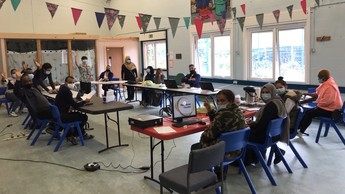
Rainbow Haven provides a place of welcome, support and opportunity for refugees, asylum seekers and other vulnerable migrants. They aim to meet the practical, social and educational needs of its service users through the delivery of expert advice, communal activities and varied training courses that lead to people gaining improved well-being, life skills and confidence. They also have a volunteering programme that supports their work. Two thirds of their volunteers come from refugee and migrant backgrounds. Last quarter they supported 604 people, of which 339 were advice clients supported through in-person and telephone advice.
One such person is Bob (not his real name). Bob is an older gentleman with a heart condition. His asylum seeker case was refused, and all appeal rights exhausted. He had been sofa-surfing in his community in Manchester throughout the pandemic. A Rainbow Haven case worker got him a homelessness assessment under the A Bed For Every Night (ABEN) scheme, and Bob has since been accommodated by an ABEN provider who has helped him make contact with his solicitor who is supporting him with his immigration issues.
|
 |
New advice volunteer Yaman shares her experiences: “As a newcomer to the UK I thought volunteering would help me get engaged with the British community and give me experience to be able to work in the UK. Rainbow Haven is a nice place, people here are friendly, easy to work with, and I’ve enjoyed every moment I’ve worked here – otherwise I wouldn’t be coming, since it’s voluntary, I would just quit!
Thanks for the opportunity, I am looking forward to gaining more experience, skills and knowledge in working with you. And thank you for the birthday card and chocolates – this is what I mean when I say it feels like family here.”
Manchester’s Digital Strategy was launched earlier this month as part of the Digital City Expo 2022. The Strategy was co-developed by the council with a wide range of partners.
The Strategy sets the vision for Manchester’s digital future and action needed to make sure we have digitally skilled residents, future-proofed infrastructure, a thriving digital economy and a digitally enabled transition to zero-carbon. The digital strategy sets the priorities that our whole city – our public, private, voluntary and community organisations and our residents – will be able to work on together to make Manchester one of the world’s leading smart cities and digital economies in the next five years.
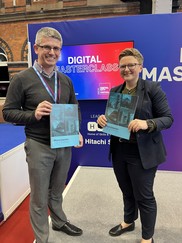
Council Leader Cllr Bev Craig said: “Manchester is the UK’s leading digital city outside London with a fast-growing concentration of innovation, expertise and talent. But we can’t and won’t settle for that. We must build on these strengths to create a digitally inclusive economy where everyone is equipped with the skills and infrastructure needed to share in – and contribute to – success. We must also seize on the potential of technology to help us meet the collective target of Manchester becoming zero carbon by 2038 and to manage the impacts of climate change.
“Our digital aspirations aren’t separate to the wider strategy for a thriving and sustainable city – they are fundamental to it. This new strategy will help power us along that path.”
|
As the digital sector has grown in Manchester, digital skills demand and a skills gap has become a growing issue in Manchester. One innovative solution to this was found in upskilling undergraduates from non-digital degree programmes and in raising awareness of the broad range of career opportunities available.

‘Graduates for Greater Manchester’ was an Office for Students funded 3-year programme for Manchester Metropolitan University and the University of Manchester to work together to offer activities designed to increase the digital skills, digital literacy and all-round confidence for their students studying non digital courses.
Led by Manchester Metropolitan University, the project is a unique partnership with the University of Manchester with input from a range of other interested stakeholders from across the city and city region. This includes Manchester City Council, Greater Manchester Combined Authority, Sharp Futures, Manchester Digital, JISC and many industry partners.
At the University of Manchester, Psychology students were given the opportunity to work on increasing confidence and developing self-awareness and literacy around digital skills. At Manchester Metropolitan, the existing RISE Rise at Manchester Met (mmu.ac.uk) programme was tailored to allow students hand-on experience of a variety of digital areas, including work experience placements and internships.
Over the course of the 3 years, thousands of students at both MMU and UoM have been given the opportunity to develop in demand skills and increase the career confidence. This has proved to be more important than ever throughout the pandemic and some of the extra challenges that this has brought to students across the city.
|
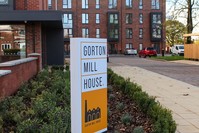
Historic cotton mill site returns to heart of community
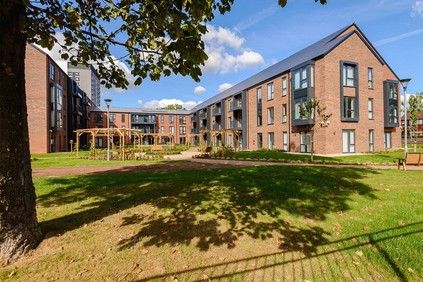
The site of a historic cotton mill has been given a new lease of life providing vital social housing for older people; Gorton Mill House, built by Southway Housing Trust on the site of the former Gorton Mills, in Abbey Hey Lane provides 106 high-quality, low-carbon ‘With Care’ apartments for social rent for people aged 55 and over. Residents can enjoy landscaped gardens, a communal lounge and events room, laundry and can access a flexible range of 24-hour on-site care and support depending on their needs, as part of Southway’s ‘Age Friendly’ offer.
Among the first to move in were Gwen and Vic, who lived in Gorton all their lives. They are delighted with their new home, having taken the opportunity to downsize and benefit from the support available.
Gwen, who previously worked in education and who also owned and ran several convenience stores and shops in Gorton, said: “The place is like a five-star hotel, it’s beautiful. The staff are really kind and thoughtful, and I feel now that I’m safe - they have really thought about elderly people and it is well planned-out. Vic, her husband, adds: “They have obviously considered everything when they designed it and we have a quiet balcony with a nice view for the summer. The process of moving here was simple and I would recommend it to other people without a doubt.”
As well as meeting a desperate need for housing with care in the area, Gorton Mill House has also transformed a brownfield site into a genuine asset for neighbours and families in the locality, who are welcome to use a new community café and a hair and nail salon included in the £17million development.
Southway Housing Chief Executive Karen Mitchell said: "Gorton Mill House has created more than 100 high-quality new homes and a supportive environment tailored for older residents, while also providing new community facilities for our neighbours in the surrounding area to enjoy.
"This scheme was born from a great need and demand for With Care housing in this area and we are grateful to all our partners for helping us to realise our vision of transforming this historic but neglected site. Most of all, we are delighted to welcome our new residents to their new homes.”
|
 |
Southway’s sustainable future for social housing
One area where the new development drastically differs from its industrial past is in the use of renewable energy sources. Unlike the coal and steam-operated mills, the new apartments benefit from ground source heat pumps as an alternative to gas, as well as solar panels and electric vehicle charging points.
Gavin White, Executive member for Housing and Employment at Manchester City Council, which supported the project, said: “This development is hugely welcome as a twin boon of bringing underused brownfield land back into use, while providing much-need low carbon, affordable homes for older people. This is just the type of project we need in our communities that support people as they grow older to access homes right for them, should they want to move from a family home."
|