What we've seen over the past year
Every year we issue a report which discusses the trends we are seeing in the complaints we investigate about local government.
In 2021-22 we received 15,826 complaints and enquiries. We also made 1,848 service improvement recommendations, with all but a vanishingly small number of councils complying (99.7%).
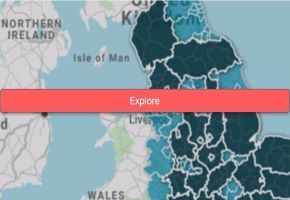
As part of this report we also update our interactive online map with each local authority's individual performance statistics. We now have four years' searchable information, including the annual letters we send to chief executives, complaint numbers, uphold rates and the service improvements we have asked them to make on the back of the investigations we have upheld.
The data also allows people to compare their own local authority's statistics against similar authorities to assess how they are performing too.
|
Looking to the future - our 'wish list' for the next three years

Every three years we review our legislation to consider what changes we would like the government to make to ensure we remain a modern and responsive Ombudsman service.
This 'triennial review' sets out our vision of what the Ombudsman’s role should be in local government and adult social care accountability and redress.
Our widespread recommendations cover all areas of our remit, including updating our jurisdiction in local government, strengthening our powers to investigate education and social care settings and a call for better complaint handling across the board.
|
Using what we learn to improve services
We use what we learn from our investigations to help inform national debates, government inquiries and policy making.
Over the past few months we have contributed to three select committee inquiries:
Joint Committee on Human Rights: Human Rights Ombudsperson
The Joint Committee on Human Rights launched an inquiry into the suitability of creating a Human Rights Ombudsperson.
We submitted written evidence and an assistant ombudsman gave evidence in person, focusing on how we consider human rights in our casework, some of our triennial review asks, and our opposition to creating a human rights ombudsperson.
Education Select Committee: One-off inquiry into the SEND review
Following on from the Department for Education (DfE) publishing its Special Educational Needs and Disabilities (SEND) review, the Education Select committee launched a one-off inquiry into the review. We submitted written evidence and Michael King, our Ombudsman also gave evidence. He spoke about the importance of our role in the SEND redress system and our triennial review recommendation that we should be given the power to consider schools' actions when drawing up and delivering an Education, Health and Care plan.
Robert Halfon MP, the Chair of the Education Select Committee has written to the DfE following on from the committee’s one-off inquiry. In this letter he reiterates the call for our jurisdiction to be expanded to encompass what happens ‘within the school gates’. He is also calling for clarity on what our role will be with regards to SEND.
Joint Committee on Human Rights: Protecting human rights in care settings
We submitted written evidence to this inquiry and Michael King gave evidence. In his evidence he focused on our role in protecting human rights and the cases we had received during the pandemic. We gave evidence alongside the Care Quality Commission, and Parliamentary and Health Service Ombudsman.
The Joint Committee on Human Rights has now published its most recent report of its inquiry on Protecting Human Rights in Care Settings. The report reaffirms the importance of our role. It also points out that there is confusion in the sector about the roles of the CQC, PHSO and LGSCO.
They also recommended that we should be given ‘own initiative’ powers in line with our triennial review recommendation.
Improving access for people with disabilities

Using learning from our investigations, we issued a focus report to help guide councils make their services accessible for people with disabilities.
Under the Equality Act 2010, councils have a duty to ensure people with disabilities can access services as easily as everyone else. Quite often this involves them making what are called 'reasonable adjustments' which can include, for example, providing information in large print for people with visual impairments, or providing translation services for users of British Sign Language.
We reminded councils how important it is to anticipate people's needs by asking them if they need help. We also said councils need to record these needs properly.
Unfortunately, in a recent report about one local authority, we found it had not got a policy in place and did not formally record people's reasonable adjustments. Officers 'simply forgot' a man with Post Traumatic Stress Disorder had requested that they did not send male officers to visit him when he was dealing with its services, causing him distress.
|

In another recent focus report we looked at the alternative provision arrangements for children who are unable to attend school for whatever reasons.
Councils have a duty to assess children's situations if they cannot go to school and decide whether they should provide them with alternative education.
Sadly, all too often we are seeing young people being denied this right because councils are not acting properly. Indeed, we're currently upholding around 90% of those cases we investigate.
We issued guidance to councils to share the lessons and help ensure they get things right in future.
|
|