|
Dear Colleague
It has been another sobering week in our national battle against COVID-19. It is a week that has served as another stark reminder that what lies ahead of us all looks set to be the most challenging period we have faced since the pandemic began last year. Infection rates remain stubbornly high, with the number of new daily cases consistently above 50,000 since 29 December. As we tragically know, this translates into hospital admissions and deaths. The number of COVID-19 patients in hospital in England stood at a record 28,246 yesterday - up 24 per cent on a week ago with more than half of all major hospital trusts in England currently having more COVID-19 patients than at the peak of the first wave of the virus. The UK has today recorded its highest daily increase in the number of COVID-related deaths at 1,325, the third successive day that there have been 1,000 daily deaths of people within 28 days of a positive coronavirus test, while the R number has risen slightly to between 1 and 1.4. London has today also become the latest area to declare a major incident.
Amid these grim daily COVID-19 figures, there remains reason for hope. It was heart-warming to see the joy on the faces of the first care home residents to receive Oxford/AstraZeneca vaccines this week and the news of two more drugs found to cut deaths by a quarter in patients who are sickest with COVID-19 is another source for optimism. The Medicines and Healthcare products Regulatory Agency has also today approved the Moderna coronavirus vaccine. Even though these vaccines will not be available in the UK until the Spring, this third approved vaccine is another vital weapon in our fight against the virus.
Schools and education arrangements have been in focus again this week amid reports that some schools are struggling to cope with the demand for places for vulnerable children or those of critical workers while also offering remote learning. The Government has published updated guidance on school attendance during the lockdown, which you can read about below, and says it will publish attendance data next week.
The Government has also announced its latest plan to try and help protect rough sleepers and renters from the effects of COVID-19 during the latest lockdown. Details on the new asks of councils are set out below.
Shielding
The Government has updated the guidance on shielding and protecting people who are clinically extremely vulnerable (CEV) during the national lockdown in England. An update pack sent to councils included a copy of the letter sent to all CEV people providing formal shielding notification; a Q&A document on lines for employers, and guidance and Q&A for councils. The Government has advised that shielding will remain in place until 21 February. If it is to be extended beyond that, a further letter will be sent to the CEV group to notify them.
The expectations of councils in relation to supporting people who are CEV remain the same as in the November lockdown and of those in Tier 4 areas, with the Ministry of Housing, Communities and Local Government (MHCLG) confirming that fortnightly reporting on shielding support will be requested throughout the duration of the lockdown. Returns will be due by 5pm every other Friday. Further information will be available in a Q&A drop-in session with MHCLG for councils on data returns on Wednesday 13 January between 9.30am - 10.15 am. Council representatives can join via Microsoft Teams or via phone: 020 3443 8728 (Conference ID: 204 963 919#).
Vaccinations
The Prime Minister said almost 1.5 million people have received a COVID-19 vaccination. Latest figures show that - of those vaccinated across the UK so far - 1.26 million are in England and 49,000 in Wales. Boris Johnson said the Government intends to give everyone in care homes a jab by the end of this month while no-one should have to travel more than 10 miles to receive an inoculation. By the end of this week, more than 1,000 GP-led sites are ready to provide vaccines, alongside 223 hospital sites, seven giant vaccination centres and a first wave of 200 community pharmacies.
On Monday 11 January there will be a Westminster Hall debate on Prioritising teachers, school and childcare staff for Covid-19 vaccination which has received more than 100,000 signatures. It calls for those working in schools and the childcare sector to be added to the Joint Committee on Vaccination and Immunisation’s (JCVI) list of priority groups to receive COVID-19 vaccinations.
We have seen many of your press releases this week warning of the vaccination scam that has been reported across the country. It involves people receiving a text saying they need to book a vaccination appointment before being taken to a fake NHS form which then asks for their bank details to prove their identity. We hope to amplify these messages nationally across print and broadcast media this weekend to help raise awareness.
The Department of Health and Social Care’s latest Coronavirus Social Care newsletter has also just been published, which includes more information on the Moderna vaccine approval and wider vaccination rollout.
LGA webinar: COVID-19 vaccine communications
Communications and engagement will be crucial to the successful rollout of COVID-19 vaccines. We have organised a webinar on Thursday 21 January to explore how councils and their partners can effectively communicate with all residents on the programme. It will explore issues such as vaccine hesitancy and countering misinformation. Speakers include colleagues from NHS England, the Department of Health and Social Care and Hertfordshire County Council. This webinar is free to all councils and government departments, and you can book your place now.
Care capacity and transfer of care from hospital
As we would expect, this week has seen considerable attention being given to timely discharge from hospitals, including how councils are working with the NHS to facilitate this. We receive constant feedback about the excellent partnership working between councils and NHS Trusts to find solutions, supported at a regional and national level, with the NHS keen to explore anything that can be done at scale to help. We will keep you informed of any initiatives that emerge.
Both the LGA and the NHS have raised shared issues of concern, including asking for government to resolve the issue of indemnifying care homes.
NHS Test and Trace
Latest NHS Test and Trace performance figures show that, of the 269,886 people referred to the system in the week to 30 December, 84.9 per cent were reached. This is down from 86.4 per cent in the previous week, and the lowest percentage since the week to 28 October. In comparison, local health protection teams reached 99.8 per cent of contacts of cases managed by them in the week to 30 December, while 92.3 per cent of close contacts of those managed online or by call centres were also reached and asked to self-isolate.
With daily infection rates and deaths from coronavirus at such high levels, we urgently need to be picking up as many contacts of people who test positive, as quickly as possible. In our media response, we continue to stress the need for councils to receive greater support with testing and tracing, including on communication, capacity and workforce, alongside better and faster information on who they should be trying to contact. We also expect there to be further announcements shortly about community testing and testing of critical workers.
Schools
The Education Secretary has outlined government plans to support young people amid the closure of education settings during the latest national lockdown. Gavin Williamson’s speech and the accompanying press notice are available for more information. Updated guidance on actions for schools was published yesterday, while a blog by the Department for Education (DfE) has also been published containing a Q&A on school closures, remote learning, critical workers and nurseries. LGA Workforce issued a round-up gathering the school workforce related issues in one place.
Only children with at least one parent or carer who is a critical worker and vulnerable children and young people should attend school or college, according to updated DfE guidance. All other pupils and students will receive remote education. The DfE has published a list of critical workers and vulnerable children and young people who can access full-time education provision.
Youth workers have been confirmed as critical workers and fall under the ‘key public services’ and ‘local government’ categories as either charity workers/volunteers or local authority staff/volunteers delivering key frontline services. Further information and a letter detailing this is available on the National Youth Agency website.
Remote learning support
Children without access to a laptop, desktop or tablet at home have also been designated as “vulnerable children” and can go to school for face-to-face learning. We are aware that this is creating demand pressures in some schools as they balance the need to have safe numbers in school with the higher expectations on the delivery of remote learning – between three and five hours a day of lessons online. This is an issue we will be raising with government on your behalf.
A government scheme that offers temporary data increases for mobile phone users on certain networks is available so that children and young people can access remote education. Schools, trusts and local authorities can request mobile data increases for children who do not have fixed broadband at home and/or cannot afford additional data for their devices. This scheme was set up for when pupils experience any disruption to their face-to-face education, and with schools remaining closed at this moment in time. This help could be incredibly valuable.
National Tutoring Programme (NTP) Tuition Partners are also offering online tutoring for disadvantaged pupils at home, as well as continuing to offer support to vulnerable pupils in schools. It is also possible for primary, secondary, special schools and alternative provision to book blocks of tutoring to start later in the year.
Early Years
The guidance related to early years settings has been released. This highlights that all early years settings should be open, including school-based nurseries, and details further information about the rationale for keeping the settings open, the safety elements and that support groups can continue to go ahead for up to 15 participants. We are in discussions with DfE about the concerns that have been raised for funding. Further information about the rationale for keeping settings open is also available.
Ofsted inspections
Today we have urged Ofsted to postpone the resumption of monitoring inspections for schools, either in-person or virtual, until after February half-term at the earliest. We believe that schools and councils need to focus on providing remote and on-site education during the pandemic, without any unnecessary distractions.
Clearly there will always be a need for inspection where serious issues are identified. However, all routine inspection activity was suspended during the last national lockdown, and this should be repeated to avoid adding to the considerable burden of school leaders and staff who are already fully stretched due to the ongoing impact of the pandemic. We have also asked for confirmation that Ofsted has no plans to resume inspections of children’s services during the pandemic.
Rough sleepers and renters
Housing Secretary Robert Jenrick has today announced that the ban on bailiff evictions – which was due to end on Sunday – has been extended until at least 21 February.
Councils will receive an extra £10 million to help accommodate all those currently sleeping rough and ensure they are registered with a GP so they can be protected from the virus and receive vaccinations.
Since the start of the pandemic and the Everyone In initiative, councils have continued to do everything they can to get people sleeping rough off the streets and into safe accommodation, to minimise the spread of infection. The Ministry of Housing, Communities and Local Government said councils are also being asked to reach out again to those who have previously refused help, given rising infection rates and the colder winter months.
It is good that the Government is providing further additional funding to tackle rough sleeping. But, as we said in our media response, we have stressed the need for councils to continue to get the support they need in the difficult weeks and months ahead to move people into safe and secure housing. We also urge the Government to remove the No Recourse to Public Funds condition so that councils can ensure that everyone who is vulnerable can access help if needed, regardless of immigration status.
Moving home
The Government has announced that the housing market in England will remain open during this national lockdown. This means that people looking to move home will be able to continue with planned moves and be able to view properties to move into in the future and that estate and letting agents will be able to continue working. Guidance has been updated to provide important public health information to ensure that moving home and related activities, such as viewings.
Leasehold reform
The Government has announced reforms to leasehold laws that aim to give millions of leaseholders the right to extend their lease by a maximum term of 990 years at zero ground rent. It follows a review by the Law Commission on leasehold enfranchisement, Commonhold, and Right to Manage. A cap will also be introduced on ground rent payable when a leaseholder chooses to either extend their lease or become the freeholder. The Ministry of Housing, Communities and Local Government will also now establish a Commonhold Council - a partnership of leasehold groups, industry and government - that will prepare homeowners and the market for the expected widespread take-up of commonhold.
Domestic abuse
Home Secretary Priti Patel has written to the Domestic Abuse Commissioner and the Victims Commissioner about the Government’s response to COVID-19 and has reminded victims of domestic abuse that they do not have to observe lockdown restrictions if they need to leave home to seek refuge or help.
The Government’s #YouAreNotAlone campaign, raising public awareness of domestic abuse issues and signposting victims to sources of support, has been extended to cover the winter period. Government is also preparing to launch a codeword scheme in conjunction with retailers, as well as working with businesses to explore opportunities to further promote information on domestic abuse through their outlets and online services.
Around a third of £76 million in government funding allocated to charities supporting victims of domestic and sexual abuse, vulnerable children and their families and victims of modern slavery, has now been distributed to domestic abuse organisations.
Enforcement
The Office for Product Safety and Standards (OPSS) has circulated updated template prohibition and fixed penalty notices following the introduction of the new lockdown regulations. These have been shared directly with Heads of Service although officers can also sign up to receive business restriction update emails from the OPSS by completing an online form. In a virtual briefing with councils yesterday, the OPSS highlighted how feedback from councils about some of the challenges with restrictions influenced changes in the new regulations, for example in relation to sales of homeware items and sales of takeaway alcohol from hospitality premises. We know that an ongoing concern among enforcement officers relates to levels of social distancing and infection control compliance in supermarkets and are aware that this is an issue that the Government is currently looking at. If you have other specific concerns you would like us to highlight, please email ellie.greenwood@local.gov.uk
The LGA is hosting its third compliance and enforcement webinar next Wednesday 13 January from 3pm – 4.30pm. The session will highlight a range of council good practice as well as hear from the Joint Biosecurity Centre about how councils have been recently using their powers of direction. To book a place, please email Katerina.Charalambous@local.gov.uk
International travellers
All passengers arriving in England from international destinations will need to present a negative test before entry from next week, the Department for Transport has announced. The test will need to be taken by those arriving by boat, plane and train within 72 hours of departure and failure to comply will result in a £500 fine.
Transport
The Department for Transport (DfT) has published updated transport guidance related to the coronavirus restrictions in England. This includes information for public transport passengers and operators, as well as for travel involving taxis or private hire vehicles, and air travel.
The DfT has also updated its guidance on walking, cycling, and travelling in vehicles or on public transport during the coronavirus outbreak in the light of the national restrictions. It has also updated its safer transport guidance for public transport operators. The joint British Parking Association, London Councils and LGA Local Authority Parking and Traffic Management Operational Advice during COVID-19 has also now been updated.
EU exit
Her Majesty’s Revenue and Customs are running a number of webinars to support businesses as they prepare for importing and exporting goods in the new UK-EU Trade and Cooperation Agreement. Please highlight these to any relevant businesses in your area. The various resources the Government has published, including training, may be helpful for your regulatory services teams.
Yesterday, the Government published additional guidance for public sector contracting authorities on the domestic public procurement policy.
The Government has set up interim arrangements for a UK environmental watchdog due to the delay in passing legislation to establish the new Office for Environmental Protection. The Interim Environmental Governance Secretariat became operational on 1 January and provides a route for members of the public to register a complaint if a public authority has failed to comply with environment law. There is a wide definition of public authorities that includes local government and government agencies. The complaint must have gone through the complaints process of the relevant authority before it can be registered with the interim body.
Broadband
Access to fast and reliable broadband is more important than ever, so it was concerning to read that business and homes in rural areas could be locked out of gigabit broadband for years to come, according to a report by the Public Accounts Committee. As we said in our media response, councils are committed to working closely with the Government to help deliver on its nationwide gigabit-broadband and mobile coverage ambitions. We are pleased the Committee has backed our call for councils to have the funding they need to play a role in accelerating and co-ordinating local broadband delivery.
Flood resilience
The flood and coastal erosion resilience innovation programme will allocate £150 million of government funding to 25 local areas. The deadline for submitting an expression of interest has been extended from 15 January to 29 January due to pressures on councils in dealing with COVID-19 and flooding over the festive period.
LGA Finance Conference
The first part of our annual Local Government Finance Conference kicked off this week with more than 450 delegates. Hosted by Cllr Richard Watts, Chair of our Resources Board, I was delighted to talk about the provisional Local Government Finance Settlement, the need for long-term sustainable funding for councils and to take questions on devolution and reform of adult social care funding. It was great to also hear Local Government Secretary Robert Jenrick praise the resilience of everyone in local government for their continued efforts in tirelessly delivering vital public services during the pandemic in his speech.
The second part of the conference – Re-thinking Local Government Finance - continues on Tuesday 12 January when we will hear from a range of speakers, including Steve Reed MP, Shadow Secretary of State for Communities and Local Government and representatives from the Institute for Fiscal Studies amongst others. It isn’t too late to sign up if you haven’t already.
Business support
In a virtual briefing to councils this week about distribution of the new package of support for businesses affected by the lockdown announced by the Chancellor of the Exchequer, the then-Business Secretary Alok Sharma said councils should receive the funding to distribute the new grants within the next week and urged all councils to get the money to eligible businesses as quickly as possible. Mr Sharma said the Department for Business, Energy & Industrial Strategy (BEIS) intends to publish statistics on distribution by local authority area again.
I am aware that some on the call were concerned at the tone of the briefing and frustrated that it did not fully take account of the speed at which you and your officers are working. We will continue working with BEIS officials and will make them aware of all feedback. BEIS officials confirmed that they are working on guidance for the new grants and intend to publish it next week. I will keep you updated through this bulletin.
Ministerial changes
This afternoon Kwasi Kwarteng has been appointed as the Secretary of State for Business, Energy and Industrial Strategy as Alok Sharma becomes full-time COP 26 President. Anne-Marie Trevelyan takes over from Kwasi Kwarteng as Minister of State for Business, Energy and Clean Growth.
Restart
The Department for Work and Pensions (DWP) is seeking input on its national procurement of providers to deliver its three-year, £2.9 billion Restart programme to help support long-term employed people back into work. It expects contracts to be awarded in Spring 2021 and go live in Summer 2021. The programme will be delivered across England and Wales in 12 different Contract Package Areas (CPAs). Providers who bid will need to show how they will tailor their offer to local conditions in the CPA, taking account of the wider landscape of support and working closely with employers, local government and other service providers to identify skills gaps and growth sectors.
DWP is therefore inviting local authorities, combined authorities and LEPs to coordinate amongst themselves per CPA to put forward one specific tender question for their area (by 22 January) and to nominate two external assessors to review bidders’ responses and help inform the selection process (by the end of February). The LGA is happy to liaise with any councils who may want to discuss any CPA or Restart issues. In the first instance, please contact jasbir.jhas@local.gov.uk or your Principal Advisor.
Arrivals from Hong Kong
Chief Executives and Local Resilience Forum Chairs in councils with social care responsibilities will have received correspondence from the Ministry of Housing, Communities and Local Government flagging potential impacts on councils of arrivals of British Nationals from Hong Kong. The purpose of this letter is to provide an update on the progress of national plans and to set out how local authorities can best prepare for arrivals of British National citizens from Hong Kong to your local area. We are keen to hear your views on this to help us as we feedback to government, particularly about the potential cost impacts. Please email my colleague emma.jenkins@local.gov.uk.
Separate communication was sent to councils with existing communities outlining which local services could see increased demand. The most recent census data is being used as proxy, due to the lack of information on both numbers and destination given the current situation in Hong Kong.
Local elections
This year’s local elections on 6 May will see everyone in England having a ballot of some kind, with many places having multiple ballots taking place at once – this is unprecedented. I know councils are preparing to deliver these elections with your usual efficiency but we are aware of media speculation about the potential delay to the polls as a result of the ongoing impact of the pandemic. The Government has this week said the intention is for these elections to go ahead as planned but that this “will be kept under review”.
We continue to stress to government that it will need to meet any additional costs to councils of holding these elections in these extraordinary circumstances. Please do include any additional election costs in your monthly financial returns to the Ministry of Housing, Communities and Local Government. Given uncertainty remains about what public health measures will still need to be in place in the Spring, including social distancing, the Government will also need to take steps to ensure they can be held safely, and candidates can campaign safely.
Parliament
The Commons was recalled unexpectedly as the Prime Minister, Secretary of State for Health and Social Care and Secretary of State for Education all gave updates to MPs on many of the issues featured in my bulletin today. In the House of Lords it was good to see our parliamentary briefing referenced throughout the Second Reading of the Domestic Abuse Bill. Several Peers highlighted the LGA’s calls for a national perpetrator strategy to try and prevent domestic abuse from happening in the first place and we will be working with them and the Government as the Bill continues to be scrutinized in the coming weeks. It was also good to hear several Peers raise many of the points in our On-The-Day briefing on the provisional Local Government Finance Settlement as they took some time to discuss the draft Settlement.
I hope this end of week update has proved useful. As always, please contact your Principal Adviser if we can do anything more to support your council at this time.
|
Best wishes
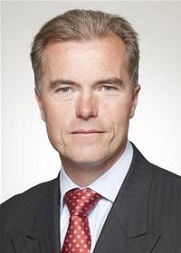
Councillor James Jamieson
Chairman, Local Government Association
@JGJamieson
|
|
 |
|