|
Dear colleague,
Yesterday the Secretary of State Robert Jenrick published the local authority allocations of tranche 4 of the COVID-19 grant funding announced by the Prime Minister earlier this month. Over £900 million of this funding will be provided to councils for their ongoing work to support communities during the pandemic. It brings the total funding given to councils since the start of the pandemic, to help with spending pressures, to £4.6 billion. Councils can also claim funding through a compensation scheme for lost income from sales, fees and charges to address the ongoing challenges local authority leisure centres are facing, the Department for Digital, Culture, Media and Sport (DCMS) has also confirmed a £100 million fund to support leisure centres most in need. Further details on the scheme will be set out shortly. This follows extensive lobbying by the LGA, Sport England and other partners. Our response welcomed the short-term funding, but highlighted that these services will continue to struggle financially while social distancing remains a requirement.
We responded to the latest funding announcement by saying that the much-needed support is helpful, but of course significant challenges remain. It is also important that the Government address in full the financial challenges facing councils as a result of the pandemic, including all lost income and local tax losses.
Further targeted funding, which includes up to £465 million through the new Local Alert Level system, £300 million to support Test and Trace and £30 million for enforcement and compliance is being made available as required to support local measures.
Whilst the uncertain economic situation made a change to the Government plans around the Spending Review likely, it was nevertheless disappointing to hear the Treasury announce that it will be now be limiting itself to conducting a one year Spending Review in November for the third year in a row. The lack of a multi-year settlement makes it incredibly difficult for council colleagues to plan how to provide the local services to our communities.
We continue to make the case for the Government to publish its Spending Review as soon as possible, as the end of November is incredibly late for councils to find out how much money they will have to provide services next year. Councils will face a £4 billion funding gap next year just to keep services running at today’s levels and need urgent certainty to allow them to set budgets and to plan any measures they may be forced to take to cut spending. Ahead of the Spending Review, we have called on the Government to confirm that the resources councils have this year will not reduce and there will be no business rates reset next year.
As always do continue to liaise with your Principal Adviser if you would like to discuss any of the issues raised in this update.
Business Grants
The Chancellor Rishi Sunak has announced approved additional funding to support cash grants aimed primarily for businesses in the hospitality, accommodation and leisure sector who may be adversely impacted by the restrictions in high-alert level areas. These discretionary grants come on top of higher levels of additional business support for councils moving into Tier 3 which, if scaled up across the country, would be worth more than £1 billion.
Councils have the freedom to determine the precise eligibility criteria for these grants in their local areas. The guiding principle for local authorities is to use the funding to support businesses which have not been legally required to close, but which are nonetheless severely impacted by reduced demand caused by Tier 2 restrictions on socialising. Some areas have been subject to restrictions on socialising for several months, before the tiering system was introduced. Funding for these areas will be backdated until the point at which these restrictions began. Further details have been released in a factsheet. We understand from government officials that they are aiming to circulate allocations by authority and guidance next week.
In our response, we stated that it is councils who are leading local efforts to support communities and businesses through this crisis, including distributing more than £11 billion to 880,000 small businesses through the previous grant scheme earlier this year. Councils stand ready to work again to distribute this new funding. It is good that they will have flexibility to ensure as many businesses can benefit as possible.
Job Support Scheme
Our guidance on the Job Support Scheme has been updated to reflect the increased Government contribution announced this week and the confirmation that local authorities and other public bodies may be able to claim, subject to similar conditions to those of the Job Retention Scheme.
Local restrictions
The Health Secretary has announced that after close discussions with local leaders, a number of areas will move from Local COVID Alert Level Medium to Local COVID Alert Level High from Saturday 24th October 00:01. The areas are – Coventry, Slough, Stoke-on-Trent.
South Yorkshire will move from local COVID alert level high to very high from 00.01am on Saturday 24 October. This will cover – Barnsley, Doncaster, Rotherham and the City of Sheffield.
The Prime Minister confirmed at the Downing Street press conference yesterday that although the R rate remained above 1, he welcomed “great conversations” with local leaders and “everyone had shown leadership and stepped up to the plate” to bring the R down in their local area and praised the “fantastic and extensive local cooperation”. Chief Scientific Adviser, Sir Patrick Valance presented the Government’s slides on the latest infection data, which continued to show an increase in the total number of people with the virus and being admitted to hospital.
The Government has today published the latest reproduction number (R) and growth rate of coronavirus in the UK. The R number range for the UK is 1.2 and 1.4.
You can see a weekly report providing COVID-19 data for each local authority in England listed by number of people tested, case rate per 100,000 population, local COVID alert level and weekly trend.
A report by the House of Lords Secondary Legislation Scrutiny Committee has called on the Government to publish the data used to decide on moving regions and cities in England between Tier 1, 2 and 3 of COVID-19 restrictions. We are working with Government officials to help bring clarity to the criteria being used to judge whether an area moves up – and critically – or down the three tiers or restrictions.
Enforcement powers
In a statement to the House of Commons yesterday, the Secretary of State, Matt Hancock set out the Government’s intention to legislate to give councils powers to introduce improvement notices and, where these are not complied with, closure powers to shut premises failing to make their businesses COVID-secure. Both the LGA and councils have been calling for these powers to offer alternative tools that can be deployed more quickly than directions and have more impact than a fine, so we are pleased that the Government has listened to our calls. Mr Hancock also stated that the Department for Health and Social Care (DHSC) would work with councils on the details of these proposals. Officials have also advised that the legislative changes may include tweaks to the existing Directions powers to help make these easier for councils to use; new guidance on directions powers is also expected imminently. Our response to the announcement emphasised the importance of ensuring that the Government shares the draft regulations with councils before they are laid, to help avoid any drafting errors or other implementation issues.
Yesterday we hosted a discussion between council colleagues in some of the areas moving into Tier 3. The aim was to identify and consider some of the more challenging enforcement issues councils are grappling with. We are working at pace to turn this into an approach that councils can use as they wish and will share this with councils as soon as possible. We also held a webinar to share local authorities’ experiences for more than 100 officers working on compliance and enforcement in local government. With an ongoing focus on these issues at the highest levels of government likely to continue for the foreseeable future, do let us know what more we can do to support you on this agenda by contacting ellie.greenwood@local.gov.uk.
Test and trace: the numbers
Latest test and trace figures for the week ending 14 October show that local health protection teams have reached 94.8 per cent of complex cases assigned to them, asking people to self-isolate and stop the spread. For those cases handled either online or by call centres, 57.6 per cent of close contacts were reached and the system overall recorded its lowest weekly rate since it began, at 59.6 per cent. Our response highlighted our concern that the national test and trace system appears to be going backwards in the number of close contacts reached, and that it needs to meet the recommended 80 per cent benchmark, to have any chance of success. We continue to call for clearer, more precise information on who councils should be trying to contact as soon as possible, including details such as occupation and workplace, alongside the right resources to help respond quickly to outbreaks.
Test and Trace Support Payment scheme
The Department for Health and Social Care has updated their guidance setting out what councils in England need to do to enable people in their area to claim the Test and Trace Support Payment, including discretionary payments if they have been asked to self-isolate by NHS Test and Trace. You can view further information about the scheme or contact soc.support@dhsc.gov.uk if you have any questions.
Designated COVID-19 care settings
Following last week’s DHSC letter to directors of adult services highlighting the requirement for designated care settings for people discharged from hospital who have a COVID-19 positive status, we have continued to work with the department, directors and providers to support effective implementation that recognises the policy intent without imposing a ‘one size fits all’ solution. We are clear that councils must have the flexibility to adapt to the needs of their residents, including ensuring an individual’s wishes on discharge are enabled and that the scheme builds on local arrangements. We are pushing also for recognition that the ‘Home First’ principle must remain the most appropriate way to support our residents’ wellbeing and independence.
Shielding
You may have seen that the National Shielding Support Service (NSSS) went live on Tuesday. The NSSS is a web platform that will allow clinically extremely vulnerable (CEV) people to register their support needs if shielding is re-introduced in any part of the country. For now, the NSSS platform can be only used in areas in the Tier 3 very high alert level, by CEV users to register their support needs or by local authorities to register needs on behalf of people who are CEV. Further development work is being undertaken to prepare for the system to correctly route users from both ‘very high’ and ‘very high + shielding’ areas if shielding is reintroduced, and the shielding team are continuing to engage with council data leads on this.
COVID-19 ethnicity disparities
The Minister for Equalities, Kemi Badenoch MP, announced the first quarterly report on the progress to understand and tackle COVID-19 disparities experienced by individuals from an ethnic minority backgrounds. The Minister said that the evidence and data gathered has given the Government a better understanding of the risk factors for ethnic minority people, including occupational exposure and existing medical conditions.
Community Champions scheme
The Minister for Equalities also announced a new ‘Community Champions’ scheme’, with up to £25 million to reach groups most at risk. The scheme is funded by MHCLG and will enhance existing communication strategies in the most at-risk places, and also fund work with grassroots advocates from impacted communities. The scheme will also provide funding for voluntary and community groups who specialise in working with communities most at risk from coronavirus. The Minister reflected that councils have been working tirelessly to support and engage their communities throughout this crisis and they know how to do this best. The funding, for a target group of councils, will enable them to do more of what they know works, but also to go further. We encouraged the Government to back councils to decide upon the best approach for their community.
EU Transition
You will have seen that the negotiations between the UK and EU to agree a new trading relationship have started again this week, with the transition period due to end on 31 December. Whilst there will be no legal cliff edge in January as most EU rules and laws will be converted in UK law, there will be other changes for councils including new responsibilities for regulatory services, possible changes in data governance and proposals for new UK migration rules which will impact on recruitment.
The LGA’s cross-party EU Task Group has been working hard to lobby Government to address the risks and opportunities as a result of the trade talks. We continue to make the point that EU transition is just one of the numerous challenges that local government is facing this autumn. We have concerns about the capacity of some regulatory services who are already at the forefront of our work to protect our communities from COVID-19. We are also pressing Government to take the opportunity to review EU procurement rules and offer greater local flexibilities.
We have detailed on our website the priority issues that councils have raised with us and we like to if there are other issues of concern. Please share your feedback via EUtransition@local.gov.uk.
The Ministry of Communities, Housing and Local Government (MHCLG) Preparing local government for 1 January 2021 provides comprehensive advice for councils. The Government is also urging business leaders to step up preparations for the new arrangements from 1 January and has launched its 'time is running out' campaign.
Changes to Immigration rules
Yesterday legislation was laid in Parliament for a number of changes to the Immigration Rules. These changes provide the foundation for the new Points-Based Immigration System, which will apply from 1 January 2021, when hiring anyone from outside the UK’s resident labour market (except Irish citizens). They build upon the measures already outlined in the policy statements published by the Government in February and July 2020. Information was also updated for student visas.
EU, EEA and Swiss citizens
The Government has created a range of introductory guides for EU, EEA and Swiss citizens planning to enter the UK from 1 January 2021 and individual country pages on GOV.UK with translated information across 24 EU languages. These pages will be updated in the coming weeks with further guidance.
EU Settlement Scheme
The Home Office are hosting a webinar on the EU Settlement Scheme (EUSS) and looked after children on 27 October at 12pm. The session will provide a general introduction to the EUSS, covering the application process and responsibilities on councils in relation to looked after children and care leavers. You see the guidance for councils and sign up for the interactive hour-long webinar by contacting feedback-EUSSsupportmodel@homeoffice.gov.uk.
EU Transition impact on waste and recycling
The Department for Environment, Food and Rural Affairs (Defra) is inviting feedback from waste and recycling stakeholders, including councils, on any queries regarding the end of the transition period on 31 December 2020. Feedback will be used to inform Defra’s planning. Share your feedback by contacting Waste-EUExit@defra.gov.uk and you can of course still raise your concerns with the LGA through your Principal Adviser.
Travel corridors
The Government announced that the Canary Islands, Denmark, Maldives and Mykonos will be added to the Government’s travel corridor list at 4am on 25 October.
The Government also announced that people arriving in England from Liechtenstein from 4am on 25 October will need to self-isolate for two weeks. The Foreign, Commonwealth and Development Office has also updated its global advisory against ‘all but essential’ travel exempting destinations that no longer pose an unacceptably high risk for British travellers. Please see the FCDO guidance on travel corridors for more.
Adult social care providers
The National Care Association published its COVID-19 Care Provider Impact Study, which indicates that despite levels of improvement in access to critical items like PPE, 67 per cent of providers remain concerned about their ability to continue to operate. Meanwhile 93 per cent of respondents have indicated that they do not have COVID-19 in their services, which is a testament to the efforts made by providers over the past 6 months and to the support they have received from local systems.
Adult social care funding
The Health and Social Care Committee has published its report on ‘social care: funding and workforce’. The report called for a £7 billion annual increase in social care funding and urged Government to bring forward proposals for long-term reform. The Committee also recognised the importance of parity of esteem, and called for improved pay, training and conditions for the adult social care workforce, as well as a 10-year people plan for adult social care. The LGA submitted written evidence to this inquiry, and our Deputy Chief Executive, Sarah Pickup, spoke to the Committee in September to inform their evidence gathering. Reassuringly many of our recommendations were reflected in this report and it shows that local government is being heard.
CQC review: Out of sight - who cares?
The CQC has published its review of restraint, prolonged seclusion and segregation for people with a mental health problem, a learning disability and/or autism. In our response, we said that it is essential that people with complex needs are safe and protected from discrimination and abuse in communities, hospitals and other care settings. This is an important report and the LGA is already offering support to local areas to achieve the recommendations set out. The findings further highlight the need to increase investment in community care settings for people with a learning disability and/or autism, who may also have a mental health condition, and to move towards putting social care on a long-term sustainable footing. In our response, we said the forthcoming spending settlement is an opportunity to increase investment in community care settings for people with a learning disability and autism, who may also have a mental health condition, and to move towards putting social care on a long-term sustainable footing.
Long-term effects of COVID-19
Earlier in the week, DHSC released a film featuring the stories of four people, one aged just 22, who are living with the long-term effects of COVID-19. The film urges the public, particularly young people, to follow the rules and protect themselves. It follows new data which suggests around 10 per cent of 18 to 49 year olds who become unwell with the virus suffer the long-term effects.
COVID-19 data sets
The Joint Biosecurity Centre (JBC), Office of National Statistics (ONS), Administrative Data Research UK and the Ministry of Housing Communities and Local Government (MHCLG) are partnering on the Local Data Spaces (LDS) project, which aims to give councils access to more granular COVID-19 related data sets such as those relating to NHS Test & Trace and the COVID-19 Infection survey. The LDS is looking to engage councils and/or logical groupings of authorities, to pilot the project over the coming months. The team would like to understand councils’ needs and invite you to participate in this LDS User Needs Survey where you can also express your interest in participating in the pilot. Closing date for submissions is 3 November deadline. Please contact jbc.lds@dhsc.gov.uk if you have further questions.
Schools
The Department for Education has published updated guidance for schools on actions that need to be taken during the pandemic. This guidance provides updated information on prevention, other considerations (system of controls), response to any infection, pupils travelling from abroad, attendance, workforce, safeguarding, school uniform, wraparound provision and extra-curricular activity, behaviour expectations, hospital schools and contingency planning for outbreaks.
National Tutoring Programme
From November, schools will be able to access support for children and young people who have been most affected by school closures during the coronavirus outbreak through the National Tutoring Programme. They are also hosting a webinar for schools on 5 November at 4pm that will provide an introduction to the programme and details on how schools can get involved. Register your interest or get in touch with the National Tutoring Programme.
Home test kits: webinars for schools and colleges
The Department of Health and Social Care are hosting a series of webinars to support schools and colleges in understanding how to use coronavirus home test kits in education settings. The webinars will provide guidance on who should receive the kits, what they will look like and how parents and carers should use them. Each webinar will last for 60 minutes and there will be an opportunity to ask questions. The webinars are being run on 23 October at 3pm and 30 October at 3pm.
Full details on when the test kits should be provided, how to store them and the usual routes for accessing free coronavirus testing can be found in the guidance on coronavirus home testing kits. Schools can continue to apply for additional coronavirus home test kits through the application portal for organisations. To minimise the risk of missing deliveries these will not be delivered during half-term.
Out of school settings
The Department for Education (DfE) has published a voluntary code of safeguarding practice for out-of-school settings (OOSS). The non-statutory code of practice is intended to support providers of OOSS. It covers advice on what policies and procedures providers should have in place for health and safety, safeguarding and child protection, staff suitability, and governance.
Funerals
The Government has updated its guidance on managing funerals during the pandemic. Changes from previous guidance include a limit of 30 people attending a funeral at all local COVID alert levels. The updated guidance reflects the new legal duties on individuals to self-isolate.
Halloween and Bonfire Night
Upcoming festivities will be different this year. The Working safely during coronavirus guidance offers guidance to event organisers and local authorities around planning for Halloween and Bonfire Night. Please continue to encourage your communities to check the current Local COVID Alert Level rules for meeting others inside and outside, using the postcode checker on GOV.UK. Public Health England has also produced Halloween-specific imagery to use on your social media channels.
Markets
You may want to share information about a new study which has been launched with the support of NMTF (formerly known as the National Market Traders Federation) and the University of Greenwich to investigate the impact of the on-going COVID-19 pandemic on traditional markets in our town centres. This study includes a 10-minute online survey that will give market traders, local shops and the general public a chance to share their views and voice any preferences.
Supported housing
The Government has set out new funding and guidance to improve supported housing. It has published a new National Statement of Expectations, outlining what it expects to see in standards, quality and value for money in supported housing and how this can be achieved by bringing together best practice across the sector. A £3 million fund has also been announced for five pilots in Birmingham, Hull, Blackpool, Bristol and Blackburn to run until the end of March 2021. The pilots will test different approaches to greater oversight of the sector and how higher standards could be enforced. In our response, we said it was good the Government had set out these measures, but that it needed to sustainably fund the housing accommodation and support costs of all types of supported housing in the forthcoming Spending Review.
Further Green Homes Grant funding for local authorities
The Department for Business, Energy & Industrial Strategy is inviting applications for further funding under the Green Homes Grant Local Authority Delivery scheme. All councils in England can apply and eligibility is not affected by previous applications. Further information will be provided in a webinar on Wednesday 28 October 2-3pm, repeated on Monday 2 November 10am. Application closes 4 December 2020, for queries contact LAD.Project@beis.gov.uk.
Public transport
The Secretary of State for Transport, Grant Shapps MP, delivered a speech at the Great Northern Conference. His speech reaffirmed the Government’s commitment to bringing forward a new Bus Strategy to overhaul bus provision in the region. The Secretary of State detailed financial support for local transport systems, including light rail, and said he hopes the Williams Review will trigger a new approach to running the railways to provide more reliable services for the whole of the North. Mr Shapps also said Government will be setting out further plans to empower communities and speed up decentralisation in the Devolution and Local Recovery White Paper.
Taxi licence register
Next week we will be writing jointly with the Department for Transport to council licensing leads to encourage sign up to the National Register of Taxi and Private Hire Vehicle Licence Revocations and Refusals (NR3). The LGA commissioned NR3 in 2018 and it provides a mechanism for licensing authorities to check if an applicant has had a licensed revoked or refused elsewhere. We were pleased that the use of NR3 was one of a range of measures to protect passengers that was included in new Statutory Taxi and Private Hire Vehicle Standards published by the Government over the summer. We hope this will prompt more councils to sign up and start to use the register over the next few months. For more information about NR3 please contact rebecca.johnson@local.gov.uk.
Active Lives survey
Sport England has published their latest Active Lives survey. Despite the challenges of COVID-19, the key findings paint a picture of a nation doing its best to stay active, with an extra 1.2 million adults cycling for leisure or sport (increasing from 6.1m to 7.2m) and an extra 2.1m exercising at home, compared to the same period last year. However, the overall drop in numbers of active adults, defined as doing 150 minutes of activity each week, is reflective of the limitations of choice over types of activity that could be pursued, with swimming particularly affected and continuing to be low. Sport England will be publishing communication toolkits to help councils and partners encourage people to remain active during their winter months, in addition to their Autumn and Winter Activity Toolkit.
Older volunteers
The COVID-19 pandemic has prompted an outpouring of community spirit and volunteering, which has been critical to the local response. Many older people have made significant contributions to their communities during lockdown, with 30 per cent of people aged 50 to 70 volunteering informally and 87 per cent saying they wanted to continue. The Centre for Ageing Better guide is designed as a practical tool to support organisations working with volunteers to engage over 50s and widen participation among different types of people.
Culture Recovery Fund
We are aware that some conditions relating to pay restraint are attached to receipt of funding from the Culture Recovery Fund. We have confirmed with DCMS and MHCLG that councils are not prevented from accessing this Fund as a result of being part of national collective bargaining arrangements and the pay restraint requirement applies only where it is legally possible to comply.
Black History Month
Parliament also celebrated Black History Month as MPs gathered to discuss what the month means to them and the opportunities to tackle inequalities. In our briefing, we highlighted how councils are working with the LGA to increase diversity and inclusion; encouraging people from all walks of life and experience - including those from BAME communities - to stand in their local elections. We also emphasised the importance of investing in public health to tackle health inequalities, particularly considering the COVID-19 pandemic. MPs including Felicity Buchan MP (Conservative, Kensington) and Kim Johnson MP (Labour, Liverpool Riverside) noted the work their local councils are doing to improve equality in the community and how their councils are celebrating Black History Month. Summing up the debate, Minister for Equalities, Kemi Bandenoch MP, highlighted how Black History Month remains an opportunity to shine a light on those whose contributions to our national history deserve to be better known.
The LGA’s BAME Staff Network organized a fabulous webinar to celebrate the contributions of leaders from Black, Asian and minority ethnic (BAME) backgrounds to local government and politics in the United Kingdom. My personal thanks to Cllr Paulette Hamilton, Vice Chair of the LGA's Community Wellbeing Board for hosting the event and to Cllr Asher Craig, Deputy Mayor at Bristol City Council, Ian Thomas CBE, CEO at Royal Borough of Kingston upon Thames and Bernadette Thompson from MHCLG for such an engaging and insightful discussion.
Holocaust Memorial Day 2021
The UK Commemorative Ceremony for Holocaust Memorial Day 2021 will take place virtually on Wednesday 27 January 2021 at 7pm. Please register your virtual attendance to the online Ceremony by Friday 4 December.
Apprenticeship rankings
The Government announced its Top 100 Apprenticeship Employers rankings this week. Nine councils and two combined authorities feature on the list, flying the flag for the excellent work that local government does up and down the country to create apprenticeship opportunities for residents. Since the apprenticeship levy was introduced, apprenticeship starts in local government have almost trebled, so it’s terrific to see the sector rightly rewarded for its excellent work. Congratulations to City of Lincoln Council (33rd), Dudley Metropolitan Borough Council (43rd), Leeds City Council (47th), Greater Manchester Combined Authority (58th), Hertfordshire County Council (61st), Medway Council (79th), Chesterfield Borough Council (82nd), Rochdale Borough Council (83rd), Durham County Council (91st), Salford City Council (94th), and Liverpool City Region Combined Authority (98th). For more information visit Apprenticeship Support Programme to find out how the LGA is supporting the sector.
MHCLG financial returns
The next round of monthly finance returns has been emailed to authorities and is due to go live today; it will be open for two weeks closing at 11pm on Friday 6 November. This is “round 7” of the monitoring; please encourage your teams to contribute – as always, this information will help us to make the case that the financial impact of the pandemic must be fully funded. MHCLG have also notified that they are planning (subject to Ministerial approval) for “round 8” of the monitoring to be a double month covering both November and December with a form to be issued in early December. They would then return to monthly surveys in January. We will let you know when that is confirmed.
Previous MHCLG previous survey results
The following links lead you to our summaries of the results of the financial monitoring returns made by councils to MHCLG in July, August and September (rounds 4, 5 and 6). Survey data is shared with us by MHCLG who also publish their own summary results. The results of these returns have been used in identifying the funding gap faced by councils due to the pandemic and making the case for the gap to be met. They were also used in our submission for the Comprehensive Spending Review.
Local elections
The Electoral Commission has published supplementary guidance to support electoral administrators in their preparations for the May 2021 polls, which you can find on the Local Election webpage. The guidance outlines the risk assessment process councils should be undertaking and additional requirements that will be necessary given the pandemic. We know that some councils are already considering these additional requirements and how they can be achieved practically and financially. We would be keen to hear feedback from councils who have begun this process and what challenges they are anticipating. You can email Jessica.Norman@local.gov.uk to provide feedback. Other more specific guidance is expected from the Electoral Commission in due course.
Out of Country Voting
The Foreign, Commonwealth and Development Office (FCDO) is liaising with countries that would like to facilitate their citizens living in the United Kingdom to vote in their upcoming elections. This currently includes Romania, Moldova, Lithuania, Georgia, Bolivia, Bosnia and Guinea. As set out in FCDO’s guidance, it is essential that in the present circumstances, any Out of Country Voting (OCV) is conducted with full regard to public health regulations which vary across the United Kingdom. OCV organisers – for example the consular staff engaged in facilitating polling at UK locations – must apply the relevant guidance to the way they administer their event in the United Kingdom, including the venues they hire, equipment they use and all other elements specific to their event on their chosen day. The FCDO advise OCV organisers to consider providing alternatives to voting in person for those that want or need it, such as utilising and promoting proxy and postal votes. OCV organisers must take responsibility for deciding if in-person voting should go ahead, accepting the risk that they may have to quickly adapt to an update of public health regulations.
Cyber Security
Cyber security continues to be a priority for all of us. Our increased reliance on digital services means the consequences of an attack are greater than ever. Following last week’s cyber-attack on Hackney Council some initial technical guidance has been shared with IT colleagues, containing some important advice and actions to take. You may also find the following helpful:
You may also be aware of the Sopra Steria cyber incident. We understand that some local authorities may be customers and therefore wanted to draw your attention to their public statement. If any local authorities have been affected by the incident, and need to report it to the NCSC, could you use their web portal and quote reference number 44843.
If your council would like any additional advice or support, please contact us using cybersecurity@local.gov.uk.
Modern slavery and supply chains
To accompany existing guidance on Modern Slavery transparency statements, we have updated our guidance to give you practical advice on how to draft your first statement; what to include; where to publish it and how to avoid some of the common pitfalls and offer some practical procedural suggestions when carrying out supply chain due diligence. It can also be used to assist those looking to build on previous statements; to implement year-on-year improvements and evidence the practical progress on how you are tackling the risks and incidence of modern slavery in your operations and supply chains.
Behavioural Insights Programme
Earlier this month we launched our Behavioural Insights Programme for 2020. The programme invites councils to apply for grant funding from the LGA to contribute towards the delivery of a behavioural insights project aimed at changing or sustaining a behaviour which has arisen in communities during the COVID-19 crisis. You now have just under a week left to apply with applications closing on Thursday 29 October at 5pm. The LGA will be contributing £20,000 per project for up to eight projects. To learn more about previous successful behavioural insights applicants listen to our podcast series ‘Nudges for social good’.
Public Sector Exit Payments
I’ve mentioned previously that the Restriction of Public Sector Exit Payments Regulations 2020 had been approved in Parliament and would come into force on 4 November. The draft regulations have now been published to amend compensation and pension regulations in line with the Government’s consultation published on 7 September. We are preparing a response on both the policy consultation and these draft regulations, which we will make available to councils next week. Please share any responses with jeff.houston@local.gov.uk.
Media
This weekend we are hoping to secure some media coverage on our calls for the Department for Transport to end an emergency COVID-19 measure that is forcing councils to pay private bus providers based on pre-pandemic concessionary journey numbers. It is becoming increasingly unsustainable to ask councils to continue to prop up local bus operators for a national scheme that is already underfunded. We have also been talking to the Observer this week about commercial income losses as a result of the pandemic and extensively briefed BBC One’s Andrew Marr show on the financial challenges all councils face as they cope with this ongoing crisis. As always you can find all our latest press releases and statements on our dedicated news page and please keep sending your case studies showcasing your work to media.office@local.gov.uk.
LGA webinars
We are running a series of webinars that may be of interest to you or your colleagues, including:
It has been another busy week for councils as you lead your communities and respond to a fast moving and increasingly complex environment. Thank you for your amazing efforts.
I will send you the next bulletin on Tuesday unless something significant occurs before then.
|
Best wishes
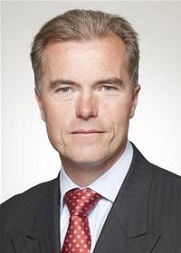
Councillor James Jamieson
Chairman, Local Government Association
@JGJamieson
|
|
 |
|