|
Dear Colleague,
Against an unsettling backdrop of rising infection rates and continued uncertainty, yesterday’s announcements from the Prime Minister again dominate the agenda today.
We continue to work with Government on the use and distribution of the further £1 billion announced yesterday relating to the wider COVID-19 cost pressures councils face. Thank you for working with us and MHCLG to highlight the financial impact of COVID-19 on councils and critical local services.
Protecting vulnerable people has been a top priority for councils throughout this pandemic. New guidance has been published explaining the next steps for supporting clinically extremely vulnerable people in England. It provides advice at each of the new Local COVID Alert Levels framework. The updated shielding advice is more targeted and will only apply in some of the worst affected areas and only for a limited period.
Further information sent to chief executives outlines that shielding will not automatically be triggered by an area going into the ‘very high’ alert level. This will be considered as an additional intervention to be agreed by Ministers under advice from local public health experts and the chief medical officer (CMO) or deputy CMO. Alongside the guidance received earlier today, you should also shortly receive a copy of the newly approved local lockdown framework document, developed jointly by the shielding team and council officers, which sets out the Government’s expectations of councils in the event that shielding is re-introduced.
In our response to the guidance, we make clear that councils have already proven during the first wave of this crisis that they can provide the extra help needed for those who have to shield and have no other means of support, including care, promoting wellbeing and access to food, and are prepared to step up again if required. We continue to press for councils to receive the funding, data, information and recognition of workforce capacity challenges needed to inform and support all vulnerable members of their communities. Please contact your Principal Adviser or each region’s representative on the Strategic Engagement Forum with your views.
Following the news that Hackney Council has been the target of a serious cyber attack, I wanted to take the opportunity to remind colleagues that cyber threats have not gone away. As very many organisations, including all councils, rely on distance working and new partnerships to support our communities, vulnerability to cyber attacks have increased. Our reliance on digital services means the consequences of an attack are greater than ever. A gentle reminder to check that you take regular backups which are frequently tested and stored offline; and also to ensure that IT recovery plans and incident management policies have been updated and tested post COVID. For any support or advice please contact cybersecurity@local.gov.uk.
Below is a summary of today’s announcements.
Local restrictions
The Prime Minister yesterday made a statement to the House of Commons on the response to the coronavirus pandemic where he set out a new three-tiered system of local COVID Alert Levels in England – set at medium, high, and very high. He also confirmed that the Government will expand its economic support to assist those affected by these decisions; extending the Job Support Scheme to cover two-thirds of the wages of those in any business that is required to close.
Last Friday (9 October), the Government updated the stay at home guidance for households with possible coronavirus infection to include information on actions to take in case of a negative test result, enforcement of self-isolation, and to reduce the risk of transmission.
Alert levels
Last night the Government published a full list of the areas which will be subject to the ‘high’ and ‘very high’ COVID alert levels from 00.01 tomorrow (Wednesday 14 October). The rest of England will fall under alert level ‘medium’.
They have also published information on local COVID alert levels, including what they mean, why they are being introduced and what the different levels are.
The Government has also made available an interactive map, which allows people to browse data for specific areas within the UK. The map displays weekly data including seven-day case rates and direction of change.
Labour Party’s response
Labour Leader Sir Keir Starmer has this afternoon called for a two to three-week “circuit break” in England with all non-essential offices and all pubs, bars and restaurants closed but not schools; although he suggested it could be timed to run across half-term.
Regulations and enforcement
Following the announcement of the new three-tier system, the Health Protection regulations have been updated to reflect how restrictions will apply for each tier. These follow the original business closure regulations introduced in March more closely than more recent regulations. There is a clear division of enforcement responsibility, with council officers enforcing the regulations on businesses and the police overseeing the restrictions as they apply to individuals. The new regulations do not introduce significant changes to the rules that councils are already enforcing, with the exception of a new requirement in very high alert areas, that licensed premises may only sell alcohol where it is served with a substantive meal. Enforcement options include prohibition notices, fixed penalty notices and prosecution. We are continuing to call for councils to have the ability to issue improvement notices across the full range of COVID-19 regulations you are enforcing.
Clinically extremely vulnerable people and shielding
As noted above, by the end of today the Government will have:
- published updated guidance for clinically extremely vulnerable people, including an overview of who is defined as clinically extremely vulnerable(CEV) and setting out the actions they should take depending on which their local area’s alert level
- shared with chief executives its expectations of councils if shielding is reintroduced, set out in its local lockdown framework document, and a supporting Q&A document.
The guidance sets out what clinically extremely vulnerable people in tier 3, very high alert level areas should be avoiding, which is significantly less restrictive than with shielding. It also outlines that those without friends, family or other support can contact councils for assistance, for example, to help access food, care and wider wellbeing services. The Government has recognised that there are cost implications for councils, and it is expected that part of the overall funding package to tier 3 areas will cover support for vulnerable people, although the exact details of what is included in the package are still being worked through. MHCLG’s shielding team have advised that they will be looking at light touch ways to help them understand how much this type of support costs and how many people are being supported in tier 3 areas. Councils should also soon receive a short readiness survey on their ability to implement and manage local shielding support.
Councils have stressed the need for effective communication with this group. Department for Health and Social Care (DHSC) will be writing to people who are clinically extremely vulnerable in the coming weeks, but in the meantime, councils are advised to update their websites with the latest guidance for people in their areas depending on their tier. DHSC is encouraging councils to provide feedback on the new guidance to inform any future updates. If you have comments please send these to ellie.greenwood@local.gov.uk.
Given the need to support people’s self-reliance, MHCLG are working quickly to develop further information about supermarket offers available for tier 3 areas. They are also exploring what changes could be made to the clinically extremely vulnerable online registration system to enable people in tier 3 areas to register their preference for a priority supermarket slot, if they have not already done so. As ever, thank you to those who are closely involved in supporting the development of shielding processes and systems, including responding quickly to requests for feedback on data and other issues, whilst stressing this need for the support for this group to be placed in the wider context of support for all vulnerable people in local areas.
Rough sleepers
Today the Communities Secretary, Robert Jenrick, and Minister for Housing and Rough Sleeping, Kelly Tolhurst, announced a package of support for rough sleepers and those at risk of becoming homeless this winter. Measures include:
- a new £10 million Cold Weather Fund to support councils get rough sleepers off the streets during the winter by helping them to provide more self-contained accommodation
- an additional £2 million for faith and community groups to help them provide secure accommodation for rough sleepers
- guidance, produced with Public Health England (PHE), Homeless Link and Housing Justice to help shelters open more safely, where not doing so would endanger lives.
The funding is welcome. We will continue to work with Government to do more to help councils reduce rough sleeping by addressing the funding gap facing local government and temporarily remove the No Recourse to Public Funds condition to enable vulnerable people to access welfare benefits.
Guide to protecting our communities
Directors of public health are being asked to provide advice which balances the need for interventions to protect our communities from COVID-19 whilst minimising adverse impacts on the economy, social life, inequalities, and overall health and wellbeing. Non-Pharmaceutical Interventions (NPIs) remain a core part of the set of tools available to reduce the spread of the virus. The Association of Directors of Public Health (ADPH) have produced a guide to support local authorities, and partners, in considering the range of interventions that might be most appropriate.
Test and Trace Support Payment Scheme
We know that some councils are still experiencing issues joining the eligibility checker for the Test and Trace Support Payment Scheme, offering £500 to those asked to self-isolate by NHS Test and Trace, on a low income, unable to work from home and will lose income as a result. On the working group call today the DHSC assured councils that they are working through queries and data-sharing agreements to help outstanding councils join as quickly as possible. If you have any operational inquiries please email soc.support@dhsc.gov.uk.
SAGE
The minutes and papers from the Scientific Advisory Group for Emergencies (SAGE) meetings held in September 2020 have been published. The summary of the effectiveness and harms of different non-pharmaceutical interventions featured prominently in the media today.
Funeral attendance
On Monday, 28 September, the updated Health Protection (Coronavirus) Regulations 2020 came into effect in England. The Regulations now allow for COVID-19 positive people (whether symptomatic or asymptomatic) to leave their self-isolation for specific purposes, one of which is to attend the funeral of a close family member (see Section 2(3)(b)(v). Previously, the guidance for managing a funeral during the coronavirus pandemic outlined that those showing symptoms should not attend a funeral. The Government has not yet updated the guidance to reflect these legislative changes; we are aware it is currently under review, although we have not been provided a timeline for delivery.
We have heard the concerns of councils and funeral sector stakeholders regarding the significant health and safety risk this change to the regulations poses for council staff, funeral staff, and other funeral attendees. We have raised these issues with the Cabinet Office and highlighted that these changes will have an impact on the delivery of bereavement services in local areas. Conversations are ongoing and we are lobbying for updated guidance to be issued as soon as possible.
Designated care settings
The Department of Health and Social Care has written to directors of adult services, copied to council chief executives, directors of public health and health partners, about putting in place designated accommodation to support COVID-19 positive people before they are admitted to care homes from acute hospitals, so that they are no longer infectious upon admission. The letter asks directors to notify the Care Quality Commission (CQC) as soon as possible, using the proforma mentioned in the letter, with the accommodation they plan to use for this purpose, so that the CQC can organise an inspection and assure themselves that it is fit for purpose.
Impact of COVID-19 on people relying on adult social care
A report about the impact of COVID has been published today by TLAP (Think Local Act Personal), working with an alliance of other organisations including the LGA and the Association of Directors of Adult Social Services (ADASS). The report seeks to understand the impact of COVID-19 on the people who access care and support through the voice of people with lived experience. The report acknowledges the unique challenges faced by everyone working in the sector, highlights different examples of how councils responded to these challenges, and makes a number of recommendations for councils, ADASS, the LGA, Department of Health and Social Care (DHSC) and others.
Home adaptations guide
Along with ADASS, Care & Repair England and Age UK, we have updated our guide to meeting the home adaptation needs of older people in the light of COVID-19. The guide highlights how councils are putting in place personalised interventions that enable people to live in their homes for longer and promote positive ageing, often in partnership with the voluntary and community sector. We also set out practical steps which councils can take to further improve local approaches to home adaptations.
Education, childcare and children’s social care
Guidance on safe working in education, childcare and children’s social care settings during the pandemic has today been updated. The guidance covers preventing and controlling infection, including the use of PPE, and has been updated to include new guidance on the test and trace process, social care visits, shielding, staff who have been in close contact with a positive case and the use of face coverings.
Guidance for managing playgrounds and outdoor gyms
The Government has today updated its guidance for owners and operators of playgrounds and outdoor gyms to enable their use while minimising the transmission risk of coronavirus (COVID-19). It offers practical advice on the assessment and management of risk, compliance with relevant public health legislation and keeping staff safe.
Qualifications in COVID-19 support packages
Yesterday the Government updated its guidance on the qualifications the Education and Skills Funding Agency will fund to support economic recovery following the coronavirus outbreak, to include an updated list of the level 2 and level 3 qualifications included in the high value courses for school and college leavers.
These are one-year courses to prevent young people from becoming NEET (not in employment, education or training). The list will be updated monthly until the end of July 2021.
Sports and physical activity
Sport England's new Autumn and Winter Activity Toolkit contains advice on running activities safely through the pandemic, including a key message on not having spectators at amateur events. UK Active have also published information on the low rate of transmission of COVID-19 within gyms and leisure centres, at 0.34 cases per 100,000 visits.
Remembrance Day and Armistice Day events
The LGA has collated information and advice to help plan local Remembrance events and pay tribute to those who have made the ultimate sacrifice for our country.
Current advice for councils is that event organisers should follow general COVID-19 guidance on outdoor events. Any events should also comply with local restrictions that are in place at the time of the planned event. There is an exemption made for local Remembrance events if the gathering takes place to commemorate Remembrance Sunday, and those attending the gathering are limited to:
- those there as part of their work or providing voluntary services in connection with the event
- members of the armed forces
- veterans of the armed forces or their representatives or carers
- spectators who participate in the gathering alone or as a member of a qualifying group.
Many councils are planning to live stream scaled back events, so that they can still engage the wider community.
Business support
The Chancellor’s statement yesterday confirmed that the Local Restrictions Support Grant will change so that businesses can receive:
- grants of £1,334 per month, or £667 per two weeks, for properties with a rateable value of £15,000 or under
- grants of £2000 per month, or £1000 per two weeks, for properties with a rateable value of between £15,000-£5,000
- grants of £3,000 per month, or £1,500 per two weeks, for properties with a rateable value of £51,000 or over.
Councils will continue to receive 5 per cent of the funding, which they received for the Local Restrictions Support Grant scheme as a discretionary fund. The Government are encouraging this to be used to support business that have been legally mandated to close by the Government but are outside of the business rates system.
The scheme will apply after the very high level of restrictions has been in force for two weeks. We understand that it will apply to councils within the Liverpool city region if their Level 3 alert is still in place on 28 October, in which case it will be backdated to 14 October.
The Chancellor also said that from 1 November the scheme will be extended to include businesses which have been required to close on a national, rather than a local basis, or which have not been legally able to reopen since the first lockdown in March, including nightclubs, dance halls and hostess bars.
Further guidance from the Department for Business, Energy and Industrial Strategy (BEIS) is expected to be published in the next few days. We will continue to discuss the details of the scheme with councils and government.
Local government reorganisation
On Friday the Secretary of State issued an invitation to councils in Cumbria, North Yorkshire, and Somerset, including associated existing unitary councils, to submit proposals for moving to the establishment of unitary councils in those areas. Yesterday Robert Jenrick published a written parliamentary statement, which explains the process by which councils in these areas can discuss and conclude proposals for reorganisation, including the deadlines involved.
Whilst we cannot take sides when there are two or more competing proposals for re-organisation, where all councils that are potentially affected by a proposed re-organisation agree that they would like our support, we are able to help. We can organise discussions with leaders and chief executives, put you in touch with councillors and officers who have been through re-organisation, or help you with your business case. If you would like to discuss how we could help all the councils in any of the three areas, please get in touch with your Principal Adviser.
The LGA will continue to lobby the Government for devolution in its broadest sense supported by the powers and funding communities need to deliver an effective recovery.
Powers and duties
Our LG Inform Plus subscription service is continuing to review any legislation issued as a result of the current pandemic and is updating the Powers and Duties module as new legislation comes into force. Our latest legislative update references recent changes including legislation pertinent to health protection, adoption and fostering, early years, children’s homes and the postponed elections.
Webinar: Prevention and Promotion for Better Mental Health in local systems during COVID-19 and beyond
Chaired by Jim McManus, Vice President for ADPH and hosted by PHE, this webinar will give colleagues the chance to hear about developments in prevention and promotion for better mental health during COVID-19. Please register in advance to join the event on Tuesday 3 November from 2.00pm to 3.30pm.
Royal Approval
And finally, local government has, once again, received the Royal Seal of Approval this week as the Duchess of Cornwall visited Wiltshire Council to thank staff for their work to support the COVID-19 response. Wiltshire’s work coordinating community and voluntary groups and supporting the wellbeing of vulnerable residents, as highlighted by the Duchess on the Clarence House social media pages, is just one example of the outstanding work that councils continue to undertake in our communities.
|
Best wishes
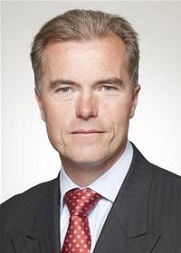
Councillor James Jamieson
Chairman, Local Government Association
@JGJamieson
|
|
 |
|