|
Dear Colleague
As covered in our special bulletin yesterday, new measures came into force on Monday that mean people across England will be required by law to self-isolate if they test positive or are contacted by NHS Test and Trace. The regulations also require individuals to notify their employer of the period of self-isolation if they are due to work other than at the place where they are self-isolating.
Those on lower incomes who cannot work from home and have lost income as a result will be eligible for a new £500 Test and Trace Support Payment. As of yesterday, those who are told to self-isolate and are deemed eligible will receive backdated payments.
To ensure that the new measures can be successfully implemented there are a number of areas where we are seeking further clarification from Government, such as the administration of the support payment scheme. Further to Friday’s Test and Trace Support Payments guidance DHSC are consulting closely with a local authority working group to ensure that the Department is addressing operational issues and refining the guidance. It sets out what councils will need to do to enable people in their area to claim the support, including discretionary payments, in a bid to encourage people on lower incomes to get tested if they have symptoms.
Councils are working quickly to set up the scheme, with the Government indicating that they will need to be in place by 12 October. Some councils are concerned that they did not receive the first draft of the guidance as quickly or directly as they would have liked. DHSC are now working closely with the Department for Work and Pensions (DWP) to get timely information and updates direct to Revenues and Benefits teams via DWP’s usual channels and include information in MHCLG’s updates to chief finance officers.
In order to support councils' communications in relation to this new legal requirement to self-isolate, DHSC has prepared a communications toolkit with key messages, a Q&A and social media materials. Public Health England (PHE) have also posted a new blog aimed at everyone, which looks in more detail at why self-isolation is still an important measure to help stop coronavirus from spreading.
As mentioned in my bulletin on Friday, the September round of MHCLG’s COVID-19 financial management information survey is currently live, closing at 11.00pm on Friday 2 October. I'm pleased to say that all bar one council completed the last return which provides an invaluable source of information not just for Government but to help us gauge the developing financial situation during this challenging time. We're very grateful for your continued engagement and diligence. The first round of data returns and claims for the sales, fees and charges compensation scheme also closes at the end of September, covering the months of April to July.
And finally, further restrictions are due to start in parts of the north east from midnight tonight (see below). We also expect there to be another press conference with the Prime Minister and the Government's Chief Scientific Advisers tomorrow afternoon, which is likely to be an update on the infection rate numbers rather than an announcement of new restrictions.
If there is anything you feel we should be highlighting on your behalf, please get in touch with your Principal Adviser.
Self-isolation enforcement
Breaches of the new self-isolation regulations are subject to Fixed Penalty Notices (FPNs) on a sliding scale from £1,000 to £10,0000 for repeat offences. In order to increase compliance with self-isolation, the Government are also planning to ensure people are contacted by NHS Test and Trace call handlers and the police will check compliance in the highest incidence areas. There are also plans to ensure additional checks in high-risk groups, investigate and prosecute high-profile cases of non-compliance; and to act where the close contacts of positive cases are not self-isolating. This comes after research found voluntary compliance is very low, with a study suggesting that just 18 per cent of those testing positive and 11 per cent of those contacted by NHS Test and Trace self-isolating.
New restrictions
From midnight on Wednesday, stricter measures will be introduced for parts of the north east including Durham, Gateshead, Newcastle, Northumberland, North Tyneside, South Tyneside and Sunderland. Additional restrictions are also currently in place for Wigan, Stockport, Blackpool and Leeds to help curb infection rates.
The new restrictions include a ban on people mixing with other households inside or in a garden. In addition, over the weekend the Government has updated local restrictions that apply in several areas of England including, West Yorkshire; West Midlands; North East of England; Greater Manchester; Bolton and North West of England. This includes guidance for university students moving to or relocating within an area of local restrictions, the guidance on going to work and on childcare bubbles was updated. The guidance was also updated to reflect regulations affecting businesses selling food and drink.
Training and skills
The Government has announced an expansion of the training and skills system to help the country recover from coronavirus, including free Level 3 courses for those who want to start new roles and occupations, which we have been calling for. In our response we say that using the National Skills Fund to fund this is a step in the right direction and it is right that courses should target employers skills needs, but they also must respond to the needs of different local areas, with a strong role for councils and combined authorities, as well as colleges.
Test and trace
The ONS have published its latest report into the characteristics of people testing positive for COVID-19 in England. It highlights that the infection rate has increased in recent weeks, with rates increasing primarily in the least deprived areas of the country and those under the age of 35.
Mike Coupe, former Chief Executive of Sainsbury's has been given the role of Testing Director, at NHS Test and Trace, taking over from Sarah-Jane Marsh who is returning to her post as chief executive of Birmingham Women’s and Children’s NHS Foundation Trust.
Guidance for small marriages and civil partnerships
The Government has updated its guidance for people planning to get married or form a civil partnership in England. There is updated guidance on the number of guests allowed, on avoiding raised voices, such as communal singing or chanting, and a ban on guests dancing with an exception made for the couple's 'first dance'.
Adult Social Care Winter Plan
The Government has published guidance for those working in care homes on how to work safely during this period of sustained COVID-19 transmission. The guidance includes:
- PPE recommendations for care home staff
- frequently asked questions on the use of PPE in care homes
- examples which help to identify the correct use of PPE when undertaking activities that require physical contact or activities which do not require physical contact but are carried out in close proximity to residents
- specific guidance for those providing support for people with learning disabilities and/or autism in care homes
- guide to putting on PPE for care homes
- guide to taking off PPE for care homes.
Personal protective equipment
The Government has published its new PPE Strategy. This sets out its plans to prepare a resilient supply chain of PPE for a second wave of COVID-19, alongside usual seasonal pressures. The Government have also said that they have now established a strong domestic supply base, which will improve their ability to respond to a crisis and providing greater resilience for any second wave.
Flu immunisation programme and COVID-19
PHE has published its new guidance on the national flu immunisation programme and the delivery of the 2020 to 20201 programme. This will be the largest national flu immunisation programme to date offering 30 million people a vaccine.
This resource focuses on the delivery of the programme, co-infection of flu and COVID-19 and calls to action for the wider health economy and councils as we prepare for the first winter with co-circulation of flu and COVID-19.
To support communications, PHE have published a range of resources, available to download from the campaign resource centre. We encourage you to share these resources with your colleagues to increase the uptake of the flu vaccination in your local area.
Education and childcare establishments
Last week (23 September) the Secretary of State for Education and Secretary of State for Health and Social Care wrote to directors of public health to reiterate guidance on managing the risk of outbreaks in educational settings. The letter outlines the need to support nurseries, schools and colleges to take a proportionate approach when responding to positive cases, and the need to develop robust outbreak plans with higher education institutes.
Children’s services
The Adoption and Children (Coronavirus) (Amendment) (No2) Regulations 2020 have now come into force. These will be in force until 31 March 2021 and:
- allow, where face-to-face visits are not possible due to COVID-19, visits to take place over the telephone, a video-link or via other electronic communication methods
- change the rules regarding health assessment in the adoption and fostering process, as long as assessments are obtained and considered for the final stage
- suspend the minimum frequency of Ofsted inspections recognising that assurance visits will be conducted using a risk-based approach.
Updated guidance for children’s social care services has been published to reflect these amendments.
Early years
The Children’s Commissioner called on the Government to provide a comprehensive recovery package to stop the rise in childhood vulnerability caused by the coronavirus pandemic. We support the call to put children at the heart of recovery planning, and are asking the Government to use the forthcoming CSR to properly resource councils to enable investment in local safety nets and the universal and early help services, including mental health and wellbeing services, that children, young people and their families will need to support them through the short and long-term impacts of the pandemic.
iPads for care homes
NHSX is providing up to 11,000 iPads (tablet devices) for care homes to improve access to healthcare services for care home residents. Each device will include a 12-month support package and, for care homes without full access to WiFi, a data-enabled SIM card. The iPads will be ready to use straight out of the box. Councils will hear more about the plan later this week including a request to make care homes aware of the offer.
NHS Reset
The NHS Confederation published its report NHS Reset: a new direction for health and care. The report forms part of its NHS Reset campaign, which was launched in May. The report identifies the following factors as fundamental to achieving a more sustainable health and care service:
- the need for honesty and realism from political leaders about what is possible as the NHS faces up to rising COVID-19 infections, a huge backlog of treatment, and having to manage with reduced capacity
- additional revenue and capital funding to cover the extra costs of meeting rising demand, especially in mental health; enabling the NHS to play catch-up with the backlog of treatment; and in order to deliver patient services in new and improved ways as part of the widely supported transformation programme outlined in the NHS Long Term Plan
- a lighter, leaner and more agile approach which empowers local leaders and reduces unnecessary bureaucracy
- an acceleration of steps to further integrate health and care, and embedding “system by default”
- and a radical and conscious shift to tackle the health inequalities that have been exacerbated by coronavirus.
Business rates relief
We have worked with councils to inform MHCLG that some local authorities had underestimated the amount of business rates relief for the expanded retail and nursery discounts they intend to award in 2020/21. On the 25 September MHCLG made a request for additional data through the DELTA system. This allows billing authorities to update the amount of retail discount and nursery discount they will award this year. This form should be completed, and certified by your authority’s Section 151 officer by Friday 9 October. MHCLG will make additional payments where billing authorities’ returns indicate they underestimated the amount of business rates relief they would award this year. There will be a reconciliation process, following year end, for any billing authority that overestimated the relief it would grant in its April return.
The Redmond Review
The report on the Independent Review into the Oversight of Local Audit and the Transparency of Local Authority Financial Reporting was published on 8 September. Sir Tony Redmond, who led this Review, will be joining us next week for an interactive webinar session to discuss the report. This session is being chaired by Cllr Richard Watts, Chair of the LGA’s Resources Board, and will take place on Wednesday 7 October, 11.00am-12.30pm. It will provide the opportunity to learn more about the main proposals from the Redmond Review report and the feedback from government, while inviting attendees to ask their own questions as part of an extended Q&A with Sir Tony Redmond. This session is open to all councillors and officers, though particularly relevant for members of audit committees and officers with finance or audit responsibilities.
The future of sector-led improvement
We are keen to hear what support is important to you as this will help us to shape the future of our sector-led improvement (SLI) offer. You can help us by filling in this webform or join our interactive webinar, ‘Shaping the future sector-led improvement offer’. The first webinar for chief executives and senior managers will be held on 6 October from 3.00pm to 4.30pm and the second webinar for councillors on 12 October from 11.30am to 1.00pm.
I hope you found this midweek update helpful. My next bulletin will be on Friday unless there is a significant development requiring urgent communication before then.
|
Best wishes,
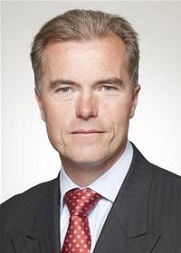
Councillor James Jamieson
Chairman, Local Government Association
@JGJamieson
|
|
 |
|