|
Dear colleague,
I hope you had an enjoyable weekend and that your area coped well with any heavy downpours.
Ofqual have this afternoon decided that A-level and GCSE students in England will be awarded the grade their school or college estimated was the grade they would most likely have achieved in their exam – or the moderated grade, whichever is higher – rather than the previous Ofqual model. The switch to centre assessment grades comes ahead of students receiving their GCSE results later this week.
Over the past couple of days, you will have seen the media speculation that Public Health England (PHE) is reportedly to be scrapped and replaced by a new body specifically designed to protect the country against a pandemic by early next month. The press coverage suggested that there could be a merger of the pandemic response work of PHE with NHS Test and Trace into a new body, called the National Institute for Health Protection. The Secretary of State for Health and Social Care, Matt Hancock, is scheduled to deliver a keynote address on the future of public health tomorrow lunchtime. It is likely that we will get further details of any plans in his remarks.
In recent weeks we have highlighted councils’ unrivalled knowledge of their communities – our ability to connect with those speaking other languages, in minimising the spread of infection through contact tracing, as well as the role we play in tackling public health priorities including smoking cessation, obesity, drug and alcohol treatment, mental health and sexual health services. As the new body for Health Protection is established, and approaches are developed to wider population health improvement, we will keep highlighting the vital role and contribution of councils in all our discussions with Government ministers and officials.
You will have seen the widespread coverage of our weekend press release, rallying parents across the country to make sure their child’s vaccinations are up to date to prevent avoidable diseases in the future. Vaccines are an absolutely essential part of our children’s health and wellbeing and we called for the Government to set out its plan to ensure children receive routine vaccinations. It follows research by PHE and the London School of Hygiene and Tropical Medicine which found that immunisations fell by 20 per cent in the first three weeks of lockdown. Immunisation programmes help protect children as well as reducing pressures on our health services.
We have also called for the extension of the free winter flu jab to as many people as possible this year, following the Government’s widening of its criteria, to be overseen by directors of public health. This would make best use of their local knowledge, including making sure our health and care workers are vaccinated to protect both themselves and the people they look after during a potentially devastating second wave of infections.
Local government finances
The Ministry of Housing, Communities and Local Government (MHCLG) has been in contact with local authority chief finance officers with a draft of the detailed guidance for the sales, fees and charges income compensation scheme which was announced in July. MHCLG will be looking to gather information in September to make the first payments under the scheme in late September or October. Further payments are then scheduled for January 2021 and May 2021. The email also advises that the next round of monthly finance returns will be emailed to authorities Friday 21 August, for completion by Friday 4 September. Please encourage your teams to contribute – as always, this information will help us to make the case that the financial impact of the pandemic must be fully funded.
Comprehensive Spending Review
We continue to prepare our submission to the Comprehensive Spending Review. This includes engaging with individual spending departments about local government’s priorities for long-term financial sustainability, and a decentralised and locally-led fiscal and policy framework. Of course, the Review is taking place against the backdrop of the COVID-19 pandemic and we continue to reiterate that councils have played, and continue to play, a leading role in supporting the national efforts, whilst continuing to support local communities and businesses. We encourage you to submit your own representations to HM Treasury before the deadline of 24 September. Please share your response with us by emailing lgfinance@local.gov.uk, as this will help inform our lobbying on behalf of local government.
Back to school campaign
Today the Government has launched a new campaign to reassure parents and students that schools and colleges are ready for their return next month. #Backtoschoolsafely will reiterate the protective measures in place to reduce the transmission of the virus. The campaign will be featured in newspaper, radio and billboard advertising, and leaflets explaining more about the safety measures in place will be made available over the coming days. Parents are encouraged to visit gov.uk/backtoschool for information and practical guidance to help them plan for their children’s return to school.
Supporting children's return to school
Last Wednesday I highlighted the Department for Education and DHSC's ‘wellbeing for education return’ initiative, designed to help councils support children and young people’s mental health and emotional wellbeing on their general return to education in September. Relevant councils will have received a letter last week with S31 grant allocations. We are keen to hear how you are supporting children and young people’s mental health and wellbeing so we can share good practice and ideas. Please get in contact with your Principal Adviser or email abigail.gallop@local.gov.uk.
We are also expecting a new government campaign for children and young people, parents and schools about children’s mental health and wellbeing to launch in September. We will update you when we know more.
Ofsted inspections
Ofsted has confirmed that it will visit councils and children’s social care providers from September. Today the inspectorate has published new guidance for local authorities and the children’s social care providers it regulates and inspects on how the visits will work in practice. The visits will not result in a graded judgement, but the findings will be published, setting out what is going well and what needs to improve. For the services it regulates, Ofsted will still be able to use its enforcement powers where it has serious concerns.
Public transport
The Department for Transport (DfT) has published a new toolkit to help local transport authorities in England, outside of London, manage increased demand on the public transport network. The toolkit sets out a framework to help develop and implement transport demand management plans that will support the full re-opening of schools and further education colleges in September. It is expected that the demand for public transport is likely to increase when trips to and from schools and colleges are added back into the transport network, due to social distancing and other COVID-19 related measures that reduce carrying capacity.
Culture
The Department for Digital, Culture, Media and Sport (DCMS) is inviting organisations to take part in the second round of a survey to understand the impact of coronavirus on organisations in the digital, culture, media, sport, gambling, telecoms, and tourism sectors.
We appreciate that council teams remain very stretched, but as DCMS tends to underestimate councils’ crucial role in delivering its objectives, we encourage councils to complete this if possible. The deadline for responses is 8 September.
New guidance has been published by Arts Council England to help cultural and heritage institutions apply for a share of £270 million in repayable finance as part of the Culture Recovery Fund. Organisations will be able to apply for funding in excess of £3 million, the limit of the grants already available, on terms including repaying for up to 20 years, an initial repayment holiday of up to four years and a two per cent interest rate per annum.
They have also drawn together an FAQ specifically aimed at councils about the Cultural Renewal Fund grants scheme.
Applications are now open for Historic England’s £50 million Heritage Stimulus Fund to restart construction and maintenance on heritage sites to preserve visitor attractions and provide immediate work for heritage specialists and for around £34 million in Programmes of Major Works grants, to allow repair and conservation work to continue.
Social prescribing
The National Academy for Social Prescribing (NASP) has been awarded £5 million in funding to undertake a range of local community activities that aim to support people to stay connected and maintain their health and wellbeing following the pandemic. The National Academy should work with councils on this, given our vital role in supporting health and wellbeing through the whole range of local government services.
Earlier this year, updated guidance was issued to GPs that outlines how social prescribing link workers are uniquely placed to work closely with GPs, local authorities, health and care professionals and voluntary sector partners to coordinate support for these people while they are self-isolating.
Business support
HM Revenue and Customs has published new guidance to help self-employed people decide if their business has been adversely affected by the pandemic. This includes examples and what records people need to make ahead of making a claim. This was produced ahead of the second stage of the Self Employment Income Support Scheme opening for applications today. Those eligible will receive a government grant worth up to £6,570.
Quarantine
People returning to the UK must self-isolate for 14 days unless they’re travelling from a country with a quarantine exemption. The Department for Business, Energy and Industrial Strategy (BEIS) has published new guidance for employees and employers on self-isolating after returning to the UK. However, councils should refer in the first instance to the guidance issued previously by the National Joint Council for local government services in its circular dated 5 June 2020.
Personal protective equipment
The Department for Health and Social Care (DHSC) sent a letter on Friday to Local Resilience Forums (LRFs), following previous communication on the role of LRFs in the distribution of PPE. The current emergency supply of PPE to LRFs via MHCLG will end by 11 September, however DHSC are offering one additional drop of PPE to each LRF to help build local reserves.
As LRFs consider local arrangements to maintain resilience following the cessation of regular PPE deliveries, DHSC has also released a Statement of Intent that looks at the storage and release of PPE from LRF-managed stockpiles.
Local government pay 2020
Finally, although not COVID-related, GMB members have voted by 76 per cent to accept the Employers’ final pay offer of 2.75 per cent. However, Unite members have voted by 70 per cent to reject it. We await an announcement from UNISON which we hope will be made this week. You may be aware that a pay deal can only be finalised, and new pay points issued, when all three unions have reached a collective position to accept the pay offer.
I hope this update is a helpful start to your week. As always, if you have any specific concerns or insights that you think we should be aware of please, do let us know by sharing your views with your Principal Adviser.
|
Best wishes
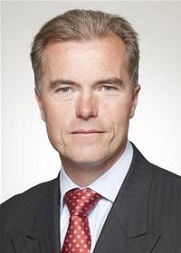
Councillor James Jamieson
Chairman, Local Government Association
@JGJamieson
|
|
 |
|