|
Dear Colleague,
At Prime Minister’s Questions today Boris Johnson announced that £63 million will be made available for councils to offer food and basic necessities to those in need. We are pleased that the Government has recognised concerns that we have raised on behalf of councils about the sufficiency of existing hardship funding. This new funding will help councils to continue to provide much needed crisis support to households who are struggling to afford food, fuel and other essentials. Defra has confirmed that they will engage with the LGA and councils in the coming days about the detail and to discuss the next steps.
Given the predicted impacts of the pandemic on the economy and employment market, many households will continue to look to their council and local partners in the voluntary and community sectors for support and advice for some time to come. We believe it is vital for local welfare funding to be put on a long-term, sustainable footing. We are calling on the Government to ensure councils have the resources needed to provide support to all the households who need it.
This afternoon our Deputy Chief Executive, Sarah Pickup, provided evidence to the House of Lords Public Services Committee as part of their inquiry into the lessons from Coronavirus. This provided an opportunity to build a consensus amongst parliamentarians and partners across the wider public sector to support local government’s priorities. Sarah gave evidence alongside senior officers from NHS Providers and the Care Quality Commission and, in the panel that followed, Peers heard from the Children’s Commissioner for England, the Ofsted Chief Inspector and a representative from the mental health team at NHS England. During the session, Sarah reiterated the importance of national government ensuring sustainable funding for local government, so that councils can continue to deliver essential services. She also highlighted the tireless work of our invaluable social care workforce and called for long-term reform of adult social care and improvements in the pay and conditions of the workforce. Sarah also raised the importance of LGA’s sector-led improvement work and noted how councils have been sharing good practice on what works throughout the COVID-19 pandemic.
Finally, we understand that the Ministry for Housing, Communities and Local Government (MHCLG) will be issuing the June round of its financial management information survey to chief finance officers this Friday, 12 June, with a deadline of 11pm, 19 June. This is a tight turnaround, similar to the deadline given for the May round of the survey. However, this time we do not expect the form to feature many additional questions and are aware that some of the more burdensome questions are being removed. We understand chief finance officers have been sent an advance copy for information.
The information you provide continues to be vital as we work to unlock a further package of measures that would help councils manage the financial impact of this unprecedented situation. As with the May survey, the Government has confirmed that the LGA will have access to your returns on the same confidential basis.
Today's updates from the Prime Minister
This evening’s Number 10 Press Conference was led by the Prime Minister, Boris Johnson. He was joined by Professor Chris Whitty, Chief Medical Officer and Sir Patrick Valance, Chief Scientific Officer. The Prime Minister used the press conference to announce various changes to the current social distancing measures.
The data slides highlighted that hospital admissions, the number of people on mechanical ventilators and the number of people dying due to COVID-19 are continuing to decrease. It was also shown that the rate of infection is decreasing.
Mr Johnson announced the following adjustments can be made to the current measures in the coming days:
- Non-essential businesses will be allowed to reopen from Monday. You can read more about this below.
- From this weekend, single adult households or single parents with children under the age of 18, will be allowed to form ‘support bubbles’ with one other household. They can spend time with each other inside their homes, and do not need to meet outside.
- From Monday, outdoor attractions can reopen, including drive-in cinemas, zoos and safari parks.
- Places of worship will be allowed to open for private prayer this weekend.
He reiterated that phase three will not begin any earlier than 4 July, and he will “apply the brakes” on relaxing measures if necessary. The rate of infection is not low enough, which is why the Government has chosen not to reopen all primary schools before the summer holidays, he added.
Sir Patrick confirmed that R is currently between 0.7 and 0.9 in every region. He added that the growth rate is also important to look at, and confirmed that the epidemic is also shrinking in every region. Sir Patrick noted that the number of cases is also a crucial factor when looking at local outbreaks, and this will be a key element of monitoring the spread of the virus. He reiterated that the epidemic is shrinking, but not enough, so the public need to remain vigilant and follow the social distancing guidelines.
As referenced in my introduction, at today’s Prime Minister’s Questions (PMQs), Boris Johnson announced that an additional £63 million of funding will go to local authorities to help the most vulnerable families who are in need of food and other basic necessities. On school reopenings, Leader of the Opposition, Sir Keir Starmer MP, highlighted that disadvantaged children will suffer the most due to the closure of schools for six months, and asked whether the Prime Minister would look into forming a comprehensive strategy on ensuring children don’t fall behind academically. In response, Mr Johnson said that the Government is being “extremely cautious” and added that some European countries are not sending any primary school children back to school. Both sent their sympathies to the families and friends of the 72 people who lost their lives in the Grenfell Tower fire, with the third anniversary of the tragedy taking place on Sunday.
Test and trace
Today, the allocations for the £300 million additional funding for local authorities to support the new test, trace and contain service were published and arrived with councils. This funding aims to support councils to develop and action your plans to reduce the spread of the virus in your communities. In particular, it should enable local authorities to develop and implement tailored local COVID-19 outbreak plans through, for example, funding the recruitment of additional staff where required. The allocations have been made on the basis of the 2020/21 Public Health Grant allocations. Details of arrangements for two-tier areas can be found in Annex B of the grant determination letter.
As we said when this was originally announced back in May, it is good that the Government has acknowledged the crucial role of councils in the test, track and trace programme by providing new and much-needed funding.
As mentioned in previous updates, we have been calling for councils to have control over prioritisation and deployment of testing capacity. This would allow you to target resources based on local intelligence, knowledge and prioritisation. We know that having the ability to flex testing capabilities based on local circumstances and community needs will be vital to reaching all aspects of our communities, particularly vulnerable and hard to reach groups. We are keen to hear from you on the range of different testing capabilities you think you need in order to support your communities access testing, particularly vulnerable and harder to reach groups. Please send any thoughts you have on this to frances.marshall@local.gov.uk to help inform our work on this issue on your behalf.
Adult social care
We have shared examples of innovative local approaches to supporting adult social care's COVID-19 response. The snapshots show approaches to creating extra or different provision, financial pressures, PPE, provider engagement, partnership working and innovation. They will be updated regularly based upon input from councils and partners. To share examples of commissioning approaches and care provider support please contact adass.lga.covid@local.gov.uk
Personal protective equipment
In a previous bulletin we circulated DEFRA’s video on the appropriate disposal of masks, gloves and other PPE. Government colleagues have asked if councils can stop circulating this particular video, as it is being updated in line with new Public Health England guidance. An updated video will be shared this week.
Children’s social care
Ofsted have written to councils to provide further information on the implications of the postponement of routine inspections. Inspectors are aware that some providers may be worried that the current postponement of routine inspections can lead to a delay in the opportunity to improve their latest inspection judgement. Ofsted realises that this is likely to be of particular concern to services that were judged ‘inadequate’ or ‘requires improvement to be good’ at their last inspection.
Decisions about where children should live and receive help should always take into account a range of factors including, where relevant, evidence from recent Ofsted inspections and visits. Commissioning frameworks may need to be more flexible while Ofsted are unable to undertake inspections that lead to judgements. Urgent monitoring activity has continued during the restrictions, including the monitoring of services that were judged inadequate. Ofsted would expect that reports from these monitoring visits inform councils' decisions.
Deaths of children’s services staff
To provide a clearer picture of the number of COVID-19 related deaths of staff working across children’s services, the Government has set up a new death notification process. This asks employers to email a dedicated inbox to notify the Department for Education of COVID-19 related loss of life in children’s services, including of a staff member or carer. This is a voluntary process for employers of children’s social care workers.
We agree that it is important that this notification process is improved, to ensure we can acknowledge our workforce’s valuable contribution, monitor the situation more closely and better understand the impact on teams’ capacity.
Please note, this new system is entirely separate from the death in service benefit scheme which applies to social care workers, working in both adult and children’s services, and is operated by the NHS Business Services Authority.
Relationships, Sex and Health Education
Following the decision to close schools for the majority of pupils, the Department for Education has been working to assess the impact of coronavirus on the implementation of Relationships Education, Relationships and Sex Education and Health Education. The communication to schools provides an update on the Department’s expectations with regard to how schools will discharge their compulsory teaching duties. It aims to reassure schools of the flexibility they have to deliver the subjects, due to lost preparation time and other competing priorities.
Mental health
Today the Institute of Fiscal Studies published a report on the impact of coronavirus on our mental health. The report found that mental health in the UK worsened substantially as a result of COVID-19, particularly for young adults and women. In our media response we said that councils are doing everything in their power to promote the mental health and wellbeing of our communities, helping people stay connected and providing safe access to parks and open spaces. A reminder that the mental health page on our COVID-19 hub includes a range of resources from the LGA, the Government and other organisations which can help councils support your staff and communities with their mental wellbeing during this time.
Public transport
We know public transport will play a fundamental role in getting people back to work. To help make sure journeys are safe, a reminder that the Department for Transport (DfT) has published guidance for operators and passengers. This includes advice on social distancing, reserving public transport for key workers and avoiding peak time travel where possible, planning journeys, wearing face coverings and practising good hand hygiene. As part of DfT’s Safer Transport Campaign, they have produced a number of downloadable materials which councils can use as part of our own local communications. This includes videos and graphics on face coverings, which will be mandatory on public transport from Monday 15 June.
Cycle lanes
As part of Bike Week, today The Department for Transport (DfT) issued a press release confirming the new tools councils will have to support cyclists. This includes being able to enforce any misuse of mandatory cycle lanes by using CCTV to issue penalty charge notices to drivers who park or load illegally in these lanes. These new powers, which councils and the LGA campaigned for, will come into force on Monday 22 June.
A reminder that DfT has published an advice note for local authorities which provides some guidance on things to remember when enforcing against parking in mandatory cycle lanes.
Culture, hospitality, tourism and leisure
The Department for Culture, Media and Sport (DCMS) published its Coronavirus Impact Business Survey which highlights how DCMS sectors are responding to the ongoing pandemic. We wrote to the Minister for Digital and Culture, Caroline Dinenage, highlighting that the survey does not adequately capture data from councils on leisure centres, heritage sites or museums. In the letter, we asked the Minister to work with us to find another way of gathering data to show the impact on councils. We are currently awaiting a response from Ms Dinenage, and we will update you as soon as we hear anything.
Shops reopening
Further to the confirmation from the Secretary of State for Business, Energy and Industrial Strategy, Alok Sharma, yesterday and the Prime Minister today that shops in England selling non-essential goods can reopen from Monday 15 June the Department has issued a press release outlining the measures that need to be in place. This includes adhering to the COVID-19 secure guidelines, undertaking a risk assessment, limiting the number of customers allowed inside at any one time, frequent cleaning and displaying a notice to customers that the guidance is being followed. You will be aware that, at yesterday’s Number 10 Press Conference, Mr Sharma referenced the role local authorities play in enforcing the Health and Safety at Work Act. We are continuing to highlight to the Government the capacity constraints on environmental health services in proactively supporting the safe reopening of many more outlets, alongside their other duties.
Work is ongoing in central government to ensure that the necessary changes to the Regulations are put in place for Monday.
Business support
The Department for Business, Energy and Industrial Strategy (BEIS) has published their weekly update on the amount of funding distributed through the Small Business Grants Fund scheme and the Retail, Hospitality and Leisure Business Grants Fund by each council. As of 7 June, councils’ efforts mean that £10.23 billion has been paid out to businesses in relation to almost 833,000 properties. This represents 83 per cent of the total allocation and 87 per cent of the total number of properties identified by councils as eligible to receive the grants.
Workforce
Further to yesterday’s update on the job retention scheme deadline for new staff to be furloughed and the anomaly regarding those returning from parental leave that we raised with government, HM Treasury has confirmed that where an employer has furloughed staff already, they will be able to add additional staff returning from parental leave after today’s deadline.
LGA virtual annual conference 2020
I’m delighted to let you know that the Secretary of State for Housing, Communities and Local Government, Robert Jenrick, will be speaking on Thursday 2 July (2.00pm-3.05pm) during our series of annual conference webinars. Our Vice-President Baroness Tanni Grey-Thompson will join us on Wednesday 8 July (10.00am-11.05am). These webinars are free to councils and government departments. Details of all our virtual conference events can be found on our website where councillors and officers can book to join us.
LGA webinar: International lessons on tackling COVID-19
As part of our virtual programme of events, we are hosting a webinar next Wednesday (17 June, 9.00am – 10.15am) on tackling COVID-19: lessons from Europe and internationally. We know the pandemic has touched every country and councils across the world have responded to the challenge in different ways, along different timelines, and with varying success. The UK has followed a similar curve to other countries, but slightly later, meaning that the strategies being followed today elsewhere can help inform our own preparations for further relaxation of the lockdown and planning for recovery. This webinar is an opportunity to hear about the experiences, successful practices and recovery strategies being followed by local governments across Europe and the OECD, with specific examples from Germany and New Zealand.
Non COVID-19 stories
Local government pay
You will be aware of the National Employers’ final pay offer for 2020/21 made in April. UNISON has today published details of its consultation that will run until around the end of July. UNISON’s NJC Committee has decided that it would not make a formal recommendation but that members should accept or reject the pay offer which it describes as the best achievable by negotiation. GMB and Unite are expected to publish details of their separate consultations in the next few days. This year’s pay round will be concluded only when all three unions have reached a joint view on whether to accept the Employers’ final offer.
Supreme Court decision on Automated Teller Machines (ATMs)
On 20 May, the Supreme Court ruled that neither internal nor external ATMs should be separately assessed for business rates purposes. For example, where a bank-owned cash machine is in a supermarket, the machine should not be assessed as a separate property (known as a ‘hereditament’) and the bank would not be liable for business rates on this property. They had previously been assessed by the Valuation Office Agency (VOA) separately, with an associated business rates bill.
On 5 June, the VOA wrote to all billing authorities about the work they are doing following this decision. The VOA states that a significant number of related appeal cases may now be settled following the Supreme Court decision. Compensation due to ratepayers will need to be backdated to 2010 in many of those cases.
However, it is likely to take several months for the VOA to carry out the work, as in many cases there are a number of outstanding matters, including the valuation of the properties hosting the ATMs. In the meantime, they have asked authorities not to submit reports for deletions from the rating list. The VOA will continue to provide updates in the coming weeks, including the approach to the 2017 rating lists. The VOA contact for queries is ratesretention@voa.gsi.gov.uk
I hope this midweek update was helpful.
|
Best wishes
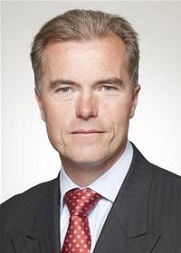
Councillor James Jamieson
Chairman, Local Government Association
@JGJamieson
|
|
 |
|