Reduce, Reuse, Recycle Bulletin | 18 March 2021

A message from Cllr Julie Car, Lead Cabinet Member for Recycling, Waste and Open Spaces
Hello and welcome to this first edition of our new fortnightly 'Reduce, Reuse and Recyle Bulletin' which we are launching today to mark Global Recycling Day 2021.
These bulletins will include things like council news about our waste and recycling services, tips and advice on wasting less and recycling more.
We will also use these to remind you of changes to bin collections around bank holidays, give updates on our work to tackle littering, fly-tipping and other environmental crime, and share news about initiatives in our parks and opens spaces such as tree and wildflower planing.
We hope you enjoy this first bulletin but if you decide it's not for you, you can unsubscribe using the link at the bottom of this email.
|
- Ever need to recycle unopened glass, plastic or metal food packaging? Remember to open and empty the contents before recycling. As with all food packaging, please wash and squash before popping in your recycling bin!
- Have you tried our Report It app? It's the quickest way to report environmental issues when you're out and about such as littering, fly-tipping, a public bin that needs to be emptied, graffiti and much more. Download at lewes-eastbourne.gov.uk/Report-It
- Considering home composting for your food and garden waste? Lewes district residents can get a discounted price on compost bins, food waste digesters or water butts via: East Sussex County Council - composting at home

Every year, the Earth yields billions of tons of natural resources and at some point, in the not too distant future, it will run out.
That’s why we must think again about what we throw away – seeing not waste, but opportunity.
The last decade has been the hottest on record, and we are now facing a climate emergency of unparalleled proportions. If we don’t make significant and rapid changes, we will see continued rising global temperatures, the melting of icecaps, continents on fire and rapid deforestation.
Recycling is a key part of the circular economy, helping to protect our natural resources. Each year the ‘Seventh Resource’ (recyclables) saves over 700 million tonnes in CO2 emissions and this is projected to increase to 1 billion tons by 2030.
There is no doubt recycling is on the front line in the war to save the future of our planet and humanity.
Learn more about Global Recycling Day at www.globalrecyclingday.com
|
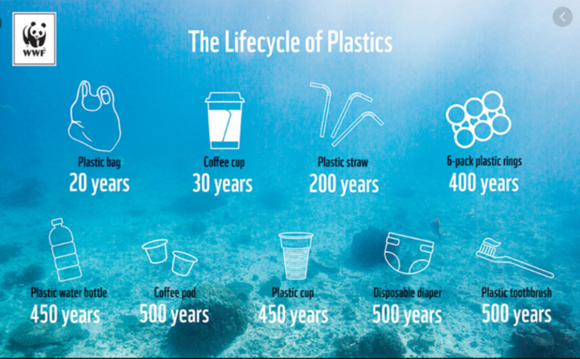
The World Wildlife Fund has shared this infographic showing how long certain plastics take to decompose.
This illustrates just how important it is to reduce the amount of plastic packaging we buy and to recycle as much as possible.
For example, recycling one plastic bottle saves enough energy to power a 60W light bulb for six hours while it takes 450 years to decompose.
A council review of waste and recycling facilities at every block of flats in Lewes district has led to over 100,000 litres of additional recycling capacity being created.
The Lewes District Council team audited 356 blocks of flats to analyse the number of waste and recycling bins at each location and how effectively and efficiently they were being used.
As a result of the review, redundant refuse bins were removed from various blocks, while the number of recycling bins was increased.
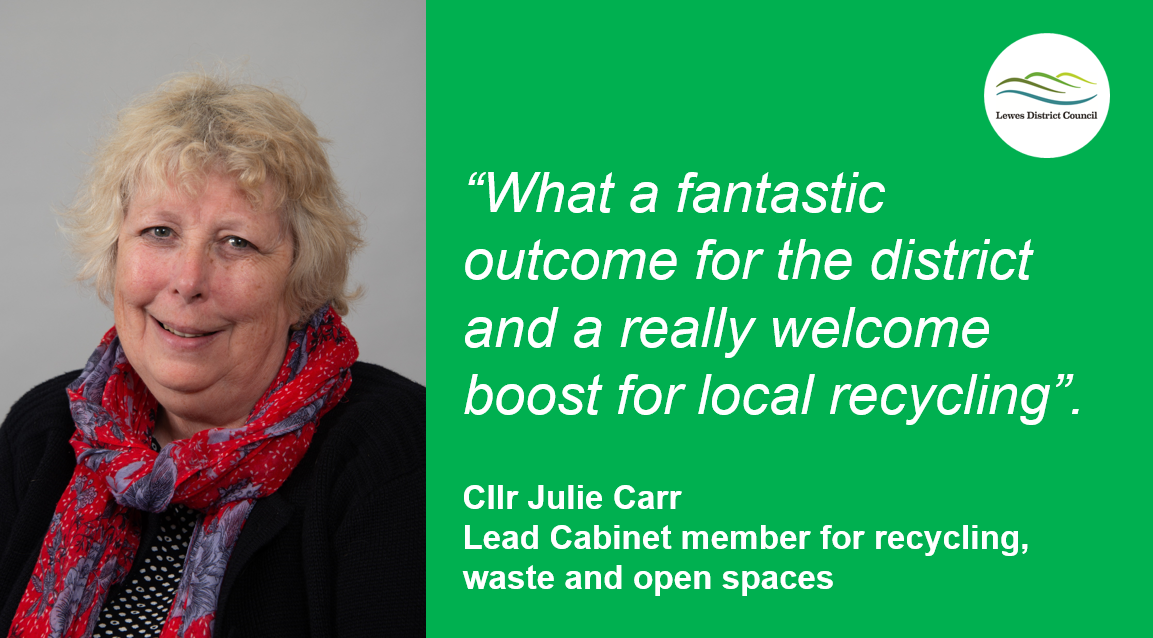
Councillor Julie Carr, Cabinet Member for Recycling and Waste, said: "What a fantastic outcome for the district and a really welcome boost for local recycling. The audit identified council owned and private sector blocks of flats where we could reconfigure the use of bins to maximise recycling and reduce waste.
"In total 154 blocks of flats benefited from additional recycling bins, creating a massive 100,810 litres of additional recycling capacity, the equivalent of 420 wheelie bins!"
Get the full story here: www.lewes-eastbourne.gov.uk/lewes-district-council-news/huge-boost-for-district-recycling
If you would like to stay up to date with information about other services, such as planning, consultations, recycling and tourism, please click manage preferences below.
|