What is Selective Mutism?
We know children thrive best when they form secure relationships, enabling them to feel safe and confident in their environment. At Minik Kardes @ The Factory Children's Centre we are committed to providing a nurturing and supportive environment, meeting children's individual needs, having strong key person and trauma informed approaches.
We understand that each child arrives at our setting with their own unique experiences that may influence their behaviour and emotional well-being. While some behaviours are typical for young children, others may indicate distress or trauma. An example of this is Selective Mutism.
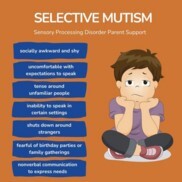
Selective Mutism is an anxiety disorder where a child is unable to speak in certain social situations despite being able to speak comfortably in others, such as at home. This condition often becomes noticeable around the age of 2-4, but it might not be diagnosed until the child starts school.
Key Characteristics include:
- Talkative at home, but silent in settings such as nursery or school.
- Nonverbal in social settings, but might use gestures, facial expressions, or nodding instead of speaking.
- Anxiety-driven, unable to speak due to extreme anxiety, not because they are choosing not to talk.
|

A child joined our setting when he was 2 years old. Parents shared that at home he was a confident communicator, participating in conversations and using complex sentences. However at nursery, he did not speak or make one single sound. Initially, he took some time to settle but eventually formed a secure attachment with his key person and always preferred to stay close to her. The child was generally reserved and quiet, not liking to draw attention to himself.
During this time, he played alongside other children and adults but preferred using body language to communicate. He would make eye contact with practitioners when he wanted to communicate something and made requests known without using any words or sounds.
What concerned us was that after the initial settling in period, he continued to be extremely anxious and stressed, especially when away from his key person. This seemed to increase after having breaks from the nursery. He presented as distressed and tearful and eventually started to refuse support from his key person and familiar adults.
|

A Bright Start Speech and Language Therapist identified traits of Selective Mutism and recommended proceeding with a formal speech and language referral.
With parents’ consent after making the Speech and Language referral we then spoke with our Child and Adolescent Mental Health Service (CAMHS) clinician who also suggested a referral to their services.
Through collaboration with the child's parents, Speech and Language and CAMHS we started to put further strategies in place within a short-term plan and met every 6 weeks to review the his progress.
Some of our key support strategies included:
- Having a strong key person approach with dedicated one-to-one time. This also included his key person taking part in online training modules to develop their understanding of Selective Mutism.
- Implementing ‘The confident speaking programme’ - This intervention is form of ‘special time’ play that takes place ideally outside of the classroom in the same place each time for at least 10-15 minutes, 2-3 times a week. Each stage gives clear instructions and makes it very easy to monitor the child’s progress. With this intervention initially progress was slow, but we did see the benefits as he became less anxious and the progress that was made.
- Daily parent involvement through 'Acclimatisation and informal sliding-in sessions’ - This is when the parent spends time in the child’s room, at least twice a week and ideally at the end of the day in a quiet space for 10-15 minutes. The process helps the child to acclimatise to speaking in the nursery setting through casually sliding into their child’s play.
- Using pictures or showing the child real objects helps to support the child to know what is happening next or in this case to provide the child with choices. This included for play activities inside, in the garden, snack time /drinking water, washing hands, using the toilet etc to ensure he could point or choose to make his needs known.
The key to our approach was ensuring adults did not put pressure on him to speak. Instead, we focused on reducing anxiety at all times in the day. When we did speak to him, we would use calm, quiet voices and provide alternative ways for him to respond, including letting him know he could shake or nod his head or point to his choice.
|
Trauma Informed
During this time, we were also taking part in Islington’s trauma-informed practice training known as Tiny Tips. As a part of Tiny Tips our whole staff team received training in understanding what trauma is and how it affects children and parents.
As part of our work to become a trauma informed provision we adapted our policies, practice and provision to ensure they were trauma sensitive and supported children to develop their understanding of feelings and emotions. This included having cosy areas for the children to have a quiet space away from others or somewhere to support them to regulate themselves and feelings displays, visuals and props.
Throughout the time that we were working with the child he transitioned rooms and so he had to be prepared for the changes very slowly and gradually to ensure we did not set his progress back too much, while he adapted to the new room and key person. This also meant his new key person taking over the various interventions.
What was crucial to supporting this child was sharing information about supporting strategies with all staff, including receptionists and cooks, to ensure consistent, non-pressuring approaches were happening across the whole setting. This included not making him centre of attention or asking him direct questions unless required and using the strategies in place. We maintained a balance between adult-guided and child-initiated activities based on observed interests. We also introduced relaxing sessions with calming music, breathing exercises, weekly yoga, and movement sessions to support emotional regulation.
It took a year for the child to feel confident to talk to his peers initially and then one day, his key person was being silly, and the child laughed out loud and spoke with him. We were advised that when he did start to speak that we should not react or pay attention to it. So, after the moment had passed, his key person left the room and shared the news excitedly with the team. We were so happy and felt very emotional. Of course we could not wait to inform parents. After this the child slowly grew in confidence and before he left the nursery he was confidently communicating and developing well in all areas.

Our Key Learning Points
- Importance of whole-setting trauma-informed approach
- Value of strong professional partnerships
- Significance of family involvement
- Need for consistent, setting-wide strategies
- Benefits of adaptable communication methods
Impact
- Enhanced staff understanding of Selective Mutism
- Improved trauma-informed practice across the setting
- Development of effective transition strategies
- Stronger multi-agency working relationships
- Better support systems for future children with similar needs
|
|