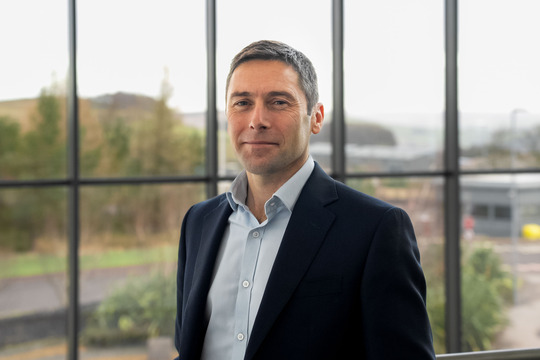
 Last month, we introduced Chris Scales as the new lead for the development of the research and consultancy services HSE offers to its customers in industry and government to help them safely manage their assets and infrastructure.
Chris joins us to focus on delivering a number of major shared research projects between HSE and industry and brings a substantial wealth of sector and regulatory experience to the role, having spent almost 30 years developing his expertise in metallurgy, welding and corrosion.
It’s been a busy start for Chris so far, but we’ve managed to grab five minutes out of his day to ask him a few questions about how he’s finding this important role at HSE.
What attracted you to this role?
I have been regulating Major Accident Hazards as part of HSE’s Energy Division in the upstream Oil and Gas sector for around ten years. This role gives me the opportunity to make the most of that collective experience by applying what I understand about the most common integrity challenges, together with both current and recurring themes, in order to ensure that the shared research work HSE carries out with industry is both relevant and aligns with HSE’s strategy.
What are you working on at the moment?
The next shared research project will look at Corrosion Under Insulation (CUI) which is a prevalent issue for many industries. I am also working to initiate a project to follow on from the recent successful work on Engineered Composite Repairs, which culminated in an Energy Institute Good Practice Guide.
Tell us about the CUI project
Managing the risks from insulated safety critical plant and equipment to levels which are as low as reasonably practicable, whilst at the same refining and optimising the process by which you do it, is a significant challenge across many industry sectors. As the Regulator, we recognise this challenge and wanted to do something proactive with industry to work on this issue collaboratively. By sharing our different perspectives, we’ll be able to tackle the problem holistically, leading to a more beneficial outcome for all parties.
There is a lot of work going on into all aspects of CUI. What makes this different?
The idea for this project was conceived by offshore and onshore regulatory inspectors as well as our materials specialists within HSE’s Science Division, who collectively have years of cross-industry experience of CUI failures, near-misses, their causes and management system failings, as well as an understanding of the current research and development landscape.
In collaboration with representatives from a broad range of industry sectors, such as nuclear, oil and gas, onshore chemical, defence and also inspection organisations and trade bodies, we developed a set of work packages that we believe will make the whole project both as unique and as impactful as possible.
…and the Engineered Composite Repairs follow up project?
We have been fortunate enough to have been donated examples of aged, ex-service, large bore composite repairs which represent a unique opportunity to understand how the repair system has responded to their years in service. The intended work programme should provide valuable learning for anyone who is currently managing, or anticipates having to manage, comparable safety critical composite repairs at some point in the future.
Is there still time to be part of the projects you are starting?
Of course. Anyone who feels they would like to help drive and influence the direction of either project and benefit from the outcomes, can contact me directly. I would be happy to discuss any of the project aims and objectives further.
Contact Chris
To take part in either project, contact Chris directly by e-mail or connect with Chris on LinkedIn.
|