This newsletter will help you keep up to date with the latest publications, news and events from us. If you have any queries, please get in touch by emailing cchs@ukhsa.gov.uk.
Please complete our short survey to rate and feed back on this newsletter.
Having trouble viewing this email? View it as a Web page.
|
In this issue:
- Update from CCHS
- Climate and Health Digital Portal
- Extreme temperature
- Flooding
- Health co-benefits
- Climate models
- Vector-borne diseases
- Upcoming reports
- Useful resources
 |
|
"Working to ensure the health harms from climate change and adverse weather are minimised, and health is improved for all people, across current and future generations". |
The big news from CCHS since our last issue is that the UKHSA Climate & Health Digital Portal has now gone live! The Digital Portal will collate UKHSA’s climate and health products, services, and better facilitate knowledge sharing with partners. You can find out more about the Digital Portal in the section below.
We also welcome colleagues from Global Operations into CCHS. Members of the Global Disaster Risk Reduction team have now joined us to lead the international portfolio and strategy for CCHS. Those who are interested can also sign up to their weekly Global Hazards Bulletin.
We have partnered with the new Net Positive Health and Climate Solutions (Net+) Centre, led by the University of Exeter to deliver research on climate change and health that addresses climate-environment-health inequalities.
CCHS and UKHSA's antimicrobial resistance (AMR) teams have also joined up and partnered with the University of Leeds to develop a set of shared deliverables exploring the nexus of AMR and climate change.
Professor Lea Berrang Ford
Head of the Centre for Climate and Health Security, UKHSA
Our Climate and Health Digital Portal is now live on gov.uk! The first topic area, Heat launched in December 2024. We are now developing content for the next topics: Age, Vector-Borne Diseases, and Aeroallergens, which will be released this quarter.
The Portal will ultimately bring together all of UKHSA’s climate and health products and services in one place, making it easier for partners to access and share knowledge.
Designed primarily to meet the communication and information needs of local authorities based on extensive user testing, the Portal is also a valuable resource for anyone interested in climate and health.

Please note that the survey is designed to prioritise certain roles for feedback so those in other roles may not progress beyond stage 2, but we value all feedback.
|
The Adverse Weather and Health Plan (AWHP) 2023/24 annual report, published in December 2024, mentions UKHSA’s commitment to regular reporting on the implementation of the AWHP, provides a comprehensive assessment of the activities conducted between April 2023 and March 2024 and outlines recommendations for improvement in future AWHP iterations.
Adverse Weather and Health Plan survey - send us your feedback
Researchers at the London School of Hygiene & Tropical Medicine are conducting an evaluation of the UK’s Adverse Weather and Health Plan (AWHP). The AWHP was produced by UKHSA in 2023 and aims to protect individuals and communities from the health effects of adverse weather.
The evaluation is focusing on how the AWHP is being implemented in local health and social care organisations in England and includes a short knowledge survey to understand awareness and use of the AWHP and/or similar local plans. The survey should take no more than five minutes to complete.
This evaluation is targeting frontline NHS and social care staff/managers, local authorities, service delivery staff and the voluntary sector. If you are part of one of these groups, please consider filling out the survey.
Please click this link to complete the survey.
If you have any questions, please get in touch with Dr Beth Jakubowski
Beth.jakubowski@lshtm.ac.uk
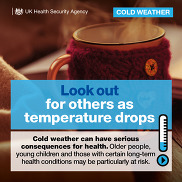
The Cold Weather Health Alerting System went live on 1 November 2024. There are currently no alerts in place.
We are advising stakeholders in England to sign up to Weather-Health Alerts which are distributed via email. If you have not done so already and would like to receive the alerts, please register and share the link with anyone you feel should be receiving them.
To support stakeholders communicate cold weather messaging, we have updated our cold weather communications toolkit for 2024/25. The communication material in this toolkit relates specifically to cold weather and is intended to provide basic health information that can be communicated before and during cold spells so the right messages reach the right people at the right time. The content included in this toolkit can be used to target both public and professional audiences. We ask that cold weather messaging is not used until alerts are issued.
You can read more about the Weather-Health Alerting system on gov.uk.
|
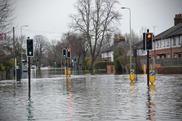
We are aware that many of you have been dealing with the public health impacts of localised flooding.
Following feedback from stakeholders, we have added our flooding toolkit onto our External Affairs Team Google Drive. Please use and share this link going forward. The toolkit can help support any communications activity stakeholders choose to undertake during the course of a flood in relation to public health advice. Getting our message to all sections of our communities during adverse weather events and other incidents aids us to mitigate the impact of health inequalities.
The content included in this toolkit can be used to target both public and professional audiences. It contains background information, key messages, suggested social media copy, example press statements and links to useful information.
|
On 4 November 2024, we hosted a joint UKHSA and Environmental Change and Health HPRU webinar, Net Zero: The Potential Health Co-benefits of Climate Action. The session featured a series of talks exploring key evidence from HPRU research and the wider health co-benefits of climate action. Over 200 attendees joined from local authorities, the NHS, civil society, academia, and UKHSA.
If you missed the webinar, you can access the recording and transcript here:
Net Zero: The Potential Health Co-benefits of Climate Action - webinar recording and transcript
Israelsson, J., Macintyre, H. L., Jenkins, K., & Sanderson, M. (2025). Bringing real-world problems into climate models – RMetS Weather and Climate conference workshop. Weather. 16 January 2025.
This report summarises discussions from a workshop at the RMetS (Royal Meteorological Society) Weather and Climate Conference on integrating climate, health, and socioeconomic data into climate models. Participants emphasised the need for collaboration across disciplines to develop effective methods. Some also highlighted the importance of closer engagement between data providers and users to ensure data relevance, recognising that providers may not always be aware of the challenges users face when applying climate and weather data.

We’ve completed the first year of ecological research as part of the Defra-UKRI funded OPTICK project, which explores how farm management and landscapes influence tick-borne disease transmission in the UK. Using modelling techniques with the UK Centre for Ecology and Hydrology, our findings will help inform future disease management strategies.
|
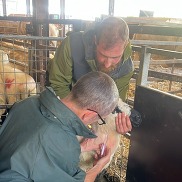
Senior Medical Entomologist Mark Greener led an 8-week field campaign in North Wales, where the MEZE (Medical Entomology and Zoonoses Ecology) team and University of Liverpool colleagues collected around 1,500 ticks from sheep farms. These will be tested for tick-borne pathogens of public and animal health importance with the Animal and Plant Health Agency (APHA). Blood samples from 1,200 ewes will also be analysed with APHA and the Moredun Institute.
The information from this project will be used to co-develop potential disease management strategies in alignment with land managers, livestock owners and policy makers.
Next year, research will take place on beef farms in the Southwest England. If you are a farmer or a vet working in this part of the country, please visit Farmer Survey or Vet Survey for more information or if you’d like to get involved.
|
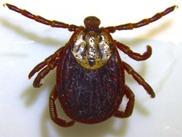
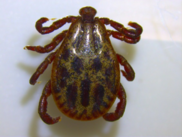
The Dermacentor reticulatus (Ornate Cow Tick) species is a is a vector of Babesia canis and Babesia caballi which cause babesiosis in dogs and horses respectively and has been found infected with the human pathogen Rickettsia raoultii in the UK. This tick is of public health interest as it can also feed on people. Little is known about its ecology or how host movements and modern grazing practices affect its distribution - both of which could have future public health implications.
These ticks are most active in cooler months (Jan–Apr, Sept–Nov) and are known in four UK regions. Recent field surveillance in spring 2024 confirmed their presence in:
-
South Devon – coastal grazed grassland
-
North Devon – sand dunes/burrows
-
South-east Essex – coastal marshes
All locations have livestock presence (mostly cattle, also sheep and horses). New sites were also identified within South Devon and Essex.
We plan March 2025 surveillance, including:
- Visiting known sites in North Wales to assess distribution
- Investigating new locations where public reports through our Tick Surveillance Scheme suggest tick presence
|
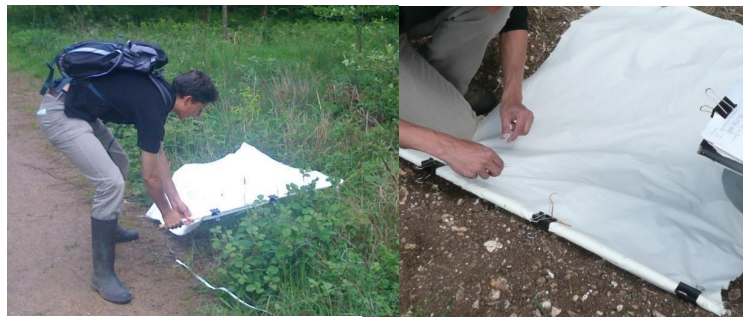
Our surveys use flagging, where a cloth is swept over vegetation to collect ticks. Specimens are identified and may be tested for pathogens. We take great care to avoid harming other invertebrates and ensure accurate site attribution.
Our tick surveillance is always weather dependent. Let’s hope for a dry March!
Find out more about our Tick Surveillance Scheme:
https://www.gov.uk/guidance/tick-surveillance-scheme
|
- In November 2024, we hosted a consultative workshop on Greenspace, natural ecosystems, and public health.
The event brought together 26 participants from planning, public health, and research sectors. A report summarising key discussions and insights has been prepared and will be shared with attendees soon.
- We are also developing a thematic report on the impacts of climate change on mental health in the UK.
This report will explore the pathways linking climate change and mental health, as well as potential interventions relevant to the UK context.
Look out for further details in upcoming newsletters.
We have collated events and publications from our external partners, we hope you find these helpful.
We do not accept responsibility for the availability or reliability of the resources included in this newsletter or any actions based on the information provided. Their inclusion does not represent an endorsement of any views that may be expressed.
-
COP29 special report on climate change and health: health is the argument for climate action This World Health Organization report, produced with input from over 100 organisations and 300 experts and practitioners, provides wide-ranging evidence and calls for the integration of health in climate negotiations and policies.
-
Quality criteria for integrating health into Nationally Determined Contributions (NDCs) This World Health Organization report provides guidance to governments on incorporating health into national climate plans.
-
Advancing and integrating climate and health policies in the United Kingdom This study from the Tyndall Centre for Climate Change Research (University of East Anglia) and the Grantham Research Institute on Climate Change and the Environment (LSE) explores how climate and health policies are integrated in the UK, based on insights from 42 expert interviews. It highlights the need for a well-resourced, holistic approach that addresses the broader determinants of health and prioritises vulnerable populations to improve policy effectiveness and outcomes.
-
Public health approaches to ‘Leave No One Behind’ in heatwave resilience: insights from the UK This study explores stakeholders' perspectives on heatwave resilience from a public health perspective, with a specific focus on operationalising the commitment to ‘Leave No One Behind’ as outlined in the United Nations 2030 Agenda for Sustainable Development.
-
How have the UK public been affected by extreme heat and what do they think about the risks that it poses in the future? These slides from Grantham Institute – Climate Change and the Environment (Imperial College) summarise findings from a nationally representative sample of 897 people: people are concerned about extreme heat and a considerable proportion believe that the Government’s adaptation plans don’t go far enough; the impacts of climate change are already negatively affecting people’s health in the UK and increasing the pressure on the NHS; exposure to extreme heat affects the productivity of the UK workforce; and while the public is concerned about very hot weather, they may be underestimating the risk of experiencing negative health impacts caused by such weather in the future.
-
Greening urban areas in line with population density and ecological zone can reduce premature mortality This study suggests that greening could prevent an average of 54 deaths per 100,000 annually, revealing the importance of integrating green spaces in urban areas to enhance public health, reduce exposure to urban heat, improve air quality, and promote physical activity and mental well-being.
-
Association between active use of urban green spaces and well-being in adults aged 18-65 years: a systematic review investigated the link between physical exercise in urban green spaces and well-being in adults, highlighting improvements in physical, mental, and social health. The study revealed that the active use of urban green spaces can enhance cardiovascular health, reduce stress, improve mood and self-esteem, and strengthen social cohesion.
-
Policy position: Climate change and women’s health This Royal College of Obstetricians and Gynaecologists policy position sets out the role of all four UK governments and health services in creating a liveable, healthy future for women and girls, by reducing emissions, adapting to a changing climate and prioritising health equity.
-
Country-level climate and health data from the Lancet Countdown This resource collection provides country-specific data and analysis on climate change and health impacts, highlighting vulnerabilities and opportunities for action. The regularly updated sheets and policy briefs aim to support evidence-based local climate and health planning to protect population health and reduce inequities.
-
Collective for Climate Action (CfCA) Recognising that working on the topic of climate change can have mental health impacts, the CfCA provides a safe and supportive space for UK public sector workers and civil servants to network, collaborate, share resources and good practice, ask/answer questions, and access peer support.
|