|
What's in this issue
Welcome to the May edition of our A417 Missing Link newsletter. In here you’ll find out more about what’s happening on the project including:
- Upcoming roadworks
- Other work happening in the area
- Environmental update
- Volunteers' Week
- The Customer Hub
- Meet the team
- National Highways TRIP campaign
Project update
Bridge beams for Stockwell Crossing, Cowley Crossing and Gloucestershire Way Crossing have all now been transported safely to site. These will be installed over the coming months as work on the scheme progresses at pace.
Members of the project team visited the A3 Hindhead Tunnel at Devil's Punchbowl, Surrey this month by invitation of the National Trust, to understand what lessons could be learned about building a repurposed road, like that planned on the A417 scheme. In other news, the project has been recognised with a Gold Award at the Considerate Constructors National Awards 2025.
Month in pictures
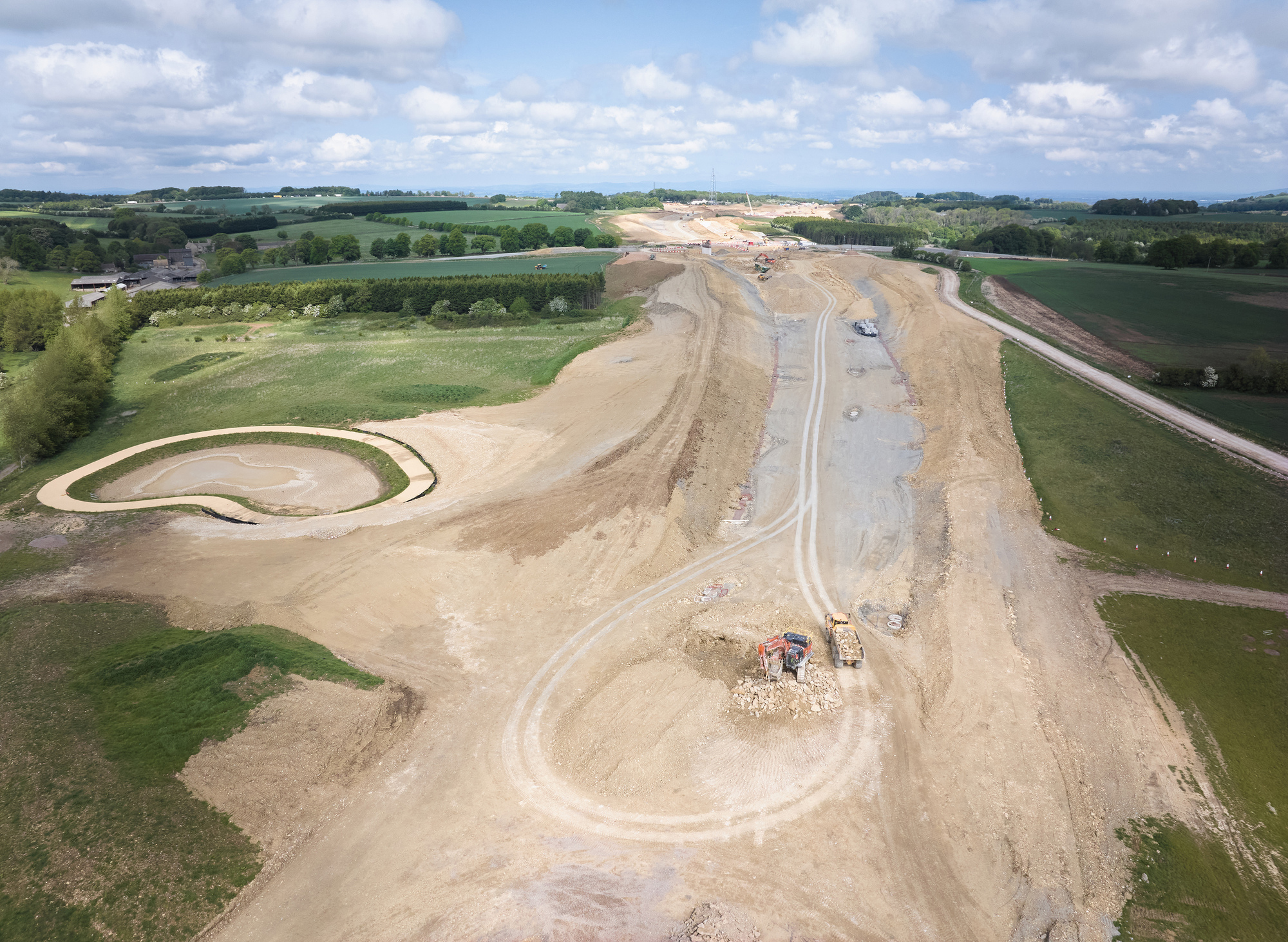
Caption: Aerial view of activity at Cowley.
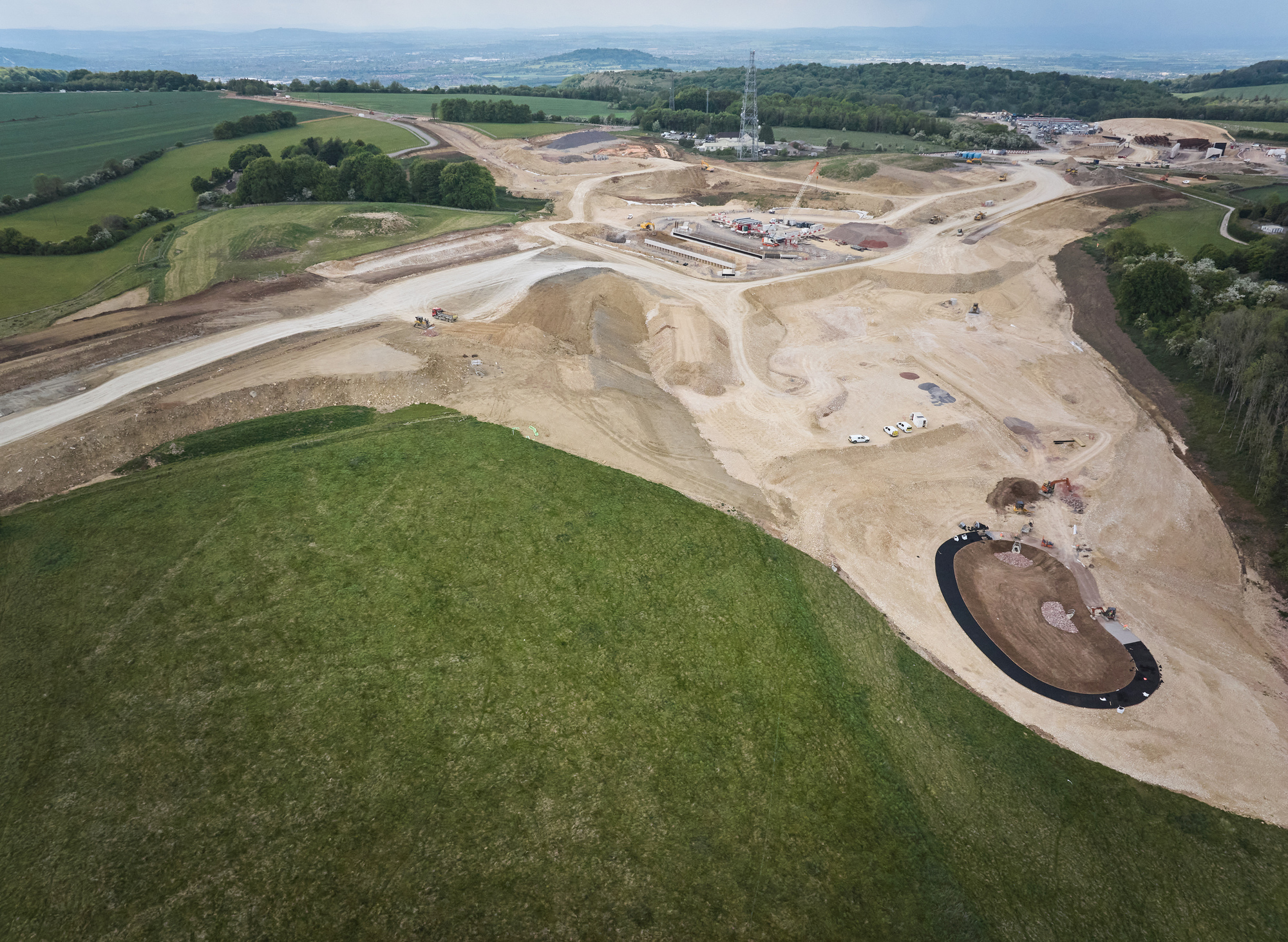
Caption: Aerial view of activity at Shab Valley.
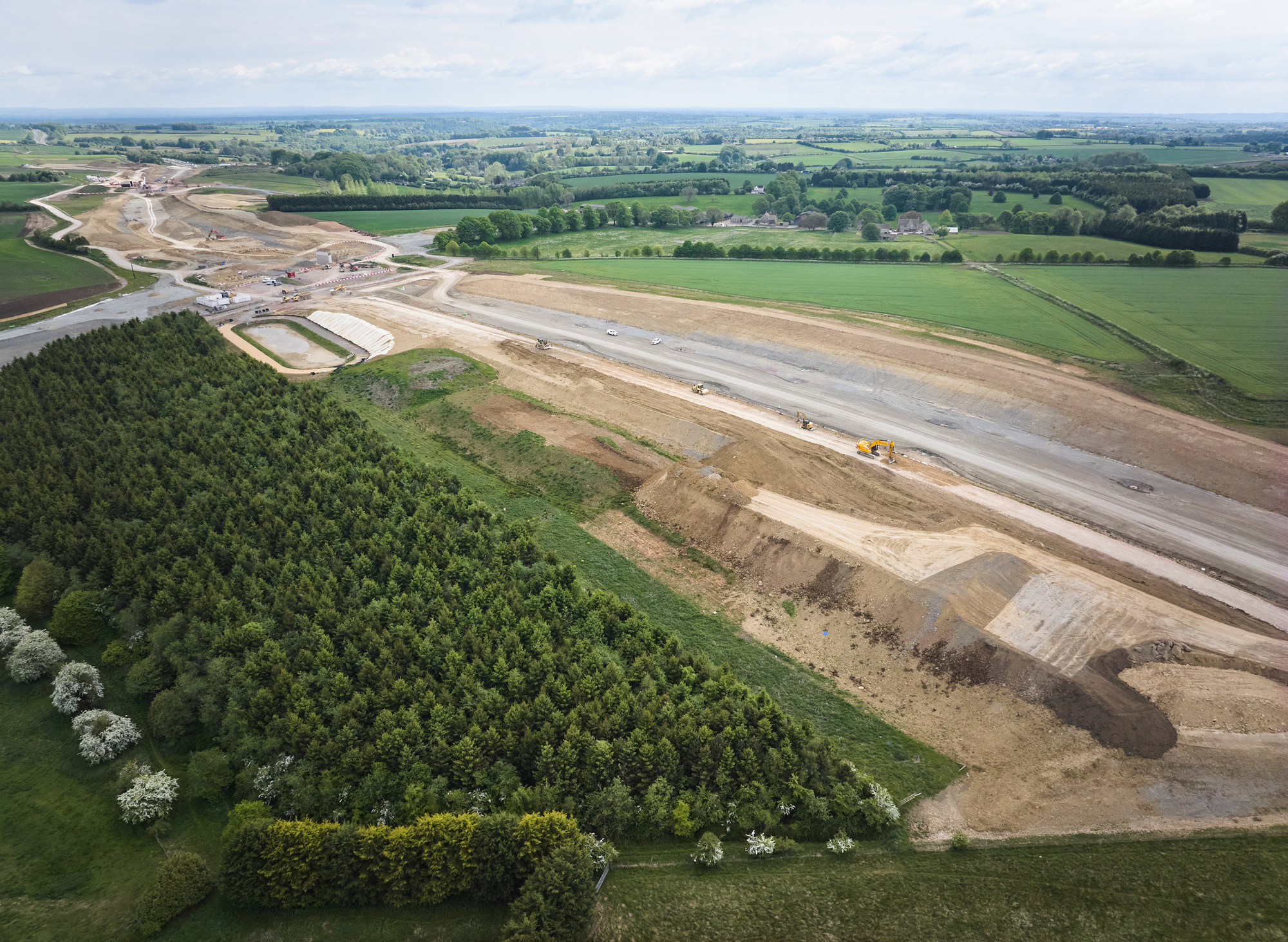
Caption: Aerial view of activity at the Stockwell site.
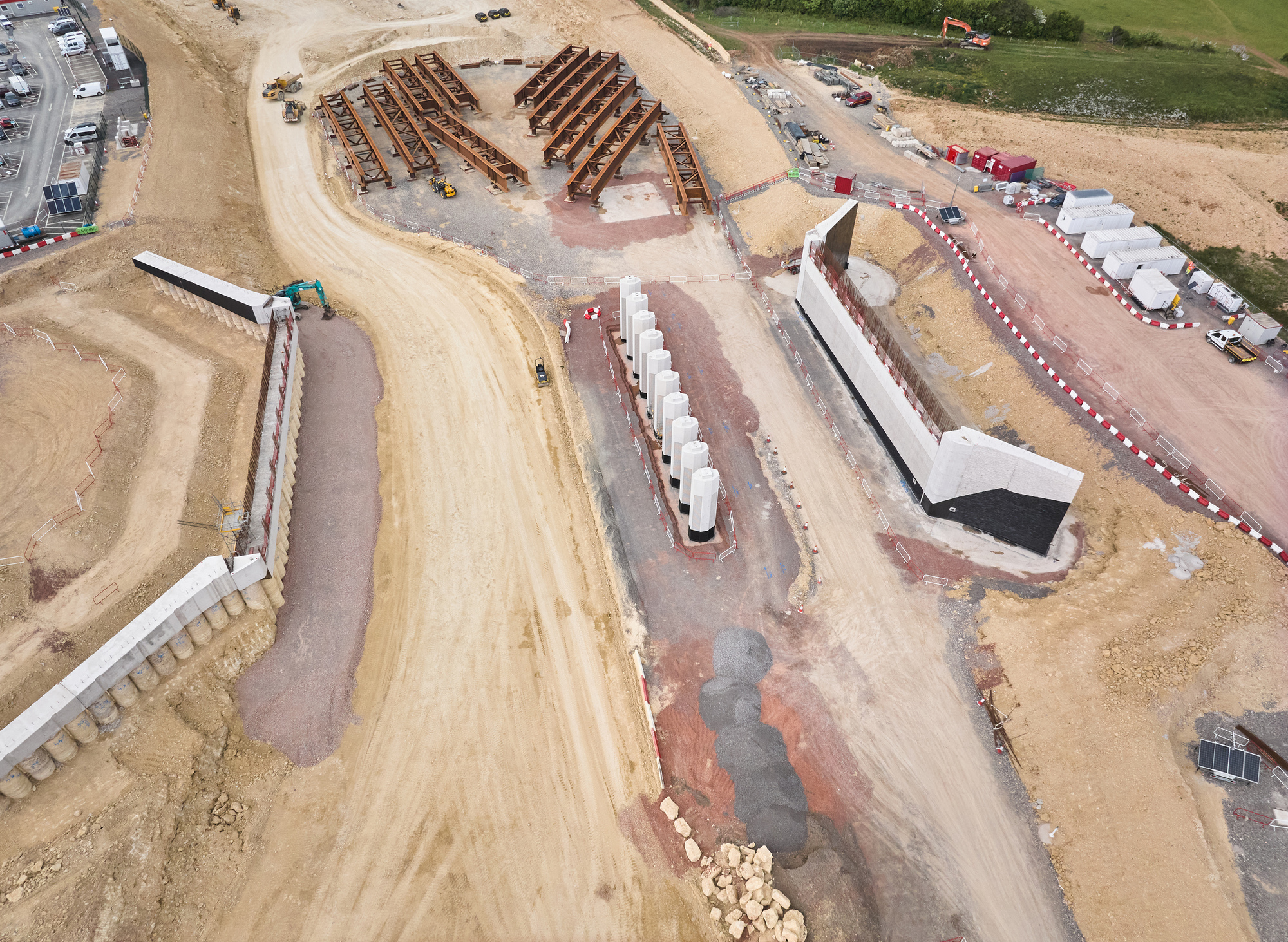
Caption: Work continues at the new Gloucestershire Way Crossing.
Upcoming roadworks
Weekend Closure - A46 Brockworth junction and the Air Balloon roundabout
The A417 will be closed between the A46 Brockworth junction and the Air Balloon roundabout for a full weekend on the following dates:
-
11pm on Friday 30 May to 6am on Monday 2 June
This is to remove and reinstate kerbs and verges, install drainage and carry out resurfacing activities. Fully signposted diversion routes will be in place during the closure. Please follow the official diversion route on our webpage. Do not follow satnavs.
Access between the A417, Leckhampton Hill, and the A436 via the Air Balloon Roundabout will remain open, including entry to Crickley Hill Country Park.
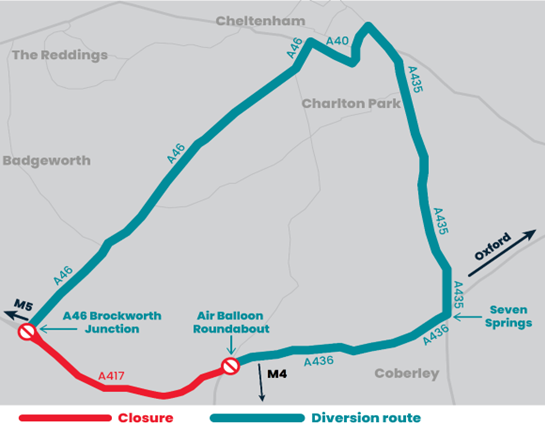
Caption: A map of the diversion route.
Maintenance work coming up in May and June
There are some closures planned as part of ongoing maintenance work being carried out in the South West region. These are separate to the A417 Missing Link scheme but may affect your journey.
Other work happening in the area
Where to find more information
All roadworks and planned road closures on motorways and major A roads, including the A417, are published on the Traffic England website.
We also publish a Road Closure Report that includes a seven day look ahead of planned road closures. This is updated twice a day, Monday to Friday except for bank holidays.
You can also find the latest information about local road closures managed by Gloucestershire County Council, on its webpage.
Environmental update
World Environment Day - 5 June
Innovative carbon-saving trail starts next phase
The Missing Links scheme has shared an exciting update ahead of World Environment Day in June about the innovative UK-first trial it’s been running to explore how vegetation removed from the site can be reused to make significant carbon savings.
Biochar – a charcoal-like material produced by burning organic matter at extremely high temperatures – was produced from vegetation removed by the scheme, turning it back into a product that can be reused to fertilise new plants and catch microplastics. The study produced five tonnes of biochar on site, which is a saving of 13 tonnes of CO2 – the equivalent of roughly five flights from London to Perth.
The next stage of the trial is to use the biochar in different elements of the A417 project, turning waste from the project into a material that is being used to support the project.
-
Landscaping: Biochar will be mixed into the soil when planting thousands of new trees, which will help them establish and grow quicker, while removing more carbon from the atmosphere.
-
Green Bridge: Biochar be used in the construction of the green bridge, which is going to be the largest green bridge in the UK at the time of building. On the deck of a green bridge, manmade gels are normally used to help retain water in dry periods to stop plants dying. Instead, biochar will be used to store and retain the water improve resilience.
-
Microplastics: The biochar will be used to remove microplastics from highway runoff in the highway drainage system.
On completion of the trial, a case study will be developed detailing benefits, improvements and lessons learnt. This study could then be shared across National Highways and the supply chain to see if its implementation can help reduce carbon across future builds.
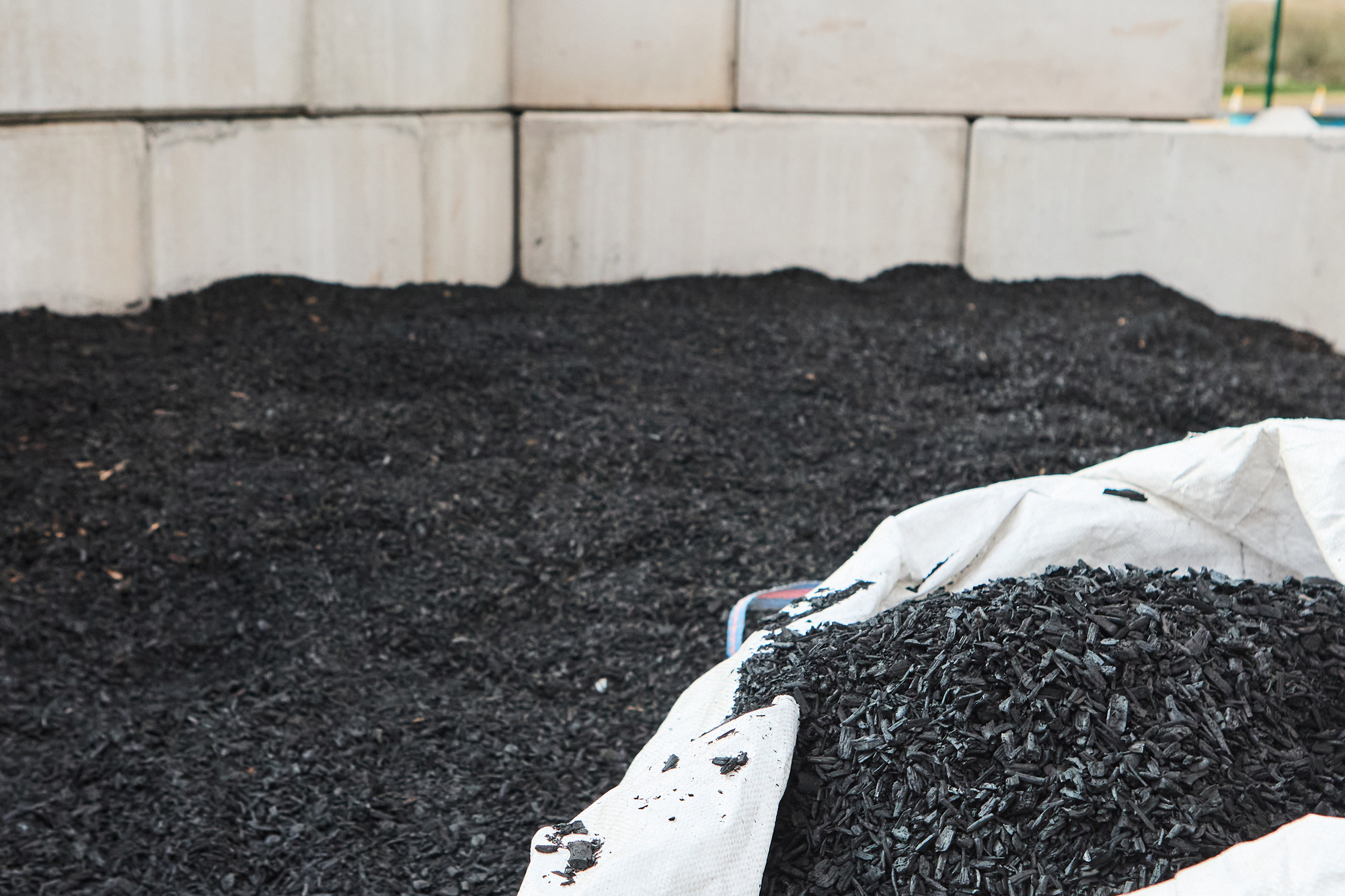
Caption: Biochar is a charcoal-like material produced by burning organic matter at extremely high temperatures
Celine Acard, Senior Project Manager for National Highways, said: “We’re always looking to improve how we design and build our major projects, especially in relation to the environment and our commitment to net zero. This trial is incredibly exciting because it means we can look in detail at new ways or repurposing and reusing site materials to cut down on our environmental impact.
“By investing in innovation, we can explore new technology and solutions to protect and enhance the environment and increase biodiversity benefitting communities that live alongside our roads.”
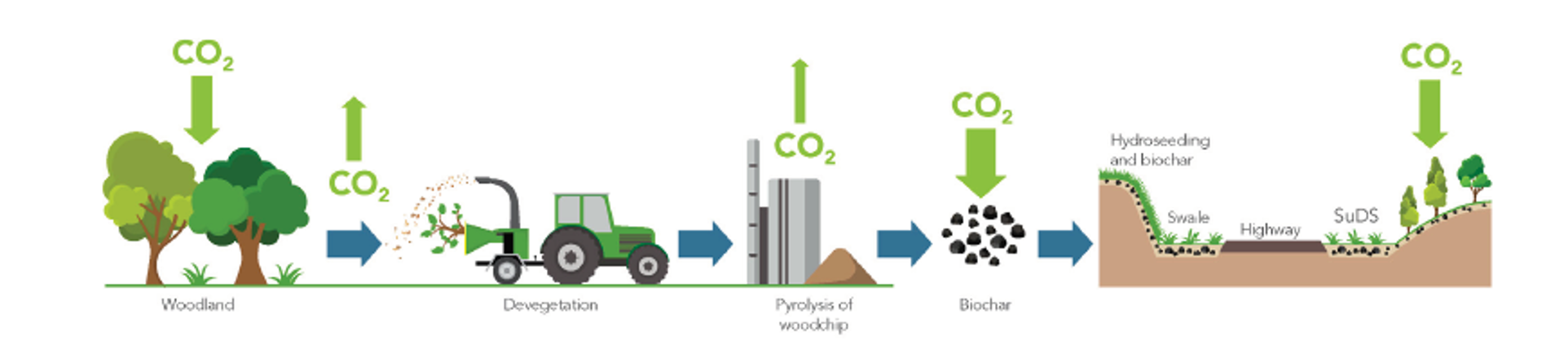
Caption: The biochar process, as trialled on the A417 Missing Link (Credit: TerrAffic)
Biochar is created through the process of pyrolysis, when organic materials such as trees or vegetation are turned into solid carbon under extremely high temperatures in the presence of little or no oxygen. This biochar is then reused across the project in new elements such as soil, where it is proven to enhance plant growth, improve nutrient exchange and water retention.
This increases the chance of successful habitat establishment, provides climate change resilience, improves the soils’ ability to sequester CO2 and reduces reliance on synthetic materials such as swell gels.
Using pyrolysis to manage site biomass is a pioneering approach to capturing carbon in construction and reusing it onsite. The process of pyrolysis will reduce carbon emissions through carbon capture, reduction in vehicle movements and reduction in purchased materials, contributing to National Highways’ carbon reduction targets set out in the Net Zero Plan.
It will also support National Highways objectives to design, build, maintain and operate roads more efficiently and effectively by incorporating a site-won material into the design, reduce waste, reduce carbon emissions and reduce maintenance on the soft estate.
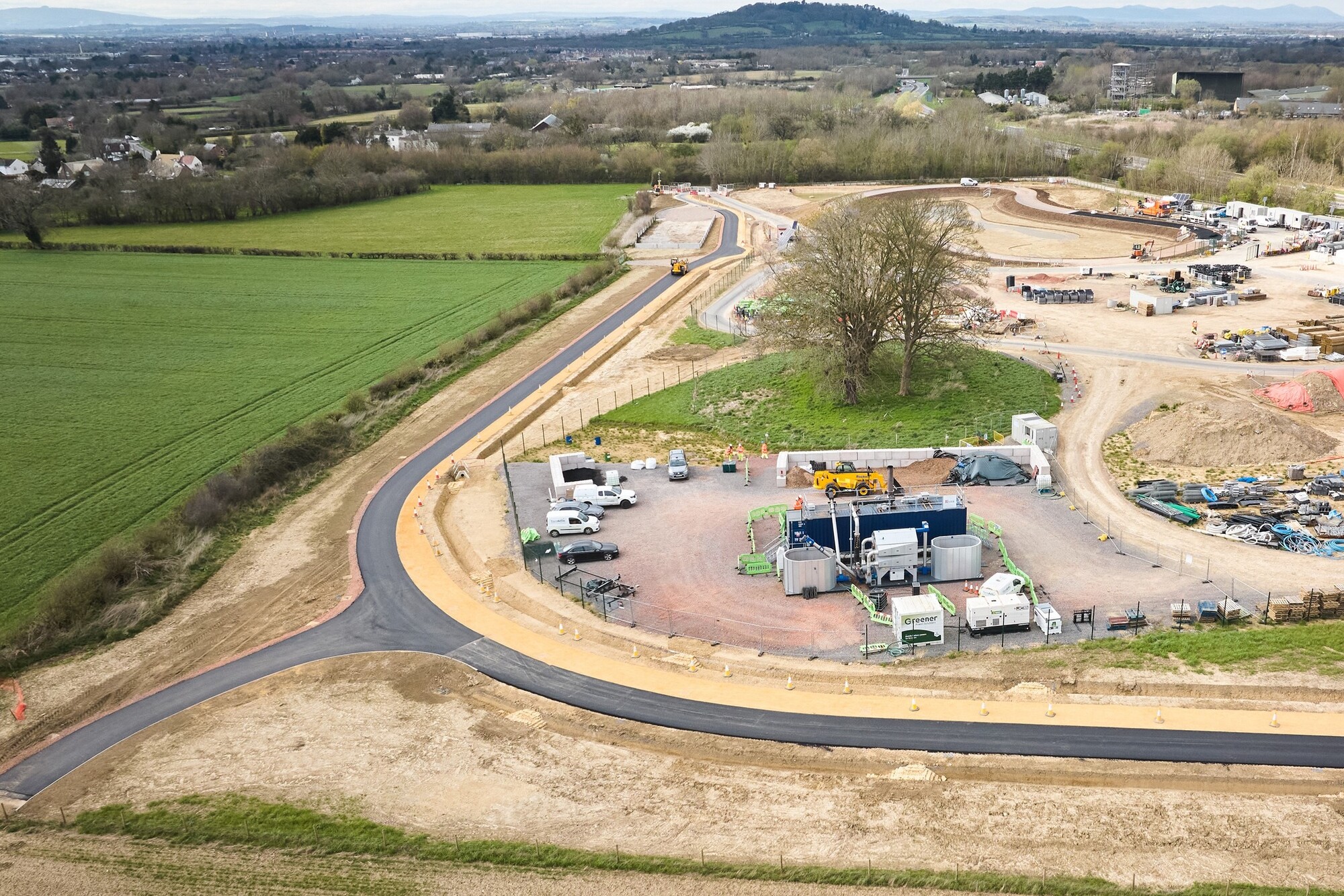
Caption: The study produced five tonnes of biochar on site, which is a saving of 13 tonnes of CO2 – the equivalent of roughly 5 flights from London to Perth
The successful completion of this project will provide National Highways with proof of concept for this approach and could allow for the technology to be deployed across all other suitable highways schemes, supporting National Highways in their objective to deliver better environmental outcomes across all schemes.
Translocated adders doing well
We have some good news to share about the adders that were translocated as part of the Missing Link scheme. So far this year, we’re seeing high numbers of the adders, which are in good health and have moved across their new receptor sites well, using the areas that have been sensitively managed during the winter months. This latest update shows that sensitive habitat management is hugely important on schemes such as this one. We’ll continue to monitor how the adders are getting on and provide you with further updates in the future.
Volunteers' Week - 2 June
Our team members will be out and about supporting the local community again during Volunteers’ Week, which runs from 2-8 June.
We'll be holding a careers day at Hartpury College, speaking to students about opportunities available in the wonderful world of construction.
The Customer Hub
Our Customer Hub, located at the crusher compound at Shab Hill, continues to open every Tuesday and Wednesday from 10am until 2pm. You can visit us any time during these hours, without pre-booking an appointment. Members of our team will be on hand to tell you more about the scheme and answer any questions that you may have.
Our address is A417 Project Office, Birdlip, Gloucester, GL4 8JX. Directions on our webpage.
You can also use What3words: ///shaped.quietest.payback
Site restrictions must be adhered to, which is 10mph. Please Reverse Park.
We are also starting our very successful site visits again in June for members of the public. If you are interested in the scheme and want to visit to hear more, please contact A417MissingLink@nationalhighways.co.uk
Meet the Team... Apprentice Communications Assistant
This month we caught up with the project’s Apprentice Communications Assistant Harry Mover.

Here’s what they said:
What is your role on the A417?
I assist the communications, stakeholder and social value team. It’s a very dynamic, public-facing role, and I enjoy meeting new people on a near-daily basis.
Tell us more about your apprenticeship
It’s a Level 4 Public Relations and Marketing course provided by Cirencester College, teaching varying content creation skills, from writing newsletters to social media posts, and even podcasting. Being new to the construction industry, I’ve had to learn a whole heap of additional jargon and processes besides those pertaining to my course and role, which was daunting at first but has really improved my confidence going forward.
How do you support with the delivery of social value to local communities?
I support through comms work, attend stakeholder meetings, and help to arrange volunteering days at places like Coberley Primary School and Teckels Animal Sanctuary. The team is always looking for ways to give back, for Christmas last year, we collected and wrapped hundreds of presents to be donated to the James Hopkins Trust, Gloucester Royal children’s ward, and the homeless at Gloucester Community Kitchen.
Why is social value so important to the A417 and National Highways?
To me, social value goes hand in hand with infrastructure projects like the A417. They’re both about creating long-lasting, positive change to the communities we live and work in. We currently have over 600 members of staff, including our supply chain, who are living local to the scheme for the duration of the project so being able to give back to the communities who have welcomed us is key.
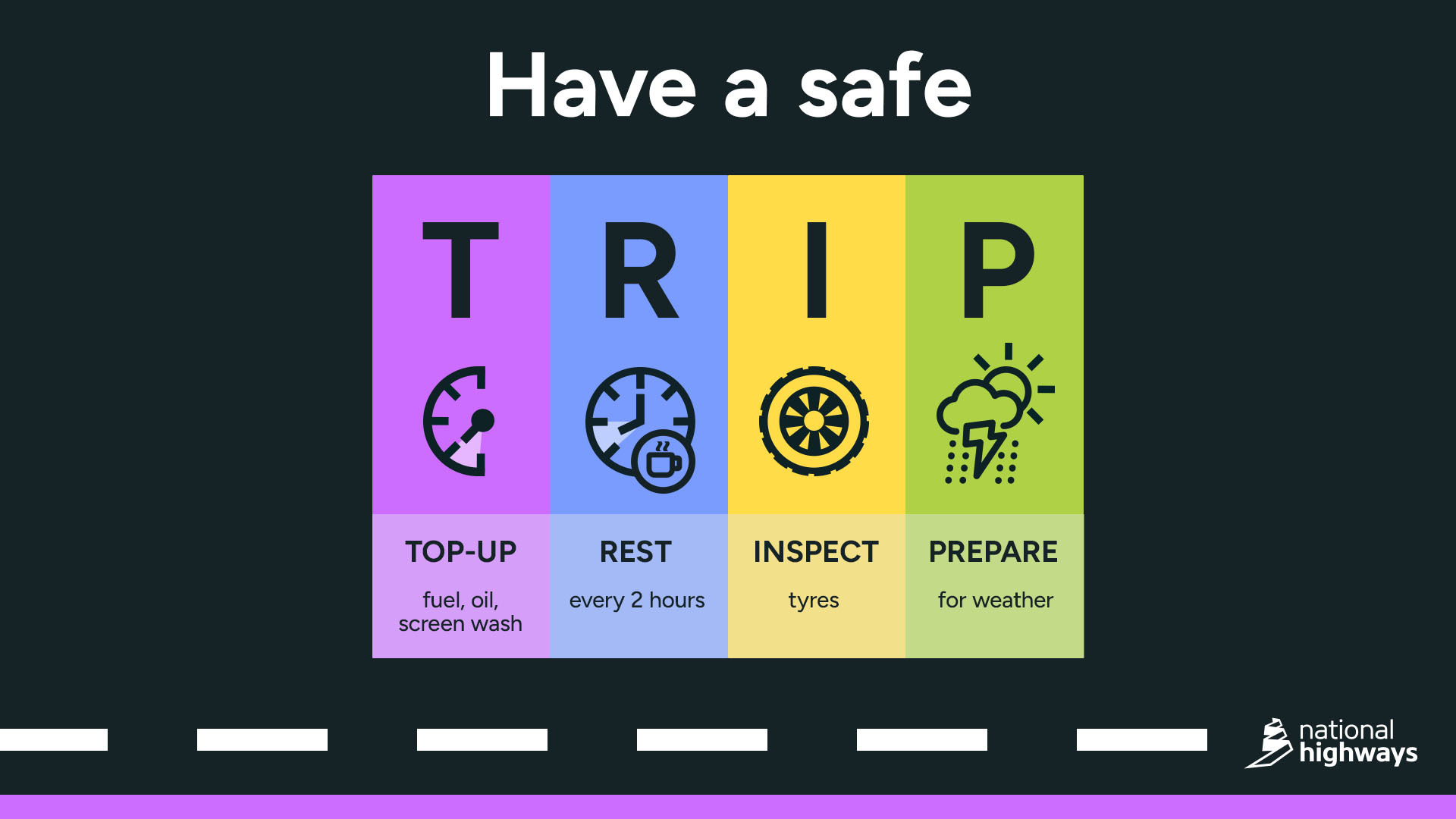
Have a safe T.R.I.P. this spring
As we continue to enjoy spring, many of you will be setting off on road trips, scenic drives and family days out. But, just like spring cleaning helps refresh our homes, a little car TLC can help avoid unwanted breakdowns.
Spring weather in the UK can be full of surprises and this variability makes preparation more important than ever. Completing the simple T.R.I.P. safety checks before setting off can help ensure a safe, smooth journey.
Drivers have many things to do before setting off on a long journey, packing snacks, loading up tablets or getting the family ready to get into the car. However, while taking extra time for car checks may feel frustrating, it can help prevent breakdowns which could lead to hours of delays waiting for help, unexpected costs, unnecessary stress and a disrupted journey.
Use our T.R.I.P. guidance to get ready for spring:
-
Top-up: Fuel, oil, and screen wash
-
Rest: Plan regular stops every two hours to avoid driver fatigue
-
Inspect: Check tyre pressure and tread
-
Prepare: Have a plan for severe weather conditions
Contact us
You can keep up to date with the latest scheme news by visiting our website, emailing or phoning us, or following us on X (formerly Twitter) or Facebook -
|