
Welcome to our new Champions:
We're delighted to welcome several new champions to the network:
- Farzana – Social Prescribing Link Worker, Oldham
- Jessica – Care Coordinator, Rochdale
- Wendy – Social Prescribing Link Worker, Bury West and East
- Charlotte – Our dedicated Health and Wellbeing Coach representative in Manchester (please let us know if others are interested!)
-
Arvind – Social Prescribing Link Worker, Bolton GP Federation
A big congratulations to Caroline Lindsay, Community Connector at Wellbeing Matters in Salford, who has recently been welcomed to the National Academy for Social Prescribing’s official Link Worker Advisory Group: https://www.salfordcvs.co.uk/wellbeing-matters
We've also said goodbye to some Champions who have moved onto new roles - we wish them all the very best and thank them for their contribution. Their departure means there are still opportunities available.
If you’ve been in your role for over a year, we’d love to hear from you. Click here to learn more about the benefits of becoming a Champion.
If you’re interested in becoming a Champion, please contact Sarah Paine (Sarah.paine1@nhs.net) and CC Charlotte Leonhardsen (c.leonhardsen@nhs.net) to explore this opportunity.
And if you’re new to your role or would like to speak to a peer, your Champions are here to help. Their email addresses are listed in the ‘Welcome to GM Peer Support’ resource, which you can find here: 'Welcome Network'
|
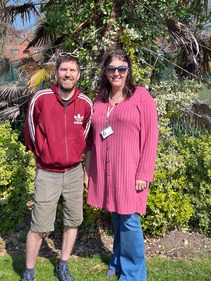
After struggling with the long-term effects of Covid, Stephen Finneran from Prestwich found new hope through a ‘social prescription’ to walking tennis, thanks to support from Julie Marshall, one of Bury’s dedicated Social Prescribing Link Workers.
Once an active hiker and footballer, Stephen’s world was turned upside down by long Covid, leaving him unable to work or even hold a conversation without breathlessness. “It felt like life had been taken from me,” he shared.
Julie helped Stephen access walking tennis through We Do Tennis CIC – a sport he loves, at a pace he can manage. The result? A boost in both his physical and mental wellbeing, plus new social connections.
Julie is one of 10 Social Prescribers working across Bury, Prestwich and Whitefield, helping people tackle non-medical challenges such as loneliness, anxiety, money worries, and housing issues. Her passion for person-centred care is making a real difference:
“It’s a privilege to support people like Stephen. Every person’s needs are different, and we’re here to listen, guide, and connect them to the right support.”
Stephen is one of over 5,850 people in Bury who’ve benefited from social prescribing since May 2024.
“Talking rather than tablets – that’s the power of social prescribing.”
|
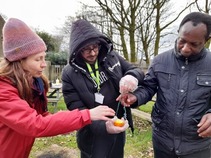
After six months with the Community Mental Health Team programme, Damian has gone on to volunteer with the Lancashire Wildlife Trust's Nature and Wellbeing sessions. His journey is a great example of how green social prescribing can transform lives.
“Before joining the programme, I struggled with anxiety, depression, psychosis, and found it difficult to leave the house or mix with others. I was referred to Nature and Wellbeing by my Community Mental Health Team team after speaking with my Occupational Therapist and therapist.
"From the first session, the staff and volunteers were understanding and supportive. Activities in nature helped build my confidence, manage my symptoms, and reconnect with others. The natural environment became a healing space.
"I enjoyed it so much that I’m now a volunteer, supporting others on their journey. It’s incredibly rewarding – helping others helps me too. I’m so grateful to Community Mental Health Team and Greenspace for this opportunity.”
Damian’s story highlights the impact of green social prescribing, Nature for Health – improving mental health, building confidence, and fostering community through nature.
If you'd like to fin out more visit: Nature For Health | Home
|
Watch how Boost Boxing in Marple partnered with Marple Cottage Surgery and the Stockport East and South Primary Care Network, to develop and deliver a boxing programme to support men with mental ill health, in the Marple community: BOOST Boxing in Marple
NEWS FROM ACROSS GM
It’s been a significant few months for Live Well – Greater Manchester’s commitment to making sure great everyday support is available in all neighbourhoods to help tackle health, social, and economic inequalities. Key milestones include:
- £10 million from DWP to test and embed new ways of supporting people towards employment and training: £10m funding boost for Greater Manchester’s Live Well plan to tackle inequalities, improve health and help people back into work - Greater Manchester Combined Authority
- £10 million investment from NHS GM and GMCA to establish Live Well centres, spaces and offers: Greater Manchester invests £10m to support Greater Manchester residents to live well - Greater Manchester Combined Authority
At least half of this funding is to be used to directly support local Voluntary, Community, Faith and Social Enterprise sector's contribution to Live Well.
- £1.3 million Live Well Communities Fund growing investment in the region's community and grassroots groups and organisations
- And a powerful community-building event held at Manchester Monastery, which brought together people from across the system to share learning and strengthen partnerships

Most recently, the Big GM Live Well Bus Tour took over 60 system leaders on the road to visit a range of pioneering community-led spaces in Trafford, Salford, Bolton and Wigan. These spaces are great examples of what Live Well aims to grow - local hubs where people can connect, find support, and build confidence in managing their health, social and economic wellbeing.
The tour also provided an opportunity for reflection and shared learning across localities, showcasing what’s possible when services are built around people and place. It reinforced the importance of listening to communities and co-designing solutions that meet their needs.
Live Well is about much more than delivering services – it’s about changing the way we work together to create healthier, more connected communities.
To read more please visit: Greater Manchester driving change through the power of community - Greater Manchester Combined Authority
|
The GM WorkWell Partnership Programme is making a real impact. In its first year alone, it has supported over 1,000 Greater Manchester residents who are struggling to stay in work due to health-related challenges.
This £7 million pilot, funded by the Department for Work and Pensions (DWP) and the Department for Health and Social Care (DHSC), is a life-changing opportunity for individuals facing physical or mental health barriers to employment.
WorkWell offers tailored, person-centred support to help people start, stay and thrive in work—particularly those at risk of leaving employment due to health conditions. It’s a key part of Greater Manchester’s wider efforts to improve health outcomes and reduce inequalities through joined-up, community-based approaches.
Greater Manchester is one of only 15 areas across England selected to run this pilot, which will continue until 31 March 2026. The programme also aims to support local employers to better understand and accommodate employees with health needs, contributing to a more inclusive and resilient workforce.
Whether through practical advice, coaching, workplace adjustments or health support, WorkWell is helping people take positive steps toward better wellbeing and sustained employment.
👉 Read more about GM WorkWell and how it's changing lives: GM WorkWell Partnership Year 1 Success | FHFA Academy
The latest #BeeWell survey results have landed – capturing the voices of nearly 100,000 young people aged 11–15 across Greater Manchester since the programme launched in 2021. It’s the largest wellbeing dataset of its kind in the UK, helping to shape how we support young people to live healthier, happier lives.
🧠 Key Findings this year include:
-
More than half of young people report “good” wellbeing or higher – holding steady with previous years
-
1 in 10 young people experience food insecurity, with food often not lasting at home
- Only 1 in 10 are eating the recommended 5-a-day of fruit and veg
-
Physical activity levels among girls remains low – with just 1 in 4 meeting the Chief Medical Officer’s daily guideline
-
Belonging at school is lower among girls, LGBTQ+ young people and Year 10 pupils
- While three quarters say they have someone to talk to, boys are less likely to feel they have a trusted adult to confide in
🌱 The #BeeWell findings align closely with the city-region’s Live Well ambition, a commitment to ensuring great everyday support is available for everyone.
🧒 The #BeeWell Youth Steering Group continues to play a vital role, using the data to drive change. As one member said:
“By analysing these key headlines, we can target the most significant factors impacting the mental wellbeing of young people... every young person should be given the opportunity to flourish.”
📘 Explore the Reports: #BeeWell Greater Manchester Headline Findings 2024/25 now live! - #BeeWell
|
The Bee Network recently completed a three-month trial of GoodMaps, a free wayfinding app designed to help people navigate transport spaces more easily and independently — particularly those with visual, hearing or mobility impairments.
The app uses camera-based positioning to provide turn-by-turn directions to key destinations like tram and train platforms, accessible toilets, kiosks, and help points — especially helpful in busy areas where GPS doesn’t work.
TfGM worked with local disability groups and older people’s representatives to understand how this technology could support passengers. The trial forms part of the Bee Network’s ongoing commitment to making transport across Greater Manchester inclusive, accessible, and easier to use for everyone.
To read more please visit: Bee Network trials free wayfinding technology to help people navigate transport spaces easily and independently
The annual Personalised Care workforce survey took place in early 2025. Thank you to all those who responded.
The survey's 35 questions covered a number of areas, including how people feel about their role and wider support, caseload levels and time spent with clients, and supervision and support.
The survey showed that 85% of Social Prescribing Link Workers feel valued in their role but this decreases to 68% for Care Coordinators and 56% for Health and Wellbeing Coaches.
86% of Care Coordinators feel their caseload is manageable, decreasing to 66% of Social Prescribing Link Workers and 56% of Health and Wellbeing Coaches.
And only 50% of Social Prescribing Link Workers have sufficient time to spend with community providers, with even fewer Care Coordinators (49%) and Health and Wellbeing Coaches (38%) having the time they need.
When asked, Is there anything we haven't covered, that you would like to share?
"I really struggle with my work load, especially when I am expected to drop my work that only I do to cover others due to being short staffed. I worry I am not going to hit the targets properly."
"We cover and accept referrals that are not always social prescribing and it can be very overwhelming at times, we hear a lot of trauma and it can feel like we are counselling case loads of clients without the professional supervision that is needed to discuss how that emotionally impacts us as professionals. At times caseloads are unmanageable."
"Housing is a huge problem, it's making our work increasingly difficult and they haven't attended any MDT meetings the last 6 months."
"I believe MDTs are very useful and it’s a shame not to be part of any."
A total of 129 responses were received. You can read the full results here.
The national Social Prescribing Link Worker survey was carried out at the same time—providing additional context and insight. More details on the national survey are available here: Link worker survey 2025 - latest news from the National Academy for Social Prescribing | NASP
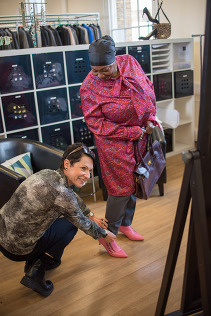
Smart Works Greater Manchester offers free, high-quality interview clothing and 1-1 coaching to support unemployed women aged 16+ into work.
They provide both in-person appointments (in Stockport and Manchester City Centre) and virtual sessions across all boroughs of Greater Manchester.
Services include:
-
Career Coaching – for women actively job-seeking who need support securing an interview.
-
Interview Clothing and Coaching – for those with an upcoming interview, including a full outfit (free to keep) and tailored interview preparation.
To make a referral, contact 0161 974 0669 or email: greatermanchester@smartworks.org.uk
Find out more: greatermanchester.smartworks.org.uk
|
CAHN (Caribbean and African Health Network) is now a Level 1 Disability Confident Committed organisation—demonstrating a strong commitment to creating inclusive employment opportunities for disabled individuals within our communities.
Working in collaboration with Black-led and Disability organisations, CAHN is supporting disabled people to gain work experience and employment skills through a structured programme. This initiative is an important step toward building confidence, enhancing employability, and fostering long-term career development.
For more information or to explore referral, please visit: Level 1: Disability Confident Committed - GOV.UK

Did you know that 1 in 4 children leave primary school unable to read well? The School Readers programme is helping to change that — and they need your help!
They're looking for volunteers to support primary school children with reading and comprehension during term-time. No qualifications are needed, just a few spare hours a week and a passion for helping young learners thrive.
✨ Volunteers are often aged 50+, and the oldest current volunteer is an inspiring 93 years old
Interested or know someone who might be? Visit 👉 www.schoolreaders.org to find out more.
|
Greater Manchester was one of the four English regions that took part in a study led by researchers from the University of Manchester, which shows the positive impact of Social Prescribing Link Workers on patient experience and outcomes
The report is the first to analyse the impact of the Government’s 2019 drive to increase the numbers of Link Workers, who connect patients to activities and support in their communities which boost health and well-being.
This National Institute for Health and Care Research (NIHR) funded study indicates the scheme led to improved outcomes and experience of and for both patients with long-term conditions and mental health needs. The study found Link Workers:
- Increased the patient’s confidence in managing their long-term condition
- Made them feel more supported by local services and organisations
- Made them feel less isolated from others
- Improved their experience with their GP
- Increased the feeling that their mental health needs were understood
Charlotte Osborn-Forde, Chief Executive of the National Academy for Social Prescribing, said:
“This is an important and groundbreaking piece of research. There is already a wide range of evidence demonstrating that social prescribing is highly impactful and can save the NHS money, but this is the first time research has been published showing statistically significant improvements for the whole population. It’s simple: the more Link Workers that are employed, the more likely it is that patients are able to manage their own health, and have a good experience of their GP.
“This is because Link Workers get to know patients, supporting them step by step to access local services, tackling issues like housing, debt, food or fuel poverty, loneliness and unemployment - the issues that matter to people and can have a big impact on our health. This vital research further supports the case for the expansion of social prescribing in the NHS so that is available to more patients who could benefit.”
Social prescribing link workers have positive impact on general practice
|