|
Market authorisations newsletter
Dear Subscriber,

Welcome to the 1st Birthday edition of the Food Standards Agency's (FSA’s) Market Authorisations Newsletter.
As we reach this milestone, we’d love to hear your thoughts and suggestions for how we can continue to improve this newsletter. Please do take a few minutes to fill in this short form or email us.
In each edition we will bring together links to new entries to the register of regulated product applications, newly published safety assessments, consultations and authorisations and much more.
If you missed the previous edition from July, you can find the link at the bottom of this email.
In this newsletter:
|
|
|
Market authorisations
We, along with Food Standards Scotland (FSS), are responsible for running the process for granting market authorisations for the sale of certain food and feed products in Great Britain.
Our job is to make sure these food products are safe before recommending that they are allowed on the market. We are here to protect people, and to give consumers confidence that the food they buy is safe and, where applicable, authorised for sale.
Scotland
Food Standards Scotland (FSS) is the relevant public body in Scotland.
|
|

General update
Sanitary and Phytosanitary (SPS) Agreement update
The UK and EU are each other’s largest agri-food trade partners and share similarly high food standards. In May this year, the UK Government and European Commission and set out their ambition to negotiate a Sanitary and Phytosanitary (SPS) Agreement, to make it easier for businesses to trade between the UK and EU, delivering benefits to businesses and consumers. The ‘Common Understanding’ policy paper outlines the proposal.
An SPS Agreement would involve ‘dynamic alignment’ with EU law across areas in scope (including food safety and consumer protection rules and marketing standards). The Common Understanding acknowledges that limited exceptions to alignment (also referred to as carve-outs) may be possible. What exceptions are included in the agreement, their scope and operation, depends on the outcomes of negotiations and the UK negotiating position will be decided by government ministers, not the FSA. However, we are working closely with other government departments to ensure that food safety, consumer interests and the needs of our stakeholders are being fully taken into account, to help the UK get the right agreement.
We do know that the UK will have to meet three conditions for any exceptions that may be agreed:
- they must not lead to lower standards compared to EU rules,
- they must not negatively affect imports to the UK from the EU, and
- they must respect the principle that only goods that comply with EU rules move into the European Union.
The UK Government is expecting to start negotiations in the autumn and details of our preparations for these cannot be made public. In the meantime, we are working hard to understand the implications for businesses and to plan for the wide range of possible outcomes.
We’ll include updates in forthcoming editions of this newsletter.
Launch of Innovation Research Programme
On 23 September we launched our exciting new Market Authorisation Innovation Research Programme (IRP).
This new research programme is the latest development in our ongoing work to support innovation in the food sector, while giving consumers a wider choice of safe food. Complimenting the sandbox on cell-cultivated products, the IRP is a rapid one-year programme, designed to enhance our capabilities and specialist expertise in regulating innovative food technologies, with a particular emphasis on foods derived by precision fermentation.
As part of the programme launch, we have unveiled a new Innovative Food Guidance Hub, a one-stop shop for advice on the regulation of innovative food technologies, which builds on our existing guidance on novel foods. We are also pleased to announce the expansion of our pre-application support offering: the Business Support Service (BSS) Pilot for precision fermented products, building on our Business Support Service pilot for cell-cultivated products, which launched in June.
Both are designed to provide industry greater regulatory clarity and faster routes to gain market authorisation, which will assist innovative food products in reaching the market with confidence.
More information on the Business Support Service, including how to submit a Pre-Submission Enquiry Form (PSEF), the types of support available, and guidance on preparing a dossier can be found on the FSA website.
|
|
|
Northern Ireland
Applicants wishing to place regulated products on the Northern Ireland (NI) and EU markets must submit applications to the EU. Under Windsor Framework arrangements, regulated products authorised in Great Britain may also be placed on the NI market, provided they are eligible for, and are moved through, the Northern Ireland Retail Movement Scheme (NIRMS).
|
|

Cell-cultivated products
Sandbox Programme workshops
The Cell-Cultivated Products (CCP) Sandbox Programme workshops continue to be held and on track. These sessions continue to provide opportunities to learn about the challenges faced by the sector, and to test how FSA/FSS can support this developing sector whilst ensuring consumer safety. The latest session on toxicology and growth media was held in July. After a pause in August and September to develop science and policy positions from this learning, the workshops will resume in October, with a focus on regulatory approval, followed by a deep dive into hygiene, production and microbiology workshop in November and ending the year with a session on imports/exports in December.
Regulatory and scientific forums
Since the Programme launch, the FSA and FSS have successfully run three meetings with the newly established Cross-Government Network (CGN) to discuss the learnings of the CCP Sandbox and raise any cross-cutting issues that might affect other government agencies. Three meetings have also been held with the Advisory Network of International Regulators (ANIR) to share insights gained from workshop sessions and discussions on how they manage similar products under their national legislations.
Furthermore, an ACNFP subgroup focusing on CCPs has been set up. To date, they have held two meetings which have informed the development of scientific guidance that will support future applicants in developing regulatory dossiers before seeking authorisation in the UK.
Development of guidance
The Advisory Committee on Novel Foods and Processes (ACNFP) provided feedback on an update to current ACNFP guidelines on conducting taste trials involving novel foods. Once published, this refreshed guidance will provide greater clarity for those wishing to conduct taste trials for novel foods in the UK.
In addition, the first piece of technical guidance on CCPs addressing allergenicity and nutrition assessment, as well as guidance on the classification of CCPs within existing regulatory frameworks, is on track to be published in December 2025.
Business Support Service
A core offering of the CCP Sandbox is the recently launched business support service (BSS), which provides additional support for companies wishing to submit applications for cell-cultivated products to the GB market authorisation service.
The BSS will provide both enhanced knowledge for the FSA/FSS and improved understanding for prospective applicants. To engage with the BSS, prospective applicants can submit an application form which, once triaged, will inform the level of support that can be offered based on the time until dossier submission and nature of their product.
In addition, the FSA has launched, and continues to update, a consumer-facing page on our website, where we will share information with consumers about CCPs and progress with the Sandbox Programme. This includes an explainer video from Professor Robin May, our recent Chief Scientific Advisor. An equivalent page is available on the FSS website.
We will also be sharing information gathered from the sandbox with non-participants via industry webinars, hosted by Good Food Institute (GFI) Europe. The webinars are primarily aimed at businesses that are aware of the CCP Sandbox programme and would like to know more (these sessions will not discuss upcoming guidance). From January onwards, we will be holding similar events for industry members to talk through the guidance we publish. The first webinar is scheduled for Thursday 16 October, registration is via this form.
Research publication
We have published combined literature review/expert elicitation research projects on ‘Best practice for cell banking techniques used in cell cultivated products’ and ‘How do microbial safety issues associated with meat apply to cell cultivated products?’. These reports provide additional evidence to support the development of guidance and assessment of risks associated with cell cultivated products.
|

Feed additives
Published safety assessments
Three FSA/FSS safety assessments have been published since the last newsletter, relating to the following feed additive applications:
- RP2212 (new authorisation of a feed additive consisting of L-isoleucine produced by Corynebacterium glutamicum KCCM 80185)
- RP1696 (extension of use of a feed additive containing Bacillus velezensis ATCC PTA-6737)
- RP1880 (extension of use of a feed additive containing endo-1,4-beta-xylanase produced by Aspergillus niger CBS 109.713, and endo-1,4-beta-glucanase produced by Aspergillus niger DSM 18404)
These can be accessed here.
Application guidance
In 2021, FSA/FSS incorporated the European Food Safety Authority's (EFSA’s) technical guidance for the evaluation of regulated products applications for all the market authorisation regimes, including feed additives. Since then, EFSA has published and implemented three documents updating this technical guidance:
These guidance documents have been evaluated by the Advisory Committee on Animal Feedingstuffs (ACAF) and deemed appropriate for assessing feed additive applications within the context of farming in Great Britain.
Hence, from 1 August, these documents have been incorporated into the FSA/FSS assessment framework, ensuring it is up to date with the latest scientific developments.
Applicants should follow the parts that relate to the development of dossiers only and not the application process.
There will be a transition period during which both the 2018 and 2024 efficacy guidance documents will be accepted. Applications submitted between 1 December 2024 and 31 January 2026 may follow the principles outlined in either the 2018 or the 2024 efficacy guidance.
From 1 February 2026 onwards, only applications that comply with the 2024 efficacy guidance will be considered to meet the necessary requirements for assessment. Applications based on the 2018 guidance submitted after this date will not be accepted.
New guidance on trials using feed additives not authorised
The FSA and FSS published new guidance to support businesses and researchers conducting trials with feed additives that are not authorised. This guidance outlines the requirements for feed additive trials across England, Wales, Scotland and Northern Ireland. For more information, please visit the FSA website.
|

Food improvement agents
Food additives
Guidance on glycerol in slush drinks
Following the FSA Board’s June meeting, we launched a public awareness campaign on 17 July to highlight the risks associated with glycerol in slush ice drinks. The new guidance advises that:
- these drinks are unsuitable for children under 7, and
- children aged 7–10 should consume no more than one 350ml serving per day.
This message is being amplified through national media and supported by the Department for Education, helping ensure it reaches parents and carers effectively.
We’re working closely with industry and local authorities to support implementation. Major retailers have already committed to displaying point-of-sale warning signs, and we’re encouraging broader uptake across the sector. To support consistency, we’ve published a communications toolkit - including posters - on our website, alongside the guidance.
Further work is planned to monitor glycerol levels in products and evaluate the effectiveness of the guidance over time.
|

Food contact materials
Plastics
New guidance - risk management advice on bisphenol A (BPA)
We are considering implementing a ban on the use of bisphenol A (BPA) and its analogues (which includes other bisphenols, and bisphenol derivatives) in the manufacture of food contact materials (FCMs). This proposed measure is part of a wider programme of work to review and strengthen the safety of substances used in FCMs, in line with emerging scientific evidence.
BPA is currently used in the production of plastic materials, including reusable plastic tableware and refillable drinking water bottles, and as a resin in coatings applied to the inside surfaces of some food and beverage cans.
The proposed ban is based on the scientific opinion of the Committee on Toxicity of Chemicals in Food, Consumer Products and the Environment (COT), which has identified health concerns associated with BPA and structurally-related bisphenols. The intention is to eliminate the use of BPA and the wider bisphenol family in FCMs to reduce consumer exposure and protect public health.
To achieve this, we will review and revise existing regulations governing the use of BPA and related substances in FCMs and develop legislative proposals to prohibit their use. Transitional measures and derogations will be introduced to allow industry sufficient time to adapt, and a formal public consultation will be held to seek views on the proposed ban, its scope, timing, and implementation.
Any decision to implement the ban will be subject to Ministerial approval as part of the legislative process. The consultation will outline the proposed approach and set out the next steps in delivering this important public health measure.
|
Novel foods
Published safety assessments
One FSA/FSS safety assessment has been published since the last newsletter, relating to the following novel food application:
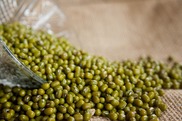
- RP32 (mung bean protein as a novel food).
This can be accessed here.
Cannabidiol (CBD)
The FSA is currently consulting on our draft recommendations to ministers concerning three applications for authorisation of CBD food products as novel foods. These were the first applications to successfully progress through the initial safety assessment stage in 2024. If approved by ministers, products attached to the applications would become the first fully regulated CBD food products available on the UK market, subject to meeting the specifications of the authorisation. The consultation closes on 20 November 2025 and we welcome comments from stakeholders. The consultation pack contains full details on the proposals and how to respond.
|

Precision breeding
The Genetic Technology (Precision Breeding) Regulations 2025 will come into force on 13 November 2025.
To support the new regulatory framework, the FSA has published draft technical and administrative guidance for applicants. We are currently reviewing feedback from stakeholder engagement and user testing before publishing the final guidance.
We will also share nation-specific enforcement guidance with local authorities.
|
|
|
Do you need to read our previous newsletter?
|
|
Subscribe to this newsletter and others
If this email was forwarded to you, you can subscribe below and get future newsletters delivered direct to your inbox.
|
|
|
|
|