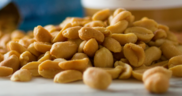
UK recalls of mustard products due to peanut contamination
The Food Standards Agency (FSA) and Food Standards Scotland (FSS) are working with food businesses and district councils to investigate the food supply chain for mustard ingredients which may have been contaminated with peanuts. This potentially poses a serious risk, particularly to people with a peanut allergy.
As a result of extensive and ongoing investigations, the food business FGS Ingredients Limited who import mustard to manufacture spice products including curry powders, seasonings and spice blends from India, have undertaken a precautionary withdrawal and recall of all products containing mustard.
Food businesses are responsible for establishing whether any of their food products are affected and taking steps to ensure consumers are protected, and the food they sell is safe. For more information, read the business guidance on our website: https://www.food.gov.uk/business-guidance/mustard-ingredients-and-peanut-contamination-guidance-for-businesses
|

Majority of businesses are missing out on the opportunity to promote their food hygiene rating online
All businesses in Northern Ireland display their food hygiene rating at their premises, but fewer than 10% display online, despite widespread agreement that displaying a rating resulted in more customers.
Online display guidance, free images and other resources are available for businesses to help them display their food hygiene rating on their website and social media platforms.
To download a food hygiene badge for your digital channels, or learn more about online display, visit: https://www.food.gov.uk/online-food-hygiene-rating
|

'Not suitable for under 4's': Updated guidance on glycerol in slush-ice drinks
The FSA recently developed industry guidance on glycerol in slush-ice drinks, advising that they should not be sold to children four years of age and under.
We are aware pre-packed slush ice products, including syrups, kits and ready-to-eat drinks, containing glycerol are now available for sale in many retailers. Businesses are advised to review these products before placing on the market and, where no warning is present on the packaging, ensure the recommended warning is displayed to inform customers: "Product contains glycerol. Not recommended for children 4 years of age and under."
Some of these products are known as grey market goods that have been manufactured for international markets. As such, they do not carry the appropriate warnings required for the UK market.
For a detailed look at the guidelines, visit our industry guidance page:
|
FSA/FSS publish risk assessment on safety of titanium dioxide as food additive
The UK's independent scientific committees have undertaken a risk assessment on the food additive, titanium dioxide (E 171). The assessment concluded that the exposure of food grade titanium dioxide from the diet is unlikely to present a risk to health of the UK population.
Titanium dioxide is used in the UK in food as a colour (white pigment) to make food more visually appealing, to give colour to food that would otherwise be colourless, or to restore the original appearance of food.
There is no change to the regulatory status of titanium dioxide in Northern Ireland - under Regulation (EC) No. 1333/2008 it remains an unauthorised additive for use in manufacturing of food products. However it remains the case that foods containing titanium dioxide can be moved to Northern Ireland through the Northern Ireland Retail Movement Scheme.
For more information and to read the full risk assessment, visit the Committee on Toxicity website: Titanium Dioxide - Statement on the safety of Titanium Dioxide (E171) as a Food Additive | Committee on Toxicity
EFSA updates guidance for novel food applications
The European Food Safety Authority (EFSA) has published new guidance on the submission of novel food applications, which will come into effect in February 2025. Food Business Operators can only place a novel food on the EU market after authorisation has been given.
EFSA’s updated guidance document provides advice on the scientific information needed to be submitted by the applicant towards demonstrating the safety of the novel food. The guidance applies to all novel food applications in the EU, including those for cell-based foods and food ingredients.
EU to impose ban on smoke flavourings
The European Union (EU) has risk assessed applications for the renewal of authorisations for eight smoke flavourings and concluded that these should be refused on safety grounds.
Smoke flavourings are added to foods – like meat, fish, or cheese – as an alternative to the traditional smoking process. They can also be used as flavourings in other foods such as soups, sauces, drinks, crisps, edible ices, and confectionery.
To allow time for producers and operators to adapt to this change, the EU has introduced phased transition periods for different food commodities during which they can continue to be supplied. The transition periods are as follows:
-
1 July 2029 for cheese products, meat, processed fish and fishery products including crustaceans and molluscs, fish roe and their corresponding sub-categories.
-
1 July 2026 for all other food categories (for example, crisps, sauces and soups)
Regulation (EU) 1321/2013 on smoke flavourings is listed under Annex 2 of the Windsor Framework, therefore, the ban directly applies in Northern Ireland. Following the phased transition periods, Northern Ireland food businesses will no longer be permitted to use these smoke flavourings in their products. However, pre-packed retail products from Great Britain, that contain these flavourings, may still be placed on the Northern Ireland market under the Northern Ireland Retail Movement Scheme.
EU revokes health claim for monacolins from red yeast rice
The European Union has revoked the existing health claim for monacolins from red yeast rice from its list of permitted health claims, via amending Regulation 2024/2041, which came into force on 19 August 2024.
The revocation of the health claim comes after monacolins from red yeast rice were restricted and placed under scrutiny in Annex III of Regulation (EC) 1925/2006. The Annex to Regulation (EU) No 432/2012, which lists approved health claims, has been amended accordingly.
EU allows a fourth form of protein hydrolysate to be used in the manufacture of infant and follow-on formula
The European Union published Regulation (EU) 2024/2684 on the 11 October 2024.
This regulation amends the Annex of EU Regulation 2016/127 to include the additional authorised form of protein hydrolysate for use in the manufacture of infant and follow-on formula. Each form of protein hydrolysate has their own unique requirements on content, source, processing and quality of proteins manufactured from hydrolysates.
European Commission amends the provisions of food information to consumers (1169/2011) regarding the use of behenic acid from mustard seeds in the manufacturing of certain emulsifiers
Since 2016, the European Food Safety Authority (EFSA) has been assessing the safety of behenic acid and the likelihood of adverse reactions triggered by the intake of behenic acid produced from mustard seeds in the manufacturing of some emulsifiers. Findings concluded that it is extremely unlikely to trigger allergic reactions in mustard-allergic individuals.
The European Commission (EC) has introduced Commission Delegated Regulation (EU) 2024/2512, amending Annex II to Regulation (EU) No 1169/201 to remove reference to behenic acid. This means that businesses placing products on the market in Northern Ireland will no longer be required to state 'mustard' in bold in the ingredients list of products containing behenic acid from mustard seeds. Regulation 1169/2001 continues to apply in Great Britain.
This amendment will apply from 1 April 2025. Foods legally placed on the market, or labelled before 1 April 2025 which do not comply with this regulation may be marketed until the stocks of those foods are exhausted. Enforcement authorities in Northern Ireland have been made aware of this amendment.
Consultation on best practice guidance – allergen information for non-prepacked foods
The FSA has launched a consultation on new best practice guidance on the provision of allergen information in the non-prepacked sector, including restaurants, cafes, delis, and market stalls. Our aim is to create clear, practical guidance that works for all businesses, while ensuring consumers have the allergen information they need to stay safe.
This guidance covers the interpretation and application of allergen provisions for non-prepacked foods. The FSA invites comments and feedback on how our policies are expressed as part of our proposed best practice guidance. This could include any potential impacts these changes may have.
We’re calling on food businesses, local authorities and anyone with an interest in food hypersensitivity to share their views. The consultation closes on 27 November 2024. For more information, visit: Consultation on Best Practice Guidance - Allergen Information for Non-Prepacked Foods | Food Standards Agency
EFSA calls for data for the re-evaluation of food additives
The European Food Safety Authority (EFSA) has published calls for data on the below food additives:
The purpose of these calls for data is to gather up-to-date information on these substances in order to re-evaluate their safety as food additives, including permitted conditions of use. Deadline for submission of data is 31 December 2024.
|