|
Market authorisations newsletter
Dear Subscriber,

Welcome to the Food Standards Agency's (FSA) first market authorisations newsletter. We hope you will find this compilation of updates related to regulated products a handy resource.
In each edition we will bring together links to new entries to the register of regulated product applications, newly published safety assessments, consultations and authorisations and much more.
If you have any feedback, we would love to hear from you – please email us with your thoughts and suggestions.
In this newsletter:
|
|
|
Market authorisations
We, along with Food Standards Scotland (FSS), are responsible for running the process for granting market authorisations for the sale of certain food and feed products in Great Britain.
Our job is to make sure these food products are safe before recommending that they are allowed on the market. We are here to protect people, and to give consumers confidence that the food they buy is safe and, where applicable, authorised for sale.
Scotland
If you are a Scottish company, Food Standards Scotland (FSS) is the relevant public body.
|
|

General update
New terminology
You may have already noticed that the FSA and FSS have started to change how we refer to products requiring authorisation before they can be placed on the market. We are gradually moving from the term ‘regulated product authorisations’ to ‘market authorisations’. This is in line with other sectors and we hope it will be clearer and more self-explanatory. After all, all food and feed is regulated.
Market authorisation process reforms
Our consultation on two proposed reforms to streamline the market authorisation process for regulated products closed on 5 June, and we have now published the summary of responses.
We plan to continue with these proposals and the outcome of this consultation will be used to inform finalisation of the legislation, in preparation for the next steps in the parliamentary process. Subject to UK Government decisions on legislative timetabling, we hope to introduce these proposals in early 2025.
How we consult on market authorisations
We, together with FSS, are working to modernise the Market Authorisation Service for regulated food and feed products, following engagement with a wide range of stakeholders and agreement from the FSA and FSS Boards. As part of our work to improve each stage of the process, we are reviewing how we consult, to ensure this is proportionate and meeting the needs of our stakeholders.
The FSA and FSS run a public consultation as part of the authorisation process. Currently, consultations are launched towards the end of the authorisation process, as part of the risk management stage and run for 8 weeks. During this period, we give stakeholders an opportunity to provide their views, which then form part of the recommendations we present to ministers. Ministers in England, Scotland and Wales then make the final decision whether to authorise products.
We are seeking your views on the current consultation process and would be grateful if you could provide your responses to the questions in this form by 28 October 2024.
Following analysis of responses, we plan to hold further discussions with respondents as we develop any future plans. In the meantime, please contact us at RegulatedProductsEngagement@food.gov.uk if you have any questions.
Recruitment to Science Advisory Committees
Recruitment is currently open for experts to join our independent Science Advisory Committees (SAC), Joint Expert Groups (JEG) and Science Council.
There are 29 roles across all our committees with various specialisms, including full members and associate members. We are looking for experience across a range of areas including toxicology, allergy, analytical chemistry, bioinformatics, molecular biology and microbiology.
To find out more about the committees, the positions we are filling and the application process, please visit the recruitment page on the Science Advisory Committees website. This recruitment round closes on 7 October.
|
|
|
Northern Ireland
Applicants wishing to place regulated products on the Northern Ireland (NI) and EU markets must submit applications to the EU. Under Windsor Framework arrangements, regulated products authorised in Great Britain may also be placed on the NI market, provided they are eligible for, and are moved through, the Northern Ireland Retail Movement Scheme (NIRMS).
|
|

Cell-cultivated products
Cell-cultivated products (CCPs) are new types of food produced by cells isolated from animals, including cells from meat, seafood, fat, offal or eggs, grown in a controlled environment and harvested to make a final food product. In April 2024 we submitted a bid for funding to the UK Department of Science, Innovation, and Technology’s (DSIT’s) Engineering Biology Sandbox Fund, to run a regulatory sandbox on CCPs, and hope to find out whether we have been successful in gaining funding in the coming weeks.
Due to the novel nature of this technology, we encourage businesses to engage early in the process if they are considering applying for authorisation. All applications must be submitted through our Regulated Products Application Service.
|

Feed additives
Published safety assessments
Nine FSA/FSS safety assessments were published in August relating to the following feed additive applications:
- RP552 (Pediococcus pentosaceus DSM 32292)
- RP634 (Chromium propionate (KemTRACE Chromium))
- RP812 (Dicopper chloride trihydroxide (IntelliBond® C))
- RP814 (Zinc chloride hydroxide monohydrate (IntelliBond® Z))
- RP1039/1040 (Endo-beta-1,4-xylanase produced by Komagataella phaffii CGMCC 7.371 (VTR-xylanase))
- RP1111 (Bifidobacterium longum CNCM I-5642 (PP102I))
- RP1335 (25-hydroxycholecalciferol (Bio D® 1.25%))
- RP1603 (Enterococcus faecium DSM 2121913, Bifidobacterium animalis spp. animalis DSM 16284 and Ligilactobacillus salivarius DSM 16351 (Biomin® C3))
- RP1612 (Sodium bisulphate)
These can be accessed here.
Future authorisations
We have recently run public consultations on a total of 26 feed additive applications, including a PARNUT (feed for particular nutritional uses) application. We are in the process of considering all responses received from those consultations, prior to advising ministers. We plan to publish a summary of the responses in October.
Risk managers across the GB nations are currently considering a number of applications that have progressed from risk assessment. These include various food and feed regimes. We are looking to publish our next set of applications for consultation over the winter and will be writing out to relevant applicants to inform them of this prior to the consultation. We will also contact relevant stakeholders when the consultation is published.
Progress of applications running through the service is detailed on our Register of Regulated Product Applications.
|

Food improvement agents
Published safety assessments
One FSA/FSS safety assessment was published in August relating to the following food additive application:
This can be accessed here.
|
Food contact materials
No update for this edition.
Genetically modified organisms (GMOs) for use in food and feed
No update for this edition.
Novel foods
Published safety assessments
Four FSA/FSS safety assessments were published in August relating to the following novel food applications:
- RP1476 (2’-fucosyllactose)
- RP1477 (3’-sialyllactose sodium salt)
- RP1478 (6’-sialyllactose sodium salt)
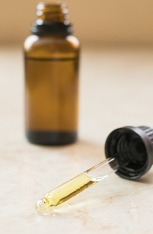
- RP427 (cannabidiol, CBD)
These can be accessed here.
General
On 21 June 2024, the FSA and FSS determined that non-selective aqueous decoctions of monk fruit (made from the fresh and dried fruit of the plant Siraitia grosvenorii) are not a novel food pursuant to Article 4(2) of Assimilated Regulation (EU) 2015/2283.
More information about the decision can be found on our website.
Cannabidiol (CBD)
We, together with FSS, are working on risk management implications of the first CBD safety cases, and with regard to England and Wales, looking at implications for the CBD Public List.
An FSA/FSS safety assessment was published in August relating to a CBD application (see above). The assessment, which can be accessed here, follows the publication in April of two other safety assessments relating to CBD, applications RP07 and RP350.
Precision breeding
No update for this edition.
|
|
|
Subscribe to this newsletter and others
If this email was forwarded to you, you can subscribe below and get future newsletters delivered direct to your inbox.
|
|
|
|
|