|
Would you like to view the web page version of this email? Click here
|
|
|
|
|
|
|
This month's archive news: photographs of Telscombe, engineers' plans of 1940s Brighton, plus gradual changes to visitor numbers and document ordering
|
|
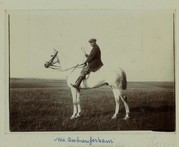
Our Archive of the Month for September is a collection of photographs of Telscombe dating from around 1900 to 1916. They were taken by Ambrose Gorham, a racehorse owner whose horse Shannon Lass won the Grand National in 1902. Gorham was a significant landowner and benefactor in the area, employing many residents of Telscombe village. He and his family clearly loved animals; cats, dogs and horses, as well as farm animals, feature in many of these beautiful photos. If you'd like to read about the archive, there's more information on our online catalogue, listed under reference AMS 6985. We'll be sharing images from the collection throughout the month on Facebook and Twitter, so if you'd like to see more, now is a good time to follow us!
Pictured: Ambrose Gorham mounted 'on his favourite grey Peccavi', c1904, AMS 6985/1/8
|
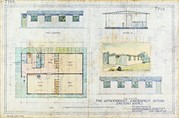
During Lockdown, Brian Phillips, who runs The Keep's research service, spent some of his time working with a fascinating series of plans drawn up by Brighton's Engineers’ and Surveyors’ Department. The project involved taking information relating to individual plans from chronological registers, and adding these details to our website. Descriptions of plans dating from January 1936 to August 1947 can now be found on our online catalogue, listed under reference DB/D/84. There is now a separate series for each year, making the plans easier to identify and order.
There is an emphasis on WW2 in the collection - it includes plans for air raid shelters and mortuaries, as well as mapped positions of explosions. However, there are also plans for prefab housing and trolleybus routes, as well as one-offs, such as a shellfish snack bar, a kiosk for beach photography, a boot repair shop and the Borough Surveyor’s stand at the Local Government Exhibition. If you'd like to read more about this collection, check out our latest blog.
Pictured: plan for a 'Government Emergency House' or prefab, June 1944, DB/D/84/9/7706
|
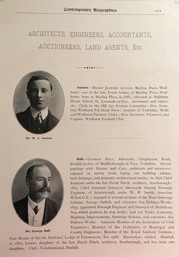
Conservator Melissa Williams has been dividing her time between The Keep and her home studio since the archive reopened at the end of July, and she continues to repair and conserve material so it can be consulted by members of the public. The latest item to receive special treatment is Sussex in the Twentieth Century: Contemporary Biographies, a popular reference volume published in 1910. Rather like a Who's Who, it presents illustrated portraits of prominent individuals, from professionals such as architects and veterinary surgeons to the 'Nobility and Gentry'.
The book was badly damaged, so Melissa carefully separated the pages from the binding, cleaned them all and repaired where necessary, before sewing them back together. New end papers were created from archival ledger paper and the text block was reattached to its original bindings. The book is now ready to return to its shelf in the Reference Room.
|
|
|
|
|
|
|