Welcome
Welcome to the November 2024 edition of the East Riding Archives e-newsletter!
In this issue:
-
News & Projects- Treasure House Transformation Update; Celebrating 150 Years of the Driffield Board School
-
What's On?- Pop-up Showing of Travellers and Settlers at Bridlington Spa
-
Collections spotlight- From Nigeria to Beverley; Helping Hands; Knitting School at Bridlington; The Degradation of Superintendent Winterbottom; New Addition to the Archives- Withernsea Primary School records
-
From Conservation- A Dangerous Suspect!
Best wishes from the East Riding Archives and Local Studies Team.
archives.service@eastriding.gov.uk / 01482 392792
News & Projects
Treasure House Transformation Update
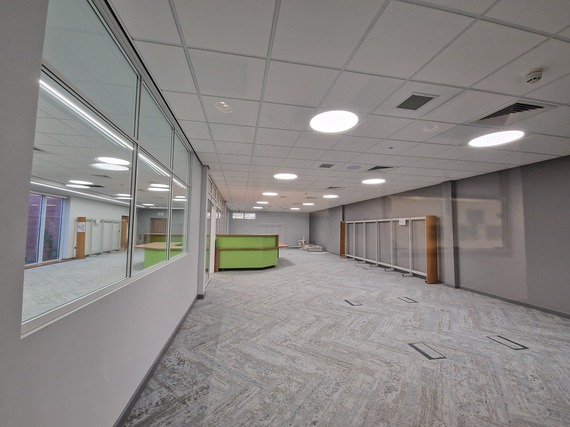 Image: Photograph of the Archives Research Room, building work in progress, October 2024.
As you can see from this photograph taken in October 2024, the revamped archives research room is progressing well with new carpets, painted walls and a very green enquiries desk! It won't be long until we can return the public computers and furniture back into the space, and place our local studies books back on the shelves.
The Archives team are working as normal behind the scenes, so please contact us with any of your research enquiries, we are happy to help.
Keep an eye on the Champney Treasure House Transformation webpage for the latest announcements regarding the public reopening. We will be welcoming you back very soon!
__________
Celebrating 150 years of the Driffield Board School
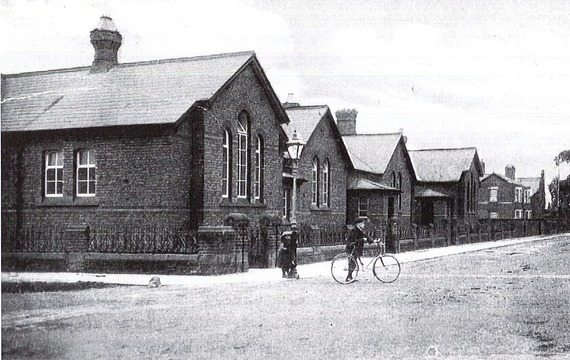
Driffield Junior School invited us to join them to celebrate the 150th anniversary of their school building, the former Driffield Board School.
Archivist Hannah was a guest speaker for the school assembly and showed a display of architectural plans, log books and photographs relating to their school's history. Well done to the pupils for their fantastic outfits- we spotted some suffragettes, Oliver Twists and chimney sweeps!
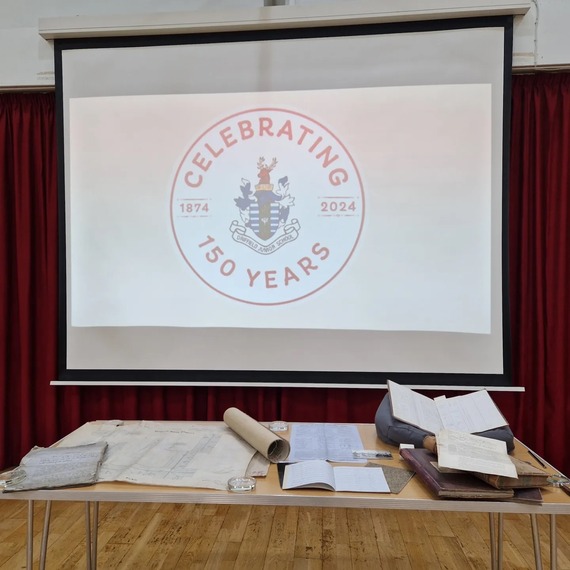 Driffield Junior School would like to collect your positive memories of attending or working at the school. Maybe there was a particular event that sticks out in your memory? A special trip, sports day, a club, your first/last day at the school, did a member of staff inspire you?
You can send your memories via the Driffield Junior School website below:
What's On?
Pop-Up Showing of 'Travellers and Settlers'
10am-3pm, Sunday 17th November 2024, Bridlington Spa, Bridlington
Free entry as part of Aces Bridlington Club and Friends by the Sea event
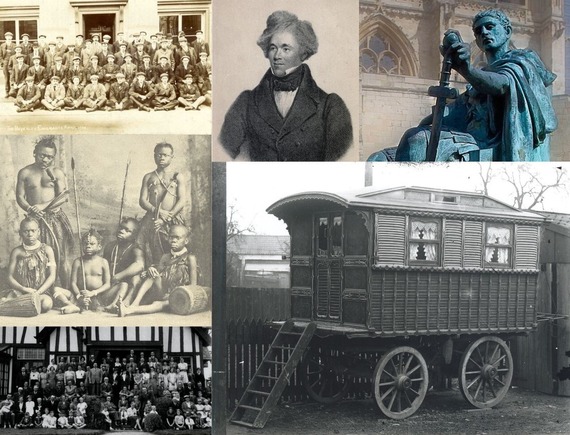 A showing of the "Travellers and Settlers: A History of Ethnic Diversity, Migration and Settlement in the East Riding of Yorkshire" will be on display for one day only at Bridlington Spa. This pop-up showing is part of many exciting things happening at a free, welcoming community event facilitated by the Aces Bridlington Club and Friends by the Sea.
The Travellers and Settlers exhibition highlights a selection of stories found within documents in the East Riding Archives and artefacts from the East Riding Museums’ collections, evidencing that East Yorkshire has always been a place of diversity. It is part of a wider East Riding of Yorkshire Council project celebrating the lived experiences, past and present, of the settlement and resettlement of traveller and ethnic minority communities across this region.
Aces Bridlington Club and Friends by the Sea are an Afro-Caribbean et South American Club, with Friends by the Sea from the United Kingdom and around the world. The event is inclusive of everyone based on Peace, Unity and Respect.
No booking required. For more information visit the event page on the Bridlington Spa website.
Collections Spotlight
Interesting stories found in the archives from the Public Services and Collections teams.
From Nigeria to Beverley
These interesting and important photographs (archives reference DDX2540/3) show a visit by a group of Nigerians who travelled to England and met Beverley’s civic leaders. Organised by the British Council, the Nigerian dignitaries were in Yorkshire as part of a two month long visit to England and Beverley was on the itinerary. The visiting group included chieftains, administrators, legal officials and teachers.
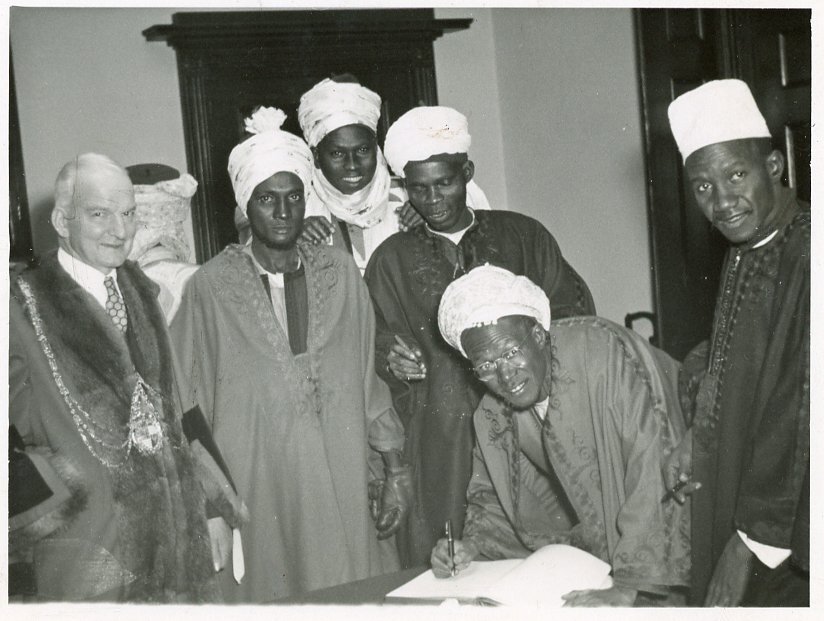 Image: Photograph of a visit by Nigerian group, 1950 (archives reference: DDX2540/3)
These images are from a large file of photographs recording civic events during the mayoralty of Duncan R Simson, who was twice mayor of Beverley from 1950-1951 and from 1958-1959. The visit was documented in the ‘Beverley Guardian’ of 27 May 1950 and 3 June 1950 where one of the photographs appears on the front page.
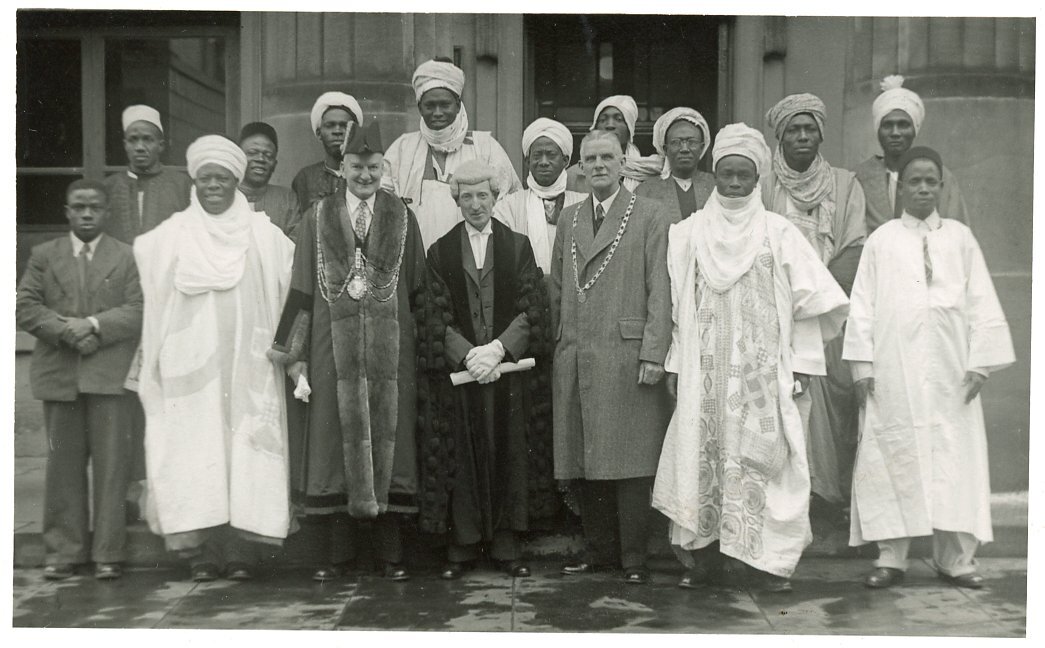 Image: Photograph of a visit by Nigerian group outside the Beverley Guildhall, 1950 (archives reference: DDX2540/3)
The photograph taken in front of the Guildhall shows the mayor, in his first public engagement since taking office, town clerk (E Bailey) and deputy mayor (Alderman W J Marson) with the visitors. The Nigerians are in national dress. On the front left is 22 years old Patrick Dokatri who acted as interpreter. Next to him is Abdullah Mai Kano, Chief of Wase, who later made a speech in the Guildhall. Next to Alderman Marson in the front row is Rwang Pam, Chief of Birom.
The newspaper report noted that the visitors were shown the town’s charters and civic plate. Chief Wase was reported to have said the visit had been instructive and would help to strengthen friendship between Nigeria and England. The report further states that the visitors went on to visit Hodgson’s Tannery and then visited schools in Hutton Cranswick and Driffield.
These photographs can be viewed in the Archives under the reference DDX2540/3.
__________
Helping Hands
Guest post by Sally Hayes, Beverley Curator (Treasure House)
During the Treasure House closure period, staff have been working on new displays in the museum. Our new case Helping Hands brings together material on the theme of community support and includes content from Archives. One of the stories explored is friendly society the Ancient Society of Foresters. Friendly societies like the Foresters were financial organisations whose members made small payments to receive a lump sum in times of crisis. The Foresters name has its origins in the idea of helping people on their "walk through the forest of life".
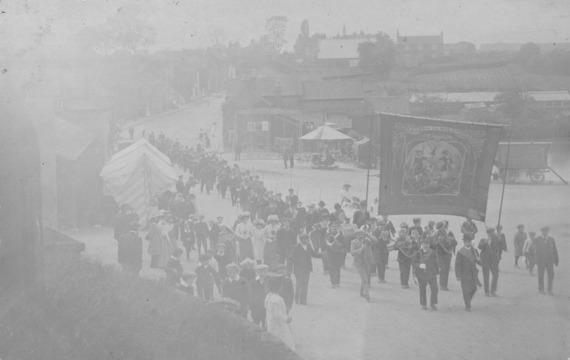 Image: Postcard of village street with Ancient Order of Foresters procession, Middleton on the Wolds (archives reference PO/1/92/2)
This wonderful photograph (East Riding Archives PO/1/92/2) shows the Middleton Foresters Club Feast, known simply as Middleton Feast. The event was held in Middleton on the Wolds each year on the second Friday of June until the Second World War and was the highlight of the village calendar. Members names were read out and any Forester not present was expected to pay a fine! Members paraded around the village wearing their green sashes and carrying a silk banner (some of the sashes are held in the East Riding Museums collection). After food and speeches, the day was given over to fun for all, including sweet stalls, coconut shies and fairground rides.
__________
Knitting School at Bridlington
This account book recently came in as part of the John Stanley Walker collection (DDX2535/2/1) and provides a fascinating insight into the Burlington [Bridlington] Knitting School during the late 18th and 19th centuries.
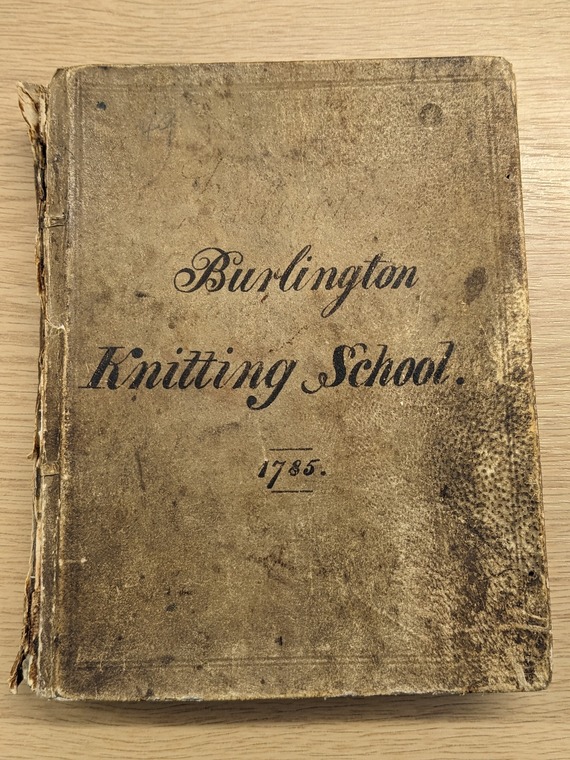 Image: Burlington Knitting School account book (archives reference DDX2535/2/1)
In 1670 William Bower, an elderly merchant of Bridlington Quay, established a school for poor boys and girls aged between 6 and 12. The children were to be instructed in carding, spinning and knitting for at least 2 and no more than 5 years. An elaborately carved gravestone in Bridlington priory church where he is buried reminds visitors of the school he founded.
The school was housed in a cottage on Church Green. Rent collected from a property in Birdsall paid for most of the school’s expenses, and the farm occasionally also provided apples and firewood.
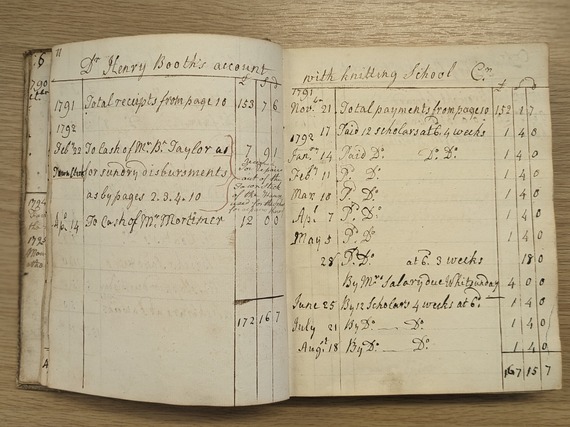 Image: Accounts from the 1790s in the Burlington Knitting School book (archives reference: DDX2535/2/1)
The first master teacher was Rowland Milner, a knitter by trade, and it seems during its first century the school was headed by a succession of masters. By the start of the nineteenth century however the children were instructed by female teachers. The scholars were paid for the work they produced. In the 1780s and 90s this could be as little as 5d a week. By 1825 the scholars’ weekly pay was fixed at the considerably higher sum of 1s (or 12d), but in 1842 this was reduced to 10d and thus it remained until the school folded thirty years later. School mistresses earned roughly 5 or 6 times what the children received.
The knitting book roughly covers the final 90 years of the school’s existence and is a wonderful resource now available for research in the Archives.
__________
The Degradation of Superintendent Winterbottom
Superintendent William Winterbottom, of Church Street, Norton, Malton was a highly respected local policeman. In the 1890s, he was looking forward to retirement after a lengthy service he faced a crisis of judgement which impacted his professional standing. His ‘crime’ related to a letter which he sent to a public official in Bridlington.
This letter was sent after much provocation, and as his supporters stated it was sent ‘in a fit of hot anger and excusable indignation’ and that after ‘sinking the policeman in the man [he] sent it to his tormentor’. It is claimed that he immediately regretted sending it. That he sent it as a private citizen rather than in his official capacity did not help his case.
His punishment, which included a demotion to second class inspector, led to an outpouring of support from local residents who were outraged at the treatment dished out to their favourite local bobby. That it was seen as ‘foreign, un-English, unmanly, and unfair course of punishing a man twice for the same offence…without him being allowed to utter a single word on his own behalf’
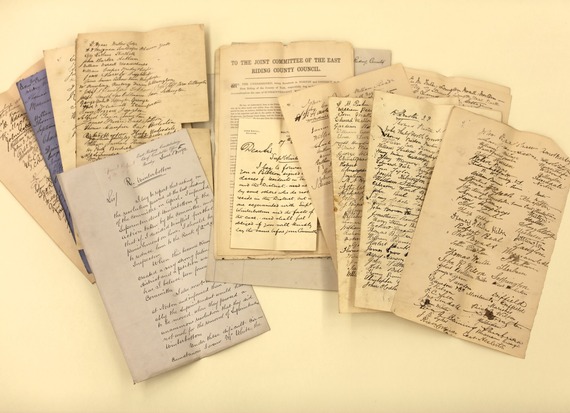 Image: Correspondence and petition relating to Superintendent Winterbottom, 1892 (archives reference CCER/1/15/1/63)
The papers relating to this case, catalogued under the archives reference CCER/1/15/1/63, are few but are nevertheless interesting. They comprise mainly the petitions signed by local residents who rallied behind him. This includes those members of the Camalodunum Lodge of Freemasons No 660 who mention that in supporting William Winterbottom they are supporting him as a ‘Past Master’ of the lodge. The chief constable who was initially compelled to punish William Winterbottom was forced to reinstate him due to the strong feelings his disciplinary action provoked in the local community.
This is an intriguing case as the offending letter’s contents are unknown. But thankfully William Winterbottom was able to resume his career and received his pension on 1 Jul 1895. He died in 1904 with his good name intact.
__________
New Addition to the Archives: Withernsea Primary School records
A sizeable collection of Withernsea Primary School records has recently been brought into the East Riding Archives. This includes a large cache of photographs from 1953 until 2017 relating to the Junior and Infants schools. They have now been catalogued and will be available for viewing under the reference SL260.
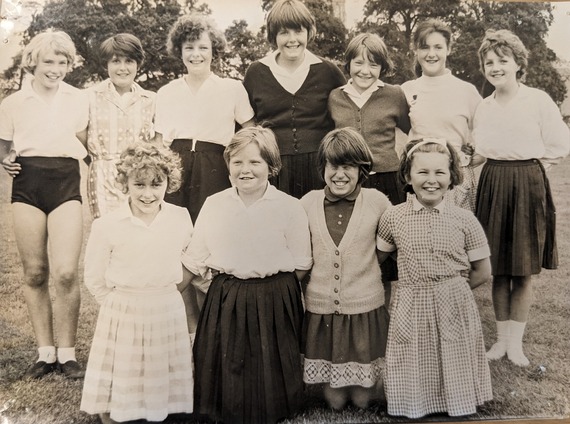 Image: Photograph relating to Withernsea Junior School students, nd. [1950s-1970s] (archives reference SL260/4/2/2)
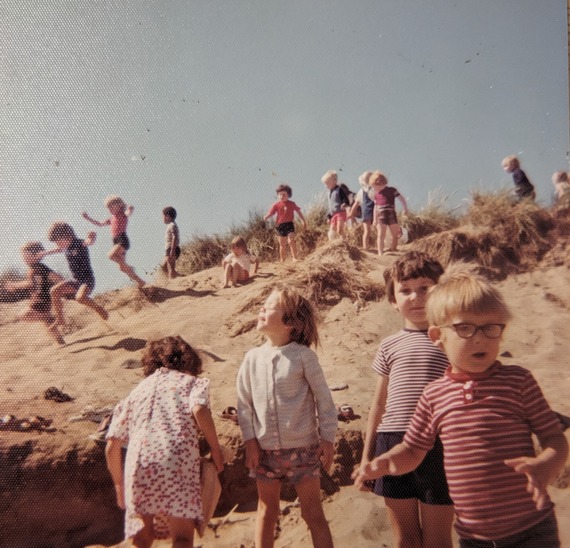 Image: Photograph relating to Withernsea Infant and Junior School students, nd. [1970s-1980s] (archives reference SL260/4/2/5)
From Conservation
Feature by Kat Saunt, Conservator
A Dangerous Suspect!
We recently found a suspected “poison book”! The vibrant green of the leather covering this book made me instantly suspicious that it might have been dyed with an arsenic-containing dye. But then looking at the date, I had to doubt that initial impression. 1907 is a couple of decades later than when we might usually expect to find arsenical dye, but then again, old stock of dyed leather could perhaps have been used long after it was produced.
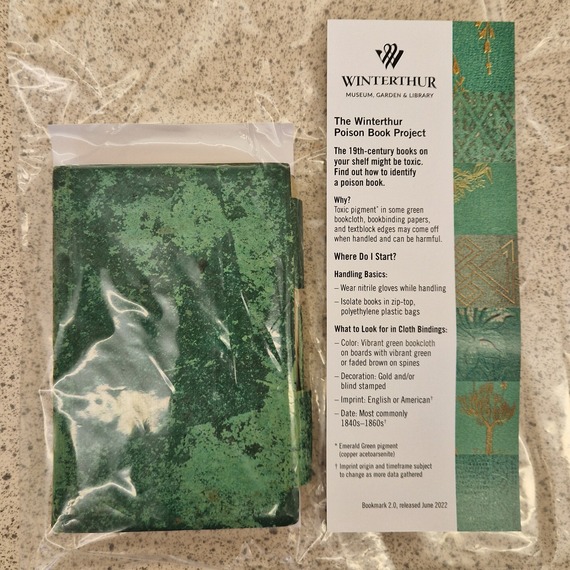 Image: The 'poisonous' green book contained in a plastic bag
Testing for arsenic would mean ordering testing materials and conducting a fairly hazardous process so we decided against testing and to err on the side of safety, we just assume we’re dealing with arsenic when we see bookcloth or leather of the specific vibrant green hue.
The book will be contained in a sealed in a clearly labelled sealable plastic bag and only handled with gloves. As long as the cloth is intact and not flaking and shedding dust it’s reasonably safe, but we would probably not carry out conservation treatments on an a poison book, as these are likely to release arsenic containing dust and create much more of a hazard.
Some of the other toxic substances we find in archival documents include lead, cinnabar and cadmium which were used to colour wax seals and chromium used to colour yellow bookcloth.
If you enjoyed this e-newsletter, why not pass it on?
Click the link "View this e-newsletter as a web page" at the top of this e-newsletter. Simply
copy and paste the web address into wherever you would like to share, such as on social
media.

|