Welcome
Welcome to the July 2022 edition of the East Riding Archives e-newsletter! We hope that you enjoy reading about what we have been busy cataloguing, preserving and promoting across the past few weeks.
In this issue:
-
News & Updates- Take a closer look at our new platform for accessing digital archives; a thankyou to the Howden and Goole History Groups; a new oral history project at Goole Museum; and 'Digitally Democratising Archives'.
-
What's On?- 'Astounding Inventions' Heritage Open Day 2022; 'Archives Up Close: Fire! Fire!' display; and 'Birds, Books and Belfries' Treasure House exhibition.
-
Collections spotlight- We highlight a vengeful poem written by the Countess of Burlington; a scrapbook donation relating to the Holmes family of Nunburnholme; and the renowned tightrope dancers Nicolo and Antonio Plege.
Best wishes from the East Riding Archives and Local Studies Team
archives.service@eastriding.gov.uk / 01482 392792
News & Updates
Digital Archives Online: Preservica for Digital Preservation
by Sam Bartle, Digital Archivist
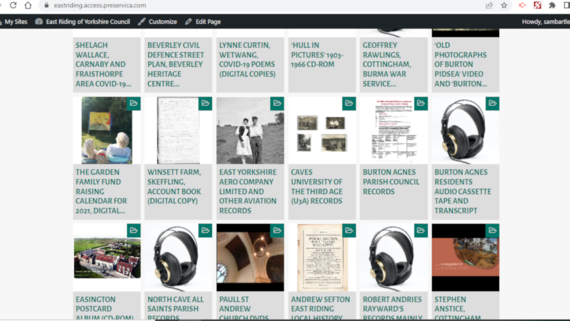 You may have seen in the news that our Digital Archive is now available online. The announcement forms part of a wider goal to secure the permanent preservation of our digital archives through an automated digital repository, and we’re delighted to have selected the Preservica system for this task.
The East Riding Archives are responsible for preserving and making accessible the documentary heritage of the East Riding of Yorkshire, and this includes digital information (or ‘data’) as well as conventional paper records. This is a much more complicated job than it may seem, as the records are written in binary code, which requires machine technology to read and translate it into something that makes sense to our human brains! When you also consider that this technology is constantly evolving (just look at how much has changed since ‘Windows 95’ first hit our shelves), then the prospect of ensuring that data remains readable for an indefinitely long period of time (ideally, forever) becomes an incredibly daunting one.
So, the Preservica system offers the automation necessary to ensure that our digital archives can be curated constantly, and updated to the most suitable file formats in line with best practice in digital preservation.
For more information on our selection of Preservica, see our blog.
__________
A visit from the Howden and Goole History Groups
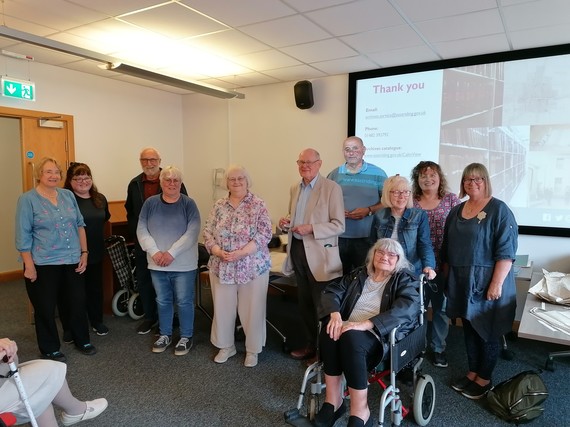 Howden and Goole History Group photo after the talk
It was a pleasure to host a talk to the Howden and Goole History Groups this July. At the Treasure House in Beverley, the groups received a talk by Hannah Stamp, Archivist, on the work of the archives and saw some fascinating original documents relating to the Goole and Howden areas.
If your group would like to receive a talk, please enquire via the Archives service archives.service@eastriding.gov.uk
__________
New Oral History Project at Goole Museum- 'On the Waterfront': Life and Work on Goole's Docks
by Dr Alex Ombler, Curator
 Goole Museum is looking for volunteers to take part in an oral history project called ‘On the Waterfront’. The project aims to document working life on and around Goole’s docks in the twentieth century. These recorded memories will form the basis of a brand new and unique archive of recollections, detailing what it was like to live, work and grow-up in Britain’s most inland port.
We’re looking to speak to anyone who had connections with the docks or waterways, including dockers, shipyard workers, seamen, clerks, and railway workers; anyone who spent part or all of their working lives in or around the port. We’d also like to talk to the family members of those who worked on the docks, especially people who lived and grew-up in households close to the waterfront.
The memories recorded will be transcribed, catalogued, and preserved in the museum’s collection for future generations. They will also be made accessible to the public and form the basis of a forthcoming exhibition.
If you have a story to tell, or would like more information, please get in touch with Alex Ombler on 01482 392777 or email alex.ombler@eastriding.gov.uk. Interviews can take place in the museum, at your home, or at a neutral venue, wherever is most convenient and comfortable for you.
__________
Digitally Democratising Archives
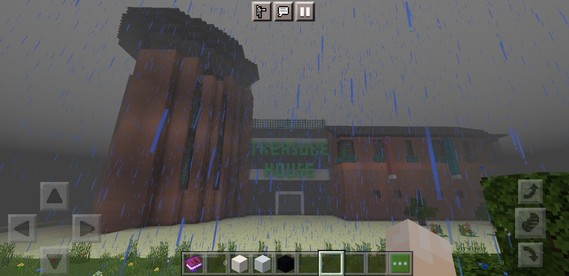 A rainy day in the Archiverse (The East Riding Blockdown project)
We were thrilled to present our East Riding Blockdown project at The Audience Agency’s ‘Digitally Democratising Archives’ dissemination event on Monday 30th May (held via Zoom). This was an opportunity for us to highlight the inspiring contributions from our history-making participants and what the Archiverse, our growing Minecraft world, means to future generations learning about the COVID-19 pandemic.
You can watch our presentation recording via YouTube, we feature from 27:00-35:00: https://www.youtube.com/watch?v=HXDhEyeRL4Y
Keep an eye on the East Riding Blockdown website for future updates!
The East Riding Blockdown is supported by The Audience Agency’s Digitally Democratising Archives project thanks to funding from DCMS and the National Lottery, as part of The National Lottery Heritage Fund’s Digital Skills for Heritage initiative.

What's On?
Astounding Inventions - Heritage Open Days 2022
 Join a free scheduled Heritage Open Days tour on Saturday 10 September, to discover some of the ‘astounding inventions’ in the Treasure House Museum and East Riding Archives collections, led by the Conservator, Archivist and Curator.
From the Conservation Workshop, there’s a look at how the Industrial Revolution and technical innovations shaped the development of the book, with examples from the Archive. Go behind the scenes in the Archive repository and view original documents relating to historical inventions. In the Museum you’ll see and hear about a selection of inventions with coastal connections.
Bring the family for the children’s mystery inventions trail available on both days. See the Heritage Open Days window display on astounding inventions from East Riding's past through patents, posters, handbills and plans from the Archive.
Visit https://www.eastridingmuseums.co.uk/ or follow us on social media for tour times and more information. Alternatively call on (01482) 392782.
_______________
Archives Up Close: Fire! Fire!
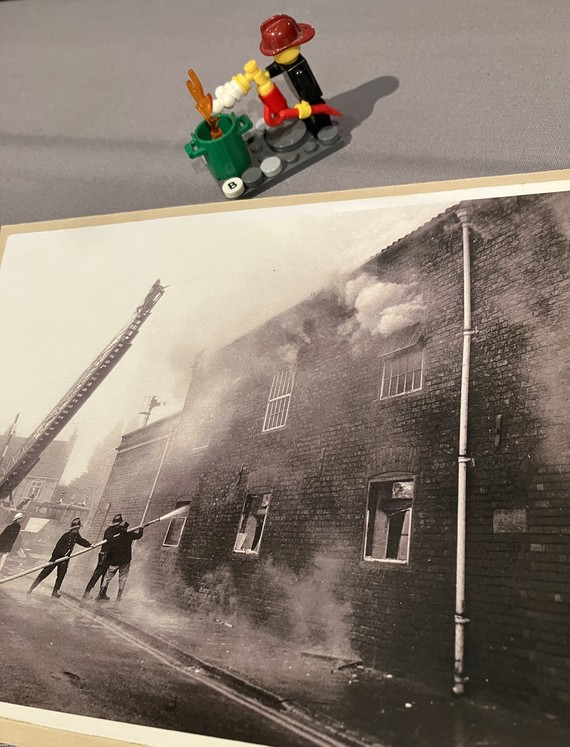 Our latest 'Archives Up Close' display in the Treasure House Museum features three documents on the theme of firefighting. The case is also home to a LEGO Minifigure firefighter, part of our Minifig-a-gram trail which runs throughout the summer - unscramble all the letters and you could bag yourself a fabulous LEGO City set as a prize! Pick up a trail sheet at the Tourist Information Centre on the first floor of the Treasure House.
Fire! Fire! documents will be on display until the end of September.
_______________
Exhibition:
Birds, Books and Belfries: An East Yorkshire Parson-Naturalist
Treasure House Museum, available until 24 September 2022
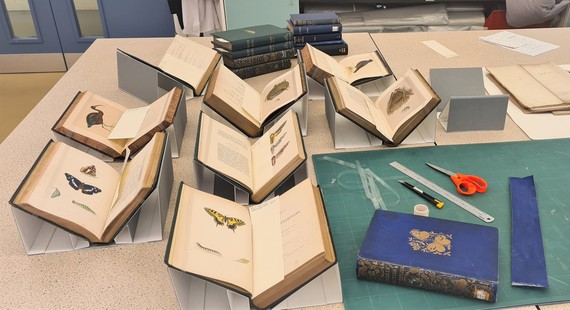 Don't miss the Treasure House exhibition Birds, Books and Belfries: An East Yorkshire Parson Naturalist. The exhibition tells the story of Reverend Francis Orpen Morris - writer, conservationist and vicar of Nafferton then Nunburnholme. Morris was one of a number of Victorian clergy whose passion for nature led to the name “parson-naturalist”.
Beautiful Books
Central to the exhibition are the beautiful books held in East Riding Archives which were written by Morris and printed by life-long business partner Benjamin Fawcett of Driffield. Conservator Kat Saunt has been busy making sure the books are ready for display - making stands, recovering spines and producing the occasional facsimile for when the text or images are covered by blank paper (can you spot the copies in the exhibition!).
The stands are different sizes both to minimise stress on the bindings and to make sure that the books open on pages which they are “happy” to open on.
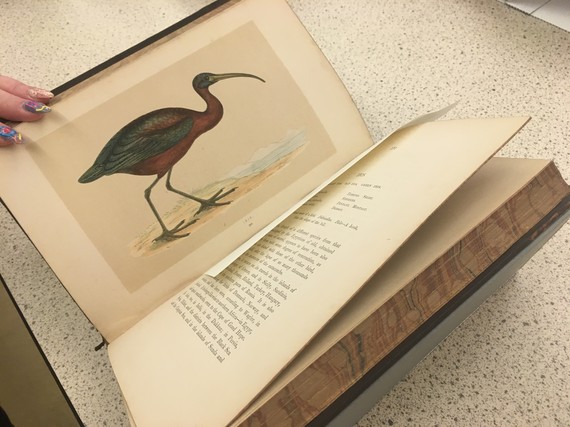 Before being launched as books, many of Morris’ works were printed in small monthly sections due to the cost to both print and buy. These sections rarely survive as they are often taken apart for their attractive hand-coloured illustrations. We are delighted to be taking in loans to complement our holdings from collector Richard Taylor, including examples of monthly book sections.
Working for the Church of England gave Morris a comfortable, secure lifestyle but he still had a good head for business. Some of the monthly sections carry advertisements for his other books or requests to fund church repairs!
Richard also has rare examples of books which have been made by binding the monthly sections together – look carefully at the books on display and you can see the slightly uneven edges.
Collections Spotlight
Vengeful Verses
In this poem (archive reference DDX245/1), the Countess of Burlington writes extensively about the cruel treatment which her Daughter, the Lady Dorothy Boyle, received from her husband George Fitzroy, Lord Euston. They married in October 1741 and Dorothy passed away seven months later.
“May spectres stare thee in thy face
May honors guard thee round
May conscience on thy footsteps wait
And all thy shouts Confound.
May Egypt’s plagues disturb thy nights
And every loath disease
Till thou hast all my wrongs redres’t
May all these plagues increase.”
This undated, presumed 19th-century copy of the original verses, was found when "taking down the Old Hall, Londesbrough"
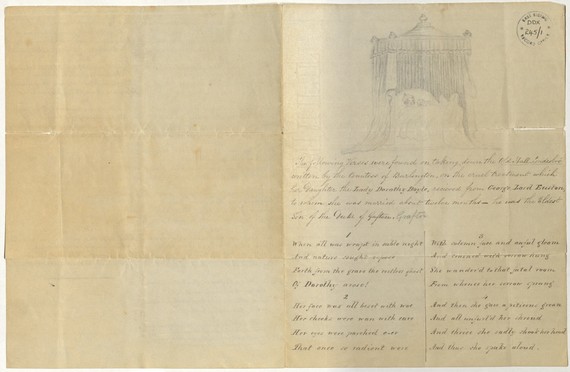 DDX245/1 (page 1), undated [19th century copy]
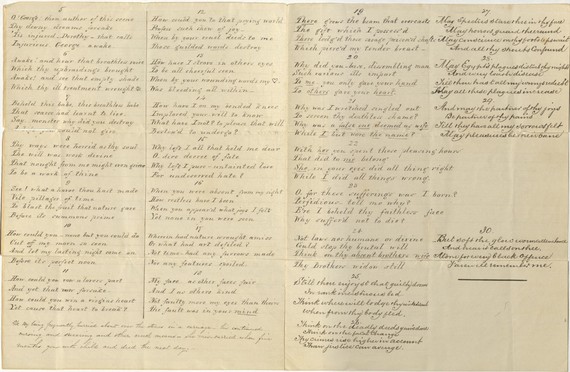 DDX245/1 (page 2), undated [19th century copy]
_______________
Holmes family of Nunburnholme scrapbooks
A recently gifted collection of family papers (archive reference DDX2415) included some scrapbooks from the Holmes family who hailed from Nunburnholme. Henry was the son of Edward Holmes, a farmer in Nunburnholme. Henry’s uncle was Thomas Holmes who lived at Coltman Street, Hull. Both Henry and Thomas appear to have been artistic but Henry appears to have been the main artist.
By their nature scrapbooks are often a miscellany of things that have caught the eye of the person compiling it. These ones include postcards and printed scenes but the lovely artwork really stands out. The ones shown were created by both Henry Holmes and Thomas Holmes.
The scrapbook is full of delightful artworks, including:
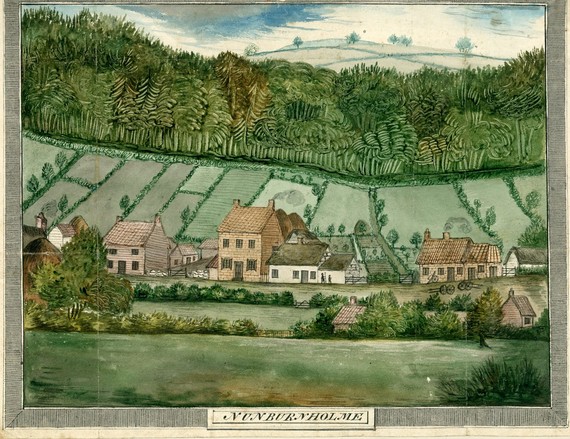 1) A lovely watercolour and pen and ink of a view of Nunburnholme.
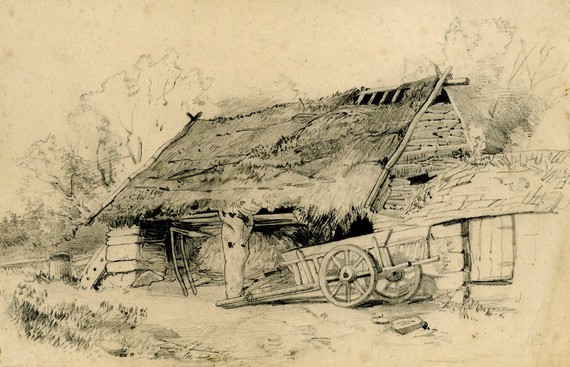 2) A farm building (thought to be by Thomas Holmes)
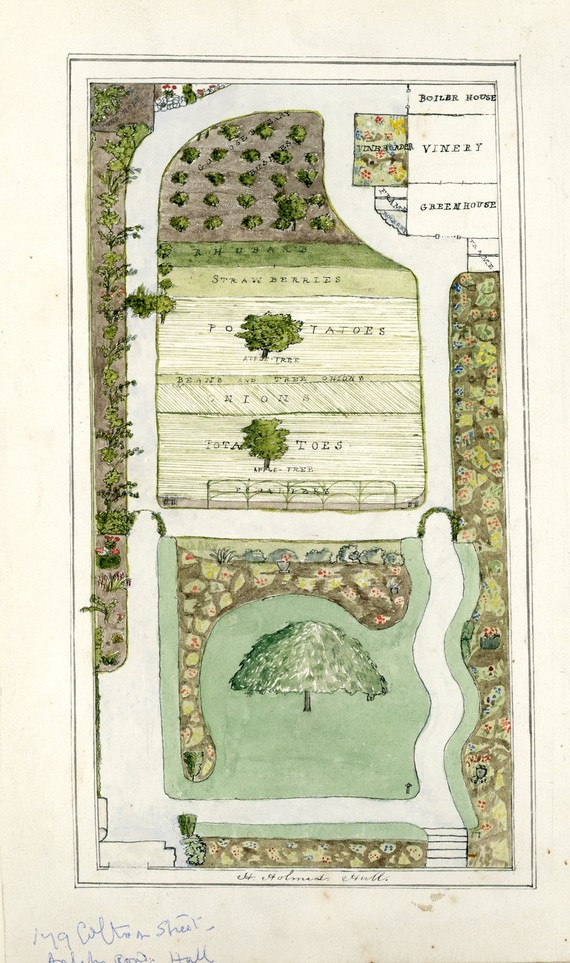 3) Plan of the garden at 179 Coltman Street, Hull.
_______________
Renowned Tightrope Dancers in Hull
Welcome to the Hull Zoological Gardens on Spring Bank! Open to the public from 1840, it housed a number of exotic animals such as polar bears, big cats and elephants. But it was there for general entertainment too, with regular displays of fireworks and dances. In June 1843, the Gardens organized a spectacle which featured on the tightrope the renowned French performers Nicolo and Antonio Plege. Their astounding feats were performed for audiences all over the British Isles, though not always as a duo.
Before their visit to Hull Zoological Gardens, in Dublin, Nicolo and Antonio had been joined on the tight rope by 4-year-old Joseph Plege. And a few years previously Monsieur Plege had performed a solo act in Edinburgh.
 Section of DDX1942/1/540, June 1843. From Gillyatt Sumner miscellaneous printed records book.
The Chambers’ Edinburgh Journal included a detailed account of the night, which gives us some idea of Plege’s stunts. A rope which had been attached to poles had been stretched across the ring and on this Plege danced and tumbled with great agility. Then he performed a feat which really astounded:
‘The next performance of M. Plege seemed to us still more surprising. Holding a cup by the handle with his mouth, he places a coin on the point of one projected foot, while he stands on the other foot –on the rope, of course– and, by a dexterous jerk, throws the coin into the cup. He then holds the cup in one hand behind his back, and throws the coin into it in the same way, in this situation! This really looks as like magic as any thing natural and lawful can do.’
No doubt the Pleges duly impressed their audience at Hull with their pas de deux a few years later.
Just 21 years after opening the Gardens proved too expensive to operate and its rockery and fountain were moved to Pearson Park. After the Gardens were sold, Peel Street, Hutt Street, Morpeth Street and Freehold Street –which consisted of allotments– were lengthened down to Spring Bank. The kink from which the newly lengthened streets were directed to Spring Bank can still be seen quite clearly today.
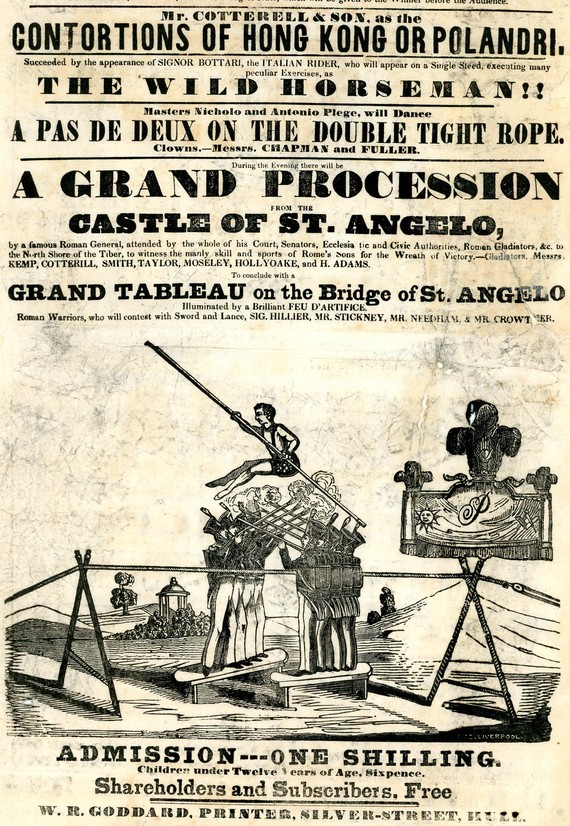 DDX1942/1/540, June 1843. From Gillyatt Sumner miscellaneous printed records book.
If you enjoyed this e-newsletter, why not pass it on?
Click the link "View this e-newsletter as a web page" at the top of this e-newsletter. Simply
copy and paste the web address into wherever you would like to share, such as on social
media.
|