Autumn 2021 Edition
Welcome to the Autumn edition of the East Riding Archives newsletter. In this edition we have an array of tales from the collections, and some exciting announcements, including an upcoming Treasure House exhibition called Hidden: Cold War Women, expansion of the What Was Here app, and a new project called The East Riding Blockdown.
Read on to find out more.
A Beauty Spot in the Collections: Raywell Park
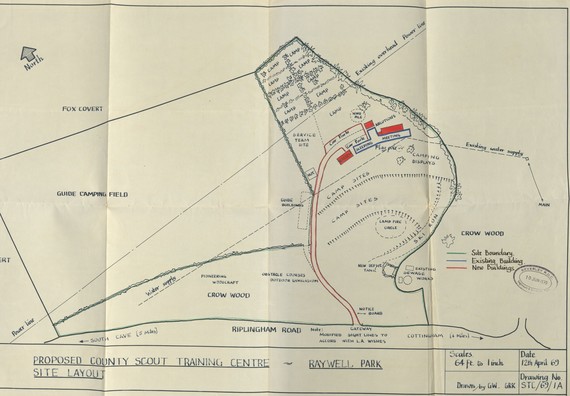
We love finding interesting plans in our collections. As a well-known local landmark, Raywell Park to this day provides the setting for a beautiful, woodland walk.
On the 8 July 1970, a planning application was submitted to extend the Scout Campsite which is located in the grounds of the former sanitorium Raywell Hall. The application includes a wardens house, toilet blocks and extension to the existing residential training building allowing the facilities to be used on a larger by scale by all the local scouting groups.
Archives reference: RDBE/6/2/2/18/256 Raywell Scout Association Area Campsite, plan from 1969
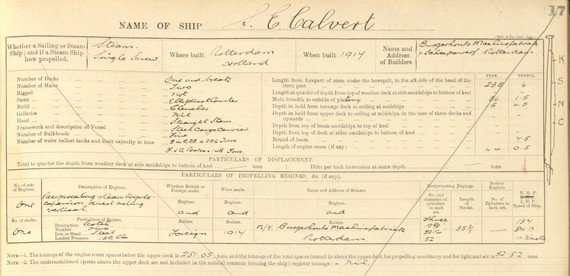
The Rocky History of the S.E.Calvert
The Shipping Register of Goole records a noteworthy steamship owned by a Goole-based shipping company in 1925. The ship, a steel cargo vessel, had a rocky and international history. Originally christened the ‘Loosdrecht’ (after a town in Holland), it had been built in 1917 by N.V. Burgerhout’s Machinefabriek en Scheepswerf, Rotterdam. Just a year later, it was seized by the British government under the Droit d’Angarie (Angary), a wartime principle which allowed the seizure of property belonging to citizens of a neutral state when on belligerent territory (as long as they were returned after the war).
During the First World War, the Netherlands had proclaimed neutrality, so Dutch ships which sailed into English waters could be seized by the UK government, for instance to prevent similar seizure by the Germans. The UK and US governments seized many dozens of Dutch ships in March 1918, among them the ‘Loosdrecht’, which was duly returned to her owners after the war. In 1925, the ‘Loosdrecht’ was bought by the Calvert Steamship Company, which had its principal place of business at Adam Street, Goole. The ship was given the easier to pronounce (if slightly unimaginative) name ‘S.E. Calvert’. After three years of service it was bought by a Norwegian company and renamed yet again. Now called ‘Ringen’, it continued to serve as a commercial cargo ship until the outbreak of the Second World War.
In March 1940 the ‘Ringen’ sailed to UK waters, but when the following month news of the German invasion of Norway reached the crew, the decision was taken not to return home. Instead, the ship was attached to numerous Allied convoys, most notably from London to the beach at Normandy for the June 1944 D-Day landings.
Her illustrious career came to an end on 4 July, when she hit a magnetic mine just off the coast of the Isle of Wight. One member of her crew died, and in three and a half minutes she had sunk.
The S.E.Calvert (Archives reference: NSG-10-3, 21 Apr 1925)
A Case of Witchcraft
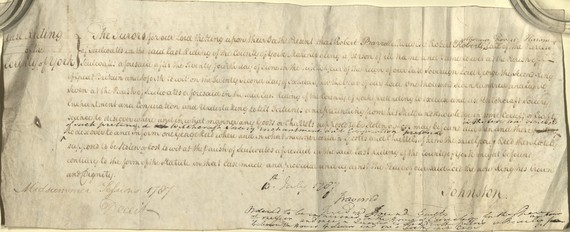
Witchcraft was considered a serious crime even if it was practiced with good intentions in mind. This was the case of Robert Barrett of Sculcoates who saw himself at the Quarter Sessions court in Midsummer 1787. He was accused of:
“pretending to exercise and use witchcraft sorcery Enchantment and Conjuration and Undertaking to tell Fortunes and pretending from his Skill and Knowledge in some Occult or Craft Science to discover where and in what manner any goods or Chattels supposed to be Stolen or Lost May be found”
Barrett was a mariner who also went under the aliases Roberts and Harom.
As noted at the bottom of the indictment document, Barrett was “tried and found guilty”. He was subsequently imprisoned in the House of Correction for one year and publicly shamed in the pillory in Beverley from 11am-1pm each day, all for trying to help find stolen goods!
Robert Barrett's indictment, 1787. Archives reference: QSF/316/B/1
Edible Ingredients
by Kat Saunt, Conservator
Inspired by this year’s Heritage Open Days theme of Edible England, here is a ‘menu’ put together from some of the materials I use to repair documents in the conservation workshop. While they might be pushing the definition of ‘edible’ it’s interesting to note how these traditional and natural materials are so useful to us in conservation, mainly as they have been tried and tested over centuries so we know how repairs made using them will age.
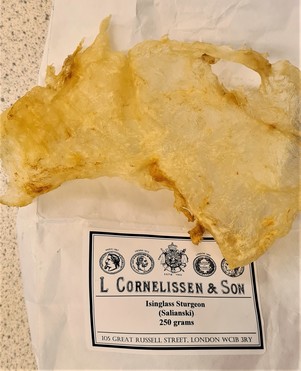
Protein: To repair damaged parchment I turn to adhesives and surface consolidants made from gelatin. Or sometimes isinglass, also referred to as ‘fish glue’, which is made by boiling sturgeon’s bladder. To repair tears or fill holes I might use what is called goldbeaters skin, which is actually intestine membrane – basically sausage casing.
Isinglass
Starch: To repair paper I often use a substance called methyl-cellulose which you can also find in the ingredients list of many foods, sometimes used as an egg-replacement. And the most commonly used adhesive in paper conservation is our indispensable hero ingredient – Japanese wheat-starch paste. A traditional adhesive simply made of wheat starch cooked in water.
Japanese Wheat-starch Paste
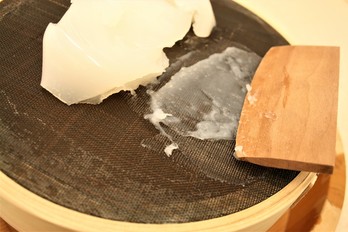
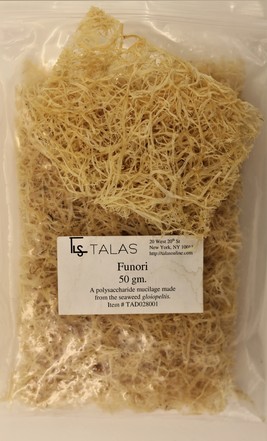
Vegetable: After those examples of protein and carbohydrates, we also have vegetables represented by agar and funori seaweeds from which we can make a consolidant for flaking pigments. Agar is often used as a food ingredient.
Funori
For the extended version of Kat's feature, read our blog: https://eastridingarchives.blog/2021/10/08/edible-england/
Announcing the East Riding Blockdown
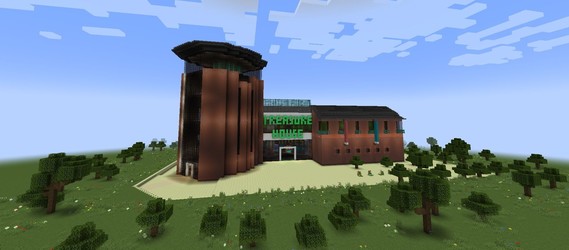 We are thrilled to be one of ten projects selected across England who have received funding from The Audience Agency to proceed with our new project The East Riding Blockdown: Contemporary Collecting in Minecraft.
Building upon (no pun intended!) our overarching COVID-19 experiences collecting project, the East Riding Blockdown will seek to collect youth experiences of the COVID-19 pandemic using the popular videogame Minecraft. Participants will be able to explore a virtual recreation of the Treasure House, document their pandemic experiences using a ‘book and quill’, and build objects and scenes that represent their lockdown. Participant creations will then be archived in the real-world East Riding Archives here at the Treasure House which we hope will be used by historians of the future to research the pandemic in the East Riding.
Our website is live, so keep checking back for the official project launch:
You can read The Audience Agency’s announcement about all ten action research projects here.
The East Riding Blockdown is supported by The Audience Agency’s Digitally Democratising Archives project thanks to funding from DCMS and the National Lottery, as part of The National Lottery Heritage Fund’s Digital Skills for Heritage initiative. #DigitalForHeritage #OpeningArchives

Uncovering the Cold War
by Sally Hayes, Beverley Curator (Treasure House)
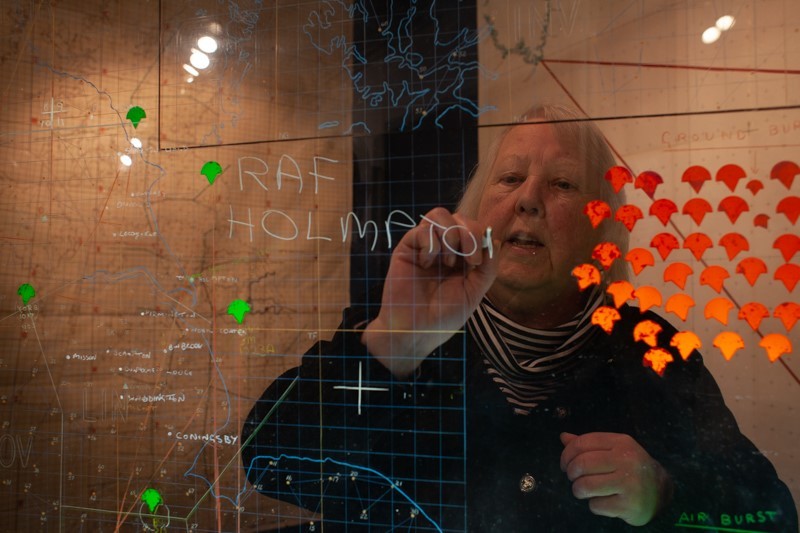
In December 2021 an exhibition of portraits by local photographer Lee Karen Stow called Hidden: Cold War Women will be on display at the Treasure House.
The exhibition is the result of an Arts Council funded project started back in 2018 (there have been a few postponements with bringing Lee’s fascinating work to Beverley) and features portraits of local women along with their testimonies.
Many of the women worked in military roles with the Royal Observer Corp and RAF. Some women were involved with local authority Emergency Planning whilst others were part of the peace moment. In their testimonies, the women reflect on living through this unique period of history which was dominated by the threat of annihilation from nuclear war.
Senior Aircraftwoman (SACW) Carol Oldridge, photo copyright Lee Karen Stow www.leekarenstow.com
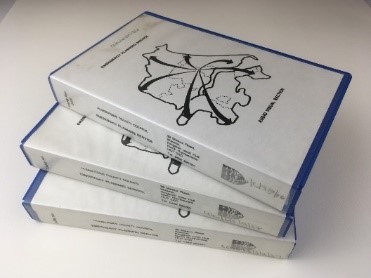
Interestingly, the East Riding Archives has a substantial quantity of Cold War related material. Some of this is generic material which was given to local authorities, such as leaflets from the Protect and Survive series and video copies of the well-known film Threads.
Titles on VHS tapes include After Doomsday and A Guide to Armageddon. Reference: East Riding Archives CCHU/6/3/9/36
Other material is unique to our area, such as photographic slides from the ‘Falfox Experiment’ which featured in BBC Panorama’s If the bomb drops (1980).
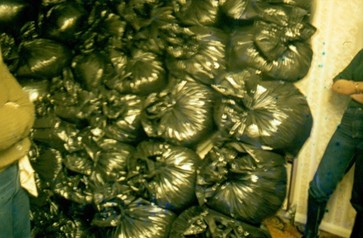
A family in Wawne create a bomb shelter from bags filled with soil as part of the Falfox Experiment. Reference: East Riding Archives CCHU/6/3/9/1
Some of the original East Riding Archives material will be included in the exhibition and some will feature in an extended webpage for the project – pop into the Treasure House or visit East Riding Museums in December.
Recently Catalogued Records
New additions to our online catalogue between April and September 2021 include:
- DDX1929 East Yorkshire and Derwent Area Ramblers records additional 1970-2015 (6 boxes)
- DDX2110 Dodsworth family history research records additional nd. [20th century-21st century]
- DDX2164 Medforth family, Bilton, records additional 1950s-1986
- DDX2263 Melbourne Primary School Governor records additional 2005-2015 (1 box)
- DDX2362 Train arriving at Goole railway station photographic slide 1984
- DDX2363 Yorkshire bills, postcard and miscellaneous records file 1832-1970
- DDX2364 Eleanor Mary Reader's research relating to North Cliffe, South Cliffe, Broomfleet and Faxfleet 1972-[c.1979]
- DDX2365 Mary Gossip school attendance certificate relating to Park Road Girls Board School, Hull, 1876
- DDX2366 Beverley Town Association Football Club minute book and Moody family photographs and documents 1905-1939
- DDX2367 Typescript memoirs of Marjorie Miller and photograph of Ainthorpe High School U3A [c.1950s-late 20th century]
- DDX2372 Beverley St John Roman Catholic Church events video recording (digital copy) 2019
- DDX2373 Beverley Rural District Council folded map notebook nd. [1960s-1970s]
- DDX2376 Ian King collection relating to Beverley Folk Festival 1983-2011
- DDX2377 'Hull Sketch Book' containing reproductions of drawings by Peter Kitchen 1987
- DDX2379 Beverley High School Old Girls Association records [1900s]-2020 (3 boxes)
- DDX2381 Flinton parish receipt and payment book, Skirlaugh Poor Law Union, 1837-1848
- DDX2382 Osgerby's Coach Yard, 31 Highgate, Beverley, photographs before demolition (copies) nd. [c.1965]
- DDX2383 Beverley photographs nd. [1920s]
- DDX2384 Nancy Potter, Hessle, commemorative gift book 'George VI King and Emperor' with biographical notes 1937-2021
- DDX2385 Eric Pascall Hessle Haven Shipyard records 1931-2010
- DDX2386 Peck family, Thorngumbald, correspondence and research notes file 1813-[2011]
- ERYC East Riding of Yorkshire Council records additional 2004-2019 (5 boxes)
- EZ1 Beverley Church of Latter Day Saints records 1994-2019
- EZ2 Goole Gospel Hall Evangelical records 1921-1948
- EZ3 Cottingham Kingdom Hall of Jehovahs Witnesses records 2001-2014
- EZ4 East Riding Society of Friends (Quakers) records 1998-2016
- PC7 Seaton Ross Parish Council records additional 1966-1979
- PC71 Hollym Parish Council records additional 2015-2019
- PC76 Bubwith Parish Council records additional 2003-2020 (2 boxes)
- PC109 Wressle Parish Council records additional 1980-2018 (4 boxes)
- PC116 Ellerton and Aughton Parish Council records additional 2002-2019 (1 box)
- PC117 Foggathorpe Parish Council records additional 2003-2020 (3 boxes)
- PE125 Winestead parish records additional 1823-2019 (3 boxes)
- PE158 Hull Holy Trinity (Hull Minster) parish records additional 2012-2017
- PE205 Hull Holy Apostles parish records additional 2002-2014
- RDDR Driffield Rural District Council records additional 1903
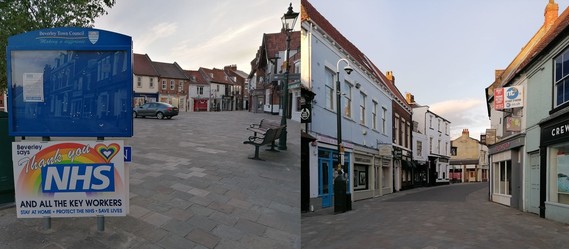 |
Beverley during the first lockdown 2020
Your COVID-19 experiences on the Online Catalogue
Between April and September 2021 we added over 20 COVID-19 experience collections onto our online catalogue.
- DDX2347 Lynne Curtin, Wetwang, Covid-19 poems (digital copies) 2020
- DDX2348 Sam Bartle, Driffield, Covid-19 poems (digital copies) 2021
- DDX2349 Janet Bucknall, Hedon, Covid-19 poem (digital copy) 2020
- DDX2350 Joy Foster-Styche Covid-19 'Lockdown diary of a Nobody' (digital copy) 2020
- DDX2351 Jackie Halliday Covid-19 lockdown photographs relating to Boothferry Bridge and Goole area (digital copies) 2020
- DDX2352 Pauline England, Beverley Saturday Market Covid-19 lockdown photographs (digital copies) 2020
- DDX2353 Josephine Connelly Covid-19 records and 'The Beverley Bounce' poem (digital copies) 2021
- DDX2354 Amber Craven, Pocklington, Covid-19 lockdown photographs (digital copies) 2020
- DDX2355 Paul Clubley, Beverley, Covid-19 lockdown panoramic photographs (digital copies) 2020
- DDX2356 Stephen Anstice, Cottingham, DEC Coronavirus Appeal records (digital copies) 2021
- DDX2357 Chris Stewart, Beverley, Covid-19 poem (digital copy) 2021
- DDX2358 Marjory and Graham Davey, Bridlington, Covid-19 lockdown story (digital copy) 2021
- DDX2359 Don Rhodes, Howden, Covid-19 lockdown diary (digital copy) 2020-2021
- DDX2360 Deborah Hall, Brandesburton, Covid-19 lockdown poem (digital copy) 2020
- DDX2361 Susan Peel, Bridlington, Covid-19 poem (digital copy) 2020
- DDX2368 Pamela Hornby Covid-19 poem 2020
- DDX2370 Beverley Covid-19 lockdown photographs (digital copies) 2020
- DDX2371 Esther Shoebridge, Leconfield, notes on living with cancer during the Covid-19 pandemic (digital copy) 2021
- DDX2375 Helen McGill, 'Panny D, our boys and me' Covid-19 poem (digital copy) 2021
- DDX2378 'The pink fairy comes to Wetwang: an isolation story for Bella Rose Ward' Covid-19 lockdown stories 2020-2021
- DDX2380 Pauline Russell Covid-19 poems (digital copies) [2019]-2020
If you would like to contribute your COVID-19 experiences to the archives, please email archives.service@eastriding.gov.uk or telephone 01482 392792.
Electrifying Bridlington
Many collections include brochures commemorating official openings and these provide an interesting snapshot in time of local events. They not only celebrated these events as a matter of civic pride but could be glossily produced for posterity so that people could keep them as souvenirs.
In this part of the world we all rely on the ability to turn on a kettle, use a refrigerator and have hot water on tap. Even as we head into a potential power crisis we will probably still expect to be able to use our electrical appliances, many of which could be the latest gadget or design. A large majority of these purchases will be made online but there was a time when the local electricity showroom was the ‘go-to’ store for the modern family. These showrooms were a showcase of the latest in modern living.
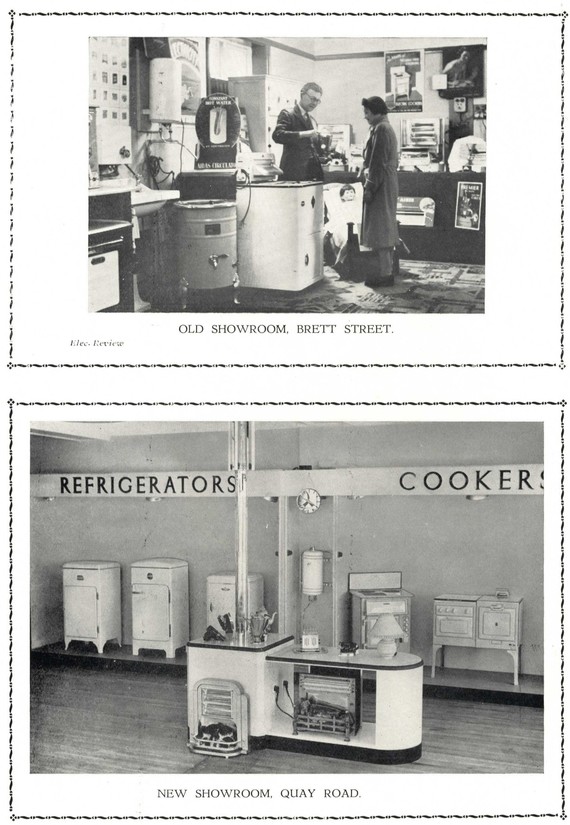
The Bridlington Electric Lighting Order of 1900 conferred power upon the council to supply electricity within its statutory area. The first public supply of electricity in Bridlington was available in 1905. At a time when the United Kingdom’s electricity provision was still a patchwork of private and public undertakings this brochure heralds a new phase in the provision of electricity for its residents by local government. The electrical expansion of the electricity undertaking and demand for electrical goods fed the need for a more efficient administrative building for staff and customers. A sleek, modern building was refashioned on the existing showroom site in Quay Road and the new showroom housed the latest domestic appliances to tempt shoppers.
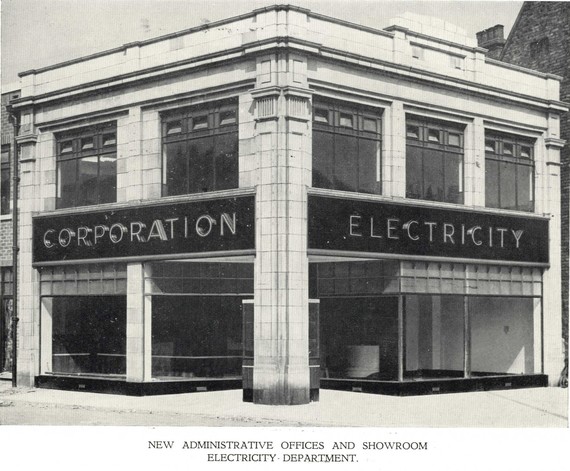
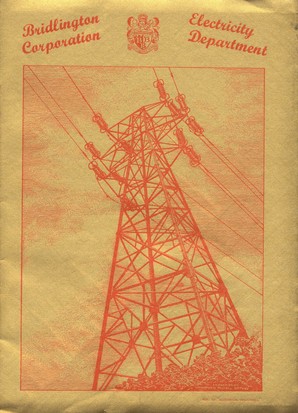
Bridlington Corporation Electricity Department brochure to commemorate new premises, Archives reference: BOBR/2/15/9/53
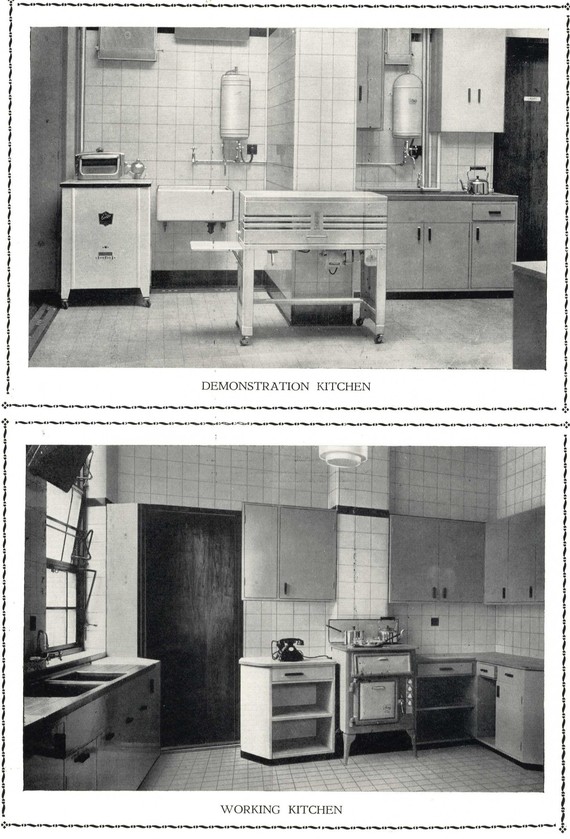
This eye-catching gold covered souvenir brochure celebrated this new showroom and offices and what it meant for Bridlington’s population. It includes the architect’s description of the premises. The showroom was on the ground floor with an interview room, general office, committee room, staff and meter rooms. The first floor provided a demonstration hall to seat 150 people with cookers, cabinets and other appliances, show kitchens and working kitchens.
The accompanying images are from the brochure and compare the old and new showrooms and the latest kitchen and heating appliances.
Water, Water Everywhere!
Here are some more interesting Bridlington facts taken from a "Programme of the official inauguration of the rural water supply scheme" (Archives reference: BOBR/2/15/9/53).
Archives reference: BOBR/2/15/9/53
On 28 July 1933 the Bridlington Corporation Act of 1933 received Royal Assent and extended the limits within which the corporation were authorised to supply water to include all those parishes within the Rural District of Bridlington as it then existed and 15 parishes in the Rural District of Driffield. This step was of a huge health benefit to the residents of the East Riding, many of whom still relied on the often unsanitary village pump to provide their water.
At this time the corporation was supplying water to Bessingby and Sewerby and water supplies to the remaining parishes in Bridlington rural district had been considered by East Riding County Council, the town council and the rural district council.
In 1934 Mr C B Newton of Hull was appointed by the corporation as engineer who provided a scheme to supply parishes in Bridlington and Driffield rural districts at a cost of £65,000. This scheme was submitted to the Ministry of Health for approval who allocated £5,000 as a lump sum towards the scheme. After considerable financial negotiations with neighbouring local government organisations the scheme was approved to supply 30 parishes at a cost of £48,611 to the corporation.
Because of the terrain in this area the elevation of the land ranged from a few feet about sea level in Holderness to over 550 feet at Speeton. A high level water scheme was constructed by the corporation in 1933. The reservoir situated on the Scarborough Road formed part of this scheme. To supply Buckton and Bempton and Speeton the water was re-pumped with a booster installation.
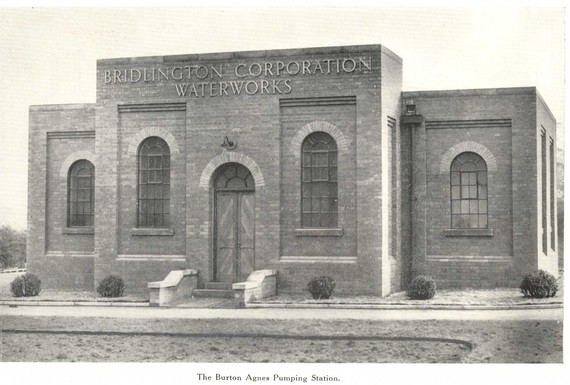
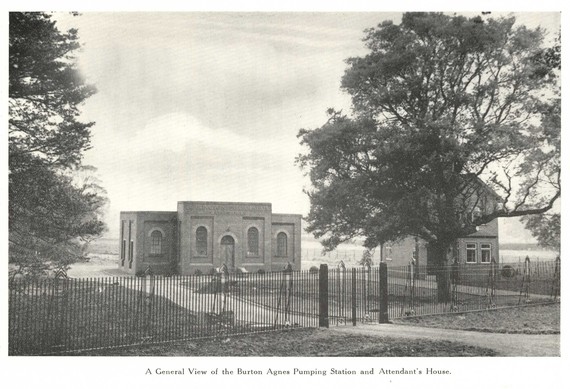
The bulk of the district was supplied by the pumping station at Burton Agnes. The corporation were rightly proud of this achievement of local government collaboration and boasted that the villages ‘are now provided with an abundant supply of water of exceptional purity which will be of inestimable value to the residents therein’.
Archives reference: BOBR/2/15/9/53
Route to Expansion
Increasing App Trail Coverage Through Partnerships
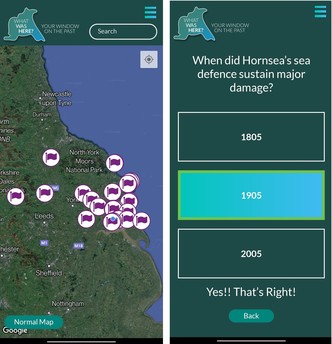
The 'What Was Here?' app launched in 2019 with a single heritage trail in Beverley, but thanks to partnership-working with the likes of Burton Constable Hall, Sewerby Hall & Gardens, the Humber Bridge Board, Visit Hull, and Visit East Yorkshire, there are now 29 heritage trail experiences available, which have developed to include mini quizzes and audio commentary on selected trails.
 |
|
Originally designed to cover the East Riding of Yorkshire area, the app has fed off the interest from other organisations to expanded the heritage trail coverage geographically. In particular, we’ve worked with North Yorkshire Libraries and North Yorkshire County Record Office so that you can now visit Skipton, Scarborough, Harrogate, and Northallerton, and be able to walk a heritage trail on the 'What Was Here?' app!
See the full blog post for information about our expanding trail coverage on ‘What Was Here?’ https://eastridingarchives.blog/2021/10/28/route-to-expansion/
|
Remembering Grovehill – Doing It Howard’s Way
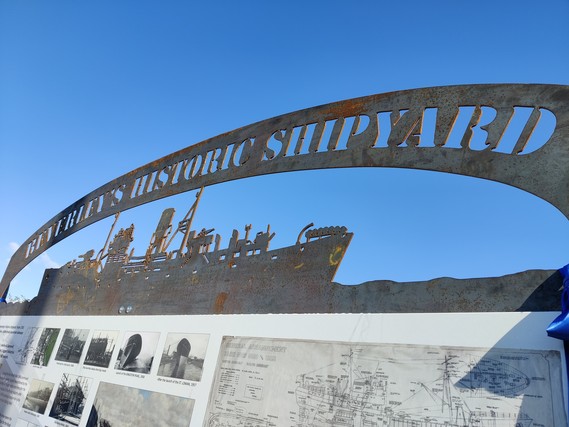 It was back in 2019 when Howard Tomlinson MBE first approached us as representative of the Grovehill Area Action Group with a proposal for a permanent memorial to Grovehill Shipyard, the site of a hugely successful shipbuilding industry that became a global powerhouse during the tenure of Cook, Welton, and Gemmell (the focus of our ‘Trawling Through Time’ project 2018-2019). Very sadly, Howard died before it could be completed. The COVID-19 pandemic undoubtedly hindered the progress of the project as well, but the sculptor Peter Naylor (known for his 158 Squadron Memorial at Lissett, among many other artworks) assumed responsibility for delivering the Beverley Shipbuilding Memorial earlier this year and, with assistance from both the Archives and Museums Services, succeeded in constructing it.
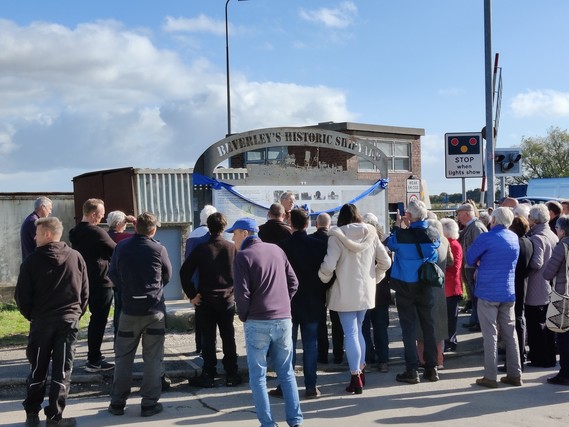
The memorial was finally unveiled at noon on Friday 15th October and stands in Beverley Business Park, Grovehill (site of the former shipyard), near Weel Bridge. Anyone visiting the memorial may also want to listen to soundclips from ex-shipyard workers on the ‘Beverley – Shipyard Voices’ trail, available on the ‘What Was Here?’ mobile app (www.whatwashere.org ).
See the full blog post for information about the memorial https://trawlingthroughtime.org/2021/10/25/remembering-grovehill/
Beverley Shipyard Memorial unveiling 15th October 2021
And Finally!
Little Treasures
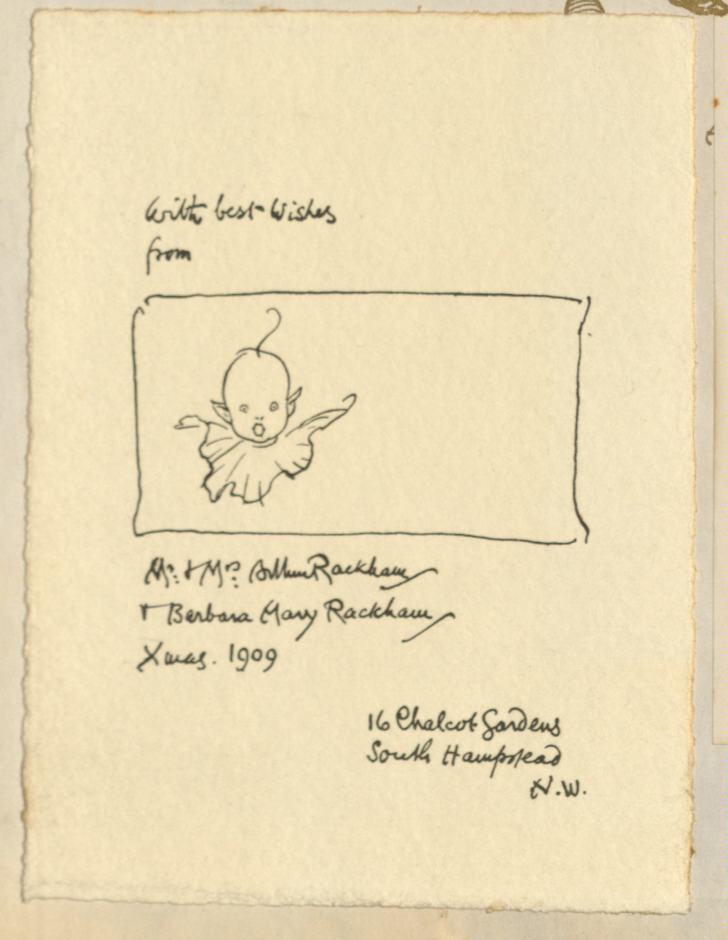
It is amazing what you can come across unexpectedly in the Archives, this lovely little drawing is by Arthur Rackham, one of the leading figures in book illustration, famous for his illustrations of 'Alice's Adventures in Wonderland' and other classic stories.
This drawing appears in a copy of 'Gulliver's Travels', held in the Champney Collection (archives reference: zCH/2886)
|