Summer 2021 edition
Welcome to the summer edition of the East Riding Archives newsletter.
We are in a holiday mood this issue with articles about the Butlins camp at Filey and how the East Riding has always been a must visit holiday destination. Have a go at our short aerial photograph quiz or enter the free draw with a chance to win an Amazon Echo dot.
Keep an eye on our social media for any news about changes in our opening hours and social distancing policies after the 19 July.
Welcome to the sunny East Riding of Yorkshire!
The idea of a stay-cation is not new to East Yorkshire. With its numerous seaside resorts such as Bridlington, Hornsea, Filey and Withernsea, it has always been a popular holiday destination.
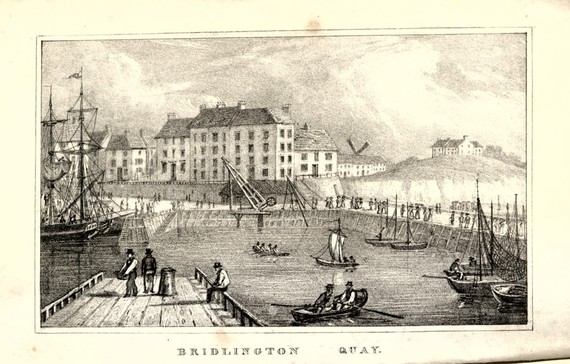
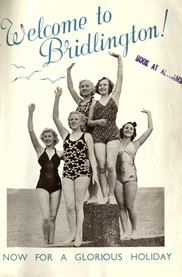
Bridlington became a popular place for people to go on holiday in the 1760s. In the early 1830’s guides were produced promoting Bridlington and the surrounding countryside. A guide entitled ‘Picturesque Excursions from Bridlington-Quay; being a Descriptive Guide to the Most Interesting Scenery in that Neighbourhood’, published in 1832, describes the Quay and its attractions for the Georgian visitor including sea-bathing which could be “enjoyed in its highest luxury” with the use of bathing machines. Other attractions are the sands, the pier, the esplanade and pebble hunting of which specimens of pebbles and fossils found on the beach are said to be “as perfect and beautiful as any on the whole coast.” There are several descriptions of excursions into the surrounding countryside at a time before rail travel brought masses of visitors to the area to sample the delights of the seaside.
Reference DDX/24/221
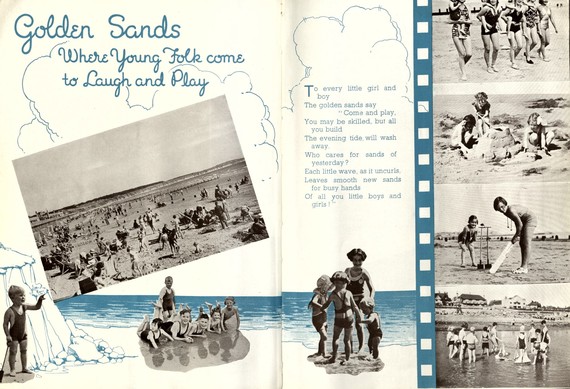
 Nearly 100 years later the bathing machines have long since disappeared, instead adults and children are seen splashing about in the water, playing games or simply sunbathing on the beach. A guide from 1939 claims ‘there is so much to see and to do to!’ At a time when steam trains brought hundreds of passengers to the seaside every week the book also contains a list of prices and places from which it was possible to travel to Bridlington with a cheap holiday ticket.
Reference DDX839/1
Butlins Holiday Camp at Filey
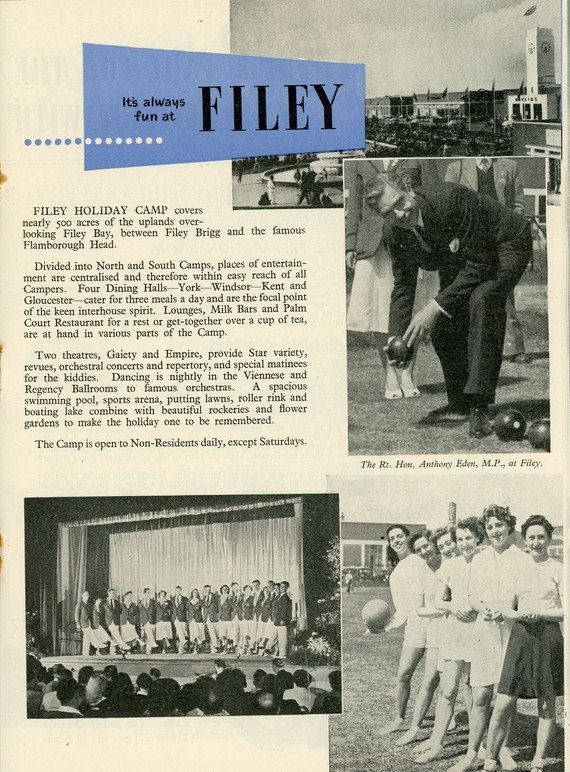
Before the advent of package holidays abroad, the British holiday camp was the place to be. Filey was the third Butlin's to be built, commencing in 1939 and taken over by the RAF during the Second World War. In 1945 the camp was handed back to Butlins and at the height of Butlin’s popularity in the 1950’s it accommodated 10,000 campers and 1500 staff making it the biggest of the Butlin empire. A programme of entertainment published in 1953 describes the camp at Filey as covering over 500 acres. It was divided into two camps, North and South with four dining halls and two theatres. There were two ballrooms, a swimming pool and various sports areas.
Reference DDX1822/4
|
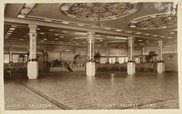
This is a postcard showing the Ballroom at Butlin’s Holiday Camp in Filey. It was sent by somebody staying at the camp to his family in North Wales in 1957.
Reference DDX123/4
|
|
 |
Going for Goal
Records recently received by the Archives Service include the first minute book of the Beverley Town Association Football Club for September 1905 to April 1907. This includes their inaugural meeting and the election of officers with J W Wadsworth being chosen as Club President. The volume also contains a list of Club rules and details of match admission charges which were ‘3d men, 1d boy and Ladies free’.
Committee meetings were usually held weekly in the Coffee Tavern in Beverley to select the team playing that week’s fixture and to discuss other club matters. A sub-committee was chosen to discuss with Mr J Watts the use of his field in Pighill Lane as a playing ground for home matches. It was also agreed to organise a dressing room at the White Horse Hotel ‘subject to the landlord’s consent’.
|
|
 |
 |
|
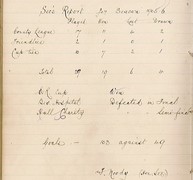
The minutes for the first annual meeting on 28 August 1906 include comments from the Club Chairman about their ‘remarkably successful season’. This is also evident in the Secretary’s Report as shown above which records 29 matches played, 19 won, 6 lost and 4 drawn. The team had in addition won the East Riding Cup earlier that year.
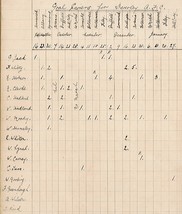
There is also a table at the back of the volume that contains more details about the team members, goals scored and matches played. Information for the early months of the 1905-1906 season is given in the extract here. This shows that the top goal scorers then were F Witty, N Hobson and W Moody.
Reference DDX2366/1/1
|
We are always pleased to receive the records of local clubs and societies as they are popular with researchers and add a more personal element to the official records that we hold. The Archives Service holds records permanently for current and future research so items do not have to be particularly old at the time of deposit. We also collect the newsletters and journals of local clubs and societies so that is another way in which local groups can become part of their local archive.
If you are a member of a local club or society that would be interested in depositing records with us then please do contact us for more information.
The View From Above
We are currently travelling less by air however aircraft and other flying objects can also be used to take aerial photographs or videos. Aerial photographs have been created in many different ways including balloons, blimps, kites, rockets and aeroplanes. Homing pigeons have also been used, they were fitted with a harness and lightweight miniature camera.
World War One saw the use of aerial photography increase with aircraft being equipped with cameras to record troop movements and enemy defences. After the war vertical photography was also used for surveys and mapping with the recently founded Aerofilms company working for the Ordnance Survey. World War Two saw more focus on the type of aircraft being used with preference being given to faster, smaller aircraft such as Spitfires.
Today aerial photographs and videos may be used for map making, aerial archaeology, land use planning, surveillance, commercial advertising and even film production.
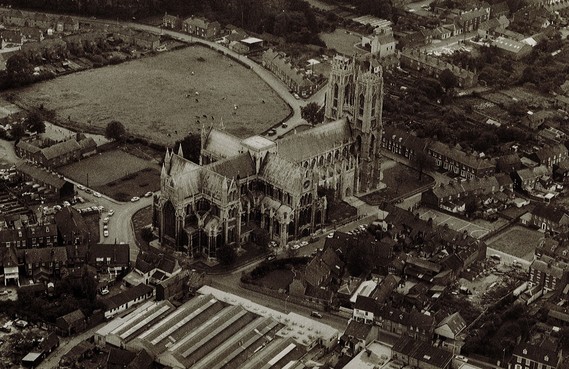
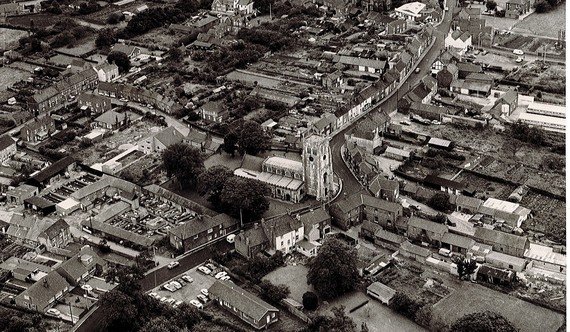
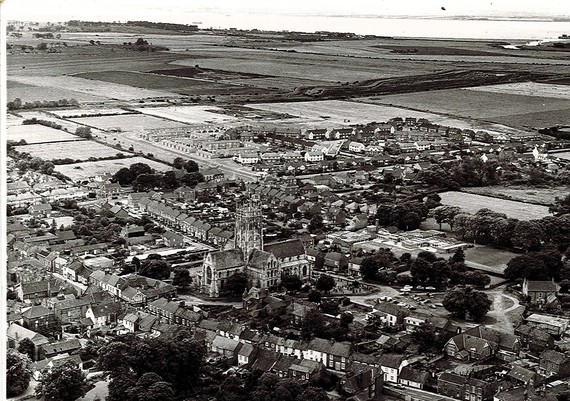
The sections of photographs below are taken from aerial photographs held by the Archives Service. Can you work out which towns in the East Riding they relate to? There are some clues to help and the answers are given at the end of this newsletter.
DDX1089/2
Clue: if you beaver away south of Driffield you will find this location
 EYHO/11/3/4/7
Clue: if you press on south from Burton Constable you will find this location
 EYHO/11/3/4/2
Clue: if you head into Holderness near to the River Humber you will find this location
‘What Was Here?’ user survey.
(Win an Amazon Echo Dot!)
Have you downloaded the ‘What Was Here?’ app yet? Cast your mind back to the year before COVID-19 (feels like a long time ago doesn’t it) and you may remember we launched a virtual ‘time machine’. It was called the ‘What Was Here’ app, free to download on smartphones, and since then its cemented its place as a heritage tourism experience for the region with two Finalist nominations in the Remarkable East Yorkshire Tourism awards ‘REYTA’s. Now we’ve done a few tweaks to our time machine, given it a spring clean, refreshed the design, and it’s ready to take people into the past as we look forward in hope to a future out of the pandemic.
Everyone loves a good heritage trail, and there are now over 21 of these across the Hull and East Yorkshire region, packed onto one app. As well as a new face, the app comes with new mini quizzes and audio commentary features on some of these trails, which adds extra fun to your tour through time.
‘What Was Here?’ has always been a window on the past, where you can look through time at an old scene from the location where it was photographed, but until now it’s only been possible to use the ‘Camera View’ to phase between past & present in the Trails section. Now, we’ve opened up several of these ‘time portals’ across the East Riding for you to discover using the ‘Map’ function. You can guide yourself around the region and see how many you can find.
We’re also asking for your help and encourage you to leave a review in the app stores once you’ve downloaded and checked it out. And, if you take part in our simple survey here, you’ll be entered into our free prize draw to win an Amazon Echo Dot!
Take our survey: https://www.smartsurvey.co.uk/s/WhatWasHere/
 One other thing you’ll notice on our app homepage is that lots of amazing organisations and projects have partnered with us on ‘What Was Here?’ to add their own heritage trails to the time travelling experience, including Visit Hull, Visit East Yorkshire, Burton Constable Hall, the Humber Bridge, East Riding Festival of Words, Hessle Mill Quarry To Country Park project, Bridlington Townscape Heritage, Sewerby Hall & Gardens, North Yorkshire County Council, with more and more coming onboard the time travelling journey.
Information about the app and links to the app stores can be found on the Visit East Yorkshire website at https://www.visiteastyorkshire.co.uk/things-to-do/what-was-here-app-p1333901
Happy (time) travels!
‘Strawberries and ice cream’
With summer upon us and Wimbledon in full swing our thoughts turn to strawberries and ice cream.
Strawberry fields
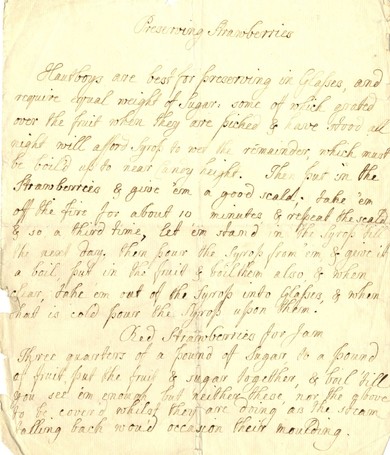
This lovely little recipe is from the Grimston family collection. It is a recipe for ‘Preserving Strawberries’, dates from around the late 18th century, and gives instructions for two different ways of dealing with the fruit The first recipe refers to them as ‘Hautboys’. This spelling is anglicised and refers to the hautbois strawberry or musk strawberry which was native to Europe. Confusingly ‘hautboys’ is also an archaic word for the oboe but for the purposes of this recipe it can safely be assumed they were referring to the edible fruit! A literal translation of hautbois is ‘upper woods’ which clearly indicates where an eager forager would find them. The strawberries can still be found and are renowned for their flavour and juiciness. The first recipe gives instructions for strawberries in a sugar syrup and the second gives a very simple recipe for strawberry jam.
Reference DDGR/38/94
Ice cream for everyone
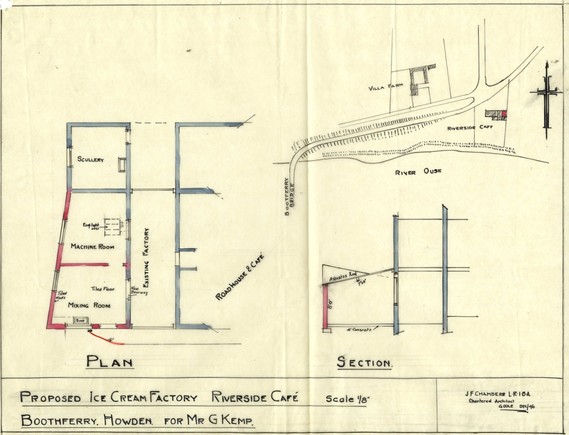
It’s summertime: sunny days and beach holidays which for many of us will now be local as this year staycations have become a necessity. When asked to name a typical summer food many would say ‘ice cream’. It’s a popular choice and to see the ice cream vans dotted around towns and beaches is a promising sign of a cooling treat. But have you ever given any thought to the ice cream manufacturer? In our local government collection for the Rural District of Howden we have a file relating to a proposed ice cream factory at Boothferry. It was to be located at the Riverside Café at Howden and the owner’s name was G Kemp. A letter from J E Doubtfire, a fellow ice cream vendor, respectfully asked the authorities to consider his own position as a manufacturer on the opposite side of the river as Mr Kemp would be providing competition. However consent was given thereby ensuring that the area was well supplied with ice cream for the years ahead. The image shows the floor plan which is dated 1946 and shows the extension to the existing factory.
Reference RDHW/6/8/2/56
Trading Places
Records recently listed include a set of four ‘Jackson's Driffield and East Riding Illustrated Almanack, Diary, Trade Directory and List of Local Information’ for 1932 to 1935. These are relatively small publications in size and number of pages however they provide a useful and interesting snapshot of Driffield in the 1930s.
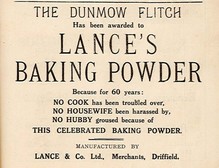
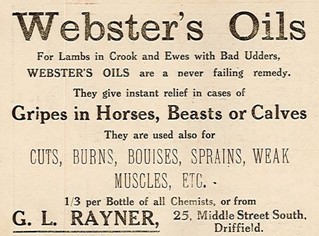
The Local Trade Directory section in each volume is arranged in alphabetical order and they cover a variety of needs. These range from accountants and aerated water manufacturers to watchmakers, window cleaners and yeast stores – with the Balloon Yeast Company being located in Driffield Market Place. Many local businesses used this as an opportunity to publicise their products or services as well as shown in the examples here. Some advertisements also illustrate the importance of agriculture and farm animals to the local economy
Reference DDX2332/3
|
|
 |
 |
Each volume has a Local Information section containing items of interest to residents such as carriers and omnibuses visiting Driffield and the days that they stopped there. Information is given about local places of worship and the times of their services. Details about various public institutions are also provided with the names of their officials. These indicate that the Middle Street North Post Office was open 8.00am to 7.30pm weekdays and the Public Library, located in the Corn Exchange, was open Mondays and Thursdays 7.00pm to 9.00pm.
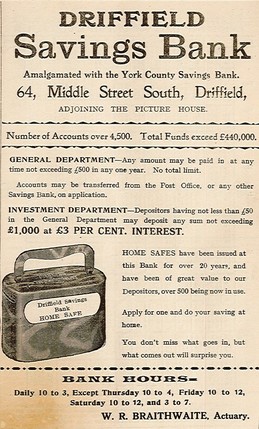
The financial institutions page lists six banks in Driffield although it is also noted that the Post Office includes a savings bank as well. The Driffield & East Riding Benefit Building Society is also listed with an office at the Mechanics Institute. More information about the Driffield Savings Bank is given in its advertisement shown here. This includes that the Bank has more than 4,500 accounts and total funds in excess of £440,000. It also recommends the use of Home Safes as pictured because ‘You don’t miss what goes in, but what comes out will surprise you’.
 |
These publications relate specifically to Driffield however many of the other similar trade directories that we hold cover a larger area in less detail such as the East Riding or Yorkshire. The Archives Service also collects modern day versions of these including small monthly local publications such as ‘Beverley Radius’, ‘Door 2 Door’ and ‘On Your Doorstep’. Our collection of about 180 local telephone directories includes some business based volumes as well such as the ‘Yellow Pages’.
The evolution of marriage registration!
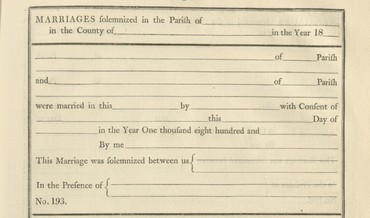
On the 4 May 2021 new marriage legislation came into being, the biggest change to the legislation since 1837.
Marriage registration is now electronic, the green marriage registers are no more! The new system will include the bride and groom’s dates of birth along with the names and occupations of both parents of the bride and groom, instead of just the father.
Before 1754 the information listed on marriage entries in parish registers varied and usually consisted of a single line entry as in this example from Beverley, St. Mary.
1714 Novembr. 18 Lawrence Clark Yeomn. & Mary Bennington Spinster, both of Willerby, married
Hardwicke’s Marriage Act 1753 came into force in 1754, it was designed to end the scandal of clandestine marriages. Marriages were recorded in bound volumes with specially printed forms. The information recorded included the bride and grooms names and marital status, date and place of marriage, whether by banns or licence and included the names of witnesses. If the bride or groom were under the age of 21 parental consent was required, this too was noted in the register.
|
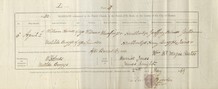
The Marriage Act of 1836 changed the registers again to the more familiar format. The new registers included the date, place and rites of the marriage, giving names, ages, occupations, marital status and address of bride and groom; the names and occupations of their fathers and the names of their witnesses.
Reference BOBR/2/5/29/11
|
|
 |
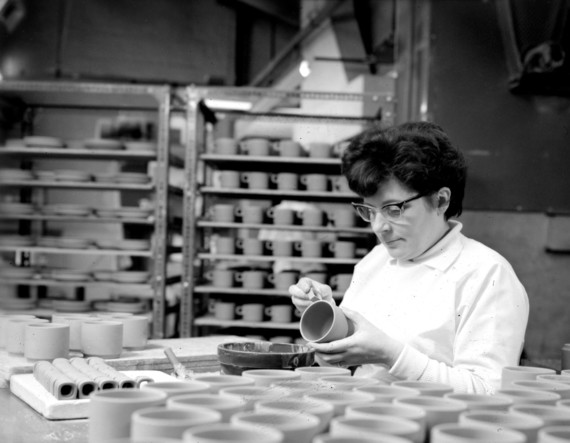
Coming soon (late July)…Hornsea Pottery online exhibition
In 1949, brothers Desmond and Colin Rawson started a small business in the seaside town of Hornsea, making plaster of Paris models as souvenirs for the local tourists. Hornsea Pottery went on to become world famous for its tablewares, which are now antiques prized by many collectors. Later in July we’ll bring you an online exhibition from our archive, in partnership with Hornsea Museum. Find out more about the Pottery’s history and view images from the archive. Check our Archives Online page from 27th July to find the exhibition.
www.eastridingarchives.co.uk/archives-online
Reference DDPH/9/1/1/23 Producing world-famous ceramics: Hornsea Pottery
And finally!
On the 22 November 1881 at Bridlington Holy Trinity William Thomas Start married Alice Foster Holiday. Thomas was a commercial traveller!
|
|
 |
Answers to the aerial photographs
DDX1089/2
Clue: if you beaver away south of Driffield you will find this location: Beverley
EYHO/11/3/4/7
Clue: if you press on south from Burton Constable you will find this location: Preston
EYHO/11/3/4/2
Clue: if you head into Holderness near to the River Humber you will find this location: Hedon
|