East Riding Archives Spring Newsletter 2021
We at the East Riding Archives are hoping to welcome back visitors to the Archives research room in May, please look out for announcements on our social media platforms.
In the meantime welcome to our Spring edition of the Archives newsletter where you can read about the launch of the First World One exhibition, the history of the census and how the Great Exhibition of London brought about the advent of the packaged holiday. We also celebrate the 25th anniversary of East Riding of Yorkshire County Council and the 225th anniversary of the smallpox vaccination.
We would like to take this opportunity to congratulate Hannah, one of our archivists and her husband on the birth of their baby daughter in late March. We look forward to meeting her when circumstances allow.

Announcing the ‘First World War Lives’ exhibition
From librarians to farmers, shop assistants to police officers; discover the stories of local individuals researched as part of the First World War Lives project in our brand new online exhibition.
The First World War Lives project tells the previously untold stories of over 1,100 local service personnel, researched by our team of volunteers. This online exhibition highlights a selection of these stories, covering subjects such as prisoners of war, women, health and those who were stationed around the world.
In addition to viewing over 150 stories in the exhibition, you can also download a free WW1 Research Guide and browse the ever-growing First World War Lives collection of over 1,100 biographies on the archives Online Catalogue.
We would like to say a big thank you to our fantastic team of volunteers who have dedicated many hours to researching these stories since the project’s launch in 2014, and for also helping with the development of the exhibition.
Visit the exhibition: www.eastridingarchives.co.uk/WW1Lives
|
225th anniversary of the smallpox vaccination
On the 14 May 1776 Edward Jenner administered the first smallpox vaccination. This vaccination went on to eradicate smallpox as a disease.
Before the development of Edward Jenner’s vaccine it was known that those who survived smallpox were immune to catching it again and inoculation or variolation, the art of giving subjects a small dose of smallpox, was widespread throughout the early eighteenth century.
 |
|
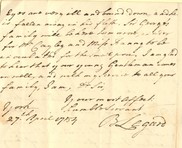
In 1756 B Legard when writing to John Gimston tells of how ‘Sir George’s family will be home from now in order Mr Cayley and Miss Fanny to be inoculated for smallpox.’
DDGR/42/4/54
|
|
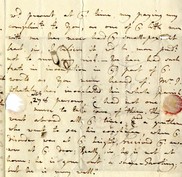
A letter from William Gilpin to John Grimston in 1766 tells him that ‘We have had such feats in inoculation in this part of this world as you never heard of. Mr J Whateley has inoculated his whole parish, about 278 persons and had not one nurse to take care of them'
DDGR/42/33/13
|
|
 |
 |
|
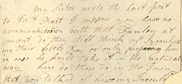
In 1770 Jane Grimston discusses with her father John the merits of inoculation and enquires whether a young boy had been inoculated or were the family ‘only preparing him in case he should take it in the natural way’.
DDGR/42/31/iv/17
|
Beverley Police Station
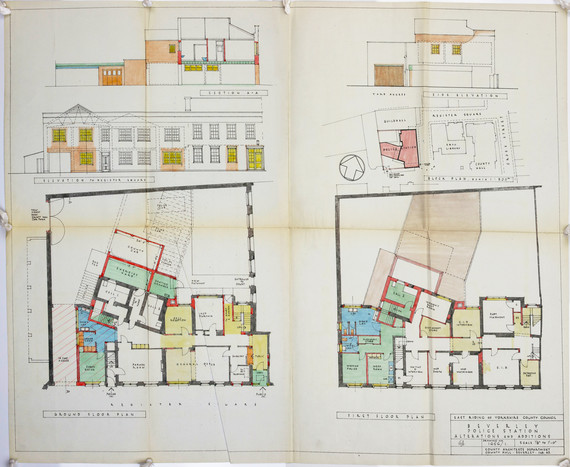
This plan is from a file called ‘Beverley Police Station improvements and extensions file’. It shows the proposed alterations and additions to Beverley Police Station. Dated 1963 it shows the site location of the building which was adjacent to the Guildhall in Register Square.
In the nineteenth century the site was previously the borough prison but by the 1890s it had become the police station. Up to 1928 the county and borough police forces were separate entities but in this year the borough police merged with the East Riding Constabulary whose headquarters were in Sessions House. The old borough office was retained as a divisional station and although altered in the late 1920s by 1963 this plan shows that they were looking at potential modernisation and providing the area with a station fit for the future.
However, by 1983 the former borough station was found to be structurally unsafe. Part of the old building was demolished in 1985 and the site now forms offices owned by East Riding of Yorkshire Council.
CCER/1/15/1/37
Census History
On 21 March 2021 we were all required to complete the national census. This is a survey of information which has been collected every 10 years since 1801. The data held in these census is an important source of information to family and social historians.
The first parliamentary bill to have a census was in 1753 but it was not until 1800 that the Census Act introduced the ten year census. The government had to produce a new act every 10 years up until 1920 when the 1920 Census Act meant government can hold a census at any time.
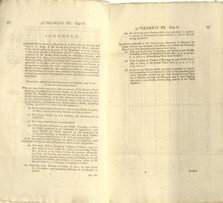
The first census were collected by the overseers of the poor. Forms were sent to parish officers, land owners and local clergy who collected statistical information which was then returned to the Home Office. This extract from the 1811 Census Act gives the schedule of information that had to be collected.
PE158/283
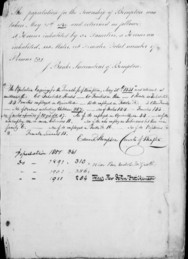
In 1801 the number of houses uninhabited and inhabited, families, persons in the parish and the number of baptisms and burials were recorded. Similar information was taken in 1811, 1821 and 1831 with extra information such as numbers who worked in agriculture or in the militia. Many parish clerks recorded this information in the baptism records. This can be seen in Bempton where the parish clerk records at the front of the parish register that in 1821 there were 46 houses inhabited by 54 families, 3 houses were uninhabited and there were 115 males and 116 females. Total number of persons 231. In 1831 there were 60 inhabited houses with 60 families in them. There was one uninhabited house. There are also details of the number of families who worked in agriculture and in trade. The population had risen to 287.
PE138/3
Within some of the parish records there are population books. These were recorded by the overseers. They identify family names with numbers in the household and whether they worked in agriculture or trade. The extracts are from the 1811 and 1821 population books for Beeford
PE114/118 &119
 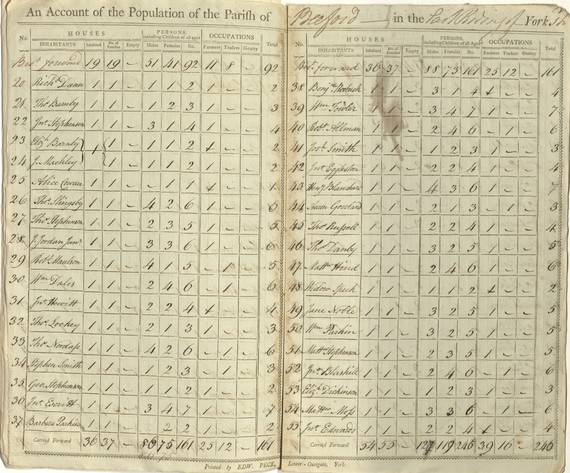 In 1841 the task of collecting the information was given to the Registrar General who organised the count. Each household was given a form to fill in, this was collected by enumerators who then recorded the information in schedules which is what remains today. The 1841 census was the first to record individual names and their occupations.
The next census to be open to the public will be the 1921 census in 2022. It is important to note that the 1931 census was destroyed by fire and there was not a 1941 census due to the second world war so we will have to wait another 30 years before the next one.
Snippets found in the Archives
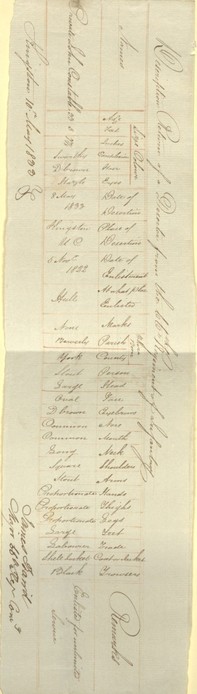
Within the parish collection for Beverley St Mary’s there is a collection of correspondence to the overseers of the poor. When browsing their content we came across a desertion notice for a John Constable, probably sent to the parish on the chance he might return to Beverley. We don’t know if he did return but this is what we have found out.
John Constable baptised 27 July 1797 at St Mary’s Beverley the son of William Constable militia man.
He enlisted with the militia on 5 November 1822 in Hull. He was a private in 66th Regiment of Infantry which was based in Canada from 1827 and there is a record of him having 500 lashes on 12 July 1832 in Kingston Upper Canada.
The desertion notice records that he deserted on 8 May 1833 in Kingston Canada. He is described as being 35 years old, 5 foot tall with hazel eyes. He was a stout person with an oval face, common nose and mouth and a long neck.
PE1/702
Happy 25th Anniversary ERYC
The Archives Service holds records for more than fifty local authorities and these include the East Riding of Yorkshire Council. This was set up as a unitary authority in April 1996 which means it celebrates its 25th anniversary this month.
As a unitary authority ERYC is responsible for local government functions within its area. This means it is responsible for providing a large number of services including council tax collection, education, health and wellbeing, housing, libraries, public health, public safety, social care for adults and children, town and country planning, trading standards, transport, waste and recycling.
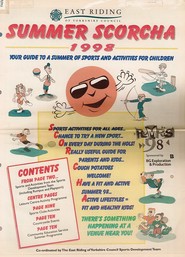
The Council’s interest in supporting its residents to have a healthy lifestyle has led to various local initiatives being organised. This included the ‘Summer Scorcha’ sports and activities for children shown in this guide for 1998.
ERYC/9/3/6/4
|
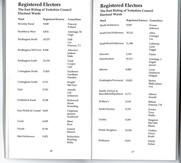
The Council currently includes 67 Councillors who are elected every four years to represent the 26 wards within the East Riding. This section from the ERYC yearbook for 1996-1997 gives information about the Councillors and wards when the Council was first created.
ERYC/1/10/2
|
|
 |
 |
|
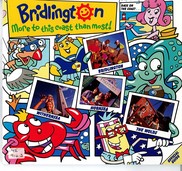
The area covered by ERYC consists of about 1,000 square miles and includes many places that are popular tourist attractions. The Council is keen to encourage visitors to these areas and has produced a number of colourful guides and leaflets over the years as this example for 1997 shows. Currently there are some restrictions on visiting local attractions however hopefully this will improve as the year progresses.
ERYC/9/3/6/3
|
 |
|
To the Water
To the Water is our latest exhibition at Beverley Art Gallery and we are looking forward to sharing it with visitors when we reopen.
Changes and uncertainties with programming over the last year provided an opportunity to produce an in-house exhibition drawing on our own collections. Water was chosen as the theme as it had the potential to be uplifting and played to our strengths: with two sides of the East Riding bordered by water and a rich network of rivers, streams and drainage channels we have some fantastic watery content in our collections.
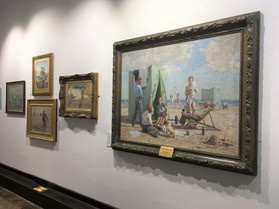
The exhibition is divided into art and history, with four themes in each. In art, Favourite Places shows work by artists who have been attracted to watery locations. A Splash of Colour looks at painters who found inspiration in Mediterranean and Cornish waters, after the county was “discovered” by artists in the 1880s. Painting for a Living focusses on Reuben Chappell of Goole who literally went to the water to secure commissions from ships’ masters and is central to the Pierhead Painters group of artists. Alive by the Water explores how artists capture moments in time, with the huge Picnic on the Sands providing a stunning centrepiece. The project was an opportunity to restore the painting’s tired frame and research artist Evelyn Saner who lived a short but rich life. You can read about Evelyn here and search the entire East Riding Museums collection.
|
 |
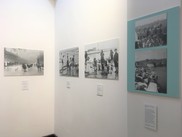
The history sections feature large reproduced photographs from Archives and Museums collections. The Archives content focuses on images to be found on the East Riding Photos website and East Riding Archives Flickr pages. Setting Sail includes images of pleasure boat rides and children sailing model boats. A Change of Scene looks at the simple pleasures to be found near lakes, rivers and the sea, in the days when trips out were a rare treat. Walking by Water looks at some of the favourite spots for waterside strolls in the East Riding, with Hessle, Welton and the cliffs at Bridlington all featuring. Having a Paddle shows children rolling up their shorts on the beach, having fun at Beverley’s Brickie Bridge and splashing in floodwater. |
|
 |
 |
|
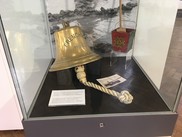
A small selection of Museum documents and original Archive material complement the wall-pieces. A highlight is the still-shiny brass bell from the steamboat Frenchmen who paddled in and out of Bridlington harbour for thirty years. |
Whilst we are closed you can enjoy an overview of the exhibition on the East Riding Museums website.
Sally Hayes, Beverley Curator (Treasure House)
The Great Exhibition of London 1851
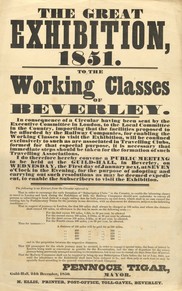
On the 1 May 1851 Queen Victoria opened the Great Exhibition of London. It was the first international exhibition of its kind exhibiting all manner of manufactured goods in a magnificent structure known as the Crystal Palace. During the six months when it was open over 6 million people visited the exhibition.
Before the exhibition took place towns were urged to establish subscription clubs in order that the ‘working classes’ could travel to London to visit it. In September 1850 Beverley’s mayor, the wonderfully named Pennock Tigar, invited people to a meeting to establish a travelling club. An account in the Hull Advertiser of 10 January 1851 describes how the mayor wanted to set up a subscription club where the working population would have the opportunity to travel down to London and return from 10s 6d to 12s and have the opportunity to board there for 6 nights with tours of the exhibition and London. This could all be done for one shilling a week up the end of June. The railway companies had agreed to establish special trains of 250 people.
Thus began the start of excursion trains where the cost of the train fare, board and entrance ticket were paid at the same time.
DDBD/5/53 part 1 Notice of railway excursions for the working classes to the Great Exhibition
|
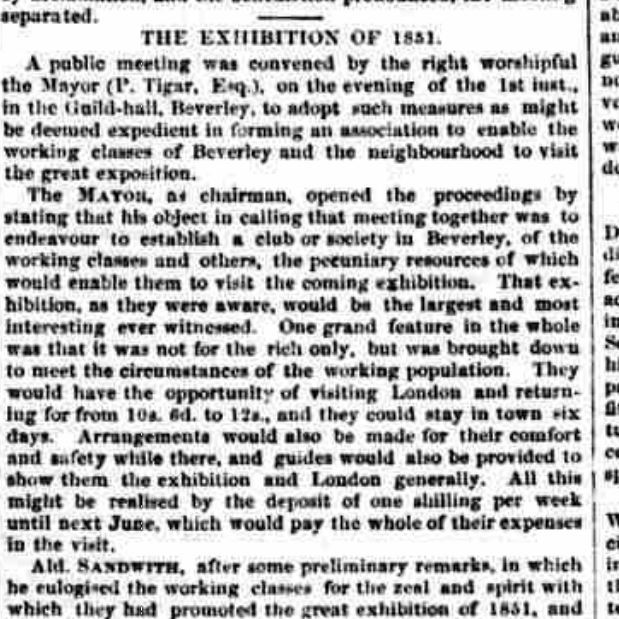 |
Hull Advertiser 10 January 1851
Recently Catalogued Records
DDX2110 Dodsworth family history research records additional nd. [19th century]-2005
DDX2328 East Riding local history records and Yorkshire printed sources 1882-2010
DDX2331 Carole Richards Covid-19 lockdown East Riding records 2020
DDX2332 Jackson's Driffield and East Riding Illustrated Almanacks 1932-1935
DDX2333 Jennison family records and printed sources 1910-1997
DDX2334 Thomas Hodgson of Sewerby records and printed sources 1745-2020
DDX2335 Gillian Ralph personal and family research records [1848]-2018
DDX2336 North Cave Women's Institute records 1927-2016
DDX2337 Matthew Bailey, tailor, East Riding account book 1818-[1827]
DDX2338 Garden Family fund raising 2021 calendar 2020
DDX2339 Cowick and Pollington Independent Church records 1849-1888
DDX2340 East Riding historic buildings photograph albums [1995-2010]
DDX2341 'History of the East Riding Constabulary Old Comrades Association 1926-1996' VHS video cassette nd. [1990s]
DDX2342 Shelagh Wallace, Carnaby, Covid-19 lockdown records (digital copies) 2020
DDX2343 Covid-19 Holme on Spalding Moor Community Support Group volunteer update bulletin (digital copy) 2020
DDX2344 South Cave Orchard Court Residential Care Home staff in personal protective equipment (PPE) Covid-19 photograph (digital copy) 2020
DDX2345 Sally Hatfield Covid-19 lockdown poem (digital copy) 2020
DDX2346 Rene James 'What I Did In Lockdown' photograph (digital copy) 2020
And finally!
Ten years ago on the 3 April 2011 the UK's last circus elephant retired.
A hundred and twenty years ago on 21 June 1901, John Sanger’s travelling circus wended its way into Beverley. Here, the elephants slope into Wednesday Market, followed closely by a pair of camels.
DDPD/2/1/32

|