EPSRC Healthcare Technologies Newsletter - October 2025 (issue 18)

EPSRC Logo New

View online

Healthcare Technologies Newsletter -

October 2025 (issue 18)

UKRI_banner-green-orange

Healthcare Technologies Information

Group of people in office meeting

Credit: Pexels fauxels

EPSRC Strategic Advisory Teams

The Engineering and Physical Sciences Research Council (EPSRC) welcomes applicants for vacancies on our Strategic Advisory Teams (SATs).

The following vacancies are available in Healthcare Technologies:

  • healthcare professional with expertise in healthcare technologies (industry or user only)
  • industry professional including biotechnologies and pharmaceutical (industry or user only)
  • expertise in engineering and physical sciences research relevant to population health and prevention of ill health (academic, industry or user)
  • expertise in engineering and physical sciences research with relevance to early diagnosis (academic, industry or user)

Submission of applications closes on 7 November 2025 at 4:00 pm UK time.

Further information, including how to apply, can be found on the UKRI website.

UKRI website: EPSRC Strategic Advisory Teams vacancies

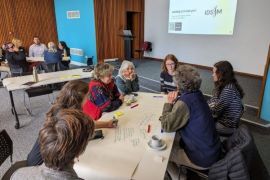
EPSRC researchers with public and patients taking part in workshop

Credit: Professor Jude Meakin. Researchers from the Image-Driven Subject-Specific Spine Models team sit around tables with members of the public and patients taking part in a workshop.

Patients’ voices help improve access to medical technologies

The EPSRC healthcare technologies theme has published a series of case studies which showcase patient and public involvement and engagement (PPIE) in action in our funding portfolio.  

The series comprises four case studies, each demonstrating PPIE approaches and challenges faced by members of the EPSRC healthcare technologies research community:

Other examples of EPSRC research outcomes and impact can be found on the UKRI website.

EPSRC research outcomes & impact

clinician with patient

Credit: SDI Productions, E+ via Getty Images

New tools aim to improve early diagnosis and ease NHS pressure

The EPSRC healthcare technologies theme has funded six new research projects focused on developing novel tools and technologies for patient-specific prediction, early and accurate diagnosis of physical and mental health conditions for use in the community.

The six newly funded projects aim to make diagnostic testing more accessible by designing simple, affordable tools that can be used in everyday settings such as: GP surgeries, pharmacies, community diagnostic hubs and people’s homes.

Each project has been co-designed with patients, carers and clinicians, and all of them are focused on real-world impact.

Further information is available on the UKRI website news item.

UKRI website news item

Application form with laptop

Credit: Pexels - Markus Winkler

EPSRC peer review college

The EPSRC Peer Review College plays an integral part in our peer review process. It enables the scientific community to be nominated as suitable to review applications, so giving general quality assurance of EPSRC’s peer review process.

EPSRC seeks college members from academic and non-academic backgrounds (such as commercial or industrial, health services, public services and charity roles). We are looking for UK and international college members.

We are always looking for new members. If you are interested in joining the college, we encourage you to apply using the self-nomination application form.

Additional information about the EPSRC peer review college is available from the UKRI website.

UKRI website: EPSRC peer review college

Funding opportunities

DARE (Data and Analytics Research Environments) UK Real-world Research Exemplar Programme

Apply for funding as a real-world research exemplar to use, evaluate and influence emerging capabilities enabling research within and between trusted research environments (TREs).

You must be based at an eligible UK research organisation, and you must meet individual eligibility requirements.

You must partner with one or more TREs and provide evidence of commitment to support project by a representation of the TRE.

The full economic cost (FEC) of your project can be up to £594,384. MRC will fund 80% of the FEC.

The projects will have a duration of 12 months from 1 April 2026 to 31 March 2027.

This funding opportunity will close on 5 November 2025, 4:00pm UK time.

Funding opportunity

Latest News

Healthcare professional using digital tablet with patient

Credit: andreswd, E+ via Getty Images

Committing to better inclusion of older adults in health research

A joint statement has been signed by over 40 UK health funders and charities, including UKRI, to improve understanding of disease and develop better health interventions.

The joint statement sets out a shared commitment to:

  • actively support the inclusion of older adults in research
  • challenge unjustified exclusion, particularly where older adults have complex health conditions
  • ensure that research is designed with equity in mind and better reflects the diversity of the UK

The statement builds on the Chief Medical Officer’s annual report on healthy ageing, which highlighted that older people are routinely underrepresented in clinical trials and research studies.

Further information is available on the UKRI website.

UKRI website - news

Equality and diversity in neuroscience workshop

Breaking barriers: making brain research more inclusive

Brain research and neurotechnologies are transforming healthcare, from understanding how the brain works to developing new treatments for conditions like stroke and epilepsy. But these technologies don’t always work equally well for everyone.

Biological and phenotypic factors - such as hair type, skin tone, head size, skull thickness, and hormonal differences - can all influence how well neurotechnologies capture brain signals. This means that if research excludes people from diverse backgrounds, the results may not be reliable or beneficial for all communities.

Despite this, participants from minority populations remain critically underrepresented in UK neurotechnology studies. A University of Sheffield-led project, funded by the UKRI Neuromod+ Network, set out to change this.

In collaboration with the Israac Community Centre in Sheffield, researchers co-designed interactive workshops to explore how communities engage with brain research. Shaped around cultural needs, these sessions built trust, improved understanding, and revealed practical barriers and solutions - leading to recommendations for more inclusive study designs and even a prototype EEG electrode.

The project was a joint effort between the University of Sheffield (led by Dr Mahnaz Arvaneh and Dr Dan Blackburn) and the National Institute for Health and Care Research (NIHR) Devices for Dignity MedTech Co-operative (led by Lise Sproson). It highlights the value of working directly with communities to build trust, raise awareness, and adapt research tools that make participation easier and more representative.

To share the outcomes, the team created a short YouTube video, designed to raise awareness among both researchers and communities about the importance of diversity in brain research.

YouTube video

DALE project logo

DALE: Disability Access in Laboratory Environments - review of lab access assessment

The Disability Access in Laboratory Environments (DALE) project is seeking people with an interest in disability access to review their lab access assessment to ensure its utility and relevance to the widest possible range of labs and disabilities. 

The project is funded by the UKRI EDI Caucus and has ethical approval from the University of East Anglia (ETH2425-2405).

Access assessment

Smart medical imaging

Advancing PET imaging with diffusion models

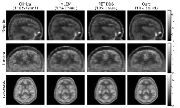
George Webber, a third-year PhD student in the EPSRC Centre for Doctoral Training (CDT) in Smart Medical Imaging, has published three recent papers—two in the Institute of Electrical and Electronics Engineers (IEEE) journals and one at the Medical Image Computing and Computer Assisted Intervention (MICCAI) Society—demonstrating how diffusion models can be used as generative priors to significantly enhance Positron Emission Tomography (PET) image reconstruction.

His research, co-funded by GSK, explores how we can integrate diffusion models, today’s state-of-the-art method for high-quality image synthesis, with our existing detailed knowledge of PET physics.

This approach improves image fidelity and sharpness, reduces noise, and enables lower radiation doses for patients - an important step toward safer and more accurate neuroimaging.

Key innovations include:

  • Likelihood-scheduling to align reconstructed images with clinical imaging heuristics
  • MR-guided personalisation to flexibly incorporate patient-specific anatomical information
  • Joint learning from raw data and images to further improve image quality

Read the papers:

Further information about the CDT is available on the CDT Smart Medical Imaging website.

CDT website

COG-MHEAR_website_home-page

New glasses will supercharge hearing with AI

Heriot-Watt researchers are part of a UK-wide team developing 'hearing glasses' that could dramatically improve how people with hearing loss experience sound by combining lip-reading technology, artificial intelligence and the power of cloud computing.

The COG-MHEAR programme is funded by the Engineering and Physical Sciences Research Council (EPSRC) and led by Edinburgh Napier University.

Further information about the development of the 'hearing glasses' can be found in the news section of the Heriot-Watt University website.

Heriot-Watt news