|
Delivering Impact from Research |
|
|
£60m committed to delivering impact from our research
 EPSRC’s Impact Acceleration Accounts (IAAs) help deliver new innovations that benefit society, form successful businesses, and offer economic and social returns built on the UK's fundamental engineering and physical sciences research base. IAAs are complementary to other investment routes along the innovation cycle and aim to promote rapid movement of knowledge and emerging outcomes between universities, businesses, and other organisations.
Through EPSRC investment of over £105 million in IAAs since 2017 and a planned further £60 million committed for 2022 – 2025, a collaborative environment has emerged where new ideas and innovative approaches are nurtured to further knowledge exchange and to respond to emerging priorities either at a local, national, or international scale.
To discover more about the breadth of activities our IAAs support, please check out the new online showcase below.
|
|
A student’s perspective on ICASE
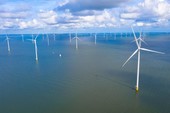 In a new blog post, ICASE student, Kaiser Saeed, discusses the benefits of industry collaboration in his work solving real-world problems with floating offshore wind, an emerging sustainable energy solution.
“My PhD is focused on the new and rapidly emerging field of floating offshore wind, specifically concerned with the operations and maintenance (O&M) aspects. There is much debate about the most optimal strategy for repairing floating turbines; is it technically feasible to tow turbines back to shore for portside maintenance using inexpensive vessels, or should maintenance be performed in-situ via floating cranes? What are the technical challenges and constraints which must be considered to evaluate the realism of these strategies? And most importantly, how can we model these processes in order to drive cost reduction?”
|
|
|
Faraday Institution celebrates success of its first cohort of PhDs
As the first cohort of 13 Faraday Institution PhD researchers nears the end of their programme, the organisation has celebrated their remarkable achievements at an event at the Royal Society. Over the last 4 years the cohort has had access to networking opportunities, industry visits, mentorship, internships, that have developed knowledge, skills, and aspirations, setting them up for career success in energy storage academia, industry, policy and beyond. Since October 2018 the cohort has published over 55 papers with around 989 citations, filed patents, set up labs, launched a start-up, delivered conference presentations around the world, completed internships and conducted STEM outreach to inspire the next generation. To support a UK domestic battery manufacturing industry there will be a demand of more than 150 newly qualified PhDs per year from 2025.
|
|
|
Clean, green public transport on zero-emission buses
For over 25 years, Wrightbus, the UK’s leading supplier of independent public buses, has collaborated with Queen’s University Belfast (QUB) to develop next-generation bus technology, working on the electrification challenge since the early 2000s. This led to the launch of Streetdeck Electroliner, the world’s most efficient double-deck battery-electric bus, eighty of which are now being gradually introduced in Belfast.
In 2019, QUB and Wrightbus secured EPSRC funding through a Prosperity Partnership programme led by Professor Juliana Early, to advance the roadmap to zero net emissions in the urban public transport sector, leveraging their joint experience in low- and zero-emission bus development. Using the modelling methods and techniques developed during this project, the team were able to apply this knowledge to support the rapid development of a new single-deck bus powered entirely by hydrogen.
Find out more about this story and many others contributing to EPSRC’s vision of a net-zero future, in the new showcase document at the link below.
|
|
|
Tomorrow’s Engineering Research Challenges
 The report on Tomorrow’s Engineering Research Challenges (TERC) identifies the most important questions and greatest challenges facing engineering in the future, and how we can help solve them.
TERC was facilitated and supported by EPSRC. The extensive engagement carried out to inform the report included workshops, roundtable meetings and written contributions, and was one of the largest exercises conducted across the UK’s engineering community.
The report identifies the most pressing actions and recommendations for funders, professional bodies and the wider community:
- Promoting inclusive engineering outcomes for all - Strengthening mechanisms to facilitate and fund multi- and inter-disciplinary research - ‘Re-engineering’ the discipline of engineering, bringing knowledge from other disciplines to bear to prepare young engineers to tackle future challenges - Encouraging diverse, agile and impactful skills - Convening and connecting with the professional engineering community to enhance impact - Inspiring the next generation of engineers
More community engagement is planned for later this year to discuss the report and its recommendations. Find out more and see a film about TERC on the links below.
|
|
Reducing proposals ‘returned for amendment’
EPSRC checks all proposals on receipt to ensure that the right documentation has been submitted in the correct format so that it is accessible for reviewers and panel members, enabling a fair and transparent peer review process.
In the last couple of years, EPSRC has noticed a significant rise in the number of proposals that have needed to be returned to University Research Offices for amendment, prior to being sent out to peer review. This additional step increases the administrative burden for Applicants, Research Offices and EPSRC and importantly, delays proposals being sent out to review.
To try and reduce the number of proposals that are being returned for amendment, we thought it would be helpful to highlight common application issues that are picked up.
- CVs: are often submitted when they shouldn’t be (for Investigators) or not there when they should be (for named research staff)
- Overlength of documents for Case for Support, Workplan, Justification of Resources etc.
- Documents incorrectly attached, with attachment type ‘other attachment’, are NOT seen by reviewers and/or panel.
- Wrong font size and type
Please find more details on the information needed for your proposal on the link below.

|
|
|
Feedback on the Resume for Research and Innovation
 |
|
UKRI have published a user feedback survey for anyone that has used the new Resume for Research and Innovation (narrative CV), as either an applicant, reviewer or panel member. This new application document has been included in EPSRC’s Open, Open Plus and Postdoctoral Fellowship schemes since 2020.
If you have been a user of the R4RI and would like to provide some feedback, please follow the link to the survey on the UKRI engagement hub.
|
|
|

Please find on the below link the UKRI funding finder. Here you can find funding opportunities from all Research Councils within UKRI.
Using the filters on the left-hand side of the screen you can narrow the search, for example by Research Council, Funding type and opportunity status.
|
|
|
|
Enabling human centred decision making through data visualisation
Apply for funding to enable improved human centred decision making through increased and better interactions with data and visualisations.
Closing Date: 2 August 2022
|
|
Digital health hub pilot scheme
Apply for funding to create a digital health hub.
Hubs should promote knowledge and skills sharing across healthcare, academia and business, and drive innovation in digital health.
Closing Date: 11 August 2022
|
|
Transformative healthcare technologies: phase two
Apply for funding to deliver risky and ambitious ideas underpinned by science, engineering and emerging technologies in the healthcare space.
Closing Date: 13 September 2022
|
|
|
Equality, diversity and inclusion caucus
Apply for funding to lead on providing high quality research evidence on equality, diversity, and inclusion that informs policy and practice in the research and innovation system.
Closing Date: 15 September 2022
|
|
Research for a plastics circular economy: outline proposals
Apply for funding for interdisciplinary research to support a more sustainable overall plastics system and help the UK move towards a circular plastics economy.
Closing Date: 15 September 2022
|
|
Pre-announcement: quantum sensing for environmental sciences
Apply for funding to explore quantum sensing potential in environmental science.
EPSRC and NERC are looking to fund proposals:
• with a specific focus on quantum sensing
• from a multidisciplinary team of researchers from the quantum technology and environmental science community.
Closing Date: 4 October 2022
|
|
|
Survey for the application of responsible research and innovation in practice from Cranfield.

EPSRC has been made aware of a small, independent project, funded by the British Academy/ Leverhulme.
As a result, EPSRC has agreed to include this item so that any researchers who have received EPSRC funding (current or held an award 2018 onwards) or EPSRC CDT funded students, may choose to engage with the project and complete a short survey exploring their knowledge and application of responsible research and innovation principles in their research.
The aim is to recommend how to improve the application of responsible research and innovation in practice.
For further information please contact: david.rose@cranfield.ac.uk
|
Water4All Joint Transnational Call 2022 Pre-Announcement
The joint transnational call will be launched on 01 September 2022 in the framework of the European partnership, Water4All. It will support projects to deliver knowledge, models, approaches, tools and methodologies to better understand hydrological processes at different scale, in order to respond more efficiently to emerging water issues related to extreme events.
Recognising that governance plays a key role in water challenges, the project outputs will contribute to the implementation of evidence-based, global, EU and national water management policies and strategies, within frameworks such as the Green Deal, the Water Framework Directive, Just Transition and the United Nations Sustainable Development Goals.
For further details on this opportunity, supported by EPSRC, please click the link below.
|
|
|
|
|