|
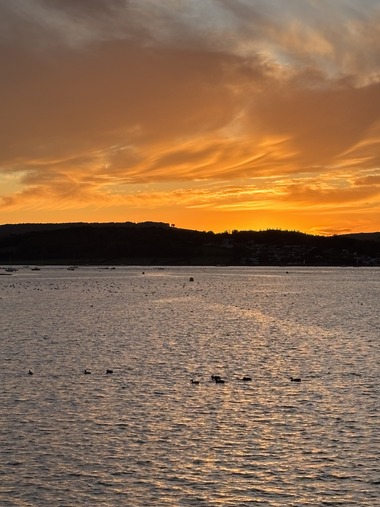 Winter Sunset over Exmouth Wildlife Refuge
Welcome to the latest edition of Shores, Heaths and Dunes, the newsletter of South East Devon Wildlife! As we race towards the excitement of Christmas and the New Year, navigating through rainstorms, clear blue skies, and frosty mornings, We'd like to share an update on what the Wildlife Wardens have been up to over the past few months...
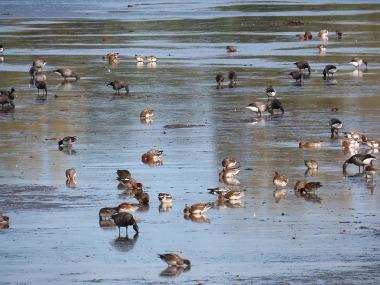 Wigeon and Brent Geese Feeding on Eelgrass
As 2025 draws to a close (no we can’t really believe it either) we wanted to take a moment to reflect on the season so far and share some highlights from the estuary.
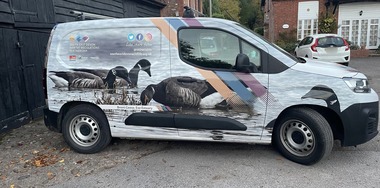
As Christmas approaches and we look ahead to a brand-new year, we’re thrilled to share some exciting news: our ranger team is growing!
In 2026, we’ll be expanding from three to six Wildlife Wardens on the ground. Of course, we'll tell you more when we can - watch this space!
With more boots on the heaths, estuary, and dunes comes the need for more resources, including a brand-new hybrid warden van and a new gazebo. As we’re expanding, we want your help design them!
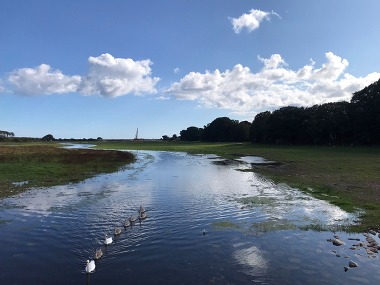 Swans on the Otter Estuary
As the temperature drops and the festive season presses in, many of us feel the pull to get outdoors and stretch our legs. Summer may be for beach days and sun-soaked afternoons, but winter brings its own kind of magic—crisp mornings, big skies, and that cosy return home to a warm cup of tea.
If you’re looking for beautiful winter walks where you can shake off the cold and enjoy our incredible local wildlife, here are some wonderful places to explore this Christmas.
|
|
Starling mumuration
A natural winter phenomenon when thousands of Starlings flock together and create amazing shapes in the skies before settling down to roost. The flocking together is called a ‘mumuration’ and is thought to be due to the sound all those tiny wings make as they fly together, which sounds almost like a murmur.
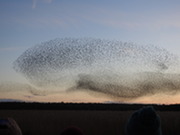 Starling murmuration
Little brown jobs
Look out for flocks of small songbirds at Warren Point (Dawlish Warren), there is a good chance they are Linnets. Linnets in winter are a small brown finch with a thick, short beak, flashes of white on their wings and forked tails. They often erupt into the air with a crescendo of melodious twittering. In spring, male linnets transform from ‘little, brown jobs’ to a fancy pinky red chest, silvery grey head and chestnut coloured head.
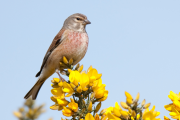 Linnet on gorse
Handsome Pintail
A dabbling duck we see in small numbers at Lympstone and Exmouth Wildlife Refuge. The Pintail has an unmistakable forked tail, a small head and curved back pointed wings. A small number breed in the UK, however most pintail fly over here in the winter from northern Europe swelling numbers to approximately 20,000.
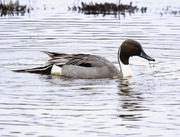 Derek Carter
European gorse
With its bright yellow, sweet pea like flowers, which with a low winter sun really look like they’re glowing, however gorse is not just a plant to lift our spirits in winter, its also an important roost for birds that stay here all year round such as the Dartford warbler. When a lot of other trees and shrubs are losing their leaves, gorse stays reliably green and dense, making it a great, albeit spiky place for birds to cosy up when it’s cold.
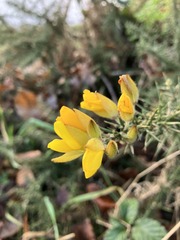 European gorse flower
|
|
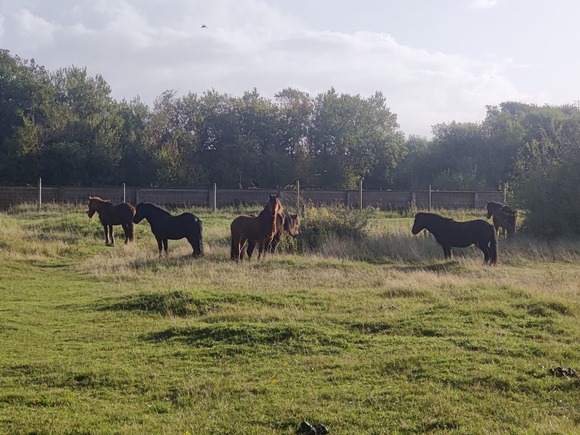 Ponies on Dawlish Warren
Hi, I’m Ryan, and I’ve recently joined Dawlish Warren as a Countryside Ranger. I bring with me over ten years of conservation experience from places like Wales, Norfolk, and Malta, and I’ve been lucky enough to call Devon home for the past four years.
My main focus is on practical management to help protect our dune systems, wildlife, and coastal habitats. I’m particularly interested in birds so I’m excited to see what I might find on the reserve.
|
|
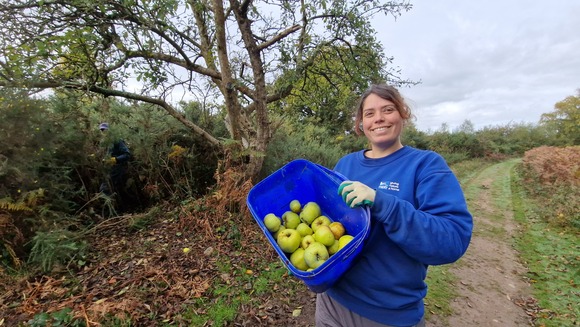 RSPB Volunteer Brigit collecting apples
It probably hasn’t escaped anyone’s notice that it’s been a bumper year for fruit, with the incredibly warm and still summer allowing plenty of pollination to occur. Out on the reserve hasn’t been an exception – with plenty of berries on the hawthorns, acorns on the oaks, and what you may not expect, apples! In fact, there are quite a few apple trees dotted about the land we manage, including 35 on a piece we’re restoring.
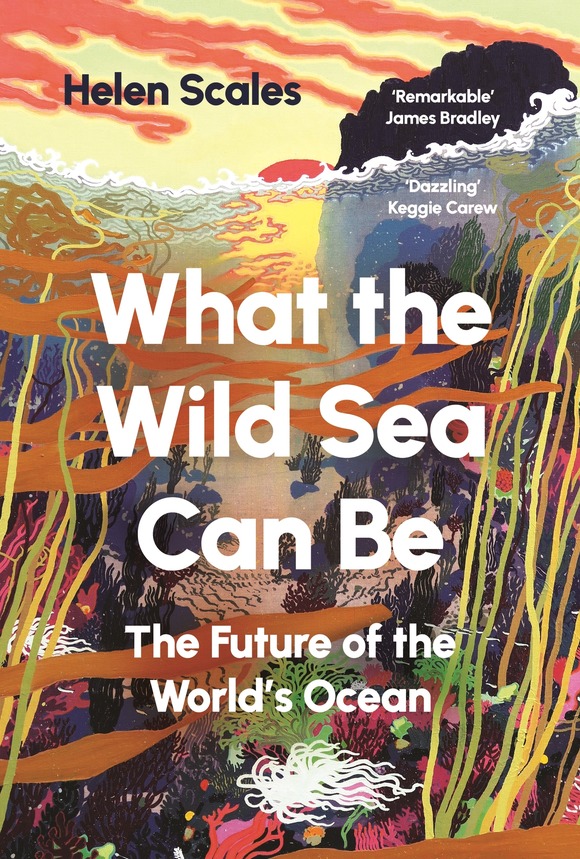 What the Wild Sea Can Be
Earlier this year, Doctor Helen Scales visited to deliver a talk for the Budleigh Salterton Literary Festival on her latest book, What the Wild Sea Can Be. Dr. Scales related that she had been prompted to assess the future of the seas after facing the same question so many times: was she hopeful about the fate of the oceans?
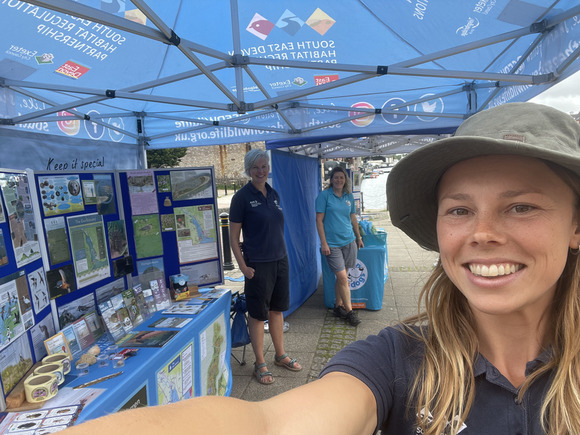 Katie, Julie and Imo at a pop-up.
Want to contribute to local wildlife conservation?
We're currently seeking volunteers who can help with any of the following:
- Events - engaging the public in conversations about wildlife and assisting with the smooth running of events and pop-ups.
- Foot patrols - walking with our wardens across our three key sites.
- Boat patrols - accompanying our wardens on the Exe Estuary, driving the patrol boat (Powerboat Level 2 required).
If you are interested in helping our team in any of these roles please get in touch at: sedwildlife@eastdevon.gov.uk to find out more
|
|
|
|
|