Return of the Countryside Review
 "After a break of a couple of years, I’m pleased to be able to publish the Countryside Team’s Annual Review once more. Looking back on 2022 has been a really productive process, seeing just how much was achieved for people and nature in the calendar year was hugely uplifting, coming so soon after the dramatic changes of 2020 and 2021.
Far from an exhaustive list, the team has captured a snapshot of the highlights and headlines from the year. For me, the most compelling and heartening statistic is our volunteering commitment, with a staggering number of hours given freely towards our work, amounting to almost £50,000 of equivalent contract work. Thank you so much to everyone who has participated in a session or joined us for an event last year, and I look forward to seeing you out there again this year!"
James Chubb, Countryside Team Manager
Early signs of Spring
 As things start to warm up, so the first signs of spring pop up in the countryside. On warm sunny days, you may see queen bumblebees out seeking the meagre nectar supplies available at this early time of year and if the temperature on hives tops 16 degrees in direct sun, then honey bees will also make short forays in search of provisions.
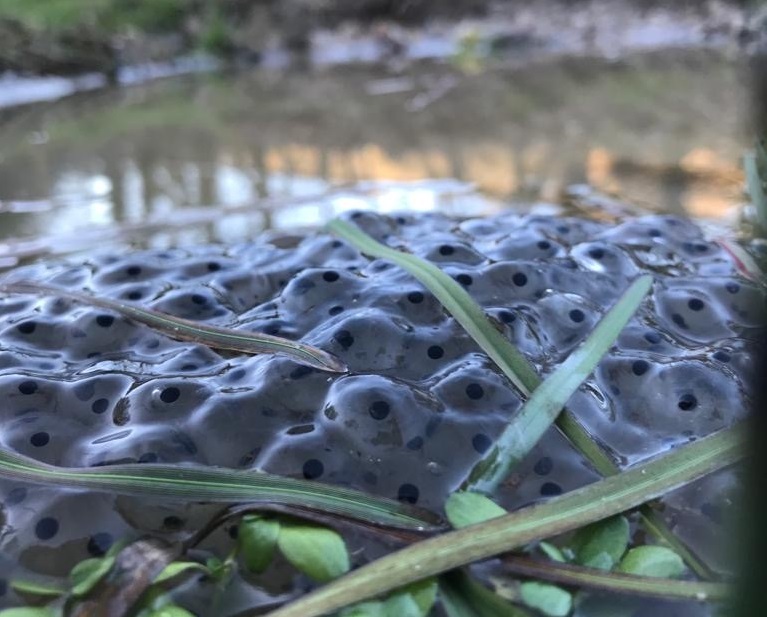
Keep an eye on ponds for frog spawn clumps, appearing after mild nights. Frogs come out of their hibernation much earlier than toads, so it’s the large masses of jellylike spawn to expect first and the long laces of toad spawn come later this season. In emergency situations, such as frogs spawning in foundation trenches of house developments, then it is acceptable to translocate spawn to a safer waterbody. However moving spawn carries the risk of moving water-borne diseases or invasive plants, and therefore should only ever be a last resort.
But beware of the fool’s spring, despite it feeling much warmer on a still sunny day in February or early March, the climate still has the ability to snap back to overnight frosts and finger-numbing chills during the day, so don’t pack the winter coats away just yet!
Follow the new sensory trail at Seaton Wetlands
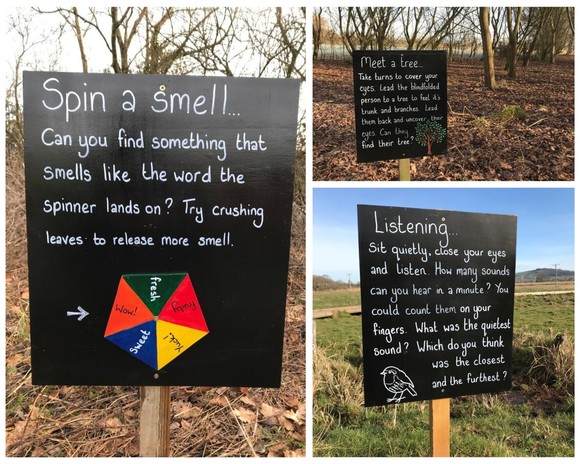 Check out our new sensory trail around Seaton Wetlands for a fun way to get outdoors. Follow the trail and each board highlights an activity to help all the family connect with nature.
To follow the trail, take a photo of the trail map, which is located near The Lookout.
Bat box installation at Knapp Copse
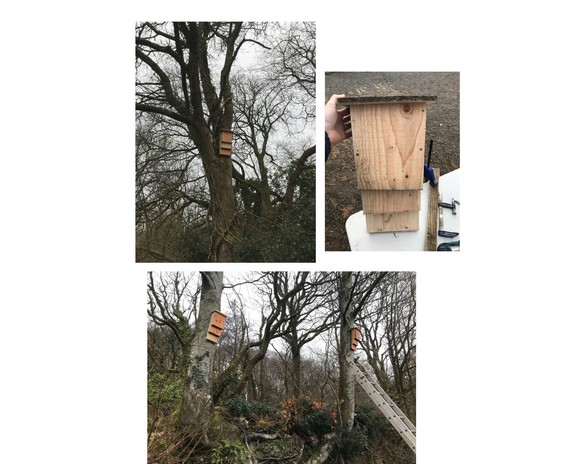
As part of a Higher Level Stewardship management agreement, the team have been installing various wildlife boxes at Knapp Copse Local Nature Reserve - for an important and under-threat mammal species: bats.
Bat activity is a great indicator of a healthy landscape and we’re very lucky to have some rare species such as Grey Long-Eared, Barbastelle, Bechstein’s, and Lesser and Greater Horseshoe bats on our reserves in East Devon.
Bat boxes need to be constructed from untreated and ‘rough-sawn’ (not sanded) wood. It just so happens that we have the perfect supply of timber available from Holyford Woods. Work has been taking place removing an area of Douglas Fir plantation on this otherwise native broadleaf site. With the help of our friends (and their mobile sawmill!) from the Axewoods Cooperative, we were able to process these trees into planks to build our bat boxes.
Helped by our enthusiastic East Devon Conservation Volunteers, we constructed twenty boxes using the Kent Bat box design. Rangers Jon and Ben have installed them in suitable locations across the reserve.
All bat species and their roosts are highly protected by law and so we won’t disturb the boxes to check for bats moving in, but Assistant Ranger (and bat enthusiast) Ben will be observing them with his bat detector over the coming months.
If you’re interested in building a bat box to help the bats in your area, we will be running a Bat Box building event later this year. Check Wild East Devon events - East Devon for updates.
EDDC consults on proposals for new green space
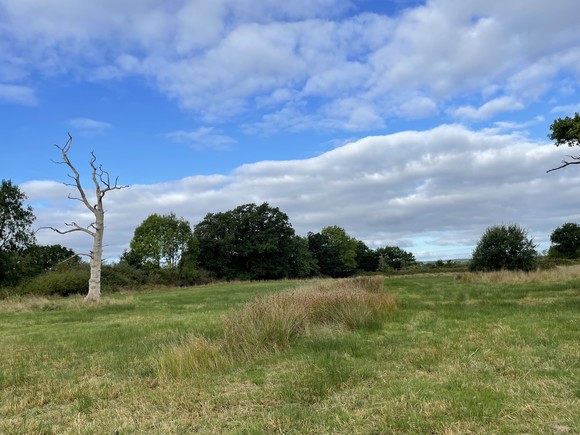 East Devon District Council has acquired 25 acres of land near Broadclyst, which has been earmarked for new public, nature-rich space.
The new green space is an important milestone in the creation of the Clyst Valley Regional Park. You can share your views on draft proposals for habitat creation, a multi-use trail, network of circular paths and a small car park until 20th March.
Help plant trees near Payhembury
The Saving Devon’s Treescapes project is calling on local people to help them plant 200 trees at Tale near Payhembury on Saturday 11th March.
It's free to come along and people will be shown how to do it.
|