Holyford wood medicine walk
 Join us for our next medicine walk on Saturday 24th September: Plant Medicine Walk at Holyford Woods to learn about the amazing properties of local plants.
With fruits & nuts coming into their own at this time of the year they seemed the obvious choice to explore on our most recent medicine walk in Holyford woods with Medical Herbalist Maggie Haworth. The humble blackberry (Rubus fruticosus) once used in the Southwest for curing boils by passing the afflicted patient back and fore through the plant’s arching stems, has been shown to be effective in lowering blood sugar levels. Interestingly, high blood sugar can leave our skin more susceptible to bacterial infection, which can result in the formation of boils. Blackberry is strongly astringent, so a teaspoon of dried leaves infused for 10 minutes in a cup of boiling water makes an excellent remedy for diarrhoea, or when cooled, can be used as a gargle to treat sore throats, mouth ulcers and inflamed gums.
A little less abundant than blackberry in Holyford woods is Elder (Sambucus nigra). The Anglo-Saxon name for elder was aeld, meaning fire, so it should be no surprise that a cordial made from this plant can be very efficient in raising our body temperature to help us fight an infection.
 The iconic brent geese are on their way to Devon from north arctic three thousand miles away in search of food and milder climates. Their arrival heralds a spectacular time of year for wildlife on the protected Exe Estuary.
Brent geese are social animals, with feeding flocks of several hundred and family groups staying together from one breeding season to the next. An adult pair may have this and last year’s young birds with them. Watching them arrive in the autumn on the Exe Estuary and at Exmouth Duck Pond is enthralling and it’s easy to spot the family squabbles.
As the geese arrive, people are asked to avoid wildlife refuges on the Exe Estuary at Dawlish Warren National Nature Reserve (all year round) and Exmouth Local Nature Reserve (15 September to 31 December) to protect wildlife for future generations. The wildlife refuges are marked with yellow buoys with “WR” in black letters printed on them.
The Imperial Recreation Ground slipway in Exmouth can still be used to access the foreshore during this time, although everyone is being asked to turn left at the end of the slipway, to avoid the wildlife refuge.
Knapp Copse Ponds
 Photo caption from top left to bottom right: golden ringed dragonfly, froglet with remnant tail and larder(!), common darter dragonfly, ragged robin, violet oil beetle, snout moth, tadpoles.
It has been a year and a half now since we had some ponds created at Knapp Copse, from what was previously a ‘wet flush’ – a boggy area where an underground spring comes to the surface. Standing water attracts life at an alarming rate and within a matter of days we saw signs of new residents and visitors, from water beetles and pond skaters to frogs, grey wagtails and deer. It was clear from the start that this modification was a hit with the local wildlife! As time has moved on we have enjoyed observing the influx of flora and fauna continue, with an ever increasingly complex ecosystem developing as a result.
Perhaps the most striking of visitors are the Odonata – the order of flying insects that dragonflies belong to. We have witnessed a good variety of species including golden-ringed dragonflies and broad bodied chasers (our longest and broadest bodied dragonflies respectively) to southern hawkers and common darters. The chasers in particular have been seen to be mating and egg laying prolifically, which is great news – their numbers locally should increase, thereby creating extra food for a host of predators such as birds and bats, and possibly even lizards and spiders! The latter two of these may struggle with the size of a broad bodied chaser, but may have better luck with our other Odonata species, the damselflies. They are generally smaller and daintier than dragonflies, and thankfully we have seen an abundance of those too, most notably the azure and large red damselflies. They have also been seen egg laying, and the evidence of this from last year is clear to see with a little time spent looking under the pond’s surface, where both dragonfly and damselfly nymphs can be seen lurking (and if you’re lucky, hunting!). These species have a fascinating life cycle, spending anything from several months to over 5 years underwater as nymphs (where they are both predators and prey) until they finally emerge and undergo the transition from larva to adult (their winged form) with a final larval moult.
Bird Flu Update
Thankfully there have been no further moribund birds discovered at the wetlands since the black headed gull in July. Our precautionary approach to request all bird feeding stop of site was, in my opinion, the right one as much of the country has seen grave losses of birds, especially seabirds and gannets in particular. We will continue to monitor the situation through the autumn migration period which is now well underway. Devon has recently been placed in an Avian Influenza Prevention Zone and, as such, our restrictions will remain in place for the time being.
One unexpected upshot of the stopping of duck feeding in the Stafford Marsh area, is a dramatic improvement in water quality, aquatic insect abundance and a stark decrease in the number of rats in the area. For this reason we intend to maintain the request that people do not visit the nature reserve to feed the mallard ducks as the concentration of this birds was having a detrimental impact on the site ecologically. As winter approaches, we plan to welcome a small amount of songbird feeding along the paths and boardwalk routes, based on the principals of only feeding what you watch the birds consume and not leaving piles of food behind. If this can be maintained then it feels like the right compromise between the wonderful enjoyment of interacting with a wild bird, and keeping those same birds and the host of other wildlife which call Seaton Wetlands their home, safe and protected.
Disposable BBQs
 Mercifully we escaped any serious wild fires in East Devon, despite suffering the worst drought in fifty years. However, our static dune grassland Local Nature Reserves in Exmouth, The Maer, was not so fortunate and a small grass fire broke out in the northern corner of the site and was extinguished by the fire service.
Regardless of us heading into autumn and hopefully some much-needed rain, could we please implore you to never use disposable BBQs in the countryside. Not only is the charcoal usually imported and chemically treated to provide “instant lighting” the risks of causing a wild fire are simply too great to use them with a clear conscious. Of course as makers of sustainable nature reserve charcoal, we are slightly biased in our assessment!
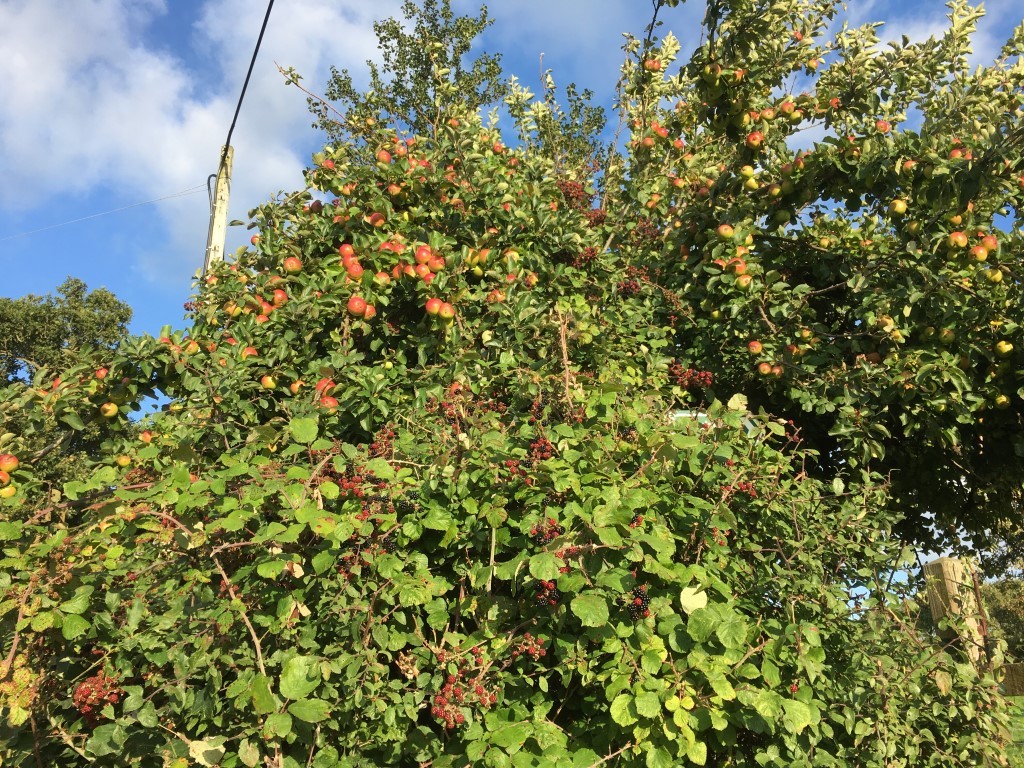 Join the Saving Devon’s Treescapes project this Hedgerow week for an exploration into the wonderful world of hedgerows and hedgerow trees. Through a series of free events they’ll explore why they’re important, how you should manage them and what the future might look like. There are events in person and online, as well as events specifically for farmers/landowners and the general public.
|