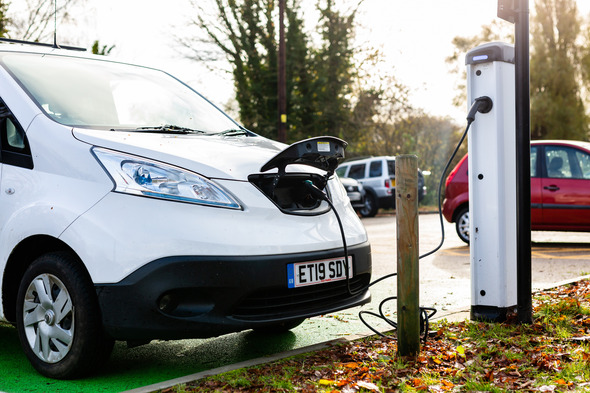
A reminder that from 1 June 2026, if you operate a zero emission goods vehicle weighing between 3,501kg and 4,250kg, the rules are changing.
Your vehicle will no longer need a heavy vehicle annual test and will instead be tested under the Class 7 MOT scheme, with the first MOT due 3 years after first registration.
Rules for Drivers’ Hours are also changing for your vehicle – bringing it into line with internal combustion engined vans up to 3,500kg.
This means that in most circumstances they are outside of the Assimilated Drivers’ Hours Rules (generally known as “EU Drivers’ Hours” rules) and fall within GB rules.
As for other vans, towing trailers and other uses can bring them back into the EU rules.
This only applies if your vehicle is operating solely within Great Britain.
Any of these vehicles used on international journeys (including between GB and Northern Ireland) will remain in scope of EU drivers’ hours rules unless another exemption applies.
This change applies to zero emission panel vans, flatbeds, tippers and box vans. Hybrid vehicles are not included.
Overall, these changes mean that from 1 June, the majority of road transport rules will be consistent between zero emission vans up to 4,250kg and other internal combustion engine vans up to 3,500kg. That applies to rules for driving licences, operator licences, vehicle testing and drivers’ hours, but not for speed-limiters.
These 2 latest changes means that heavier zero emission (generally electric) vans with broadly comparable range and capacity as other (generally internal combustion engined) vans will be regulated in the same way. This is to support your switch to electric, with the change making things simpler and less costly.
The change to MOT class gives you more choice and flexibility when booking a test for your electric van. You will have access to a network of over 6,000 Class 7 MOT test centres - potentially reducing your travel time.
Your van will now be the same as other Class 7 vans, which means there are some changes to the MOT standards that apply.
A notable difference between HGV and Class 7 requirements is that the minimum tread depth requirement is now 1.6mm.
-
identify any zero emission vans in your fleet between 3,501kg and 4,250kg DGW that will be affected by the change
-
check your vehicle registration dates to understand when the first Class 7 MOT will be due
-
ensure affected vehicles are booked at your nearest MOT garage which tests Class 7 vehicles, instead of an ATF when their MOT expires
-
ensure you are ready to manage the drivers’ hours for these vehicles to ‘GB Rules’.
You should not need to do anything with DVLA. They are already updating their systems to reflect this change.
Even if you have already had an HGV MOT, you will not now need another MOT (that will be a Class 7 one) until the vehicle is 3 years old.
Visit Active MOT test stations - GOV.UK to find MOT test centres.
|