11th December 2025
Dear Colleagues,
Balancing the End of Term and Looking Ahead
As we approach the December break, I want to acknowledge the effort school leaders and their teams have put into this first term. It’s a time of year when many of you are balancing the anticipation of a well-deserved rest with the ongoing demands of supporting your staff and students. Your resilience and commitment do not go unnoticed.
Gratitude for Your Continued Commitment
Thank you for your unwavering dedication to our shared goal: ensuring every child in Devon has the best possible chance through education in their community. This work is challenging, and yet you continue to lead with professionalism and care. I am deeply grateful for everything you do.
Progress and Our Shared Ambition
Devon County Council remains firmly committed to improving our services for children and families. The recent OFSTED Monitoring Visit to Children’s Services demonstrated that tangible progress is being made by our colleagues in Social Care. As a leadership team we are all absolutely focussed on our improvement journey and we are committed to working with you in your locality to improve outcomes. I have attached the letter from OFSTED to Julian Wooster here and I know that the progress will be reassuring to you all.
Important Guidance from UKHSA
This winter brings additional challenges with rising cases of flu and other infections. The guidance included in this document is essential reading. It is unusual for UKHSA to issue advice of this nature, which underlines its importance. Please ensure these measures are followed rigorously. While improving attendance remains a shared priority, it must never come at the expense of public health. We all have a responsibility to prevent increased risk in our communities, and I recognise how difficult these decisions can be. Please take the time to read the guidance on the Education Hub and the briefing below.
Spring Locality Briefings – Save the Dates
Early in the new term, DSLS will hold the Spring locality briefings that will provide:
-
Updates on how the redesigned service from Devon County Council is shaping up.
-
Opportunities to meet team leads and hear how inclusion partners’ work has begun.
-
A chance to discuss how localities will work together effectively.
The upcoming dates are:
- North & Mid on Thursday 22 January (at Barnstaple Hotel)
- South and West on Monday 26 January (at Buckfast Abbey)
- Exeter & East on Thursday 29 January (at Westpoint).
I strongly encourage you to prioritise these sessions. They are vital touchpoints in the calendar and will be the focal point of our communications with schools in each locality.
Best Wishes,
Jack Newton
Deputy Director, Head of Inclusion and Learning
We all have high aspirations for the children and young people of Devon. For this to happen children and young people need to engage with school regularly, where they can access an education that is appropriate to their needs.
Our focus in Devon is to ensure that through our collective work in localities we are able to address the following:
- Prevent patterns of absence from developing by promoting good engagement with education.
- Intervene early by using data to spot patterns of absence before they become persistent and working with families to remove the barriers to engaging with education.
- Target support for persistent and severe absentees with all local partners working together to re-engage children and young people.
Central towards the work we do in Devon in driving forward the improvement of attendance to school in with our Strategy for Belonging and Engagement.
Developing belonging and engagement in education is everyone’s responsibility, and we must work together to achieve the best inclusive and aspirational outcomes for all children and young people.
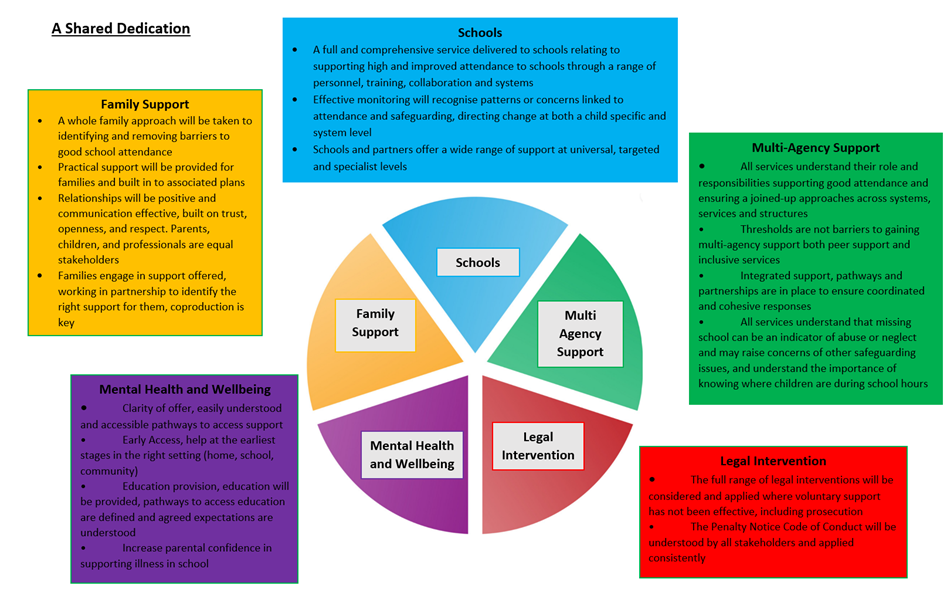
 Our shared dedication towards working alongside each other to tackle attendance is emphasised in our diagram below.
 In addition, to the development of our strategy and action plan, we have recently also achieved the following:
A Strong and Purposeful Link with the DfE
Regular meetings and key consultation with members of the Department for Education to support our development and countywide network of tackling attendance to education.
A Collaborative Approach across Devon Services
For too long, attendance to education in Devon has been tackled in silos – often by the attendance services and their officers. Within the Local Authority this is now a joined up thread across all services relating to children and young people. Children Social Care, Virtual School, Education Psychology Service, Education and Inclusion, Attendance, Legal and the Data Team. We now move forward together as that is the only way to get the job done in the way it should.
The Development of the Data Set
Specific data is now developed relating to attendance in the county – this includes breaking down data into localities, settings and children groups.
The Introduction of our Inclusion Partners
Within our new locality system, each school across the county will be allocated an Inclusion Partner. Central to their role is to assist schools breaking down barriers related to poor attendance and to ensure that implementing and upholding statutory responsibilities related to attendance ensure compliance and positive change. They will be there alongside schools to broker support towards getting young people into school and attending as regularly as possible.
Devon Attendance Strategy Group
A cross-county group developed for the purpose of:
- Developing a Devon-wide strategy and action plan to improve attendance across the county.
- Bringing together different schools and settings in order to understand context from across Devon with regard to shared dedication and best practice of positively influencing attendance to education.
Our group is currently made up of 18 colleagues who are involved in matters connected to attendance to education each day. Our current focus following two meetings this term has been:
- Contribute to the development of the Devon Belonging and Engagement Strategy and Action Plan.
- Continue the development of data systems and how it is used, when and by who.
- Develop a Devon Attendance Network (starting January 2026).
- Plan for a Devon Attendance Conference (Summer 2026).
The Next Steps on our journey are:
- Begin to activate areas of the Belonging and Engagement Action Plan.
- Develop an Attendance Network in Devon.
- Embed new Inclusion Partners across localities.
- Further develop data systems and communications.
- Learn and link with the best LAs regarding attendance to education.
- Forge tight attendance links to the Education Endowment Foundation.
Our journey in tackling the challenges we face towards addressing positive and improved attendance to education in Devon has only just started. Please do continue to join the ever expanding group of contributors as it is only together that we will be successful in our quest to ensure high and sustained attendance to schools and settings across Devon for all of our young people.
As the weather has turned more wintry, we have seen our first school closures, here’s a reminder on how to log a school closure on the school closures website.
In brief:
-
All schools and academies have a primary user account* to access the My account area. *These user accounts are linked to the main email address as displayed on the school database.
- We suggest that you test that you can access your account ok before you actually need it. Please note, any password reset requests will be sent to the email address as above.
- Once logged in please complete the Emergency closure form.
-
Please do not change the email address in your primary account to an individual’s email. Additional user accounts can be requested using the Request extra user account form.
- If you may need to be able to report multiple school or academy closures, please contact us to arrange this.
See our full guidance on reporting school closures. Please contact us on digitalcomms@devon.gov.uk if you have any problems or questions.
Flu and other winter viruses are circulating in the community, and across the South West and Devon we are seeing an escalating number of enquiries to UKHSA due to school outbreaks, with not only illness of staff and students, but also operational challenges being seen due to staff absence.
While some illnesses are unavoidable, illnesses due to infections can be reduced with simple proactive measure that minimise the spread of infections. The following DfE blog outlines tips and links to guidance on cleaning, ventilation and more. Reducing the spread of illness this winter: Seven steps to healthier schools and higher school attendance – The Education Hub
Although maintaining high school attendance is a priority, ensuring both students and staff stay at home whilst ill and potentially infectious is key to prevent infections spreading. This helps support good attendance for the wider school population, as well as preventing illness in staff. Managing specific infectious diseases: A to Z - GOV.UK which is part of the Health protection in children and young people settings, including education guidance outlines whether students need to stay away from school based on infection, for how long and also if you need to contact UKHSA.
The key points to reinforce with parents and staff to minimise the spread of infection in school are:
- Where a student/staff member has a temperature, even if it is managed with medication, this is a sign they could be infectious and should stay away from school until the temperature has gone.
- Staff and student should stay away from school for 48 hours after symptoms of diarrhoea and/or vomiting have stopped and also well enough to return to school.
- Advising and encouraging good hand and respiratory hygiene in staff and students.
- Good quality daily cleaning – ensuring this covers high tough points.
- Maintain ventilation in classrooms with windows open slightly, and/or opening windows and doors between lessons.
- Consider staff and student illness in risk assessments for any visits out of schools, particularly to any vulnerable settings such as care homes.
Key guidance and links for schools:
The following content has been pulled together to enable schools to share information directly with parents via newsletters:
We are seeing increasing cases of winter illnesses in schools. These can spread quickly in school and early years settings, and we all have a role to play in keeping children and staff healthy, and reducing impact on learning. In school we are encouraging handwashing, “Catch it Bin it Kill it” respiratory hygiene and ventilation by letting fresh air into the building all to help prevent spread of infections in school.
Make sure your child is up to date with their vaccinations
In the past few years we have seen more cases of vaccine preventable childhood infections such as measles and whooping cough. For some children, these infections can lead to serious illness, however vaccinations can provide the best protection. If you’re unsure if your child has missed a vaccination, check their Red Book or check with your GP practice, and for most vaccinations it is never too late catch up. If you have been sent a message about vaccinations being offered to your child in school, remember to go through the links to provide consent to enable the nurses to offer it to your child on the day they visit the school.
Know when your child is too ill for school
It can sometimes be hard to know if it is ok to come to school and whether they could possibly pass infections to others, so please make use of the information here in the NHS guidance to help support with decisions. It is usually ok for children to come to school if they have minor coughs and cold and generally feel well in themselves and have no fever. There are however times when children are unwell and to ensure infections don’t spread to others, it is important they stay at home for a short period of time. Some of these include:
-
Fever: If your child has a high temperature, keep them at home until the fever has passed and they feel well.
-
Diarrhoea and/or Vomiting: Children should stay home for at least 48 hours after symptoms have stopped.
- For other infectious illnesses this checklist can help know the advised times How long should you keep your child off school - checklist.
For more information the Department for Education have produced a post on the Education Hub for parents about staying healthy at school Top tips on how to keep your child healthy at school – The Education Hub.
What is the Banding Framework and why are we reviewing it?
- Devon County Council has asked Peopletoo, an independent organisation working closely with the Council, to support a review of how funding is allocated to children and young people with Education, Health and Care Plans (EHCPs). This is called the EHCP banding framework, and it’s how decisions are made about how much top-up funding (Element 3) a child receives, based on their needs.
- The banding framework is the tool that links a child or young person’s level of need to a typical level of support and funding (sometimes known as Element 3 top-up funding). Each “band” represents a general type or level of need and the kind of provision that would usually be required to meet those needs.
- The framework is designed to make funding decisions fair, consistent, and transparent, so that children with similar levels of need receive similar levels of support, no matter which school or setting they attend.
- It’s not about putting children in boxes. Every child is different - but the framework helps make sure that decisions are made fairly and based on what works for children with similar types of needs
- Families and schools have told us that the current system:
- Feels inconsistent — decisions vary between children, schools, or panels.
- Isn’t clear or transparent — it’s hard to understand how decisions are made or why one child gets one level of funding and another doesn’t.
- Is outdated and isn’t fit for purpose.
- The aim of this review is to develop a modern, needs-led framework that everyone can understand and trust - one that is clearer, fairer, and more aligned with how education and support are delivered today.
What you’ve told us:
-
Keep it clear and simple: Schools supported the needs-led approach but asked for clearer differentiation at the lower levels and simpler language.
-
Show progression clearly and account for “spiky” profiles: Participants liked the structured scoring model but stressed the importance of capturing mixed profiles and ensuring a logical step‑up between levels.
-
Funding values to be reconsidered: Schools fed back that current band values no longer reflect the up-to-date cost of delivering support in 2025.
What we’re doing now and will do next:
-
Moderation & usability testing: We are moderating a case sample of EHCPs against the draft framework. This will help us to test the usability of the framework and check clarity and consistency (identifying if the same cases are evaluated similarly by different people). We have moderated 75 cases so far.
-
Develop the funding values behind the bands: We are currently calculating the provision costs of all EHCPs included in the moderation exercise to help determine the funding values attached to the bands. For example, we will group all EHCPs moderated as ‘Band 3’ to inform the amount of top-up funding that Band 3 should provide. We will be inviting representatives from schools to review the costing assumptions we have used and provide feedback for change, to ensure that the calculations are realistic.
-
Refining descriptors: We are also strengthening the clarity and consistency of the framework based on moderation feedback.
-
Future engagement: Once the framework and funding values are stable, we will be scheduling more presentation and engagement sessions. If you would like to receive more information about this, please complete this form.
Devon County Council (DCC) is asking residents to help shape the future of the county’s 50 libraries, as a major 12-week public consultation opened on Monday 1st December.
From Monday 1 December people across Devon will be able to give their views on proposals to reduce and ‘standardise’ opening hours and options to extend opening hours through additional volunteering by using technology and the potential introduction of community managed libraries.
For more information - please see the full article here.

We want to keep you informed about an important change that will make the Education, Health and Care (EHC) process clearer and more collaborative for everyone. From January 2026, we will be moving towards a model where all consultations with schools, colleges, and other education settings will take place through the EHC Hub.
This change is designed to make the process more inclusive and transparent. The EHC Hub is a secure, central platform where families, education settings, and professionals can all view and contribute to consultations. You’ll be able to see updates and progress in real time, ensuring that your voice is part of the conversation every step of the way.
By using the EHC Hub, we can share information consistently and clearly, reducing delays and improving communication. This means everyone involved will have the same information at the same time, helping us work together more effectively.
We believe this new approach will strengthen our partnership with families and professionals, supporting better outcomes for children and young people with Education, Health and Care Plans (EHCPs).
Thank you for your continued support and for working with us to improve the SEND experience in Devon.
We would like to extend our thanks to all the schools and pupils who participated in this year’s Christmas card competition. The creativity and effort in every entry were truly outstanding, and we thoroughly enjoyed reviewing them all.
Congratulations to this year’s winner and runner-ups, and well done to everyone who submitted an entry – your contributions made this competition a real success.
This years winning design (above) comes from a student at ISCA Academy. Their wonderful artwork will feature on this years christmas card for Councillor Julian Brazil (Leader of the Council).
 This years first runner up design (above) has been created by a pupil at the Kings School. Their design will feature on Donna Manson's Christmas Card (Chief Executive).
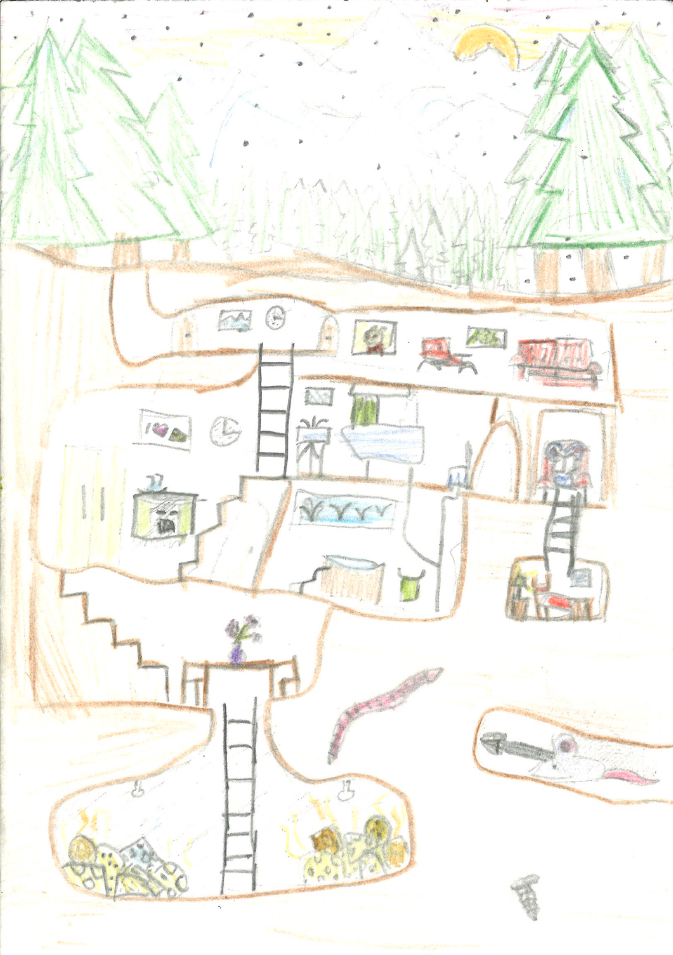 This years second runner up design (above) has been created by a pupil at the Kings School. This design will be used by our Childrens Leadership Team.
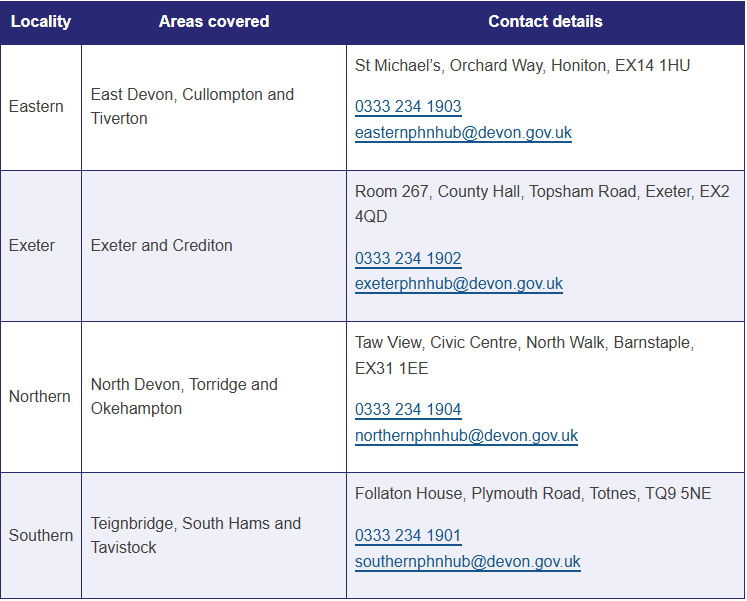
We want to make it easier for schools and families to access timely advice and support from our Public Health Nursing team. To achieve this, we’ve been piloting a dedicated advice line with practitioners available to respond to phone calls and texts.
Initially focused on 0–5s, the service has expanded to cover 0–8s and is now extending to include 9–19s. The aim is to improve responsiveness and explore options for a permanent, integrated 0–19 approach.
How it works:
- Calls for ages 0–8’s are answered by our Community Health Worker team.
- Calls for ages 9–19’s will soon be answered by staff nurses from the School Nursing team.
- Practitioners are supported by health visitors and school nurses who also respond to calls and texts.
We hope this will make it easier for you and families to speak directly to the team and access advice when needed.
Why your calls matter: Call demand will inform the future of this pilot and the resources required to sustain it. Historically, we heard that calls may have reduced because they were not answered directly for several years, which led to frustration. By using the advice line now, you help us understand the real level of need and shape a service that works for schools and families.
What we ask:
- Please make use of the advice line for queries and support. Find our contact details here or see below.
- Encourage families to do the same.
Your engagement will help us design a service that truly meets needs. Thank you for your support in making this pilot a success.
The Ethnically Diverse Education Achievement Service (EDEAS) remains dedicated to providing uninterrupted support and guidance for ethnically diverse and multilingual learners across our schools.
Their service draws on the expertise and specialist knowledge of their team to deliver a comprehensive range of support:
What they Offer
-
Support for Multilingual Learners
- Bilingual assistance in the classroom or online
- Advice and guidance for staff
- Interpreting support for meetings
- Translation services for key documents
-
Support for Ethnically Diverse Learners, including Traveller Communities
- Tailored advice and guidance
- Support with using the T code for attendance
- Cultural awareness training and resources
-
Equality, Diversity and Inclusion Consultancy
- Bespoke training packages
- Expert advice and guidance to promote inclusive practice
-
Professional Development
- Webinars and on-site training for staff development
- Specialist clinics for maintained schools and EYFS settings attached to maintained schools
To explore their current offer and find out how to access this support, please visit their website.
|