|
August 2025
Returning to school after the long summer break can be tough, moving year groups or starting somewhere new.
For children with Special Educational Needs and Disabilities (SEND), the experience can be even more challenging, with unfamiliar routines and environments, or uncertainty about friendships and connections.
This special edition of our Devon SEND newsletter offers practical advice and guidance to help make the start of this academic year as smooth as possible for your child.

-
Talk regularly about school, focus on what they enjoy and discuss any upcoming changes to ease worries
-
Familiarise them with new faces and places using photos of teachers, classrooms, or the school environment. You may be able to find some of these on the school’s website
-
Practise wearing uniform, wash it and try it on over a few days to help them get comfortable.
-
Use visuals and stories to explain the school day with simple pictures and words.
-
Let them make small choices, like picking a lunchbox or stationery, to give them a sense of control.
-
Meet up with school friends for playdates during the holiday can help them feel more confident returning to school
-
Keep communication open between you, your child and their teacher to help resolve any issues quickly

If your child experiences anxiety or frequent worries, there’s a digital tool that could help. Lumi Nova: Tales of Courage is a interactive game designed for children aged 7 to 12 years old with mild to moderate anxiety.
As children go on exciting space-themed adventures, they learn how to face their fears in small, manageable steps. This approach, known as graded exposure, is a key part of Cognitive Behavioural Therapy (CBT), and it helps children build confidence and resilience over time. Parents can join in by encouraging their child and celebrating their progress.
The experience is designed to be age-appropriate, non-stigmatising, and empowering – giving children the tools to manage their anxiety in a way that feels natural and engaging. Lumi Nova also allows authorised professionals to track progress and outcomes, ensuring that the right support is in place when needed.

For some children, feeling anxious or overwhelmed at the thought of returning to the classroom isn’t just a case of first-day nerves. These feelings can become so great that they find it hard to go to lessons, or even avoid going to school altogether. This is known as Emotionally Based School Avoidance (EBSA).
We’ve worked with children, parents and carers, teachers and other education and health professionals to create a website to help develop an understanding around EBSA and provide resources, so that the right support for children can be accessed when they need it.
It’s packed with helpful tips, advice and resources for families, including how to support your child at home and what help to expect from schools. It has different sections for children who miss some school, those who miss school regularly, and those who do not attend at all, so that families can find the right support for their specific situation.

Every child should feel happy, included, and supported at school, but we know that support can look different from one school to another. That can be confusing and frustrating for parents and carers. To help make things clearer and more consistent, Devon County Council has created two helpful frameworks.
The Ordinarily Available Inclusive Education Framework explains the kind of support all schools, early years, and post-16 settings in Devon should be able to offer, including for children with special educational needs and disabilities (SEND).
The Ordinarily Available Targeted Support Framework helps schools identify learning barriers and plan effective support using their existing resources. It’s based on the four areas of need in the SEND Code of Practice.
These frameworks aren’t rules, but they’re designed to help schools reflect on what they’re doing and improve where needed, so every child gets the support they deserve.

Starting secondary school is a significant milestone for any child. For children with Special Educational Needs and Disabilities (SEND), this transition can often feel difficult to manage.
The new school may be bigger, with more teachers, different routines, and new classmates. This can feel overwhelming, but there is support available to help your child feel more confident and ready.
Devon’s SEND Local Offer explains what support your school can offer, such as visual timetables and maps, quiet spaces, buddy systems and structured groups to help make friends. There's also lots of useful information and advice about starting a new school on the Devon Information Advice and Support website.

Devon County Council can make travel arrangements to help eligible children get to school, for example if they cannot walk to school because of their special educational need or disability, or they live further than the statutory walking distance from their designated school.
All requests for transport are considered on a case-by-case basis, and there's an online guide to help families understand the process and how decisions are made.
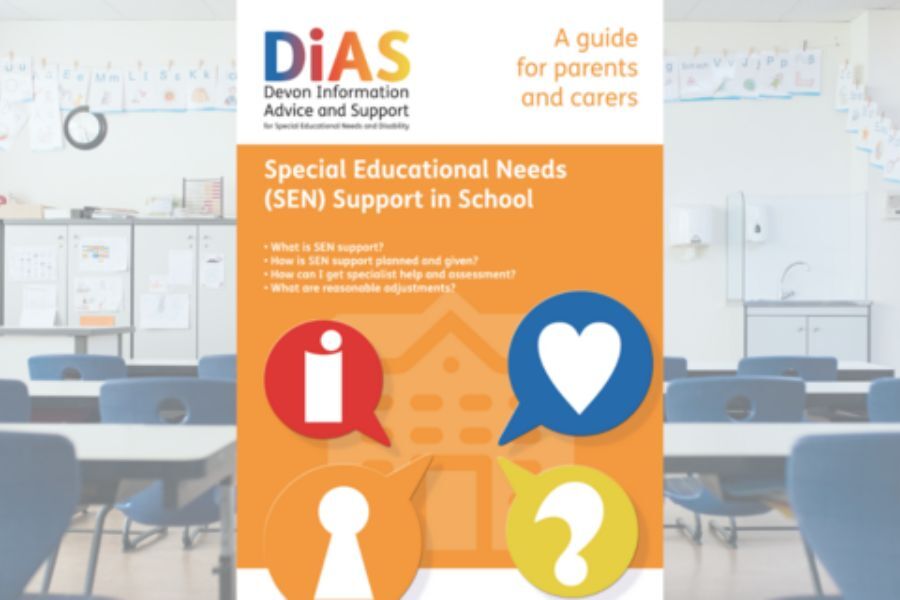
Available as a PDF and a printed booklet, it takes parents and carers step by step through SEN support in schools, as well as setting out the law and everyone’s rights and responsibilities.

Leaving school can be an exciting time with lots of opportunities and big decisions to make. Don't panic if your child has no idea about what they want to do, there's lots of information and advice that can help them.
Devon’s SEND Local Offer website has a dedicated section for young people aged 14 to 25 years old, covering everything from education and training to employment and apprenticeships.
Whether your child is thinking about college, work experience, or supported internships, you’ll find clear guidance and helpful resources to explore the options.
There’s also information on rights and entitlements, support available in education settings, and how to access careers advice.

Independent Travel Training helps young people with SEND build the skills they need to travel safely and confidently on their own. It's tailored to each individual and can include learning how to use public transport, read timetables, manage road safety, and handle social situations. There's a video about it on Devon County Council's YouTube channel.
The free scheme is open to students from mainstream and special schools, pupil referral units, and further education colleges. It’s designed for those who currently use assisted transport but would like to travel on their own. Before training begins, travel trainers work closely with parents, schools, and professionals to make sure the support is right for the young person.
If you would like your child to take part in this scheme, please contact the Transport Co-ordination Service on 0345 155 1019.
Our SEND Network for Change aims to create youth voice opportunities for young people with special educational needs and/or disabilities (SEND). And there’s something for everyone!
As part of the SEND Network for Change we have lots of different groups and projects going on, and we’d love for you to have your say.
Visit the SEND Local Offer to find out more about how to get involved with the SEND Network for Change.

Are you a parent or carer of a child with autism or awaiting a diagnosis? The Autism and Us course is here to help you feel more confident and informed.
Run by Devon County Council, this free online course offers practical advice and emotional support to help you better understand your child’s needs. It covers key topics such as communication, sensory differences, and how autism may affect behaviour and relationships.
The sessions are friendly, informal, and led by experienced practitioners who understand the challenges families face. You’ll also have the chance to connect with other parents and carers on a similar journey.
Places are limited, so early booking is recommended.
Devon Information Advice and Support (DiAS) offers a series of free training sessions designed to empower parents and carers of children and young people with Special Educational Needs and Disabilities (SEND) with the knowledge and confidence.
All sessions are free and open to parent carers in Devon. They’re repeated each term, so if you miss one, you’ll have another chance to join. To explore the full list of upcoming events and book your place, visit the DiAS website.

Life with a child with special educational needs and disabilities (SEND) is full of ups and downs. Whatever your situation or experiences there are some things that all parents and carers need – access to information you can trust and support from other parents who understand what you’re going through.
That’s where DiAS Ambassador Volunteers come in. They’re based in communities across Devon and include parents of children with SEND, as well as people who work with families. They offer friendly support, share helpful advice, and help families connect with others locally and across the county.
|