Improving Flood Resilience Across Devon
October 2025
Welcome to this edition of the DRIP newsletter.
As we move out of summer and into autumn, it is important to stay flood-aware and consider how we can better manage water flow to increase flood resilience. Natural Flood Management (NFM) is all about working with nature to increase water storage and slow the floodwater travelling to communities below.
From the return of beavers to the revival of historic landscape features, the DRIP team and project partners are exploring how nature and Devon's rich landscape history can help build stronger, more resilient communities.
In this edition, catch up on the latest updates from DRIP sites and discover how nature is playing a key role in shaping a flood-resilient future for the region. We also celebrate the achievements of project partners and mark World Rivers Day.
We hope you enjoy the read!
Natural Flood Management (NFM)
DRIP Board Visit Highlights Beaver and Wetland Work
 |
|
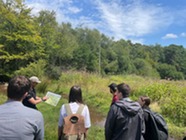
As part of the DRIP July board meeting, we attended a site visit, led by one of our partners - Devon Wildlife Trust. We visited a site that has been transformed by beavers into a mosaic of wetland habitats, creating large water storage areas. It was fascinating to see how this site has been changed over time by these ecosystem engineers, and learn about the monitoring Devon Wildlife Trust are carrying out.
|
Westcountry Rivers Trust Operations Team in Action
 |
|
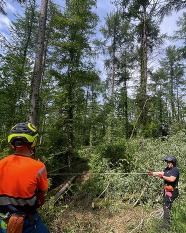
It has been great to see further Natural Flood Management (NFM) installations across Devon over the summer period. Westcountry Rivers Trust (WRT) operations team have been busy carrying out work in East Devon, including the site pictured (left) where large trees were felled to create woody flow spreaders in a steep watercourse. One of our PhD students is monitoring this site to assess the effectiveness of the interventions in slowing the flow of water to the village downstream during heavy rainfall events. |
Historic Landscape Features for Modern Flooding
Traditional water management systems used for agriculture, mining, and the textile industry have left historic features such as catch meadows and mine adits embedded in Devon's landscape. These historic structures were largely forgotten, however, today they are being rediscovered for their exciting potential in sustainably managing floodwater and improving the resilience of Devon's communities and natural landscape.
Watch the video below to discover how historic systems are being fused with innovative thinking and design and brought back to life in Devon.
Celebrating DRIP Partners
Successful Show Day for Blackdown Hills National Landscape
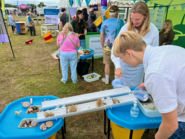
In July, DRIP partner Blackdown Hills National Landscape attended the Mid-Devon Show - a beloved annual celebration of rural life and heritage in Mid Devon. Their stand showcasing their ongoing work to improve the health of the River Culm and its catchment through Natural Flood Management (NFM) proved a real hit with visitors. A popular interactive game that simulated urban flooding drew in crowds, sparking valuable conversations about how nature-based solutions can help slow the flow of water. The team's efforts were recognised with a first prize and a third place award for educational content - a fantastic result!
To discover more about the work of Backdown Hills National landscape, visit [https://blackdownhillsaonb.org.uk/].
|
Catch Meadow Comeback in Combe Martin

A catch meadow system in a field above Combe Martin, North Devon, has been restored by DRIP partners North Devon Biosphere. Catch Meadows were historically used to store water on steep-sided land for irrigation, grass growth, and livestock. The 17th century old channels have been excavated, and with slight revisions to the system, re-purposed as a Natural Flood Management technique at this site, increasing resilience to the community below. Over the coming winters, North Devon Biosphere will monitor and evaluate the performance of the revised catch meadow system. This project is not only a step forward in sustainable water management, but also represents a meaningful connection to Devon’s agricultural heritage. The work offers guidelines for future catch meadow restoration across the South West, helping expand flood resilience while preserving a unique part of Devon's landscape history.
Want to explore this topic further? Visit the latest post on our website [Story of Historic Catch Meadows] for a more detailed story on catch meadows.
|
Celebrating World Rivers Day: Restoring Rivers and Building Resilience
28th September marked World Rivers Day - a global celebration of the important role rivers play in supporting resilient ecosystems and communities. Healthy, natural rivers are central to DRIP's mission to reduce flood risk and help build more flood and climate resilient communities. To mark the occasion, we are spotlighting some of the exciting and successful work delivered by DRIP partners. This includes Blackdown Hills National Landscape, where efforts to protect and enhance the River Culm are helping nature better manage floodwater, and the National Trust, who restored and reconnected the river to its floodplain at Tattiscombe. These projects are powerful examples of how working with rivers can shape landscapes that are more resilient to flooding and deliver benefits for both people and the environment.
On Site with Local Leaders
Conversations in the Catchment with MP Martin Wrigley and County Councillor Jacqi Hodgson
|
The DRIP team hosted a site visit for MP Martin Wrigley and Cllr Jacqui Hodgson, alongside Devon County Council and Environment Agency colleagues, to see our work in Stokeinteignhead. We had productive discussions around the challenges to manage flood risk in Devon and how our DRIP work aims to improve community flood resilience, using Stokeinteignhead as an example.
|
|
 |
Future Focus Weeks and Newsletter Editions
Stay tuned for a series of upcoming Focus Weeks! You can follow these campaigns, along with flood-related tips, project updates, and useful information, on our social media channels (linked below).
October: Flood Action Week
November: Natural Flood Management (NFM)
December: Smart Technologies and Flood Forecasting
Follow us on social media:
Next Newsletter: January 2026
DRIP is part of the £200m Flood and Coastal Innovation Programmes, managed by the Environment Agency
|