Summer 2025
At this time of year most of us look forward to sunny weather and the chance to spend more time outdoors, but it’s important to remember that even though any of us can struggle if we get too hot, for some people the heat can lead to them becoming seriously unwell.
We've put together this special edition of our Connect Me newsletter to share some advice about saying safe in hot weather, especially for those in our communities who may struggle to keep themselves cool and hydrated.
 It's hot out there!
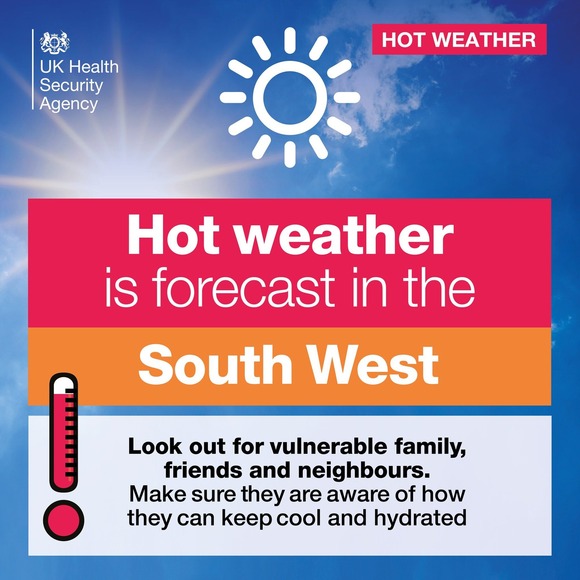
A yellow heat-health alert is in place for the South West this week until 6pm on Sunday 22 June. Yellow alerts are issued during periods of heat which would be unlikely to impact most people but could impact those who are particularly vulnerable. There's more about this in a recent blog by the government's UK Health Security Agency.
The main risks during hot weather are:
 Take extra care if you are vulnerable and look out for those most at risk
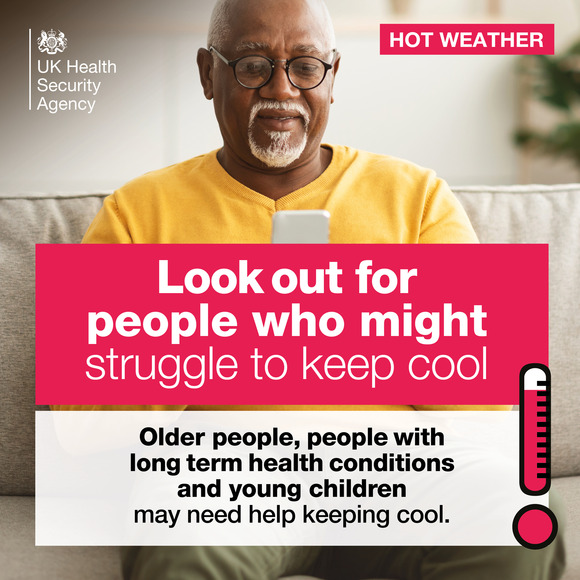
Anyone can become unwell when the weather is hot, but some are at higher risk than others. This includes older people aged 65 years old and over, babies and young children aged 5 years old and under and people with underlying health conditions or on certain medications.
The government's UK Health Security Agency has a useful list of people who are at higher risk in hot weather.
Look out for older people, people with long-term health conditions, those who live alone and may be unable to care for themselves and young children who may find it more difficult to stay cool and hydrated in hot weather.
 Top tips for staying safe in the heat
To stay cool in hot weather follow these simple tips:
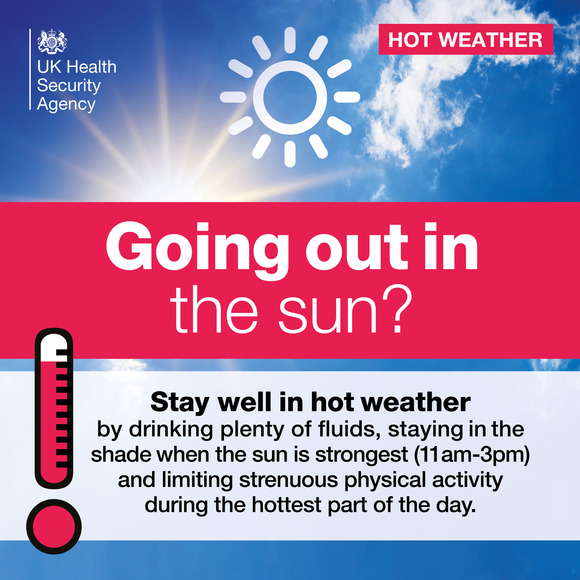
- keep out of the sun at the hottest time of the day, between 11am and 3pm
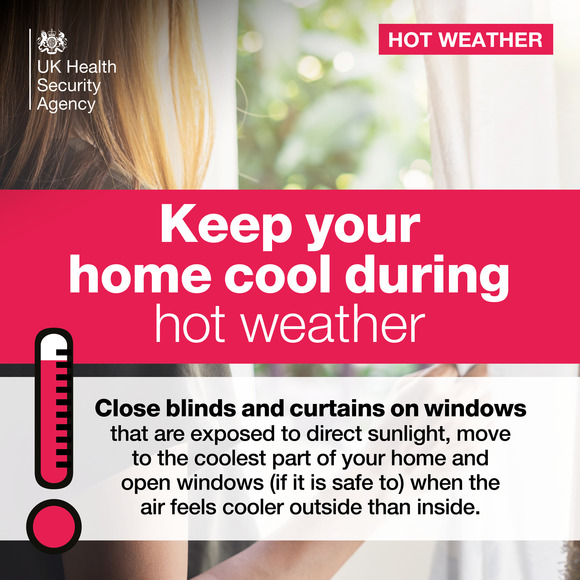
- keep your home as cool as possible by shading windows and shutting them during the day and then opening them when it is cooler at night
- stay hydrated by drinking plenty of water and avoid alcohol and caffeine
- don't forget suncream and a sunhat when you're outside
- check on family, friends and neighbours who may be at higher risk of becoming unwell, and if you are at higher risk, ask them to do the same for you
- know the symptoms of heat exhaustion and heatstroke and what to do if you or someone else has them
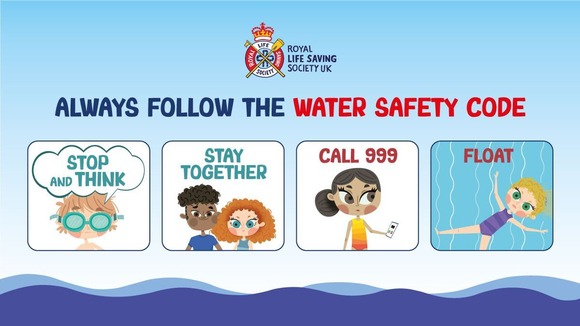
Rising temperatures mean many of us head to pools, beaches, rivers and lakes to jump in and cool off. But taking the plunge carries risks, especially for the non-swimmers, less-experienced or less-confident swimmers.
Cold water shock and cramps can happen to anyone, and if you're wild swimming then currents, tides, submerged and unseen hazards, rocks, weeds can catch out even the best swimmers. Swim where there's a lifeguard, and stay within your depth. If you do get in to trouble, float to live. Wearing a brightly coloured costume can help make sure you're more visible too.
Please take a moment to watch and share this family-friendly video from the Royal Life Saving Society UK (RLSS) about the Water Safety Code which aims to give you and your family the knowledge to stay safe in and around water.
Once you're out the water, don't forget to reapply your sunscreen straight away, even if it's "water resistant" as towel drying and sweating can rub it off.
There’s lots more information online to help you stay safe during hot weather. Visit the UKHSA and NHS websites including their pages on and on .
Met Office also have information on their campaign which you may also find useful.
Or scroll down through this newsletter for lots more information and advice, and save it somewhere handy to refer back to over the summer.
 Keep cool
If you are going outside
Try to avoid the sun during the hottest part of the day, between 11am and 3pm when the UV rays are strongest. Stay in the shade, drink plenty of water, apply sunscreen regularly and wear a wide brimmed hat. Cold showers, filling up a hot water bottle with ice and blotting your skin with damp, cold cloth can help keep you cool. You should also avoid exercising during the hottest part of the day.
What to wear
What we wear can make a real difference to how our bodies handle heat. Avoid the temptation to strip off, because you may be at greater risk of sunburn, which can affect your body's ability to cool itself. Instead wear light colours (dark colours absorb more of the light, converting it into heat) and loose cotton or linen garments that are more breathable, absorbent and encourage ventilation.
If you are inside
If you're indoors, close curtains in rooms that face the sun to keep indoor spaces cooler, spend time in cooler parts of the house (especially for sleeping), open windows when the air feels cooler outside and try to get air flowing through your home. Placing a bowl of ice at an angle in front of a fan can also help cool the air indoors. Never leave anyone in a closed, parked vehicle, especially young children and animals.
Stay hydrated
Sweating is your body's natural way of keeping you cool. Some sweat evaporates from your skin, taking heat with it, the rest runs down your face and body.
We sweat more in hot weather, so it's really important to drink lots of water to replace what our bodies have lost. It also helps cool the body and prevents heat exhaustion. Our physical thirst is not a very reliable indicator of how dehydrated we are (urine colour is better), so you should try to drink plenty before you feel parched. Try not to drink caffeine or alcohol, as they are diuretics that can increase dehydration.
Foods with high water content such as strawberries, cucumber, lettuce, celery and melon can also help you stay hydrated. Try to avoid large, heavy meals laden with carbohydrates and protein because they take more digesting, which in turn produces more body heat.
Dehydration means your body loses more fluids than you take in. If it's not treated, it can get worse and become a serious problem. Visit the NHS website to find out more about how to spot the signs of dehydration and reduce the risk.
 Sunscreen and avoiding sunburn
Sunburn increases your risk of skin cancer. Sunburn does not just happen on holiday. You can burn in the UK, even when it's cloudy.
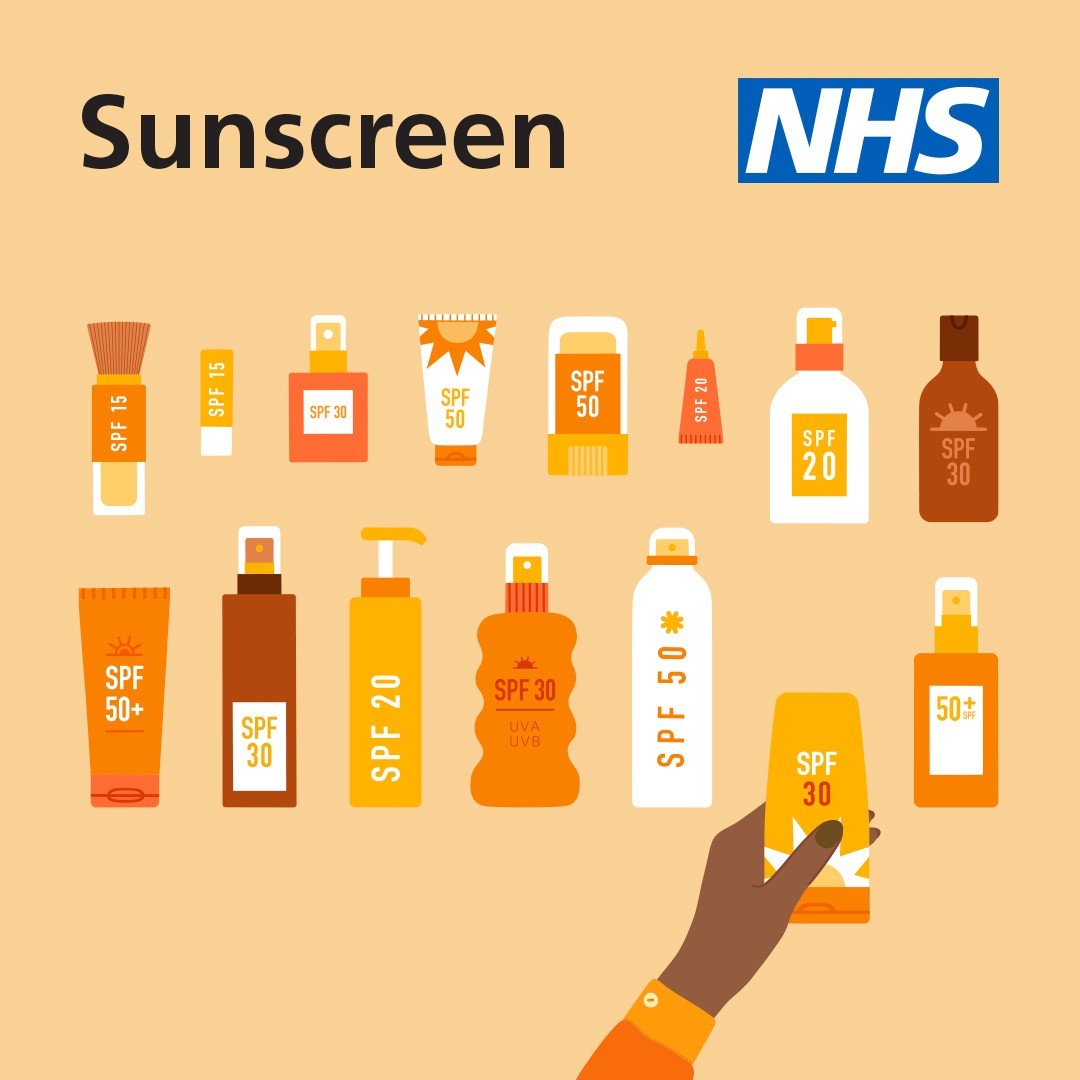
If you plan to be out in the sun, apply sunscreen (at least factor 30) to all exposed skin, and reapply it liberally and frequently for as long as you are outside. Do not rely on sunscreen alone to protect yourself from the sun though. Also wear suitable clothing and spend time in the shade when the sun's at its hottest.
Visit the NHS website to find out more about sunscreen and sun safety. And if you work outside, the Peninsula Cancer Alliance has information for you about protecting the skin you work in.
Sunburn is hot and sore skin caused by too much sun. It may flake and peel after a few days. You can treat it yourself, and it usually gets better within seven days. Visit the NHS website to find out more about sunburn, including what you can do to treat it yourself and when to get medical help.
Heat exhaustion and heatstroke
If you or someone else feels unwell with a high temperature, headache, loss of appetite, feeling dizzy or shortness of breath during hot weather, you should consider the possibility of heat-related illnesses such as heat exhaustion or heatstroke.
Heat exhaustion does not usually need emergency medical help if you can cool down within 30 minutes. If it turns into heatstroke, it needs to be treated as an emergency.
Visit the NHS website to find out more about heat exhaustion and heatstroke, including symptoms, treatment and prevention.
|