Getting it right - pronouncing children's names correctly matters

Learning a child’s name is crucial as every name has a story!
In our increasingly diverse Devon, it is essential for schools to foster an environment of inclusivity and respect. One fundamental way to achieve this is by ensuring the correct pronunciation of ethnically diverse children's names.
A child's name is a core part of their identity. It carries cultural, familial, and personal significance. When a child's first or last name is pronounced correctly, it conveys respect and validation.
Mispronunciation can make a child feel undervalued, excluded, less connected to their cultural identity, potentially affecting their self-esteem and overall engagement with learning.
It is not uncommon for parents to consider changing their child's name to avoid continuous mispronunciation, name avoidance or alternative names being used. Such a decision can have profound implications on the child's identity and should not be supported. Schools should reassure parents that they are committed to learning and using the correct pronunciation.
During the initial induction meeting, professionals should make it a priority to ask parents or the child to clarify the pronunciation of their name. You can encourage parents to provide you with the phonetic spelling of their child's name. This shows a commitment to getting it right from the start.
You can also ask children about their correct pronunciation as soon as they start and let them know that you are open to corrections when first pronouncing their names.
To ensure correct pronunciation, consider reaching out to the family before the child starts. A quick phone call to introduce yourself and ask about the correct name pronunciation can make a significant difference! This approach will show the family and their child that you value and respect their cultural heritage and identity.
You can train your reception staff to ask about correct name pronunciation when families reach out to register their child. This could be an effective strategy for learning correct pronunciation of children’s names.
You can also clarify correct pronunciation with an interpreter, during the initial induction meeting or discuss with someone who speaks the child’s language.
Additionally, there are now many online tools to support correct name pronunciation, including Google. Its audio allows you to select the language and hear name pronunciation. See the Google Translate name pronunciation tool.
Our team will be working closely with professionals and children to support this matter through resources and conversations over the next few months.
|
 Fully funded Equality, diversity and inclusion training
This year we collaborated with the Devon schools wellbeing partnership to deliver funded Equality, diversity and inclusion training. This project is coming to a close at the end of March and we want to thank the Devon schools wellbeing partnership for supporting this vital work, as well as a thank you to all the schools and governors who attended the training.
Through this training we have been able to raise awareness of the protected characteristics, as well as how schools can support children in these diverse groups for 100s of school staff and governors.
We have had lovely feedback including:
‘Everyone gained greater knowledge after having this session and it was great to receive the slides so that we can now break this down into bite-size pieces to gradually filter to all other staff via our weekly bulletin.’
‘The training was brilliant and really informative. Staff went away feeling more confident in their knowledge and understanding. As a whole school, we feel we have a better understanding of what we are doing well and where we can be even better. Really appreciate your time in delivering this. Thank you!’
‘It was an excellent CPD opportunity. Staff were very engaged and discussed the issues raised following the meeting.‘
We are delivering a further Equality, diversity and inclusion twilight webinar on the 30th of June. This is not part of the project, but is part of our Key inset and twilight training webinars. All Key inset day and twilight webinars throughout the year are fully funded for maintained schools and heavily discounted for all other settings.
These webinars cover Equality, diversity and inclusion, supporting multilingual children, as well as support children from the Gypsy, Roma, Traveller and Showmen communities.
We have moved our seminar to the 19th of October.
This half day, online seminar will support you to have a better understanding of the barriers that ethnically diverse children and their families face. We will bring together experts to share their insights in supporting ethnically diverse children.
The morning will include stimulating presentations on a combination of research-based best practices and approaches, as well as opportunities for discussions and networking.
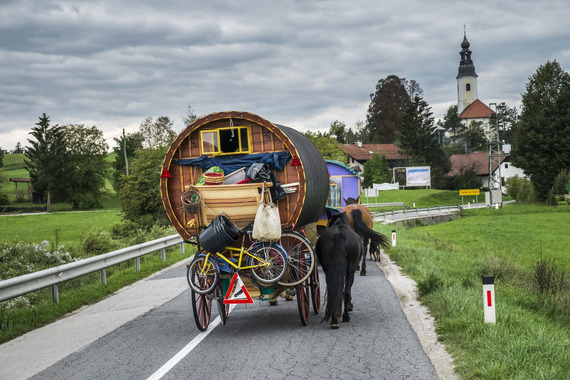
Like every June, GRTHM is about celebrating the rich and diverse cultures, histories, and traditions of Romany Gypsy, Roma, Irish Traveller, New Traveller, Showmen and Liveaboard Boater communities.
This year, the theme is to celebrate the incredible community members that don’t get the spotlight they deserve.
Put the date in your diary and start planning activities for your school now. Previous resources can be found on our website and will be updated shortly. You can also request a school assembly by contacting Ellen at ellen.tout@devon.gov.uk.
The Traveller Movement are launching their new report about the exclusion of Gypsy, Roma and Traveller children - ‘Fought not Taught’ in parliament on 11th March. Read the full report on their official website.
Attendance is a priority for all schools and the non-attendance of GRT&S children remains significantly higher than any other cohort.
The Government Ethnicity facts and figures – Absence from school report, published December '24 shows that:
- Travellers of Irish heritage (22.1% - 562,441 missed sessions) and Gypsy and Roma (17.8% = 1,512,991 missed sessions) children had the highest overall absence rates.
- For children in the Traveller of Gypsy/Roma ethnic groups, the overall absence rate was lower in primary schools (15.7%) than in secondary schools (21.3%).
- 71.7% of children from the Traveller of Irish heritage ethnic group were persistently absent – the highest percentage.
Strategies to maintain and improve attendance for GRT&S children
- Schools are proactive in communicating with parents.
- Rigorous monitoring of attendance.
- Schools appoint key members of staff for families.
- There is a sensitive response to demands of the community.
- Schools and outside agencies work effectively together.
- Schools work closely with the GRT&S advisory teacher.
- Excellent home-school relationships.
- Practical support – uniform/transport.
- There is a flexible approach top homework/uniform.
- The school environment and curriculum positively promotes Traveller culture and heritage.
- Provision of personalised learning.
- SLT/key members of staff make home/site visits.
- Provision of distance learning for mobile students.
- Option of vocational learning (secondary).
Addressing GRT&S barriers to attendance – awareness training
Do you want to understand the barriers and improve the attendance of your GRT&S children?
We support schools to have an increased awareness of:
- GRT history and culture.
- Barriers to attendance.
- Strategies to raise attendance.
- Good practice in schools.
Contact us for more information.
Richard O’Neill MBE will talk about his involvement in the ROMLIT project and his experience co-creating stories with Gypsy, Roma and Traveller Early Years children.
In his lecture, Richard O’Neill, a best-selling author, educator and advocate, will be delving into the myths and misconceptions surrounding modern Gypsy Roma and Traveller families and their relationship with education.
Drawing on his lived experience within a nomadic family and working in schools. Richard will share how cultural understanding and inclusivity can transform early years settings into welcoming, empowering environments for Gypsy, Roma, Traveller children and their families.
|

