28 March 2025
Welcome to the Multicultural Devon Network Newsletter

Welcome to the Multicultural Devon Network Newsletter, the quarterly newsletter of the Migration and Resettlement Team at Devon County Council (DCC). Our newsletter shares information about cultural events and celebrations, learning English, anti-racism initiatives, No Recourse to Public Funds (NRPF) and much more. It is also an opportunity to celebrate Devon’s multiculturalism and to emphasise that DCC is here to support all residents of Devon. We recognise that many in our community face barriers, challenges and discrimination due to their race, religion, ethnicity, first language and/or immigration status, and we are working to break down these barriers and improve information sharing and access to services in Devon.
If there is anything you think our team can do to support you and our communities, or if you have any information that you would like to share in our next newsletter, please email ESOL@devon.gov.uk.
In Memory of Anil Lee
We want to start our latest newsletter with a tribute to the memory of Anil Lee who sadly passed away just after Christmas. Anil was the CEO and founder of Devon’s most successful community interpreting agency, Multilingua Devon, which she launched, as a not-for-profit Community Interest Company, back in 2007. At that time, finding a professional interpreter or translator in Devon was often a huge challenge as there was no one-stop agency to turn to, and this gap too often had a negative impact on the ability of refugees and other migrants arriving in Devon to access the services they needed.
Through unstinting dedication and hard work, Anil grew Multilingua into a company that, today, can offer a rapid and affordable response to requests for support with more than 80 languages. Anil’s work has had a huge positive impact on Devon and she will be sorely missed.
Featured Organisation: CISCO
In each newsletter, we feature an organisation from our directory of services for ethnically diverse communities in Devon to give a deeper insight into the amazing work these organisations do.
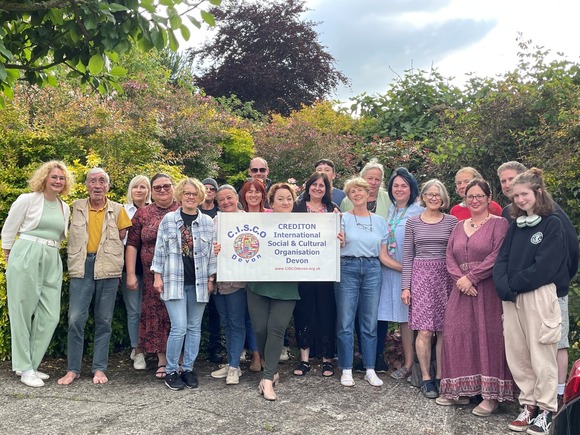
When did you launch your group and what is your group’s vision?
We started CISCO in 2009, so last summer we celebrated 15 years of activity! Our aim is to look after migrants and refugees in the area of Crediton. Our membership has no fees and our Management Committee is very international. We run an Advice Centre and English courses; everything is free of charge. We take part in the local social events and festivals and we run our own events welcoming all Crediton citizens.
What changes would you like to see in Devon?
We would like to see migrants and refugees better integrated in the host community, welcomed and celebrated. It’s a process that needs certain efforts from both sides. We noticed that migrants are often too shy to communicate, socially inactive, missing knowledge of their rights and opportunities.
How has your support benefited the people you work with?
Our 15 years’ history has a lot of successful stories of people finding decent jobs, accommodation, learning to manage their budget, building up healthy family relationships and finding new friends. CISCO is well-known in the area and often works like an emergency support.
What are your plans for the future?
We would like to see more students attending our free English lessons, which are matching different levels of knowledge and skills.
The community of Crediton is very supportive, understanding and enjoying our diversity. We consider ourselves to be lucky living here in Crediton!
Dates for your Diary: cultural events and activities April - June 2025
Spring has begun, a time of new beginnings, light and growth. Spring brings with it many celebrations and festivals.
12th – 20th April is Passover, a major Jewish festival that celebrates their ancestors' escape from slavery in Egypt. On the evening before Passover, Jews have a special meal called a Seder, which includes reading, eating special foods, singing, and other traditions.
14th April is Vaisakhi, Sikhism’s biggest festival that celebrates the founding of the Sikh community. Vaisakhi is normally celebrated by a visit to the Gurdwara, a procession through the streets and a special meal with family and friends.
18th – 21st April is Easter weekend. Easter is a Christian Festival commemorating the death and resurrection of Jesus.
22nd April is Stephen Lawrence Day, which celebrates the life and legacy of Stephen Lawrence, who was killed in a racist attack at just 18 years old. The day aims to encourage people to stand up against racism and discrimination.
23rd April is St George’s Day, the national day for England. A truly multicultural saint, St George is the patron saint of England, Georgia, Venice, Genoa, Portugal, Ethiopia and Catalonia.
1st May is May day. May Day celebrations can include maypole dancing, Morris dancing and crowning a May Queen.
12th May is Wesak, also known as Buddha Day. It is the most important Buddhist festival as it celebrates Buddha’s birthday.
6th to 10th June is Eid al-Adha, one of the most important festivals for Muslims. It remembers the prophet Ibrahim's willingness to sacrifice his son when God ordered him to.
7th to 8th June is the Exeter Respect Festival, the largest celebration of diversity in the South West, taking place in Belmont Park in Exeter.
16th to 22nd June is Refugee Week, the world’s largest arts & culture festival celebrating the contributions, creativity and resilience of refugees and people seeking sanctuary. Various events will be taking place across Devon, including film screenings at the Exeter Phoenix, workshops at Tavistock Library, a community feast at the Ockment Centre in Okehampton and much more.
21st June is Barnstaple Diversity Festival and Pride March, a vibrant celebration including music performances, exhibitions, workshops and food stalls.
22nd June is Windrush Day, which is a day to honour the contributions of migrants to life in the UK, especially Afro-Caribbeans who began arriving on the HMT Empire Windrush in 1948.
Spring around the World

In Exeter last weekend, the Kurdish community celebrated their traditional New Year festival of Newroz with dancing, singing and a bonfire in Sidwell Street. In Kurdish legend, Newroz celebrates the deliverance of the Kurds from a tyrant and is a powerful expression of Kurdish identity and culture. The Newroz fire symbolizes new beginnings: the passing of winter, the dark season, and the birth of spring, the season of light. This year’s celebrations will culminate with an event at Exeter Phoenix (EX4 3LS) this coming Sunday 30th March from 1pm - 5pm.
Below are some other stories of Spring from around the world.
|

Spring in Afghanistan is a colourful story, full of energy and life. As winter packs its bags and the sun gradually becomes gentler, people breathe a sigh of relief. The mountains still have traces of snow, but the fields slowly turn green, and almond blossoms, like tiny pink lanterns, light up every corner.
Spring is a season of movement, self-renewal, and hope. The people of Afghanistan eagerly plant trees, flowers, and greenery. The Afghan calendar even has an official day to celebrate agriculture, called "Farmer’s Day" (Mela-e-Roz-e-Dehqan).
Nowruz, marking the beginning of the new year, is celebrated with great excitement. Families prepare “Haft Mewa”, a mix of seven dried fruits soaked in water, representing freshness and the revival of nature. Sabzeh (sprouted greens), a symbol of new life, is placed in homes, and people wear new clothes. But the highlight of the celebration is Samanak, a sweet and fragrant wheat-based dish. Women stir it throughout the night while singing traditional songs and dancing.
In spring, the gardens of Kabul, Mazar, and Herat come to life. Red, yellow, and purple tulips dance on the hillsides, while markets overflow with fresh fruits and aromatic herbs. The gentle morning breeze carries the scent of freshly baked bread and green tea through the alleyways.
For the people of Afghanistan, spring is not just a change of season; it is a fresh beginning, a new hope, a reason to set aside worries and celebrate life.
Written by Dr Omid Afghan.
|

Spring in my country begins in the middle of March. The days get longer, and the nights get shorter. Nature wakes up: trees start growing new leaves, and meadows turn green. The weather is pleasant, the sky is clear, and it is usually not overcast or windy. Flowers bloom everywhere, especially in front of houses. My favourite flowers are gladioli and peonies. Gladioli come in different colours.
In spring, the weather becomes warmer. People spend more time outside, and nature comes back to life. I like spring because we often have picnics. I spend more time in my little garden, where I cultivate vegetables for the future harvest.
Written by one of our ESOL students, Nadia S.
|

Palestine is beautiful in spring. Wildflowers bloom in vibrant colours. The most famous of the wildflowers is the Palestinian poppy, which is striking with its bright red petals contrasting with the white and black middle. Other wildflowers and plants, for example iris, chamomile and wild thyme, make colourful displays in the landscape. The weather is warm but not too hot yet like in Summer. It’s the perfect time to be outdoors. Spring is about new life and hope.
Springtime is beautiful and my favourite time of year. You can get lost in the beauty of nature and for a short time forget your problems.
Written by one of our ESOL students, Rozan A.
|
ESOL Initiatives
We have been seeing increased interest in English for Specific Purposes (ESP) courses, English classes that focus on the particular language and skills needed for a specific area of study or work. Here are some examples of ongoing ESP initiatives our team has been supporting:
Learn Devon is offering a new ESOL for Childcare course: a great opportunity for learners interested in a career in childcare. The course will support learners with the English language required to take Learn Devon’s accredited childcare course, Preparing to work with children. The course, due to start in April 2025 and currently accepting applications, will be delivered online and is suitable for learners with an English level of Entry 3 and above. Find more details using the links below:
ESOL for Literacy Learners
In response to a growing need for ESOL classes which cater to the needs of learners with low levels of literacy, St Sidwell’s Community Centre in Exeter have been piloting a basic literacy class called ESOL Foundations. Teachers with expertise in literacy teaching have been delivering 6 hours per week of classes since September 2024 and have seen great progress among students. Key aspects that have helped make this initiative a success are the expertise of the teachers, adopting a learner-centred approach and putting a lot of emphasis on creating a friendly and informal environment with the option for learners to bring children if childcare is an issue.
Geographically, Devon is one of the largest counties in the UK and, in rural areas, transport can be a major challenge that, for refugees and other migrants, has a big impact on their ability to find employment and/or continue their studies. The majority of migrants arrive in UK with plenty of driving experience behind them but, within a year, most will need to pass the UK Driving tests. So, there has been a long tradition of providers offering ESOL for Driving courses. The most recent to get involved is the Pickwell Foundation in North Devon which is launching ESOL for Driving courses for Afghan refugees in North Devon, including one women-only class.
ESP has been around for many years and there are a range of existing resources and model courses out there. If you think there is an area of ESP that is in demand in your area, please get in touch with us at ESOL@devon.gov.uk; if we can’t point you in the direction of ready-made resources then we may be able to help with funding for developing new courses.
Anti-Racism in Devon Schools
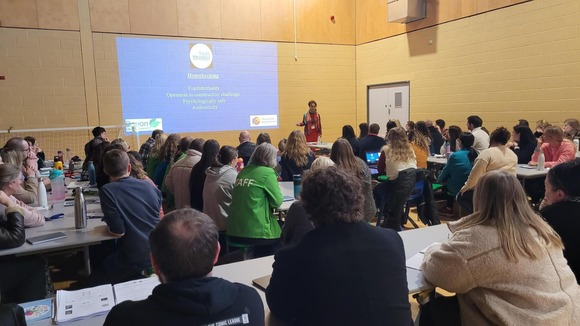
The Anti-Racism in Devon Schools Training Programme, launched by the Migration and Resettlement team and led by Ana Barbosa - delivered to 26 schools in North, South, East and Mid Devon and reaching more than 2000 staff and governors - has come to an end.
The training has supported school staff to feel empowered to become anti-racist, anti-discriminatory and anti-oppressive organisations. It has also supported schools to know more about partners in their local communities and recognise the change of demographics in the local area and beyond. The feedback about the sessions has been overwhelmingly positive.
The schools involved have acknowledged the need to adopt a long-term approach to tackling racism and are hopefully more aware of their local community partners. Our Directory of Services for ethnically diverse communities has been a welcome resource which schools can use as well as sharing with families and other partners.
Given the uncertainties of Local Government Reorganisation plans, and limitations in funding, our next steps are unclear. However, the programme has provided fantastic opportunities to engage with and support schools across Devon - a great learning experience not only for the schools but also for us as a team, and as an organisation. We fully intend to continue engaging with schools and to continue supporting anti-racism initiatives. With a follow-on project in mind, we are currently talking to voluntary and community sector partners about how we can work together to continue building an anti-racist Devon.
Communities for Afghans Project

Could you welcome an Afghan family into your neighbourhood?
The UK Government is seeking to partner with communities to resettle Afghan households eligible for resettlement under the Afghan Resettlement Programme. Sponsor Groups will need to source accommodation for a period of three years and provide integration support, including local orientation. Additionally, there will be an upfront costs fund to cover expenses such as rental deposits and upfront rent, managed by a Principal Sponsor. A monthly Sponsor Group fund will be paid via the local authority, along with a tariff per arrival paid to the local authority where the family settles.
This initiative for Afghan families builds on the well-established Community Sponsorship programme, which has enabled community groups across Devon to provide safety and life-changing opportunities for 20 families since 2016.
Skills Bootcamps back for another year

Train4Tomorrow Skills Bootcamps have been confirmed for another year! Devon County Council has received over £8m to expand training opportunities for over 2,500 adults across Devon.
Skills Bootcamps are free, short courses giving you the chance to upskill, change careers or explore new job opportunities! The courses are a great way to boost your employment opportunities, whether you are unemployed, or looking for a new career path. From childcare to project management or healthcare, Skills Bootcamps are expanding to cover even more in-demand skills from April 2025.
For those looking to move into new employment, an interview offer with an employer is guaranteed on completion of the Skills Bootcamp.
For Louise in Exeter, this interview opened the door into a new career. She said she has always enjoyed helping people and wanted to work in healthcare and now her children are older the Healthcare Skills Bootcamp was an opportunity she couldn’t pass up. Now, as result of the Skills Bootcamp, Louise has successfully secured herself a role with the NHS.
A new range of courses will be available from April so follow us on social media to keep up to date with new courses as they are released.
|
New welcome pack for young asylum seekers

We are delighted to announce the launch of a brand new welcome pack for young asylum seekers.
The welcome pack sets out important information about local services, community resources, and tips to help young asylum seekers settle in their new lives in Devon. The pack has been co-designed with some of our young asylum seekers, and it covers everything from housing and education, to healthcare or finding friends.
Devon young asylum seekers, Adil, Yousif, Sherrif, and Hagos, played a key part in creating the pack. Working with the Participation Team, they drew on their experiences to set out what information and advice they found most helpful and what should therefore be include in the packs.
The complete welcome pack is available on the Stand Up Speak Up website, while a leaflet has also been created that can be given out to new young asylum seekers.
|
|