Friday 7 February 2025
We want to make sure that this newsletter is as helpful and engaging as possible, so over the coming weeks we will be sending two different versions at random to subscribers to gather your thoughts on how the content is presented.
One will have short articles with buttons to read the full article on online, the other will be longer and include more of the full story within the newsletter.
Please let us know which you prefer by taking part in a quick poll using the button below. There's only one question!

The Devon and Torbay Combined County Authority (CCA) – the governance needed for devolved decision-making powers and funding to flow from Whitehall to local decision-makers in Devon and Torbay – is now official.
It means that decisions, previously made in Whitehall, will now be made locally on priority issues, including housing, jobs and skills, transport and the economy.
The members of the Devon and Torbay CCA will meet formally at the inaugural meeting on Wednesday 19 March 2025 at the offices of West Devon Borough Council in Tavistock.
The CCA members are drawn from Devon County Council, Torbay Council and Devon’s District/City/Borough Councils. The Police and Crime Commissioner is also a member, alongside representatives from the business community and skills providers.
The Devon and Torbay CCA will be responsible for making decisions about the powers and funding devolved to it from Whitehall through the devolution deal that was agreed in January 2024.
Read the full story on the Devon and Torbay Devolution Deal website.
 Devon County Council elections to be held in May
Devon County Council elections will go ahead in May 2025 after the Government turned down a full council request to postpone them.
The Government wants to see two-tier local government, where district councils and county councils deliver different public services in same areas, combined to become unitary councils that deliver all council public services in those areas, and for those unitary councils to work together under strategic authorities, led by elected mayors.
A council meeting last month voted in support of asking for the elections to be delayed to provide capacity to progress reorganisation and mayoral devolution at pace.
Earlier this week the Secretary of State for Housing, Communities and Local Government, Angela Rayner, announced that the council’s request was among those to have been turned down, meaning that our May elections will proceed as planned.
Read the full story on the news page of our website.
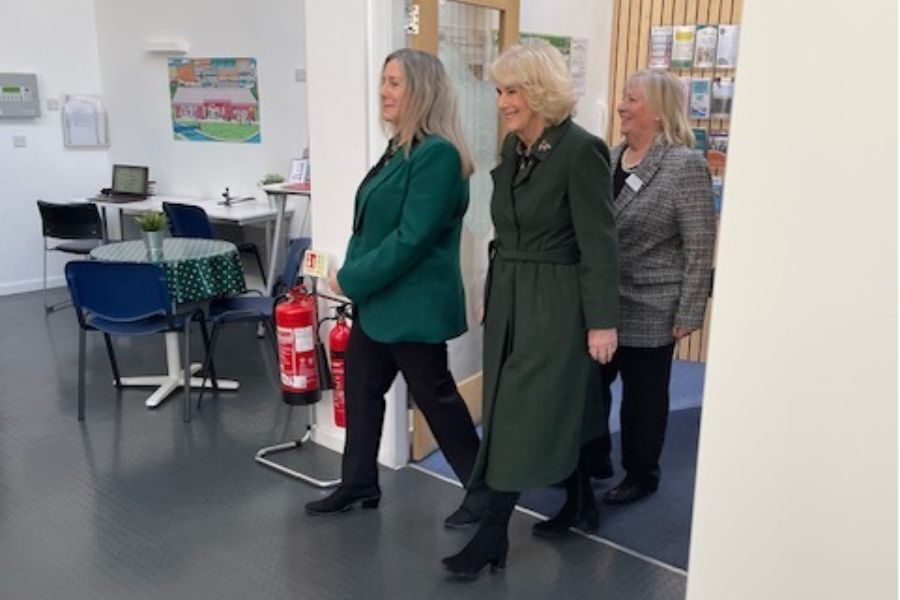
Our Chief Executive, Donna Manson and Chair of Devon County Council, John Hart, were invited to meet Her Majesty Queen Camilla as dignitaries at a royal visit to our partner organisation, Exeter CoLab, earlier this week.
HM Queen Camilla spent the day in Devon which included finding out more about the work of the charity, in particular the journey and ambition of CoLab Women which supports individuals who have experienced homelessness, domestic abuse, trauma and drug and alcohol issues.
CoLab Exeter is a multi-agency health and wellbeing hub, hosting 30 agencies under one roof which support thousands of women every year. HM Queen Camilla received a briefing and met service users and members of staff, commending them for their vital work.
Read the full story on the news page of our website.
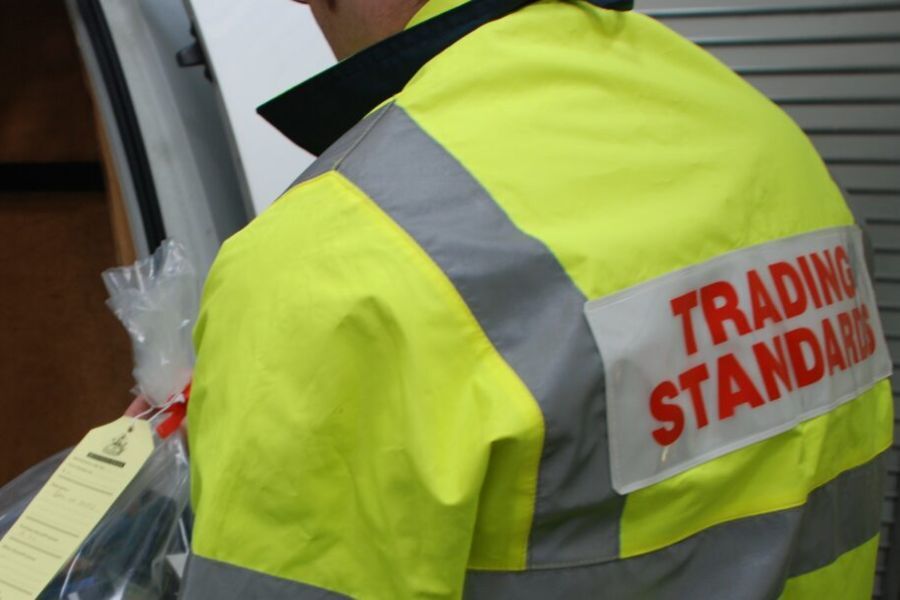 Illegal levels of plastic-softening chemicals found in plastic beach shoes
Our Trading Standards service is recommending that children’s plastic beach shoes are tested nationally after some products on sale in Devon, Plymouth, Somerset and Torbay were found to contain banned chemicals and had to be removed from sale.
Clothing retailers and importers are being urged to consider and review how and where they source their stock. It follows a market surveillance operation on a number of importers and retailers in the region.
Our officers purchased 15 pairs of beach shoes – all of which included ‘glossy’ plastic such as jelly shoes – with varying price points from a range of outlets and tested them for the presence of phthalates (plastic-softening chemicals that are used to make plastic more durable but their use in many products is strictly controlled).
Six of the 15 samples were found to contain phthalates in excess of the permitted levels and these findings were shared with the Office of Product Safety and Standards (OPSS) alongside a recommendation that further market surveillance is carried out in this product sector nationally.
Read the full story on the news page of our website.

We’re ranked fourth out of 152 county councils and unitary authorities for the proportion of people who access adult social care services surveyed who are satisfied with their care and support.
The Adult Social Care Outcomes Framework (ASCOF), England 2023-24 measures how well care and support services achieve the outcomes that matter most to people. It is used both locally and nationally to set priorities for care and support, measure progress and strengthen transparency and accountability.
Devon’s performance on levels of satisfaction is testament to the many providers that we commission services from and all the other organisations in our communities and unpaid carers who contribute to people’s care and support. More than 80 per cent of the 483 regulated adult social care providers in Devon are rated Good or Outstanding by the Care Quality Commission, a consistently greater proportion than is typical nationally, regionally or in similar areas.
That shows just how skilled and dedicated the 28,000 strong workforce in the adult social care sector in Devon is. In recent years international recruits to the caring workforce have made a significant and positive impact, bringing diversity and improving the availability of care, working alongside their established colleagues many of whom have been working in the sector for many years.
 Work due to start next week on road repairs near Ottery St Mary
Repairs to a collapsed retaining wall and edge of a road on the outskirts of Ottery St Mary in East Devon are expected to get underway shortly.
An emergency closure was put in place on Chineway Road in mid-January for the safety of the public after a full investigation of the site revealed the extent of the retaining wall collapse and 5ft-deep scour hole near a culvert at the foot of Chineway Hill.
We’ve had all necessary approvals granted and a contractor is due to start work on Wednesday 12 February.
Barriers, and then traffic lights, were installed on the road after initial assessments of the wall collapse and scour damage.
Having gained permission from owners of the land next to the road, vegetation was cleared from the site in December to enable a full assessment of the area to be carried out in mid-January. This inspection revealed the full extent of the retaining wall collapse and scour hole affecting the stability of the edge of the road.
Read the full story on the news page of our website.

Finding work can feel like a job in itself, and sometimes it's not easy. Whether you’re looking to build new skills, learn about funded or partially funded training, get support to find new jobs or develop your workforce, we’ve got you covered.
Our learning, employment and skills hubs provide in-person support and information about different career options, jobs, and learning opportunities for adults and young people in Devon.
Skilled advisors will work with you to identify opportunities and career pathways, helping you on the next step of your employment, learning or skills journey. We work with other organisations to give you the confidence and clarity you need, supporting you to move forward to what you want to do next.
We have six physical hubs in the county, providing in-person support to help you find out about different career options, jobs, and learning opportunities. Whether you’re a young person looking for career opportunities or an adult looking to retrain, find a new path or get back to work, our advisors can work with you for as long as you need.
Visit the employment hub page on our website to find out more.

The UK Health Security Agency (UKHSA) is urging young people to take up the HPV vaccine in schools when offered.
It reduces your chances of getting human papillomavirus (HPV), a common virus that's spread through skin contact. Most types of HPV are harmless. But some types are linked to an increased risk of certain types of cancer.
The vaccine is recommended for children aged 12 to 13 years old and has been offered by the NHS to all girls in school year 8 since September 2008. From September 2019, the vaccine has also been offered to year 8 boys. This is because the evidence is clear that the HPV vaccine helps protect both boys and girls from HPV-related cancers.
The NHS HPV vaccination programme in England has been shown to have dramatically lowered HPV infections and rates of cervical cancer in vaccine-eligible women, with the strongest effects seen in those offered vaccination at younger ages.
You can find out more about the HPV vaccine, including how to get it, on the NHS website.

LGBTQ+ History Month, celebrated every February in the UK, is a time to highlight the history, achievements, and ongoing struggles of the LGBTQ+ community. This year’s theme is ‘Activism and Social Change’.
This month-long celebration, founded by the organisation ‘Schools OUT’ in 2005, aims to raise awareness about the experiences and contributions of LGBTQ+ individuals to our shared history to help combat prejudice and discrimination.
Despite significant progress, many LGBTQ+ people still face challenges in society in being able to be open about and share their true identities.
This month provides an opportunity to address these issues and promote awareness and understanding, as well as recognise and celebrate the achievements and contributions of LGBTQ+ individuals throughout history.
It is hoped that shining a light on the contributions of the LGBTQ+ community will foster acceptance, equality and inclusivity and encourage allyship and support, which is crucial in creating a more understanding society for all, where everyone, regardless of their sexual orientation or gender identity, can live as they truly are.
Find out more by visiting the LBGTQ+ History Month website.

As a baby grows past those very early few months, the focus for parents often moves onto the introduction of solid food into their child’s diet.
We wanted to make sure you have the key information ready for this new, exciting stage for you and your child, so our health visiting service is offering free online support sessions for parents and carers about introducing solid foods.
The sessions, which take place online throughout the year, are aimed at parents who have babies aged around 16-21 weeks of age and will offer basic information for parents to consider before starting to wean their baby, including the following topics:
- expectations around weaning
- when babies are ready to wean
- five steps of learning to wean
- food ideas – to try or avoid
- meal examples
- common worries or obstacles
Find out more on the Health For Under 5s website.

This winter our libraries, which are run by the charity Libraries Unlimited on our behalf, are offering warm, safe, and friendly spaces for all.
Whether you're after a cuppa, a good book, or looking to join activities like Knit and Natter or breakfast clubs, their doors are open!
They're also accepting donations of warm coats, clothing, food, and hygiene products to support those in need. Your generosity will make a big difference!
To learn more about Cold Days, Warm Libraries and find out what’s happening near you, visit the Libraries Unlimited website.

Norovirus cases typically increase through autumn and into winter, but this year the number of cases is notably higher than the five-season average. It spreads easily through contact with people with the infection and any surfaces or objects that have been contaminated with the virus.
The main symptoms include a sudden onset of nausea, followed by projectile vomiting and diarrhoea, usually one to two days after becoming infected. Other common symptoms include a high fever, a headache and aching arms and legs.
To reduce the spread of norovirus, wash your hands thoroughly with soap and warm water, as alcohol-based hand sanitisers are not effective against the virus. Stay at home for at least 48 hours after symptoms stop and disinfect surfaces using a bleach-based cleaner where possible.
Most people will make a full recovery in two to three days without needing any medicine. However, some groups - including young children, the elderly or those with weakened immunity - are at risk of suffering more serious and prolonged illness, which may require medical treatment.
Try not to visit hospital A&E or GP surgeries if you have symptoms of norovirus unless advised to do so by a healthcare professional, as this may spread the bug to others. Ring NHS 111 if you are worried about your symptoms.
There's more information on the UK Health Security website.

If you enjoy our newsletters please forward this one to your family and friends and encourage them to sign up.
|