We want every young person in Devon to flourish at every stage of their life, and we made a commitment in our new Local Area SEND Strategy to provide support, alongside information and advice, so that young people can prepare and make informed decisions about their next steps.
Part of that is about supporting and encouraging them as they prepare for a safe, healthy and fulfilled adulthood. As we get older, the things we do and the opportunities available to us change, particularly when we turn 18 years old and are legally considered to be adults. It can be a very exciting time, but for young people with additional needs, there are added challenges.
So, to help young people, parents and carers to understand what’s ahead of them, we are launching a series of free online support sessions as an opportunity to learn about the support available to young people as they approach adulthood and turn 18 years old, as well as advice and resources for parents, carers and the professionals who support them.
These sessions are designed for young people aged 14 to 18+ years old and their parents and carers, as well as those who support them professionally.
Each session is designed for different people. For example, there's one for young people to find out about training and employment opportunities, and another specifically for parents and carers about the support that's available to them.
The sessions are about the support and advice available for young people who are moving into adulthood, and those who support them.
Led by industry experts, the sessions will cover topics such as independent living, money management, training and employment opportunities and support for parents, carers and young carers.
They aim to provide essential skills and information to help individuals live as independently as possible and ensure a smooth transition to adulthood.
First session next week!
Tuesday 11 February from 1pm until 2pm on Microsoft Teams
Understanding the difference between children’s and adult services: Aimed at parents and carers, this session will help you gain insights into the key differences between children’s and adult services, and understand how these changes impact you or your young person during their transition into adulthood.
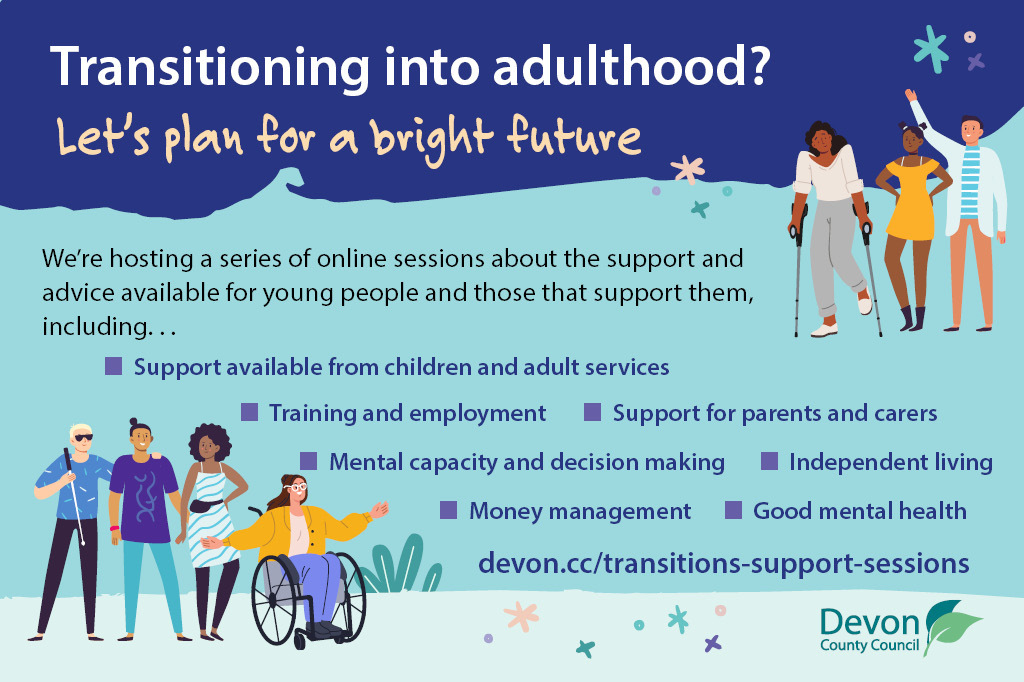
Each of the hour long sessions will take place online on Microsoft Teams throughout the year and be led by subject matter experts. The topics and dates are:
Training and employment opportunities on Tuesday 18 March at 1pm: Aimed at young people, this session explores various training and employment opportunities available for young people transitioning into adulthood. Learn how to create and utilise vocational profiles to support career development and access these resources effectively.
Independent living and housing options on Tuesday 15 April at 1pm: For young people to discover the different independent living and housing options available, and understand how to navigate the process of finding suitable accommodation.
Support available for parents, carers and young carers before, during and after transitions on Tuesday 20 May at 1pm: For parents and carers to learn about the support systems in place for parents, carers, and young carers throughout the transition process, ensuring they have the necessary resources and assistance.
Aspirations, mental capacity and decision making on Tuesday 17 June at 1pm: Aimed at helping young people and their parents and carers understand the principles of mental capacity and decision-making, and how these concepts apply to young people transitioning to adulthood, including your rights and responsibilities.
Money management on Monday 7 July at 1pm: for young people to get practical advice on money management, including budgeting, saving, and financial planning, to help young people manage their finances effectively as they transition to adulthood.
Good mental health and resilience on Tuesday 16 September at 1pm: For young people and their parents and carers to learn strategies for maintaining good mental health and building resilience, ensuring young people are equipped to handle the challenges and changes that come with transitioning to adulthood.
For those unable to attend live, we will provide a pre-recorded session with a question and answer segment available on our website.
Your input is important to us, and we will continue to ask for feedback and ideas on topics you would like to hear more about.
Getting older, for a young person, can be challenging, and the transition between being considered a child and then considered an adult is different for everyone.
A 'transition' means a time of change. Your child may go through lots of different transitions, for example:
- children’s social care to adult social care – or independence from social care
- school to college, higher education or employment, training, or apprenticeship
- residential or foster care placements to semi-independent or independent living
- college, higher education, vocational training, or apprenticeships to employment or adult social care (or both) or health services
- children’s to adult health services
- being a child in care
- living at home to semi-independent or independent living
We may offer to work with your family at different times to make sure that they have the right support that they need at the right time.
Having access to proper guidance and resources is crucial for a young person who is approaching adulthood. Support during key stages of learning and personal development allows them to take control, seize opportunities, and navigate challenges.
In addition to the support sessions, we've created an online guide to help young people and their parents and carers understand what to expect from services in Devon and know who is there to help at every stage of the journey through teenage years to becoming an adult.
It offers information and guidance on what to expect from schools, health services, and other support organisations. Sections include:
Who can I talk to about support?
Our support for transitioning to adulthood usually starts when a young person is around 14 years old. Either a young person or their parents or carers can get in touch with our Transitions Adult Social Care (TASC) Team.
A young person, a carer, parent, or professional seeking support from the TASC Team, should first complete a referral form. The form can be completed by a young person themselves or by anyone that has gained consent from the young person or their family.
If you have any questions about making a referral to the team, the services we provide, or wider questions about adult social care please call us on 01392 381 291 or email us at transitionsadultsocialcare@devon.gov.uk for an informal chat.
Devon Information Advice and Support (DiAS) gives free, confidential and impartial information about special educational needs and disability (SEND). Their helpline number is 01392 383080 and is open between 10am and 3pm Monday to Friday, or you can leave a message outside of these times. You can also email devonias@devon.gov.uk or visit their website for more information.
|