Preventing hair discrimination in schools
Research and court cases indicate discrimination related to hair or hairstyles disproportionately affects children with Afro-textured hair or hairstyles. This is often because of the way some school rules relating to hair or hairstyles are designed and implemented. Such rules might be embedded in school uniform or behaviour policies or be stand-alone policies related to hair or hairstyles. This form of discrimination can result in children questioning their identity and belonging in school, leading potential safeguarding implications.
The Equality and Human rights commission have published some resources and tools to support schools in preventing hair discrimination. Schools are encouraged to use these resources to support their efforts in preventing race discrimination and harassment, specifically in relation to designing and reviewing policies and practices related to Afro-textured hair.
Within their resources there is a short video suitable for whole staff CPD and a guidance tool for reviewing and updating policies.
Fully funded Equality, Diversity and Inclusion training
Over the last few months EDEAS has delivered Equality, Diversity and Inclusion training to hundreds of school staff across Devon.
This initiative is fully funded through the Devon schools wellbeing partnership, and helps to improve staffs understanding of protected characteristics, risk factors, strategies – as well as an understanding of the different forms of discrimination and racism.
There are only a few months remaining of this project, so if you are interested, please book your place.
👉 Further information can be found on our website!
This Holocaust Memorial Day (HMD) marks the 80th anniversary of the liberation of Auschwitz-Birkenau, the largest Nazi concentration camp complex, and the 30th anniversary of the genocide in Bosnia. 80 years on from the liberation of Auschwitz-Birkenau, antisemitism (anti-Jewish hatred) has increased significantly in the UK and globally following the 7 October attacks in Israel by Hamas and the subsequent war in Gaza. Extremists are exploiting the situation to stir up anti-Muslim hatred in the UK. Many UK communities are feeling vulnerable, with hostility and suspicion of others rising. We hope that HMD 2025 can be an opportunity for people to come together, learn both from and about the past, and take actions to make a better future for all.
|
At the end of last year, Friends, Families and Travellers (FFT) made its joint submission to the Government’s call for evidence on Improving the Curriculum and Assessment System, with Roma Support Group (RSG).
In its submission, FFT used evidence from its policy and advocacy work and consulted 47 pupils and parents, including Irish Travellers (4), Romany Gypsies (37), Roma (5), and a Travelling Showman, to inform key points and highlight the views of the communities.
Drawing from ongoing work, their submission highlighted:
- Department for Education ethnicity education data aggregates Romany Gypsies and Roma into one category ‘Gypsy/Roma’, which conceals the diversity of the two ethnic groups and the different inequalities experienced.
- High rates of exclusion and suspension of Romany Gypsies, Roma, and Irish Traveller pupils, meaning these communities are disproportionately represented in alternative provision and pupil referral units.
- The need for histories of Gypsy, Roma, and Traveller communities in school curricula, including celebrating Gypsy, Roma, and Traveller History Month in June.
- Lack of representation of Gypsy, Roma, and Traveller people in books used in schools, including the UK being joint lowest on coverage of Roma in school textbooks.
- Pre-vocational courses often equip pupils for career paths such as catering, beauty therapy, art and construction and do not always push for further study or higher education.
👉 Read the full report on FFT website!
|
This academic year, EDEAS has worked with DCC Early Years team to offer practitioners fully funded training.
This training session is aimed at early years settings and primary schools (EYFS) and will focus on a holistic approach to supporting multilingual children.
The training consists of three modules:
- Introduction to language development in Early Years.
- Monitoring progress, assessment and considerations.
- Effective practice.
Training objectives:
- Understanding language acquisition.
- Building relationships and the importance of attachment.
- Early communication.
- Understanding child development.
- Assessing young multilingual children.
- Working with parents.
- Strategies for supporting multilingual children.
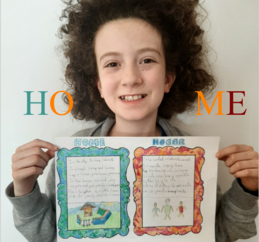
Every year on 21 February, we celebrate International Mother Language Day. This day, first proclaimed by UNESCO in 1999 and later adopted by the United Nations, is dedicated to promoting linguistic and cultural diversity and multilingualism.
International Mother Language Day is a fantastic opportunity for all schools to celebrate and promote the linguistic diversity of their multilingual children.
Here are a few quick tips from us to celebrate the day in your school this year!
- Organise an event where multilingual children can showcase their linguistic skills. This could include storytelling, poetry or even songs in their home languages.
- Encourage children to learn about different cultures and languages through variety of tasks or projects and provide materials in multiple languages. This can include bilingual books.
- Include lessons about linguistic diversity and the importance of multilingualism into the curriculum. This can help raise awareness among all children about the value of other languages and cultures.
- Involve parents and wider school community in your school activities. They can share their linguistic and cultural experiences, which will enrich educational experience for all children.
|
In the changing landscape of education, language and terminology play a crucial role in shaping our perceptions and approaches.
The EDEAS Team has recently made a shift from using the term 'EAL child' (English as an Additional Language) to 'multilingual child'. This change reflects a deeper commitment to inclusivity and a more accurate representation of the diverse linguistic backgrounds of our children in Devon.
The new term acknowledges the rich linguistic abilities of our children. Unlike 'EAL child,' which implies that English is an additional language, 'multilingual child' highlights the fact that many of these children speak several languages.
Many children who are referred to us as EAL have grown up learning two or more languages simultaneously from birth. For these children, English is not an additional language but one of the languages they use in their daily lives.
The new term, 'multilingual child', better captures this reality and will support a holistic approach to language support, considering all the languages a child speaks rather than focusing solely on English.
Using the new term will also help in fostering a positive identity among children. It emphasises their linguistic skills as assets rather than viewing their proficiency in English as a deficit. This can boost their confidence and encourage a more inclusive school environment and community.
Devon's demographics have changed significantly over the last 3 years, with an increasing number of children coming to Devon from multilingual backgrounds. The new terminology aligns with this demographic shift, ensuring that the language we use in education is representative of the community we serve.
Lastly, research supports the benefits of bilingualism/multilingualism, including cognitive advantages and enhanced problem-solving skills. By adopting this new term, we align our practices with these findings and support the multiple language development of our children.
Although some areas such as the census will still refer to children as EAL, we would like to encourage all Devon schools to adopt this term in every day conversation, communication with families and school policies as an inclusive approach.
|