|
Supporting children and families is at the heart of everything we do. While Ofsted inspections can naturally bring a degree of apprehension for providers, they also offer a fantastic opportunity to showcase the high-quality work taking place every day in settings across the county.
 |
|
Following a recent positive inspection experience, Sarah Gray from Breaston Wrap Around Care, has very kindly shared some reflections, key take-aways and top tips!
We hope this positive feedback provides reassurance and inspires confidence in your own Ofsted journey.
The full Ofsted report can be found here…Inspection Report
|
What can we expect from the initial inspection phone call?
"The inspection started with a phone call where the inspector gathered information about our staffing, the children we have on roll, our SEND picture including children with EHCPs, and our understanding of the wider community context. She was particularly interested in what makes our provision unique and spent time discussing our ethos, staff team and the experiences we offer our children."
To what degree was safeguarding covered?
"During the visit, safeguarding was a key focus. The inspector checked our Single Central Record, reviewed recruitment documentation and asked a range of safeguarding questions and scenarios. She also spoke with staff to confirm their understanding."
What emphasis did the inspector place on SEND and inclusion?
"SEND and inclusion were also significant areas of focus. We discussed individual children, the support and strategies we have in place, and how we work closely with parents and school staff to remove barriers and ensure every child can thrive."
Were there any other key take-aways?
"The inspector considered parent feedback and observed how children engaged within the setting.
Inspectors want to understand your setting and how children benefit from attending. Being organised, knowing your provision well and showcasing the positive relationships you have built with children and families will help you feel confident on the day.
Overall, the experience felt very child-focused and was centred on understanding the impact of our provision. The feedback was positive, with encouragement to continue the work we are already doing."
What 'top tips' do you have for other providers?
⭐ Know what makes your provision special and be ready to talk confidently about your ethos and impact. An understanding of your local demographic can provide a useful context too.
⭐ Keep safeguarding at the forefront of everything you do, and ensure staff can confidently explain what they would do in different scenarios.
⭐ Be prepared to talk about SEND and inclusion, including the support you provide and partnerships with families and schools.
⭐ Collect parent feedback in advance, as this provides valuable evidence of the difference your setting makes.
⭐ Have confidence in yourself! Inspectors are looking for consistency between what you say, what your records show and what they see happening in practice. You know your setting better than anyone and this is your chance to showcase all of your hard work. Don't be afraid to draw inspectors' attention to key examples of good practice to ensure they have seen and recognised them!
Finally, what are your plans for further development and continuous improvement?
"I am looking to set up a local network of wraparound club providers, where we can come together to share good practice, ideas and ‘magpie’ inspiration from one another! This was invaluable in my previous role, and I feel it would be a great opportunity for us to support one another and feel less isolated in what can sometimes be a challenging role.
If you’re interested in getting involved or would simply like to find out a little more, please drop me an email at Breastonwraparoundcare@gmail.com.
It would be lovely to hear from you! Sarah Gray 😊"

As we begin the new year, you may be thinking about how best to support your own professional development, as well as that of your staff members or assistants, if you have them.
We are delighted to share the latest opportunities available through the Derbyshire offer.
|
Following the success of our first wraparound-specific training course delivered over the summer, we are pleased to be launching additional courses later in the autumn term. These have been designed to support both school-based providers, as well as colleagues working within the private, voluntary and independent (PVI) sector.
We have also developed a new suite of training opportunities tailored specifically for school-age childcare practitioners, helping to strengthen skills, knowledge and best practice across the sector.
Keep an eye on our Eventbrite page, where additional courses and training opportunities will be added to throughout the coming months: Wraparound by Derbyshire Early Years Service | Eventbrite.
You may also wish to explore further CPD training opportunities available at:
As we know, reading plays a vital role in children's language development, imagination, wellbeing and all-round future learning success. As we continue to celebrate the National Year of Reading 2026 | Go All In, there has never been a better time to nurture a love of books and storytelling. Whether sharing a picture book at snack time, creating a cosy reading corner or enjoying stories together, every reading experience helps children develop confidence and curiosity. In this edition, we are pleased to share more of our recommended reads, chosen to support children's emotional wellbeing, inspire a love of reading and spark meaningful conversations.

Early Years / KS1
Don't Worry Little Crab (by Chris Haughton)
This is a wonderful story to share at the start of a new school year. Little Crab feels excited about exploring the big ocean, but soon becomes nervous when faced with something new and unfamiliar.
|
With the gentle support and reassurance of Very Big Crab, Little Crab finds the courage to take small steps, overcome worries and discover the beauty that awaits. This story provides an excellent opportunity for children to discuss their own feelings about new experiences, friendships and being brave when things feel challenging.Click to edit this placeholder text.
KS1 / Lower KS2
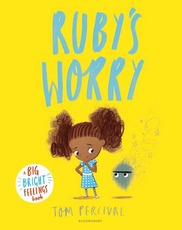
Ruby’s Worry (by Tom Percival)
Ruby's Worry is a gentle and reassuring story about a little girl whose worry grows bigger the more she keeps it to herself. When Ruby finally shares her feelings with someone else, she discovers that talking about worries can make them feel much smaller.
|
This engaging picture book provides a valuable opportunity to discuss emotions, encourage children to express their concerns, and remind them that everyone experiences worries from time to time. It is an excellent book to support children's wellbeing and confidence as they settle into a new school year.

KS2
Flotsam (by David Wiesner)
As children return to school and share memories of their summer adventures, Flotsam provides the perfect opportunity to reflect on exploration and discovery.
|
This beautifully illustrated wordless picture book begins with a child's visit to the beach, where an unexpected find leads to an extraordinary journey of imagination and wonder. Children can draw upon their own holiday experiences, whether they visited the seaside, travelled somewhere new or discovered something interesting close to home. The book encourages storytelling, creativity and discussion, making it an excellent choice for helping children reconnect, share experiences and start the new school year with curiosity and excitement.

The start of a new term can feel a little like the changing autumn weather. There is excitement and anticipation, much like a bright sunny day, alongside a whirlwind of updates, new expectations, policies, training and responsibilities that can sometimes feel as unpredictable as a sudden downpour.
|
Before long, you may find yourself hearing familiar phrases such as updates, changes, compliance, roles and responsibilities and that's all before welcoming children and families back into your setting.
With so much to do, it's easy to focus on completing the ever-growing checklist. However, effective safeguarding is about much more than policies, procedures and paperwork. It is about creating a culture where safeguarding is embedded in everyday practice and influences every decision, interaction and action.
A strong safeguarding culture can be seen throughout a setting. It is reflected in environments where children's individual needs are recognised and met, in children who feel able to communicate when something doesn't feel right, in staff who confidently identify concerns and take appropriate action, and in leaders who provide clear direction while modelling high standards and expectations.
As you explore these tips, take a moment to reflect on the following questions:
-
What does a high-quality safeguarding interaction look like in our setting?
-
How do we know that parents and carers have read, understood and engaged with our safeguarding information?
-
What does professional curiosity look like in practice, and how do we encourage it?
-
Are our partnerships with parents and carers genuine two-way conversations, or are we simply sharing information?
-
Do we create enough time and space for meaningful safeguarding discussions with staff?
By moving beyond compliance and fostering a strong culture of safeguarding, we can help ensure that every child is safe, supported and able to thrive.

This term, as a childcare provider, you will receive an email with a link to a survey about childcare for primary aged children (4-11 years), including breakfast, after school and holiday provision.
|
The information you provide is required by the Department for Education and will contribute to Derbyshire’s Annual Childcare Sufficiency Assessment by:
- Helping the local authority to understand current childcare provision;
- Identifying available places and capacity; and
- Supporting planning for future childcare demand.
Please ensure you complete the survey when you receive the link.
Welcome to our Autumn 2026 HAF update.
The Holiday Activities and Food (HAF) Programme, known locally as It's About Me, provides funded holiday club places and healthy meals for school-aged children who are eligible for benefits-related Free School Meals (FSM) during the Easter, Summer and Christmas school holidays.
The programme continues to grow year on year, with both established and new organisations delivering an increasingly diverse range of holiday activities for children and young people across Derbyshire.
We are delighted that the HAF Programme has been extended for a further three financial years, beginning in 2026/27. As we progress through the current programme year, we are seeing a range of exciting and innovative ideas being developed to enrich the experiences and opportunities available to children and families. Over the next three years, we will continue working closely with partners and colleagues across services to strengthen and enhance HAF delivery throughout the county.
Summer 2026 Highlights
This summer, HAF supported 176 holiday clubs across Derbyshire, the HAF team visited many sessions throughout the summer and distributed thousands of toothbrushes and tubes of toothpaste as part of Derbyshire's oral health initiative.
Holiday clubs delivered a wide variety of activities designed to promote healthy lifestyles, social engagement, learning and physical wellbeing. Activities included rock climbing, bushcraft, soft archery, football, cricket, hockey and much more. The positive feedback received from children, families and providers helped make Summer 2026 another highly successful HAF programme.
As part of our commitment to supporting children and families facing additional challenges, we also launched a new referral process for discretionary HAF codes. These codes enable children who are not eligible for benefits-related Free School Meals, but who are experiencing difficult circumstances, to access HAF provision. During the summer period, we received 60 referrals and were pleased to allocate HAF codes to many eligible requests.
Referral process
The new online referral process has replaced general email requests, allowing referrals to be assessed more efficiently and enabling quicker decision-making. We welcome feedback from professionals who have used the new system. The referral link will be circulated again in late November and early December 2026 for Winter 2026 applications.
Please note that this is a professional referral process and can be used by Social Workers, Family Support Workers, Teachers, Health Professionals, Social Prescribers and other relevant practitioners. Families cannot self-refer for a discretionary HAF code.
Contact Us
We are always keen to hear from organisations interested in becoming part of the HAF programme. If your organisation would like to find out more about delivering holiday provision in Derbyshire, please contact the team for an informal discussion.
To conclude our Autumn edition, we would like to take this opportunity to say a big 'thank you' to all our childcare providers across Derbyshire for everything you do. Your commitment, care and hard work make a positive difference to children's lives every day. We're proud to work alongside you and look forward to supporting you throughout the year ahead.
✨✨✨
|