 |
|
As we know, high‑quality wraparound provision is more than just care outside of the school day. It offers children safe, stimulating spaces to relax, play, build friendships and grow in confidence. Honest self‑evaluation is key to ensuring provision continues to meet the needs of children and families. |
How do you know your provision is working well?
Take time to reflect on how you judge quality, the evidence you use, and how often you review your practice, environment and offer. If self‑evaluation feels rushed or informal, we have some practical ways to make it more manageable and meaningful.
Top tips for effective self‑evaluation
1) Use a structured self‑evaluation tool
Tools such as the School-Age Care Environment Rating Scale®, Updated Edition (SACERS-U™) support reflection across areas including environment, activities and interactions. A consistent framework helps teams build a shared understanding of quality and track progress over time.
2) Capture views from your community
High‑quality self‑evaluation includes gaining feedback from those who experience the provision every day. This can be done in a number of ways, such as:
-
Parents: daily conversations, surveys, meetings or digital feedback
-
Staff: conversations, supervisions and surveys
-
Children: questionnaires, voting, discussions, idea jars or observations
3) Monitor engagement across your provision
Gathering children’s views doesn’t need to be complicated. Their choices, interactions and behaviour offer valuable insight. Take time to observe how children use your spaces and resources. Which areas are well used? Which are avoided? Do any patterns emerge by age or season? This helps highlight what is working well and where changes may be needed. Tools, such as the Leuven Scales for Wellbeing and Involvement, can support you to observe children’s engagement in provision. The Early Years Improvement Team offer training on this for all providers.
4) Connect with others
Connecting with other wraparound providers through networks or cluster meetings can help share good practice, spark fresh ideas and reduce the feeling of working alone. Are you involved in a local network, or could setting one up be an option?
Turning reflection into action
After self‑evaluation, consider small but meaningful next steps, such as:
- Adjusting layouts or refreshing resources to reflect children’s interests.
- Accessing targeted training and professional development, such as those listed within our Eventbrite wraparound collection.
- Building playwork expertise through mentoring, reflection or formal training. The OOSA signposts to a number of training providers which may be useful.
 |
|
In summary, effective self‑evaluation is an ongoing cycle: reflect, plan, act and review. By embedding this into everyday practice, your wraparound provision is more likely to stay responsive, inclusive and enriching.
What is one small step you could take this term to strengthen your self‑evaluation?
|
Books are an essential resource for all childcare provision but in short childcare sessions children need books they can read in a short time or can dip in and out of. During the National Year of Reading, we wanted to promote some of our recommendations for your provision.
It's not too late to 'Go all in' with the National Year of reading; you can find a wealth of resources here: National Year of Reading 2026 | Go All In
Early Years / KS1
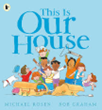
This is Our House (by Michael Rosen)
A warm, thoughtful story about sharing, belonging and making sure everyone feels included. Set around a playhouse, it mirrors situations children often experience in wraparound and holiday settings, making it highly relatable for young children. The book gently encourages conversations about fairness, kindness and taking turns, helping children build positive relationships. With its simple language and expressive illustrations, it’s a lovely choice for reading together and reinforcing inclusive values in a friendly, supportive way.
|

KS1 / Lower KS2
The Big Book of Bugs (by Yuval Zommar)
A bright, welcoming non-fiction book that celebrates the fascinating bugs children can spot, from bees and butterflies to ladybirds and beetles. It’s a lovely choice for KS1 and lower KS2 children, encouraging curiosity about the natural world right outside the door. The clear facts, bold illustrations and gentle humour make it easy for children to dip in and out, whether during quiet time or outdoor play. This book is ideal for inspiring bug hunts, seasonal discussions and a growing respect for nature at this time of year. 🐞🌼
|

KS2
Real-Life Mysteries – Can You Explain the Unexplained? (by Susan Martineau)
An exciting, thought‑provoking book that invites older children to explore strange real‑world mysteries, from puzzling disappearances to unexplained natural events. Children can dip in and discuss the mysteries together, sparking lots of curiosity and lively conversation. The book encourages critical thinking, questioning and problem‑solving, helping children weigh evidence and think like young investigators. Packed with intriguing facts and a sense of wonder, it’s ideal for inspiring discussion, debate and imaginative thinking in a fun, accessible way.
|

The world of safeguarding never stands still, and as expected, the last two months have already seen some big changes with updates to Working Together to Safeguard Children 2026, published in February, and new guidance for safer sleeping which will be published in the EYFS Statutory Framework from September 2026, but is already enforceable. Along with the new guidance for safer screens for the under 5’s and consultation for Keeping Children Safe in Education, it can seem that the updates and changes are endless.
|
What has the Local Authority done?
To support you, we have ensured all updates are shared via:
-
Leaders and Managers briefings – free to attend and held half termly! Please do look out for the link in your emails to give you access to the briefings.
-
Training – all updated to include the latest updates to key guidance and requirements. Please look at our Eventbrite page and select ‘safeguarding’ from the ‘collection’ link to view and book training courses.
-
Model Safeguarding Policy – updated as legislation changes. Make sure you have access to this and know where to find it.
-
Safeguarding Audit – updated as legislation changes and a really useful way to check that you are meeting your statutory duties. (2025-statutory-framework-for-eyfs-audit-group-and-school.docx or 2025-statutory-framework-for-eyfs-audit-childminders.docx)
What do you need to know?
Safer Sleep requirements:
Early years providers are required to meet the safer sleep requirements set out in the EYFS statutory framework, which currently links to the NHS safer sleep guidance. To make the existing requirements to follow the NHS guidance clearer, the wording in the EYFS framework will be updated so that there are more details on safer sleep. You can check the following links for more advice on safer sleep:
Sudden infant death syndrome (SIDS) - NHS
Safer Sleeping Practices for Early Years Educators - Foundation Years
Home | The Lullaby Trust
Screen time guidance for under 5s:
Digital screens are a part of modern life, but finding the right balance between screen time and other activities for young children can be tricky. The Best Start in Life have produced evidence‑informed guidance to support parents and carers in shaping healthy screen time habits for little brains, which you may find helpful to support you in your provision. Check the latest information:
Screen use by children aged under 5 - GOV.UK
Baby and toddler screen time guidance - Best Start in Life
Benedict's Law:
One of the big safeguarding updates has been around Benedict’s Law which is new legislation in England designed to strengthen allergy safety in schools, introduced after the tragic death of five‑year‑old Benedict Blythe from anaphylaxis in 2021. It makes allergy safety a clear legal priority by requiring schools to have robust allergy policies, staff training to recognise and respond to allergic reactions, access to emergency adrenaline auto‑injectors (AAIs), and individual healthcare or allergy action plans for children who need them, with statutory guidance coming into force from September 2026. While the law is school‑focused, its principles are highly relevant to wraparound and holiday providers, where children continue to eat, play and be cared for outside the school day. Providers are encouraged to work closely with schools and families, share clear allergy information and ensure staff feel confident to act quickly and safely in an emergency, helping to create a consistent, inclusive and safe experience for children with allergies across the whole day. For more information, resources and training options, you may wish to visit:
Benedict's Law: New Allergy Safety Requirements 2026 for Schools | Anaphylaxis UK
What else can we do?
To support you further to meet your statutory duties, providers of wraparound care in England:
Remember - Safeguarding is everyone’s responsibility. By ensuring that you are aware of the latest changes and updates, you can ensure that you are able to keep your children safe!
School-Age Childcare (SAC): Guidance for Schools and Academy Trusts

The school-age childcare (SAC) guidance for schools and academy trusts has been published and is available here: School-age childcare guidance for schools - GOV.UK
The SAC guidance for schools and academy trusts replaces the National Wraparound Childcare Programme Guidance for schools and academy trusts.
|
Final chance to apply... Wraparound Programme Funding coming to an end!
The local authority continues to work towards the government ambition for all primary school aged children, who want it, to be able to access wraparound provision by September 2026 from 8.00am to 6.00pm.
The Department for Education (DfE) has confirmed that the Wraparound Programme Funding can now fund ‘partial places’ as long as:
- there is at least 30 minutes provision before the school day.
- after school provision finishes no earlier than 90 minutes from the end of the school day.
- families can access childcare at least three days per week.
To apply for funding until March 2027, you must:
- submit your application by Friday 5 June 2026.
- ensure places can be available by Friday 4 September 2026.
If you are interested in either expanding your current wraparound offer or creating new provision, please email the Sufficiency Team for further information: CS.SufficiencyService@derbyshire.gov.uk.
Working in partnership – Schools and PVIs
The DfE encourages partnerships between schools and PVI childcare providers to support the delivery of school-age childcare.
To protect both the school and PVI provider, when working in partnership, schools should establish and agree terms of the use of school facilities in the form of a written agreement. When considering such arrangements under section 27 of the Education Act 2002, schools are encouraged to take legal advice. School staff or governors of schools subscribing to the Legal Services Package can contact the Legal Services Department at the County Council directly via edu.legalline@derbyshire.gov.uk.
The DfE have provided a case study - Working with a PVI partner to deliver a free school breakfast club - Case study - GOV.UK - which details the experience of how a school and wraparound childcare provider are working together to deliver the free breakfast club offer.
You can find more information and resources including an example of a Service Level Agreement template in the Blueprint. The DfE’s blueprint includes a toolkit on how to work with a PVI childcare provider to deliver a free breakfast club which can also be applied to other areas of school-age childcare.
FREE Webinar:
Families First are hosting a free online peer network meeting, focused on ensuring the wraparound sector is included in the government’s proposed SEND reforms. Open to all wraparound providers – including breakfast, after‑school and holiday clubs, HAF providers, schools, and voluntary and community groups – the session will explore how the sector can have its voice heard.
WHEN: Thursday the 30th of April, 6.30–7.30pm
WHERE: Zoom open event - join via this link
Please contact info@familiesfirst.org.uk if you have any questions.
The Holiday Activity and Food (HAF) programme has been extended for the next three financial years (from 2026/27). We are now well into our 2026/27 programme with some exciting and innovative ideas circulating to enrich the lives of our children and young people.
During the next three-years we will be working closely with our partners, aligning with teams to enhance the delivery of the HAF project.
This year, DCC and StreetGames are holding a collaborative celebration, reflection and shared learning event which is taking place on Thursday 21 May 2026 (12:15pm - 3:15 pm) at the Post Mill Centre, Market Place, South Normanton (lunch provided). This is a great opportunity for existing, new or potential providers to come along and have a chat, ask questions and see what it’s all about. If you wish to attend the 21 May 2026 afternoon session, click on the link - REGISTER NOW
Summer 2026 bookings will be open on Monday 29 June 2026, see It's About Me website, where you can also view the activities and an overview of the programme.
If you know of any providers interested in supporting the delivery of the holiday activities and food programme and want to find out how to apply for funding, they can contact StreetGames via email: derbyshireholidayactivities@streetgames.org
Applications for summer provider funding is open 11 May to 31 May 2026.
If you would like more information on the HAF programme, please contact the HAF team: Enquiries@derbyshire.gov.uk
A reminder that the Household Support Fund (HSF) came to an end on 31 March 2026, with all remaining HSF7 payments required to be issued by this date. The Government has confirmed that HSF will be replaced by a new Crisis and Resilience Fund (CRF). National guidance was published in January 2026.
The CRF will run for three years from April 2026 to March 2029 and will focus on supporting low‑income households facing financial shocks, as well as building longer‑term financial resilience. The fund has four strands: Crisis Payments, Housing Payments, Resilience Services and Community Co‑ordination.
We are currently reviewing the guidance, local need and learning from HSF delivery. A delivery plan must be submitted to Government by June 2026, and further updates will be shared once plans are approved.
Interim support for families
Households experiencing financial hardship can continue to apply for help with food and energy costs via the Derbyshire Discretionary Fund (DDF). Households can receive up to two Crisis Payments in a 12‑month period, with payments starting at £65 per household, plus £15 for a partner and each dependent child. Applications can be made by calling 01629 533399, via the DDF webpage, or by professionals on a household’s behalf via: www.derbyshire.gov.uk/discretionaryfund
Thank you and feedback request
We would like to thank all wraparound and holiday providers for the vital role you have played throughout the Household Support Fund. Your support has made a significant difference to children and families. To help shape future provision under the CRF, we are asking partners to complete a short HSF feedback survey, which will help us understand what has worked well and identify any challenges: https://forms.office.com/e/YzeaeHhyYc?origin=lprLink
Thank you for your continued partnership and support.
|