Ransomware, investment fraud - and engaging with the public: a month in preventing crime
Welcome to our latest fraud prevention update newsletter.
This month we are focussing slightly more on the world of cyber crime, with a look at ransomware. This might be of particular interest to anyone you know who works in a small business, a charity or the education sector - as all could be targeted.
We're also looking at investment fraud, where offenders could target your nest egg for their own gain.
As well as this, we've got some details of the ongoing work in the community our teams do to prevent crime.
Please pass this on to anyone you feel could benefit. Or get them to sign up to the newsletters, it could help protect them from the fraud threats out there. Details of how to do so are at the foot of this edition.
 Protect your business, school or charity against ransomware
Our experts can help
Digital experts at Cumbria Police reached out to offer advice to hundreds of schools, businesses and charities to warn them about cyber crime during a week-long campaign.
Officers and staff from the county’s Cyber and Digital Crime Unit offered their services to advise on cyber crime in general – but with a particular focus on ransomware.
This is because of a national campaign which was held to highlight the threat from this type of offending, which remains one of the biggest threats to businesses and organisations.
How does it work?
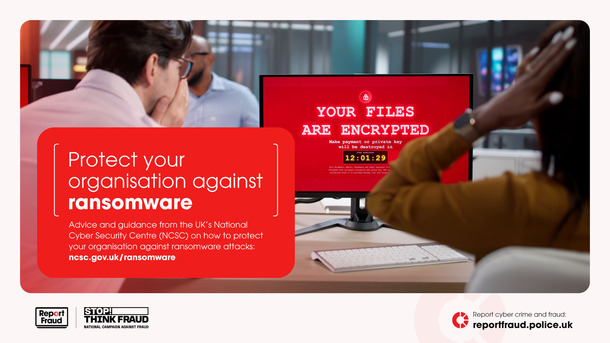
A ransomware attack happens when cyber criminals find a vulnerability in a company’s computer network to gain access, then establish control and plant malware – short for malicious software.
The malware planted is designed to prevent a person or business from accessing a device and the data stored on it.
Once the malware is activated, it locks devices and access to data across the company’s network.
The cyber criminals behind the attack will then demand a ransom via an onscreen notification in exchange to decrypt the files or data held.
 The work carried out
One of the key ways to stop these offences is education and prevention. So the force has issued social media alerting people to the risks and pointing them towards national advice.
Police in Cumbria have also contacted businesses, schools and charities across the county, with the hospitality sector to be contacted in the coming weeks.
Detective Constable Lee Fearn identifies criminals and investigates cyber crime – but he also works to protect the public and organisations and prevent offences happening in the first place.
He said: “The team wants to help businesses, schools, charities and members of the public across Cumbria strengthen their cyber resilience and respond effectively to emerging threats.
“Incidents of cyber crime continue to rise nationally and high-profile cases have shown the impact on businesses and other organisations.
“Ransomware attacks can cause serious disruption — locking systems, halting operations and risking sensitive data.
“However, there are practical steps every organisation can take to reduce risk and recover quickly if an incident occurs.
“Ourselves at Cumbria Police and our partner agencies can offer short cyber awareness training sessions for staff, guidance on reporting incidents and accessing support, lessons to school pupils and practical guidance and training for parents and teachers.
“None of this is to replace service providers. We just want to supplement what they do and help make Cumbria safer for everyone.”
If you would like to discuss how police can support your organisation, please contact the Cumbria Police Cyber and Digital Crime Unit at: cyber@cumbria.police.uk
What to do if you’re under a ransomware attack
- If you are a small or medium sized enterprise currently experiencing a ransomware attack, you should report it immediately by calling Report Fraud on 0300 123 2040. Report Fraud has a 24/7 phone line dedicated for businesses, charities or organisations who are under a cyber attack.
- Do not pay the ransom. The National Cyber Security Centre and UK law enforcement do not encourage, endorse or condone the payment of ransom demands. There is no guarantee that access can be regained to data held and devices could still be infected.
Take the right steps to ensure your organisation is protected against ransomware by looking at the advice and guidance from the National Cyber Security Centre: ncsc.gov.uk/ransomware.
Working with the church and staff from The Cumberland to get advice to the public
 One of our fraud experts, Fran Henderson (far right) carried out a joint fraud prevention event with staff from The Cumberland building society at Christ Church in Cockermouth
Lois Sparling, community chaplain, invited everyone there. She said: “It was an excellent morning. Everyone said so."
Protect yourself from investment fraud
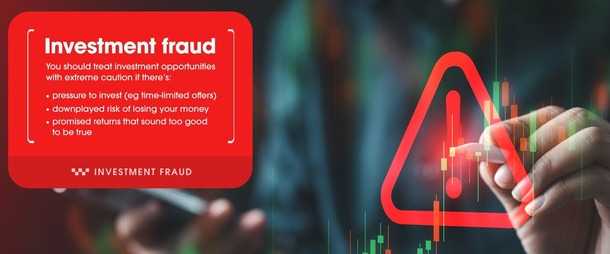
Investment fraud involves deceiving individuals into investing money in fake or misrepresented opportunities.
Promises of high returns with little risk are made. But the invested funds are stolen, resulting in significant financial losses for the victims.
There are many different types of investment fraud.
They usually involve criminals contacting people out of the blue and convincing them to invest in schemes or products that are worthless or do not exist.
Once the criminals have received payment, they cease contact with the victim.
 Examples of investment fraud
Investment fraud last year ranged from bogus online trading platforms to fake bond schemes, cryptocurrency opportunities and glossy social‑media adverts that appeared to feature well‑known public figures.
Fraud reports have highlighted how criminals now deploy AI‑manipulated videos, deepfake endorsements and cloned websites to draw victims in, echoing patterns seen across the wider fraud landscape.
Another growing problem is so‑called “recovery fraud”, where criminals return to previous victims while posing as law enforcement, lawyers or specialist recovery firms.
They promise to retrieve stolen money but instead charge upfront fees and disappear.
Detectives describe this as one of the most cynical developments in the fraud world, as criminals effectively monetise a victim’s desperation a second time.
 Who is affected?
Older adults, particularly those over 60, remained the most likely to come forward, in part because they are more likely to have significant savings or pension pots invested.
 What other trends should you be aware of?
Officers have observed a rise in so‑called “finfluencers” across social media - predominantly young male personalities who boast about making “easy money” on high‑risk trading platforms.
Their content often glamorises quick wins, luxury lifestyles and aggressive self‑improvement narratives, themes recently explored in Louis Theroux’s documentary on the online ‘manosphere’.
While not all of these personalities are involved in criminal activity, their posts can create a false sense of legitimacy around speculative trading and make inexperienced followers more vulnerable to opportunistic scammers who mimic the same language, style and promises.
 What can you do to protect yourself?
As part of wider fraud‑prevention work, the City of London Police is urging the public to take simple steps to protect themselves.
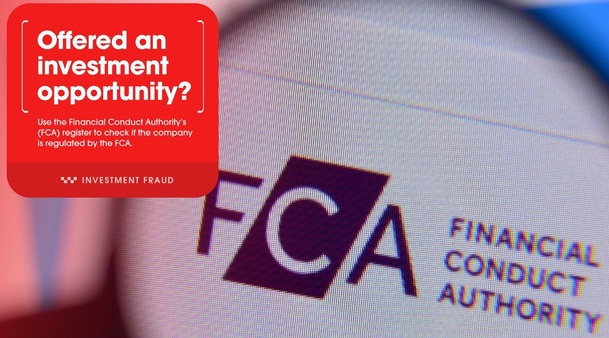
- Before making any investment, use the FCA’s firm checker tool, to confirm whether a firm or individual is authorised. The tool can be accessed via the FCA website and is one of the most effective ways to avoid cloned firms and bogus advisers.
- It is encouraged that anyone considering an investment should be cautious of unsolicited messages, adverts promising unusually high returns, or requests to keep the offer “confidential”.
- The City of London Police is reminding the public that any suspicious activity should be reported to Report Fraud as soon as possible at www.reportfraud.police.uk or by calling 0300 123 2040. In Scotland, victims of fraud and cybercrime should report to Police Scotland on 101.
You can also contact the Financial Conduct Authority’s consumer helpline on 0800 111 6768 or report suspicious businesses or individuals by using the reporting form on their website.
What to do if you have been the victim of fraud
The first thing you should do if you’ve been a victim of fraud is to contact Report Fraud. You can report a fraud via their online fraud reporting tool, or by calling them on 0300 123 2040.
Online Reporting Tool
If there is a crime being committed right now or if you are in danger you should call the police on 999.
If debit or credit cards, online banking or cheques are involved, your first step should be to contact your bank or credit card company.
If you have any friends or family who you feel would benefit from receiving this newsletter, please direct them to our website where they can sign up.
|