Welcome to our latest fraud newsletter.
We're covering three main topics this month. One that continues to cause us great concern - phone fraud targeting vulnerable people; one that is a reasonably new emerging trend, where people are exploiting QR codes to con motorists; and one that has always been an issue - pressured selling at doorsteps.
All of these have led to people being out of pocket - and also losing trust in people.
We hope the advice provided here proves useful in knowing the risks out there.
As always, we would ask people to pass on our advice to anyone who does not receive our newsletters.
Better still - get them to sign up. Details of how to do so can be found at the foot of this edition.
|
We need YOU to warn older and vulnerable friends and relatives about phone fraud
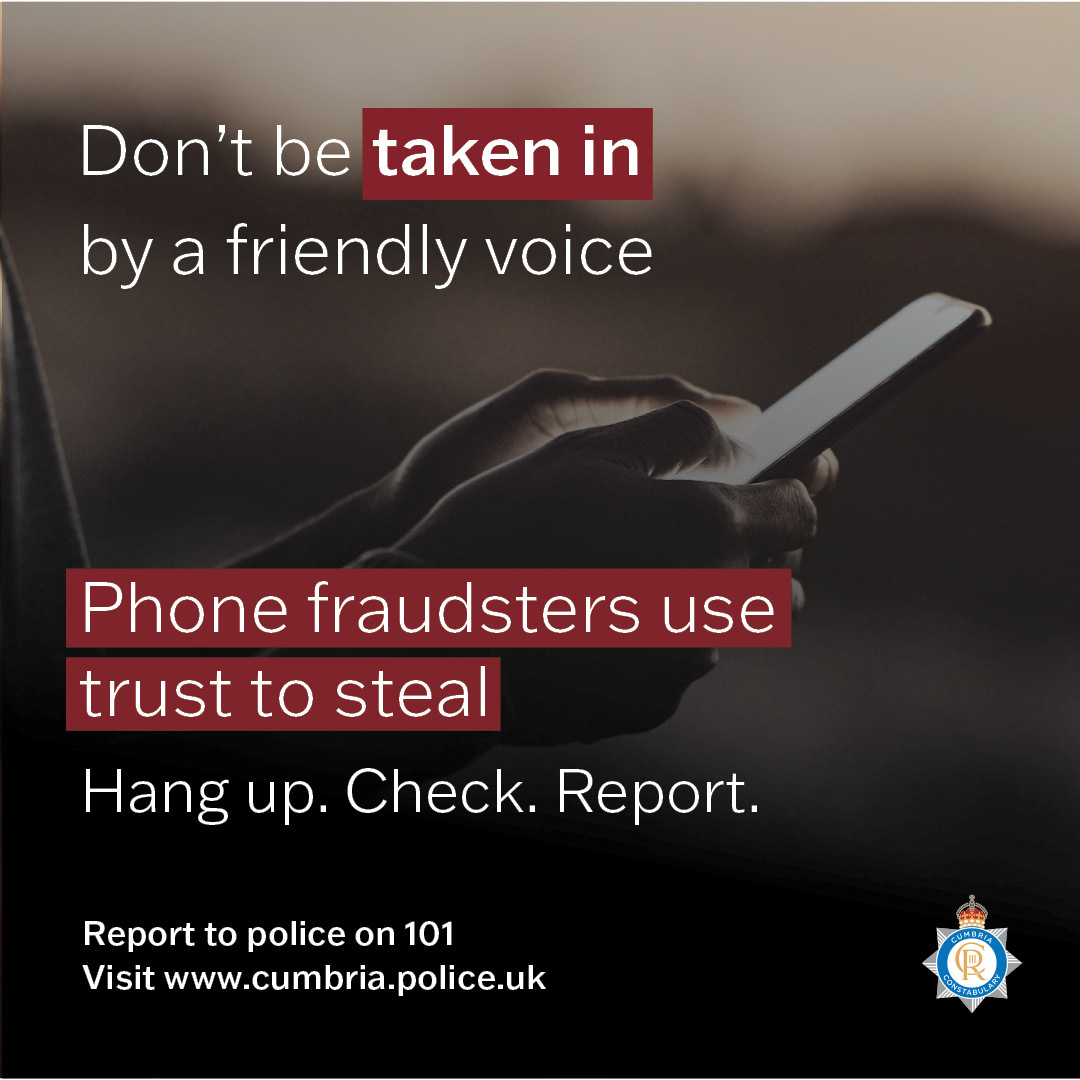 Phone fraudsters continue to target vulnerable people in Cumbria – and our officers are asking residents to raise this issue with friends and relatives.
People such as older members of the community can sometimes be the victim of crimes where people use phones, often landlines, to pose as officials to get at their cash.
This scam can fit the pattern of fraudsters pretending to be officials, such as bank fraud teams, police officers or HMRC officials.
The fraudsters may request bank details, money to be sent electronically, cash to be withdrawn at the bank for collection by a courier or expensive items to be bought for collection at a later time.
Recently, a man in his nineties was persuaded to drive across the county to hand over money.

Fran Henderson (left), a Cumbria Police specialist in preventing fraud, said:
“The fraudsters who carry out these offences are very persuasive, very friendly and extremely good at making you believe their story.
“We need people to speak to older relatives, neighbours and friends who may not see our warnings and stress they should be suspicious of any call they are not expecting.
“If they have any concerns that the person on the phone may be a fraudster, people should put the phone down.
"As fraudsters have been known to stay on the line, please wait five minutes and only when you hear the dial tone should you contact the police on 101 for advice and guidance. Alternatively, call the police from a different phone. ”
|
The key advice
Your bank, other agencies and the police would:
- Never ask you for your bank account details or PIN number over the phone.
- Never ask you to withdraw money and send it to them via someone calling at your house – such as a courier or taxi – or by bank transfer or by any other means.
- Never ask you to send your bank cards or any other personal property to them via courier, taxi or by any other means.
- If you have any doubts about the identity of the person that you are speaking with, put the phone down and attend the bank or police station in person, wherever possible, to discuss the call you have received, or call a trusted number for the bank or police using a different telephone than the one that you have been contacted on.
- It’s recommended you wait at least five minutes and make sure you can hear a dialling tone before you call, as there have been cases of fraudsters keeping the line open after a victim has hung up.
If you think you have been the victim of a fraud you can report this to police on 101. Always use 999 in an emergency.
Don't fall for QR code fraud in car parks - follow our tips
to thwart fraudsters
 We have issuing a warning about QR code fraud in car parks – following reports of scammers targeting a number of sites in south Cumbria.
Stickers were placed on payment meters by fraudsters. As a result we are re-emphasising our advice.
Fraudsters may place fake QR codes in parking areas, including on official signage, to lead users to fraudulent websites designed to steal payment information.
Key advice to avoid parking QR code fraud:
-
Don't scan stickers: If the QR code is a sticker, do not scan it. Legitimate operators rarely use stickers.
-
Inspect before scanning: Check for signs of tampering, such as a sticker placed over the original, official signage.
-
Use official apps or websites: Download the parking app directly from your app store rather than using a scanned link.
-
Manually enter URL: If unsure, manually type the official website address into your browser.
-
Check the URL: Ensure the website is secure (starts with https://) and matches the official provider.
-
Alternative payment: If possible, use the physical parking machine, credit card or cash.
Doorstep con artists continue to operate in Cumbria
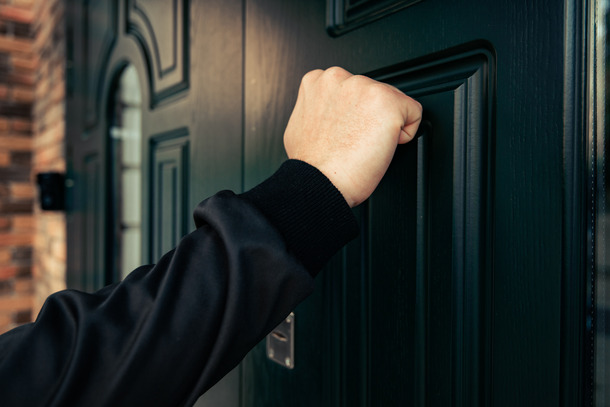 We are advising that the public be vigilant - and to speak to vulnerable family and friends - about rogue traders and doorstep sellers .
Remember: it’s ok to tell visitors you’re not interested or ask them to leave if you aren’t comfortable. Legitimate visitors will understand.
Anyone who calls at your door should have some form of identification. You are well within your rights to ask for this and make a note of their details.
If you can’t be certain if a visitor is genuinely who they say they are, ask them to come back at a later date.
This gives you time to verify their identity and perhaps also arrange for a relative or friend to be there.
We would advise the public never to agree to having work carried out by a stranger knocking on your door.
Also, we advise never to agree to having work carried out because you are made to feel pressured.
Remember: you are in control, you have the right to close your door on someone who is selling a service or to say no.
If you feel you need the work carried out, look for official traders yourself or ask friends and family for recommendations.
If you are ever made to feel intimidated or uncomfortable please call police on 101 with a description and details. Always dial 999 if a crime is in progress or in an emergency. We are here to help.
Report Fraud is now live
 Report Fraud is the UK police service’s nationwide hub for reporting cyber crime and fraud. It brings together reporting, analysis and victim support under one unified service, making it easier than ever for people to take action and help tackle fraud.
Through the new Report Fraud online hub, anyone can quickly and securely report suspected cyber crime or fraud.
This single reporting channel ensures that vital information goes directly to the police, supporting stronger intelligence and improving how fraud is understood and addressed across the country.
But Report Fraud is more than just a place to submit a report—it’s an entire service designed to support victims and strengthen the national response to fraud.
Once a report is made, it is carefully assessed by specialist teams who analyse the information and ensure it reaches the right policing or partner organisation.
Victims also have access to dedicated support services, providing guidance, reassurance and practical help to anyone affected.
Report Fraud is growing too. It forms part of a long‑term roadmap to deepen collaboration across the UK and internationally, working with industry, technology partners, law enforcement and other key organisations. This joined‑up approach helps ensure the UK keeps pace with increasingly sophisticated cyber criminals.
At its heart, Report Fraud gives the public a powerful way to act, share what they know and help build the strongest possible picture of emerging threats—so the police can respond more effectively, protect more people and disrupt criminal activity.
What to do if you have been the victim of fraud
The first thing you should do if you’ve been a victim of fraud is to contact Report Fraud. You can report a fraud via their online fraud reporting tool, or by calling them on 0300 123 2040.
If there is a crime being committed right now or if you are in danger you should call the police on 999.
If debit or credit cards, online banking or cheques are involved, your first step should be to contact your bank or credit card company.
If you have any friends or family who you feel would benefit from receiving this newsletter, please direct them to our website where they can sign up.
|