Welcome to our latest fraud newsletter - our last edition before Christmas!
We've been busy in the run-up to the festive season passing on advice on how to keep clear of fraud at this extremely busy time of year.
This has been both in person, with our economic crime experts visiting towns across Cumbria to speak face-to-face and offer tips as part of a seasonal campaign to stop fraud.
We've also launched another campaign at bus stops across Carlisle and Barrow to raise awareness of phone fraud - a crime that is always a concern.
Our officers and staff want everyone to have a fun and safe festive season, which is one of the reasons why we prioritise this time of year for advice. It's also because we know how busy it can be - and how security can take a backseat.
If you think our advice could help anyone who doesn't get our newsletters, please pass it on. And we'd like to wish all our subscribers a Merry Christmas and Happy New Year.
|
 Economic crime experts from Cumbria Police are providing top tips on avoiding fraud in a series of drop-in events across the county during the run-up to Christmas.
Officers and staff are visiting venues to offer face-to-face advice on how people can protect themselves and their money from those seeking to cash in at others’ expense.
This is part of a campaign being run by the force’s Economic Crime Unit, titled: “Don’t make their Christmas – fraudsters aren’t fussy, they will pick on anyone.”
Detective Constable Claire Keyes and Fran Henderson, who specialises in preventing fraud, are among those from the unit visiting different parts of the county to speak to people. Cyber crime experts are also attending some events.
As well as offering advice in person, leaflets are being handed out at the events, offering a range of tips.
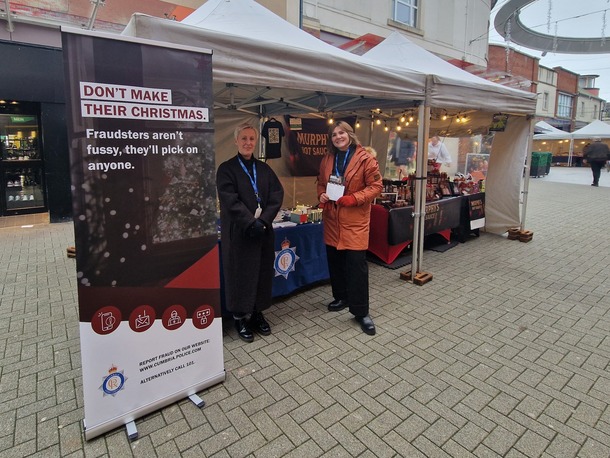 At the event in Workington: DC Claire Keyes, left, and Fran Henderson
DC Keyes said: “Fraud is something that can touch anyone.
“Whether it is identity theft, a business falling victim to a scam or someone losing money in an online fraud, these crimes can have huge consequences.
“People can sometimes be reluctant to report due to embarrassment because they believe have been ‘scammed’ or ‘taken in’ by the fraudsters.
“But people should know that anyone can be a victim of economic crime, from any walk of life, and fraudsters operate in a professional manner designed to deceive.”
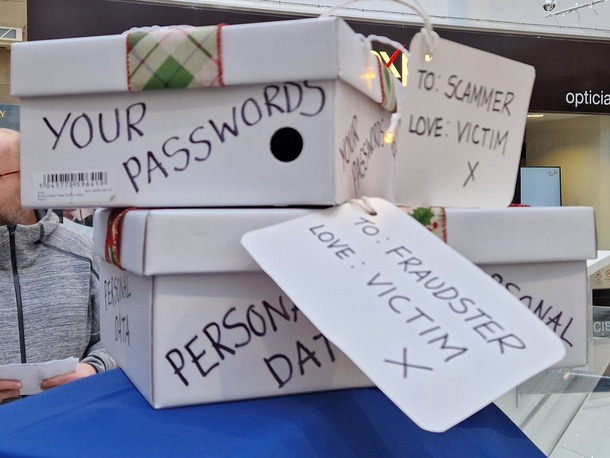 Cumbria's Police Fire and Crime Commissioner, David Allen, said: "I'd encourage anyone who has experienced fraud or is potentially at risk to attend one of the below events.
"Here in Cumbria we have a dedicated team to protect you from fraud who will support you every step of the way.
"This is particularly important over the festive period where many criminals will attempt to impersonate friends and family and trick you into handing over cash or security details."
Events have been held at towns and places including Carlisle, Workington, Kendal, Keswick and at Rheged, near Penrith.
They are also being held at the following venues on the following dates and between the following times during the rest of the campaign:
- Friday December 12 – The Beacon, Whitehaven -10.30am to 2.30pm – MP Josh MacAlister is attending
- Tuesday December 16 – Lakes Home Centre, Cockermouth – 11am to 2pm
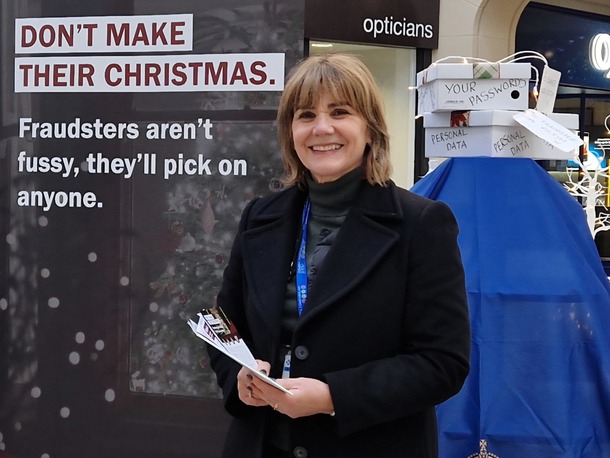 Fran at one of the events in recent weeks
Fraud and economic crimes are a concern for police forces across the UK.
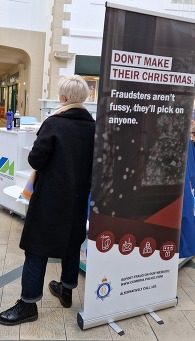
Examples include scam texts, fraudsters cold-calling by phone to prey on vulnerable people, efforts to defraud people online and bogus tradespeople targeting homes door-to-door.
DC Keyes explained about the drop-in events running across the county.
She said: “We visit places such as banks and community groups all-year-round to offer advice to customers or those attending.
“These events are an extension of this activity at a point when we know people are busier than usual.
"We're also aware there is perhaps a greater chance they may be less focussed on security.
“So we like to be out-and-about in the community for anyone who wants face-to-face advice.”
|
Tips on avoiding fraud in the run-up to Christmas
Don’t rush to respond to a text message or email address. Fraudsters deliberately rush us and want us to click on links and share personal information.
Are they really who they say they are? Just because someone says they are from your bank, the police or other organisations, it doesn’t mean they are.
Challenge them. Should you receive a call you have doubts about, take their details, hang up and call them back on a trusted number for that organisation. Don’t trust the number showing on your phone as this can be manipulated. Wait five minutes as they can stay on the line. Legitimate agencies will not have a problem with this.
Shopping Online? Watch out for copycat websites where retailers' branding is used to appear legitimate. Purchase scams are where you buy an item online and are either sent nothing in return or an item that doesn’t fit the description. These are often pushed via ads on social media.
Expecting a parcel delivery? Beware scam texts impersonating delivery organisations or companies that tell you messages such as: 'Your parcel has been temporarily held due to an unclear or invalid delivery address'.
Celebrity/company endorsements – Beware clicking on endorsement sites spread through social media ads, fake news articles and mass emails. Fake endorsements are often used to promote scam cryptocurrency or investment opportunities. Be sceptical of too-good-to-be-true offers and watch out for signs of manipulation and use of pressure tactics. Verify the source by checking whether the celebrity or company has posted the endorsement on their own verified social media accounts.
Make it harder for fraudsters to get into accounts. Passwords go a long way to keeping you safe online. Go for three random words or a memorable phrase using a combination of uppercase and lowercase letters, numbers and symbols. It is important your email account is very different to any other password and should be changed periodically. Avoid using your name, phone number, birthday, names of family members or pets.
Add an extra layer of security to your devices and transactions online. Two step verification verifies your identity beyond your password. The second step is something only you should have access to such as a code from an authenticator app or a biometric scan like a fingerprint.
Phone fraud - beware of cold callers this Christmas
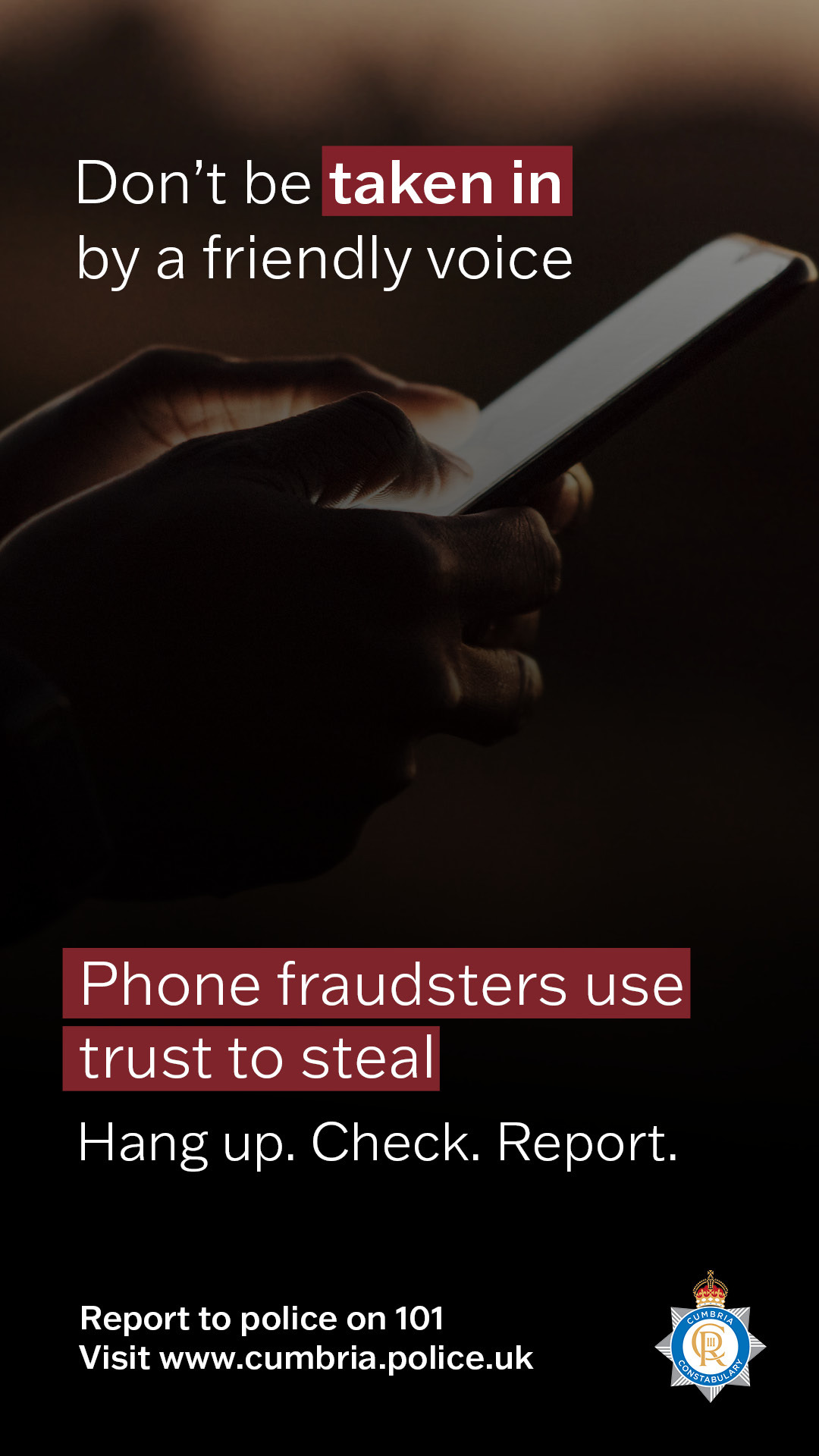 We are using bus stop adverts to step up their warnings to people about scam phone calls from fraudsters.
Officers have launched a campaign in the run-up to Christmas as criminals may use a traditionally busy time of the year to target people when they may be distracted.
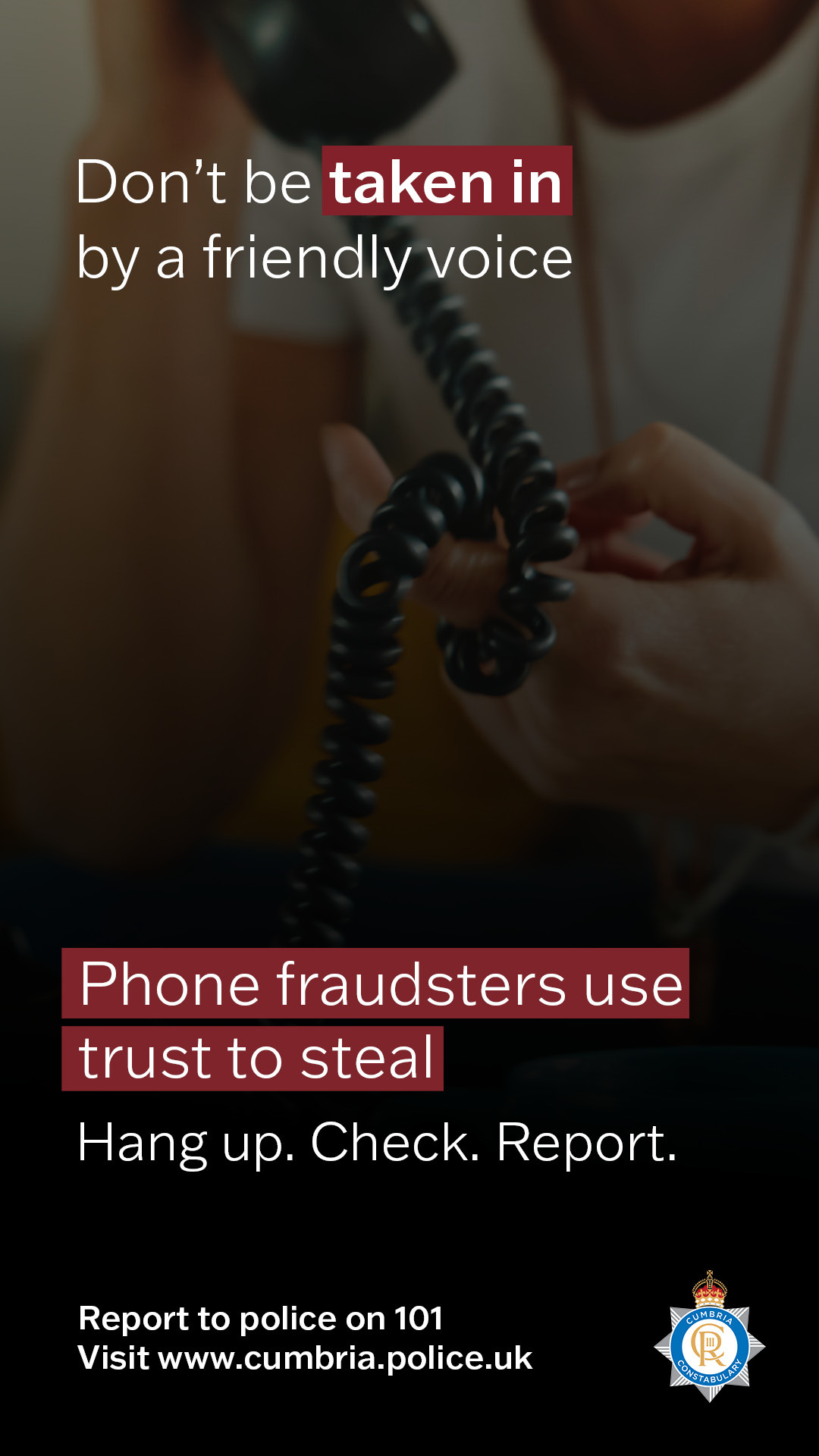
The ads are being run across Carlisle and Barrow throughout December and contain the message: “Don’t be taken in by a friendly voice. Phone fraudsters use trust to steal.”
The idea is to warn people of a scam using the phone.
This scam often fits the pattern of fraudsters pretending to be officials, such as bank fraud teams, police officers or HMRC officials.
The scams can differ slightly from call to call.
But the fraudsters often request bank details, money to be sent electronically, cash to be withdrawn at the bank for collection or expensive items to be bought for collection at a later time.
Detective Constable Claire Keyes said: “The fraudsters who carry out these offences are very persuasive, very friendly and extremely good at making you believe their story.
“But police and other agencies would never request this.
“If you have any concern that the person on the phone may be a fraudster, put the phone down and call the police from a different phone on 101 for advice and guidance.”
Officers are asking anyone who has been victim to such a scam to come forward.
If you receive a call you’re not expecting, you should be suspicious. The vital things to remember are that your bank, other agencies and the police would:
- Never ask you for your bank account details or PIN number over the phone.
- Never ask you to withdraw money and send it to them via a courier, taxi, bank transfer or by any other means.
- Never ask you to send your bank cards or any other personal property to them via courier, taxi or by any other means.
- If you have any doubts about the identity of the person that you are speaking with, put the phone down and attend the bank or police station in person, wherever possible, to discuss the call you have received, or call a trusted number for the bank or police using a different telephone than the one that you have been contacted on.
- It’s recommended you wait at least five minutes and make sure you can hear a dialling tone before you call, as there have been cases of fraudsters keeping the line open after a victim has hung up.
DC Keyes added: “Not everyone sees the warnings we put out – so we’d ask people to please share this information with any vulnerable friends or family.”
Cumbria’s Police, Fire and Crime Commissioner, David Allen, said: “Scammers are experts in gaining your trust and convincing people that they are from legitimate companies and organisations.
“Through their persuasion, they are able to scam innocent victims out of thousands of pounds, which is why it’s so important that we continue to educate the public on how to spot and prevent these scams.
“Anyone can fall for these scams so I would urge anyone to read up on the tips and advice provided by the police to spot any suspicious behaviour and, if you believe you have been targeted by one of these criminals, please report it to the police on 101.
“Remember: if you have any doubts, hang up the phone.”
If you think you have been the victim of a fraud you can report this to police on 101. Always use 999 in an emergency.
What to do if you have been the victim of fraud
The first thing you should do if you’ve been a victim of fraud is to contact Report Fraud. You can report a fraud via their online fraud reporting tool, or by calling them on 0300 123 2040.
If there is a crime being committed right now or if you are in danger you should call the police on 999.
If debit or credit cards, online banking or cheques are involved, your first step should be to contact your bank or credit card company.
If you have any friends or family who you feel would benefit from receiving this newsletter, please direct them to our website where they can sign up.
|