Welcome to our latest fraud and cyber crime newsletter, in which we aim to help prevent you and your family from falling victim to some of the dangers both online and in the real world from these types of offences.
Our partners at Get Safe Online have this month turned the spotlight on ensuring children are protected while taking part in online gaming.
While this is not strictly speaking just about fraud, children can fall victim to types of fraudulent behaviour if you do not ensure precautions are in place. This can include financial or identity theft.
There's also plenty of other good tips in this advice on keeping safe online.
As well as this, we have some advice from Action Fraud on how to avoid becoming a victim of hacking of email and social media accounts.
We hope this newsletter proves useful. As always, please share this advice with anyone who does not receive these newsletters - or anyone who may benefit from it.
There are also details for them on how to sign up to receive these alerts at the foot of the newsletter.
|
 |
Your child and online gaming
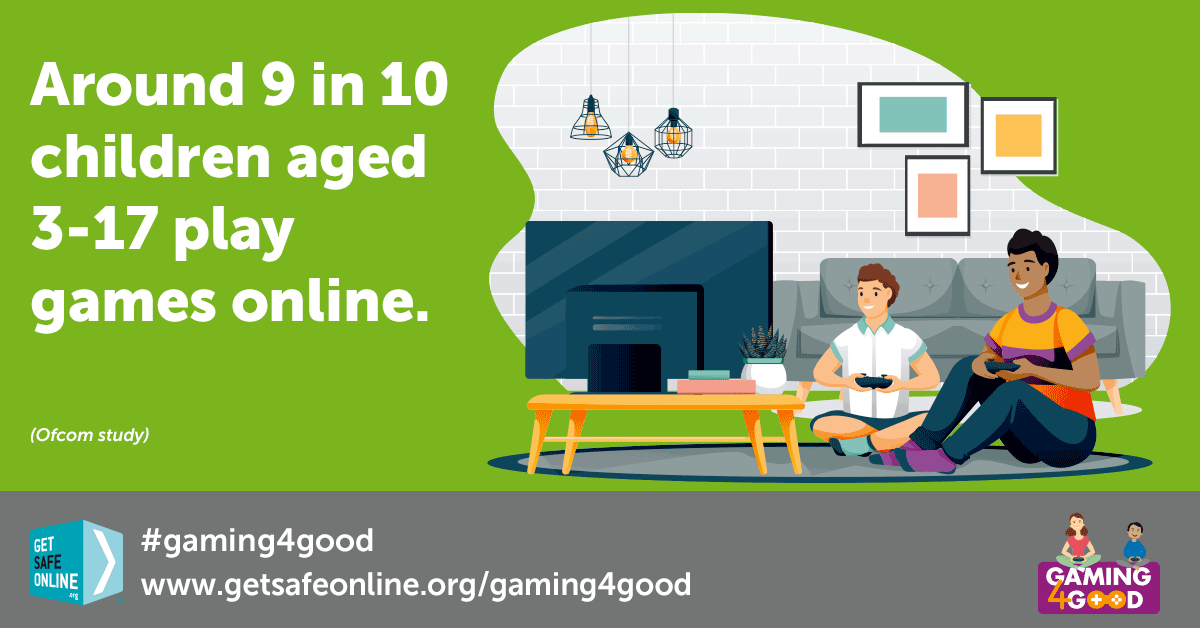
Online gaming is one of the most popular online pastimes for children - and it has both positive and negative aspects.
The benefits of gaming can include:
• Developing qualities such as strategic thinking, rationalisation, problem solving and persistence.
• Supporting development of a wide range of cognitive and motor skills.
• Encouraging creativity.
• Teaching both teamwork and competitiveness, in the case of many multi-player games.
• Socialising with friends.
• Learning the value of money and spending it wisely.
All of these qualities are vital not only in gaming but also in equipping our young people for life ahead of them.
Gaming can also equip children to understand and embrace the latest technology and its benefits.
What do you - as a parent - need to do?
It is very important that you understand and support your child’s interest in online gaming.
Like many parents, you may have little or no interest in it yourself - but there are things you can do to both encourage them to find the best games as well as helping them avoid the negative aspects.
You may even start gaming yourself and find a new hobby.
What are the risks?
Risks to children who play games online arise largely from the vast number of people both in the UK
and abroad who are also playing and the fact that they are not playing face-to-face.
These include:
• Playing games with an inappropriate age rating, potentially exposing them to violent, sexual or other unsuitable content.
• Playing games which either reference gambling, or involve gambling to, for example, predict results or win money.
• Running up bills (for example, on ingame properties/in-app purchases), perhaps on your credit card.
• Spending excessive time gaming to the exclusion of social contact, exercise and schoolwork.
• Stranger danger - either grooming or manipulation into negative or harmful activities
• Financial or identity theft to you if your child overshares personal family information online.
• Cybercriminals using gaming platforms and forums to recruit young people for malware coding or money muling.
• Some radicalisation also begins on gaming platforms.
Keep your child’s online gaming safe
• Work with your child to find the best games for their age, interests and personality.
• Check PEGI (Pan European Game Information) age ratings of games to ensure your children aren’t accessing inappropriate content.
• Join your child in online gaming from time-to-time and randomly. This will give you an idea of the games they’re playing and who they connect with.
• Have open and honest conversations with your child about their online gaming and the risks involved including stranger danger, bullying and oversharing. Tell them that not everybody they meet on gaming platforms and forums is who they claim to be.
• Set and monitor limits for the amount of daily or weekly time your children spend online gaming.
• Don’t give your child access to your payment card details as extras can be very costly.
• Impress upon your child that they can come to you or another responsible adult with any concerns. Depending on their age, you could also discuss how to report issues to the gaming platform or the police.
Action Fraud issues a new warning to stay safe online after £1.3m lost from hacked email and social media account scams last year
More than 22,500 people had their social media or email accounts hacked last year, new data shows.
Data from Action Fraud, the national fraud and cybercrime reporting service, shows that 22,530 people reported that their online accounts had been hacked in 2023, with victims losing a total of £1.3m.
Pauline Smith, head of Action Fraud, said:
“Anyone with a social media or email account can be a target for fraudsters or cyberattacks. It is important to take action to secure your accounts, as fraud becomes even harder to detect with technology on a global scale.
“Protect your information by ensuring your email and social media passwords are secure and different from all your other passwords. You can also set up 2-step verification for a layer of extra security. Remember, prevent the potential for fraud and hacking, never share your password or any 2-step verification code with anyone.”
What can you do to avoid being a victim?
-
Use a strong and different password for your email and social media accounts. Your email and social media passwords should be strong and different from all your other passwords. Combining three random words that each mean something to you is a great way to create a password that is easy to remember but hard to crack.
-
Turn on 2-Step Verification (2SV) for your email and social media accounts. 2-Step Verification (2SV) gives you twice the protection so even if cyber criminals have your password, they can't access your email or social media account. 2SV works by asking for more information to prove your identity. For example, getting a code sent to your phone when you sign in using a new device or change settings such as your password. You won't be asked for this every time you check your email or social media.
What to do if you have been the victim of fraud
The first thing you should do if you’ve been a victim of fraud is to contact Action Fraud. You can report a fraud via their online fraud reporting tool, or by calling them on 0300 123 2040.
If there is a crime being committed right now or if you are in danger you should call the police on 999.
If debit or credit cards, online banking or cheques are involved, your first step should be to contact your bank or credit card company.
If you have any friends or family who you feel would benefit from receiving this newsletter, please direct them to our website where they can sign up.
|