Welcome to our latest fraud prevention newsletter.
This month we cover a number of topics, including the work we have done to help victims, some messaging to help keep you safe from scam calls and details of visits to banks to listen to concerns and pass on tips on preventing crime.
Get Safe Online, which gives out advice on online safety, has also revealed its range of tips on staying safe while dating online.
We hope you find the information interesting and useful. As always, if you have any concerns you can contact us at the reporting avenues at the bottom of the newsletter.
|
Stay vigilant over scam calls
We are asking the public to remain vigilant following a handful of scam phone calls to people in Cumbria in recent weeks from fraudsters.
The scams fit the pattern of what are known as “courier frauds”, where fraudsters pretend to be officials such as police officers, HMRC officials or bank fraud teams.
The scam differs slightly from call to call.
But the fraudsters often request bank details, money to be sent electronically, cash to be withdrawn at the bank for collection or expensive items to be bought for collection at a later time.
Officers are asking anyone who has been victim to such a scam to come forward.
If you receive a call you’re not expecting, you should be suspicious. The vital things to remember are that your bank and the police would:
- Never ask you for your bank account details or PIN number over the phone.
- Never ask you to withdraw money and send it to them via a courier, taxi, bank transfer or by any other means.
- Never ask you to send your bank cards or any other personal property to them via courier, taxi or by any other means.
- If you have any doubts about the identity of the person that you are speaking with, please put the phone down and go to the bank or police station in person, wherever possible, to discuss the call you have received, or call a trusted number for the bank or police using a different telephone than the one that you have been contacted on.
We ask that the public please share this information with any vulnerable friends or family.
If you think you have been the victim of a fraud you can report this to police on 101 and to Action Fraud on 0300 123 2040 – or by visiting their website at https://www.actionfraud.police.uk/
Our fraud experts have been visiting banks and their customers to provide advice on staying safe from crime
 |
|
We’ve been out-and-about offering advice on keeping you safe from fraud in recent weeks.
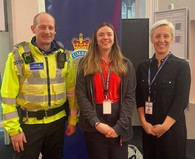
Our officers have held a series of drop-in sessions at branches of HSBC across Cumbria.
DC Claire Keyes, from our Economic Crime Unit, has been co-ordinating the visits.
|
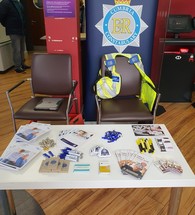
She has been supported by officers from around the county, with help from staff at the branches as well.
Branches in Workington, Penrith, Kendal and Barrow have been among those visited.
This has been a great way of getting out and giving out some advice face-to-face.
Please keep an eye on our social media for further updates about future bank visits.
|
Our detectives helped get back £550,000 for fraud victims last year alone - here's some more details of their work
Operation Alliance is Cumbria Constabulary's overarching operation to protect the county against serious and organised crime.
Some of the work of our Economic Crime Unit falls within this - and we recently updated people with some of the results in the last year on fraud.
In 2022, our officers carried out about 120 interventions with victims of fraud or financial abuse, leading to about £550,000 returned to Cumbrian victims of crime.
More than 50 separate cash seizures are currently being investigated.
A number of account freezing orders are in place linked to money laundering or fraud enquiries.
We share these details today to demonstrate the work going on to protect you from fraud and to stop those offenders responsible for economic crime.
|
 Staying safe while dating online
Online dating is a brilliant way to find a new relationship, whether it’s an online companion or the love of your life.
What you want to get out of it is up to you. But you need to consider that your new friend may not be who they say they are.
Most people you’ll meet on dating sites and other online platforms are genuine - but if they’re not, you could potentially fall victim to:
• Romance fraud – when your date is actually a fraudster or identity thief
• Catfishing – when you’re lured into a relationship by a false or stolen profile
• Personal harm – when you meet in person
 Your expert tips to help keep online dating safe and secure
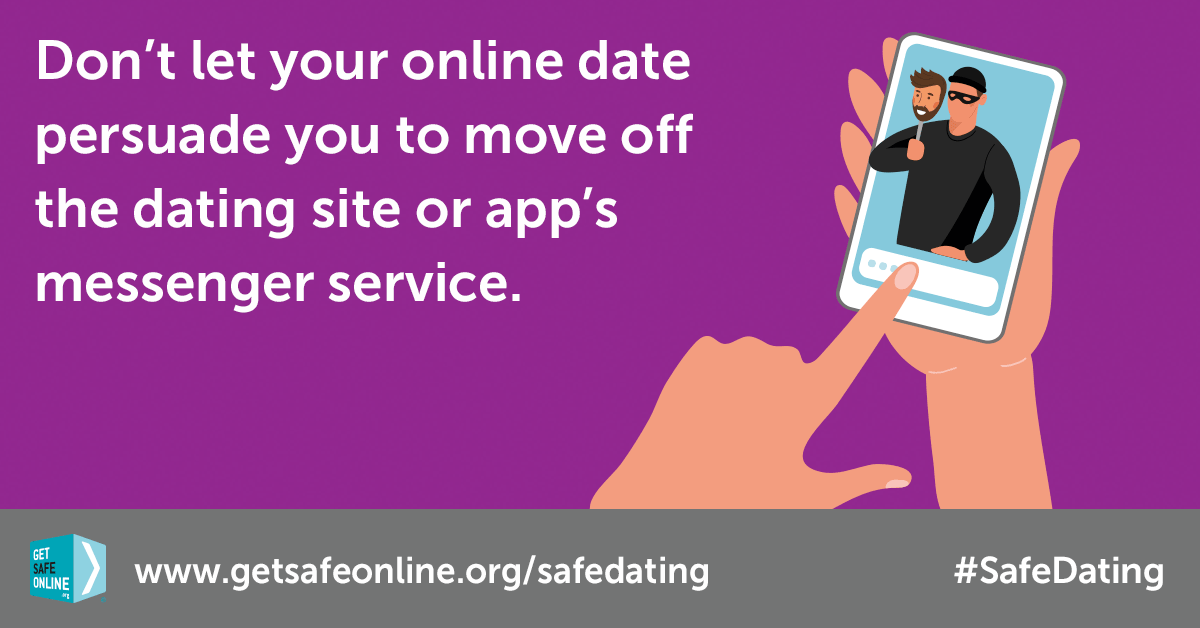
• Use a reputable dating site or app and stay on its messaging service until you’re confident your date is who they say they are, and that you completely trust them - even if it costs you money.
• Always use secure and unique login details on dating sites and apps to minimise the chance of your account being hacked.
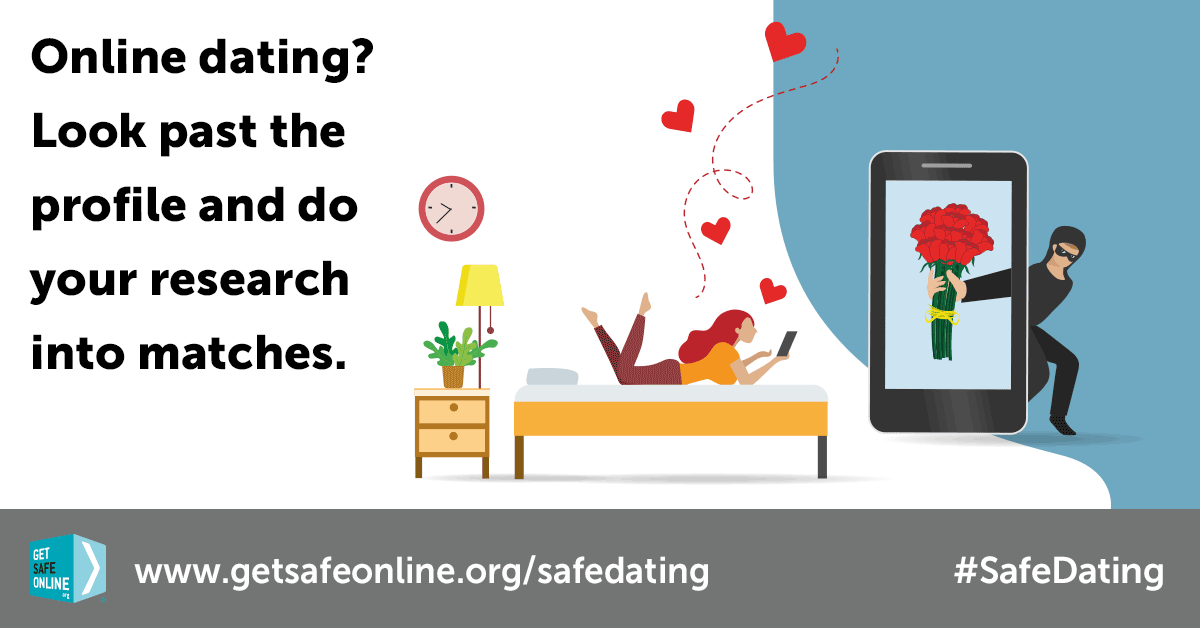
• Look past the profile. Ask plenty of questions, use your head and don’t rush into anything. This might help you avoid issues such as fraud, extortion or being used for sex.
• Search matches by name, profile pictures or any repeatedly used phrases and the term ‘dating scam’, ‘romance scam’ or ‘catfish’. To check if the photo is genuine or of somebody else, do a
reverse image search. Start by searching ‘Search with an image on Google’.
• Be wary of anyone who seems over keen, as this may be a sign that they have other motives.
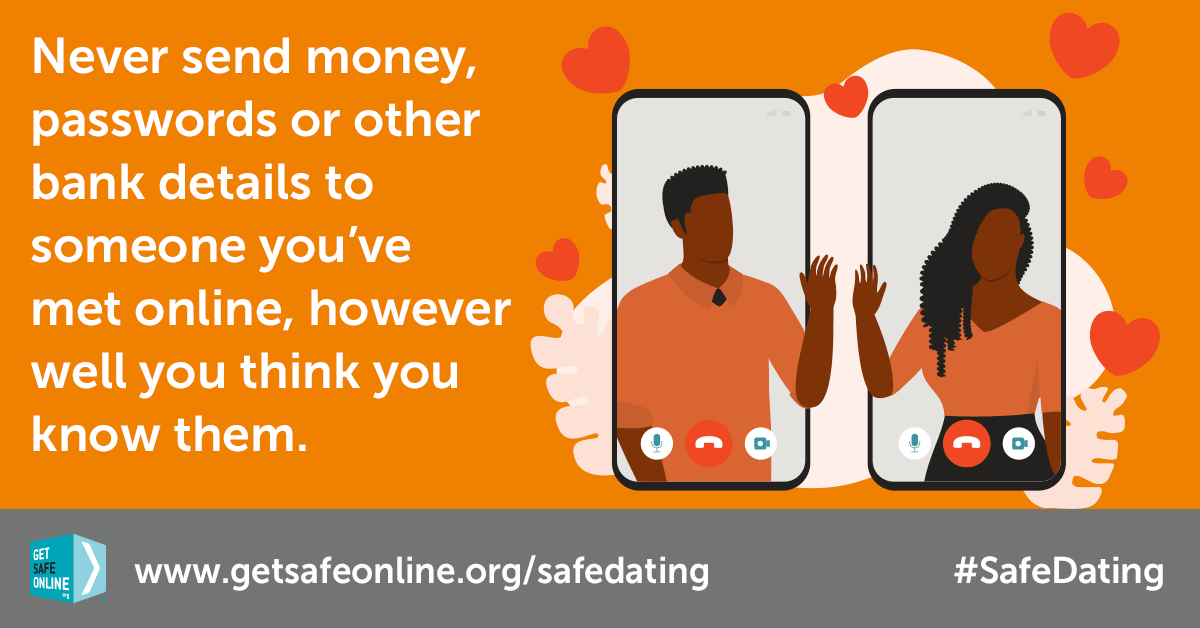
 • Never send money, bank details or passwords to someone you’ve met online, whatever the reason
they give for needing it, nor how long you’ve been communicating with them. It could spell fraud.
• Don’t reveal personal details such as full name, date of birth, home address or names, details and
locations of your children or other family members. This could lead to fraud, identity theft or even
personal harm.
• Sending intimate images or videos of yourself to someone you’ve met online definitely isn’t
recommended. This could lead to problems such as extortion or reputational damage, and you can
never be sure who will get to view the content. Also remember that some relationships don’t last forever and you may not want an ex to be in possession of your private images.
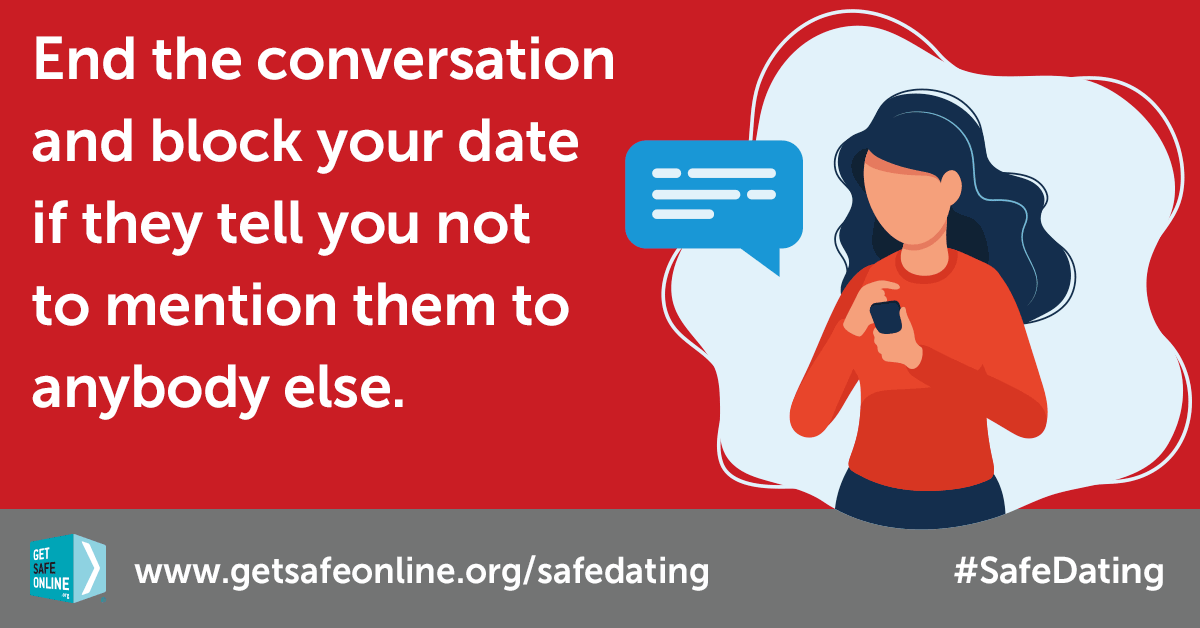
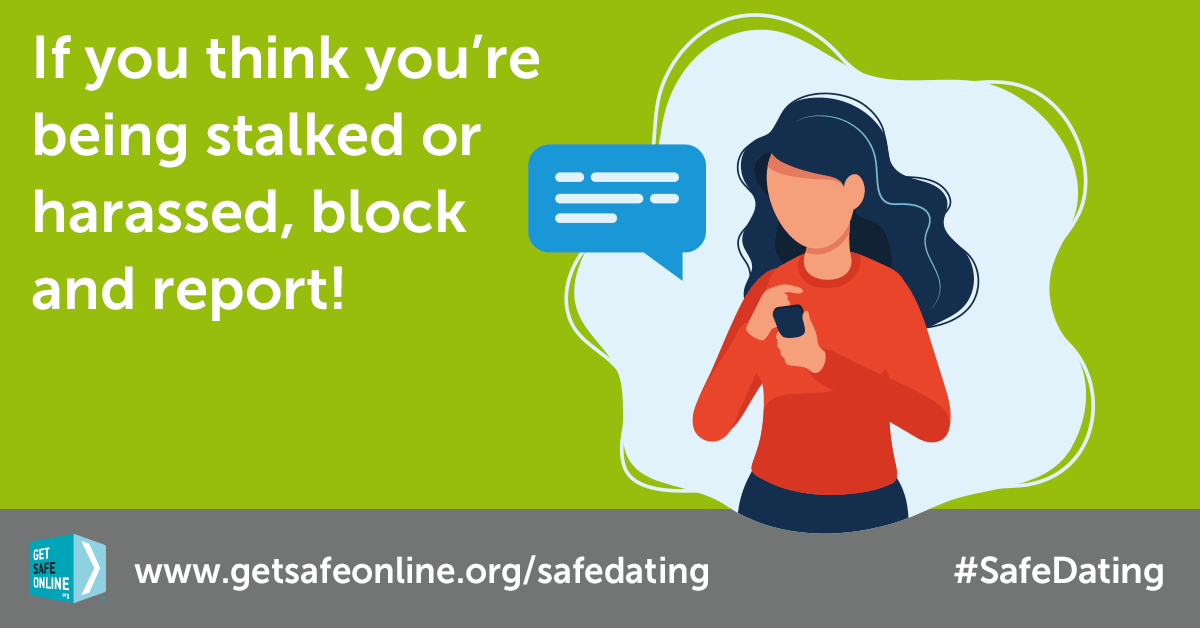 • End conversations with anyone you meet online who tells you not to mention them to your friends and family. Fraudsters and sexual predators work by isolating their victims.
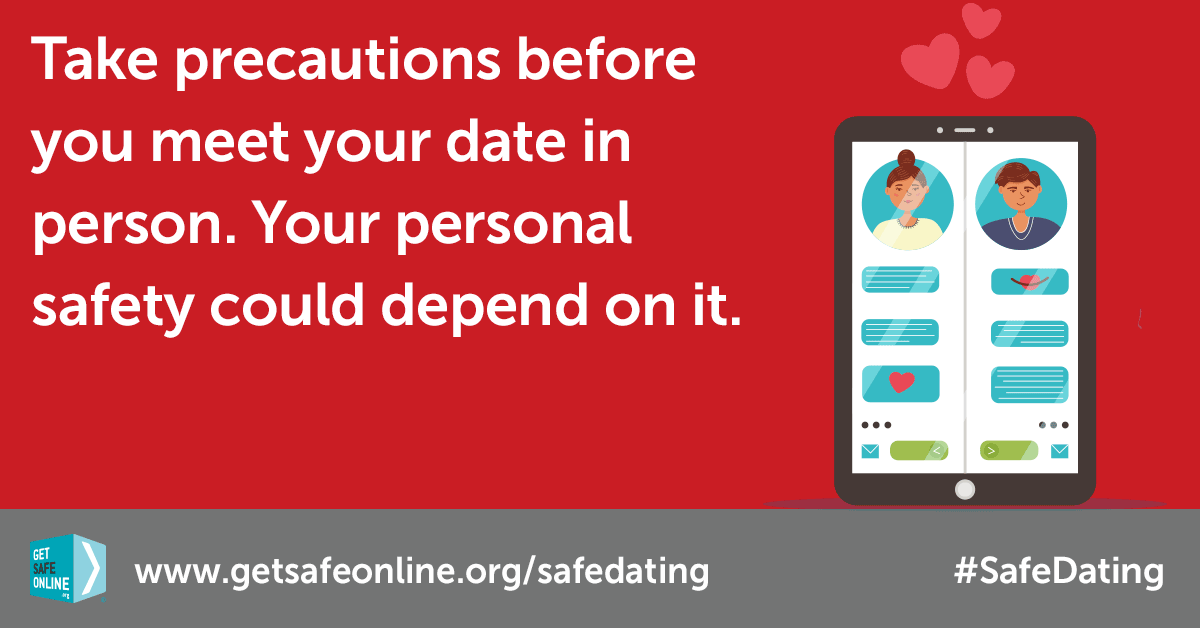
• Don’t meet an online date in person for the first time without first telling a friend or family member where you’re going. Meet in a public place, keep your phone switched on and arrange for
someone to call you to give you an opportunity to make your excuses and leave early. Arrange your own transport to and from the date.
 If you become a victim of romance fraud, report it immediately to Action Fraud on www.actionfraud.police.uk or on 0300 123 2040 (or if you’re in Scotland, Police Scotland on 101).
Also, report it to the dating site or app where you met the perpetrator.
Report any assaults to the police.
What to do if you have been the victim of fraud
The first thing you should do if you’ve been a victim of fraud is to contact Action Fraud. You can report a fraud via their online fraud reporting tool, or by calling them on 0300 123 2040.
If there is a crime being committed right now or if you are in danger you should call the police on 999.
If debit or credit cards, online banking or cheques are involved, your first step should be to contact your bank or credit card company.
If you have any friends or family who you feel would benefit from receiving this newsletter, please direct them to our website where they can sign up.

|