SPRING IN CUMBRIA
|
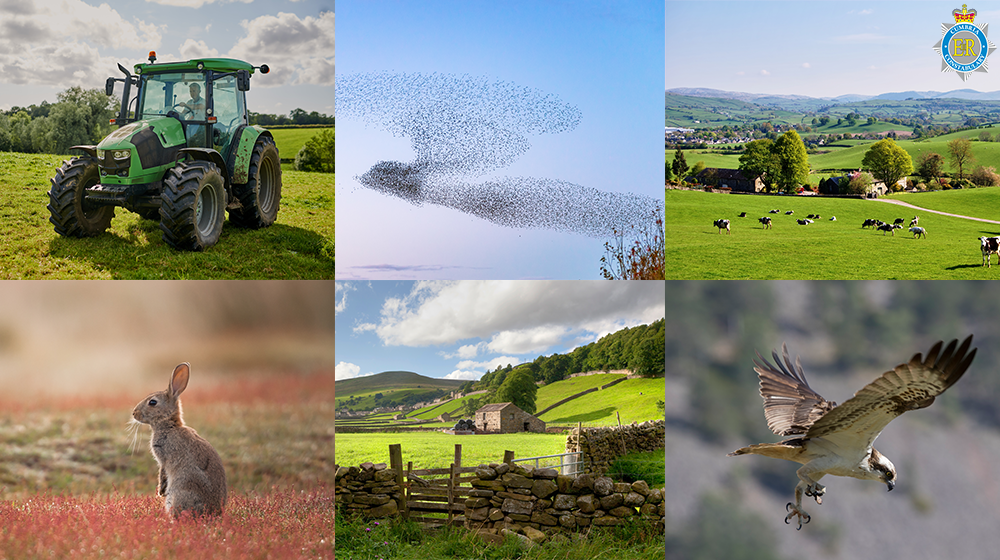
Longer days and lighter nights, new growth and life. Spring is a busy time for our rural communities and wildlife.
In this addition we'll be raising awareness of some of the issues facing both.
|
|
|
Meet The Team
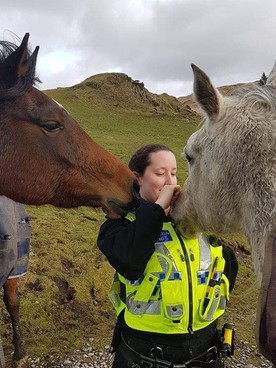
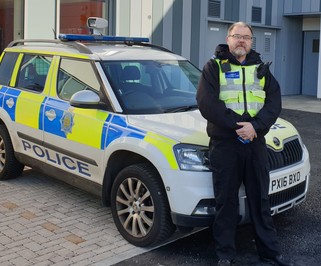
Below are two of Cumbria's Wildlife Officers based in the South of the County
|
|
Police Sergeant 2217
Amber Howarth
Kendal South
|
|
PCSO 5125 Paul Harris
Ulverston and Lakes Community Team
|
|
|
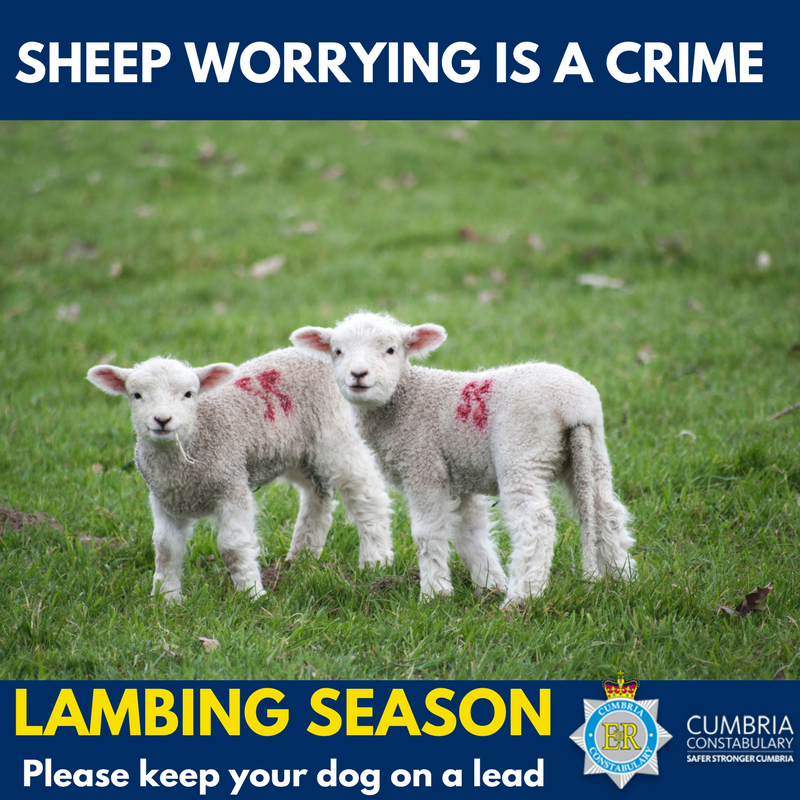
SHEEP & LIVESTOCK WORRYING
***warning, graphic image below***
You know it's a sign of spring when you see the lambs skipping around the fields!
Unfortunately, each year many lambs, sheep and other livestock become victims of worrying.
Worrying includes attacking or chasing and it is a crime! Not only can it have a financial impact, it is also extremely distressing for livestock owners to see their animals injured or killed in this way.
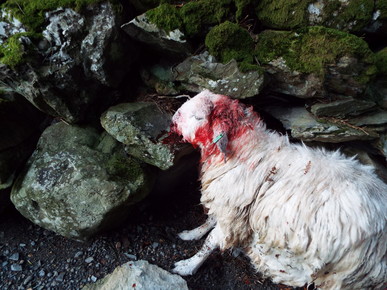
Time and time again we hear dog owners say "my dog's only playing and wouldn't hurt a fly". This maybe so, but it is in a dogs very nature to chase no matter how placid and often, if this allowed to happen around livestock it can have devastating effects.
Also, dog faeces (poo) can transmit disease to sheep which can be fatal. Please regularly worm your dog and clean up after it. Dog walkers should use their bin at home if there are no public waste bins available.
Cumbria Police cannot stress enough the importance of keeping dogs on a lead around livestock.
On 1st April 2021 a new revised Countryside Code was launched by Natural England. Please go to www.gov.uk/countryside-code for full details.
Many thanks to Vicki Temple for providing further information about the impact of worrying below:
|
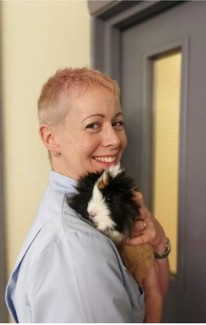
Vicki Temple (BVMS, CertAVP ZM, MRCVS), Veterinary Surgeon for Millcroft Vets.
(www.millcroftvets.co.uk)
"I live in Buttermere and as well as being a vet, I’m married to a sheep farmer so sadly, I regularly see the consequences of sheep worrying first-hand. Even in the first three months of this year, in a lockdown, with far fewer visitors, we’ve already had sheep worried on 3 out of the 4 farms in the valley. Devastatingly, one of these was so severely injured it had to be put to sleep. Bites from dogs can cause fatal injuries but even those with less serious injuries can die a slow death through infection.
"However because it isn’t just biting the sheep that causes problems, dogs of any size can cause lives to be lost. For example: when chased, as well as being killed or seriously injured during their panicked attempts to escape, the stress can make the pregnant ewe miscarry her lambs; a dog going too close to, or chasing a ewe when she is giving birth or feeding her lambs can make her abandon them leaving them vulnerable to starvation, hypothermia and death. Also, here in the valley, it’s not uncommon for sheep that are being chased to run in to the lakes to escape. Because their woolly fleece absorbs water quickly, this extra weight means they often drown.
"What many people don’t realise is: it’s not just the sheep in the fields that are pregnant (or as we say ‘in lamb’), but also the sheep on the fells. That’s why it’s really important to make sure your dog is either on a lead or right by your side from the very moment they get out of the car when you’re on the mountains together. It’s every dog’s instinct to chase, even when they are normally very well-behaved, and the further they are away from you, the less control you have.
"Farming isn’t just a job, it’s a passion and a way of life so please keep your dogs on a lead around ALL livestock (but release your dog if you are chased by cattle). If you witness or are involved with a dog chasing or attacking sheep contact the police urgently. If you find a sheep with obvious injuries, please let a farmer know then we can make sure it gets treatment as soon as possible."
|
WILD BIRDS
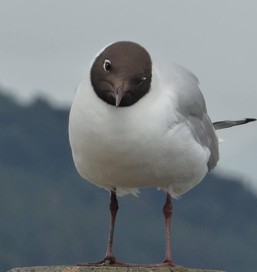
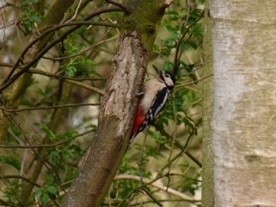
Cumbria is fortunate to be home to a diverse range of bird species including the black-headed gull, chaffinch, woodpecker and robin to name but a very small few!
In my opinion, the the world would be a very boring place without birds and their song!
|
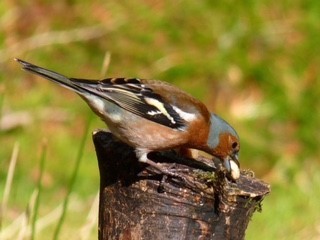
Wild birds are protected under the Wildlife & Countryside Act 1981 making it illegal to take, injure or kill any wild bird.
|
|
|
Intentionally take, damage or destroy the nest of any wild bird while it is being used or built.
|
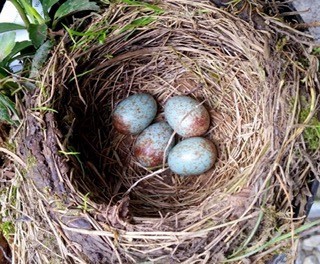
Intentionally or recklessly disturb any wild bird listed on Schedule 1 while it is nest building, is in or on, or near the nest with eggs or young, or disturb the dependent young.
Trees, hedges and birds!
Please adhere to advice regarding the removal of trees, hedges and branches during the nesting season. If you see a bird carrying nesting material or food into an area, it is likely that there is an active nest.
Not only do birds nest in trees and hedges, we also have ground nesting birds such as sky larks. Always follow the Countryside Code and do not stray from designated rights of way.
Penalties for the above can include fines of up to £5000 and/or six months in prison.
Please see www.rspb.org.uk for further advice and information on our wild birds, nests, eggs and young.
|
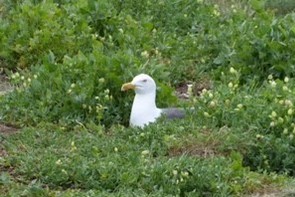
Herring Gull
Many of our coastal towns are also heavily populated with seabirds such as the herring gull.
Herring gulls are beautiful, large birds that are venturing further in land to find food. Unfortunately, they can become a nuisance especially during spring and summer, and have been known to be aggressive when protecting nests and young, which makes them a target for persecution.
Every year Cumbria Police receive many reports of herring gulls being deliberately run over, shot, trapped, kicked and abused. This behaviour is cruel and unacceptable! Gulls are offered the same protection in law as any other wild bird and offenders could face fines of up to £5000 and/or a six month prison sentence.
Cumbria Police would ask that residents and visitors do not feed the gulls, and dispose of all waste food matter responsibly in rubbish bins provided or take your rubbish home.
|
RAPTOR PERSECUTION
Continuing with the feathered theme........
What has a dinosaur got to do with birds?
The Velociraptor (meaning "speedy thief") was given it's name due to it being roughly the size of a turkey and the most birdlike dinosaur found.
Raptor (meaning "thief"), in general means any bird of prey. A bird of prey, is any bird that pursues other animals for food.
They are classified in two orders:
|
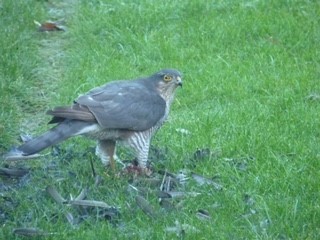
Falconiformes (eagles, hawks, falcons)
Vary in size with hooked bills, sharply curved talons and excellent eyesight. Active during the day, though several fly at dawn and dusk. They are intelligent and because of this and their hunting ability they can be trained for sport of falconry.
|
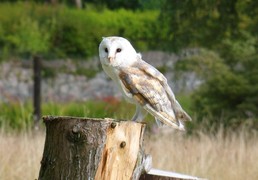
Strigiformes (owls)
Owls are mostly solitary and nocturnal birds of prey. They have an upright stance, large broad head , binocular vision, binaural hearing, sharp talons and feathers adapted for silent flight.
|
As with any wild bird, raptors are protected under the Wildlife & Countryside Act 1981. Unfortunately, they are still widely persecuted.
Persecution can come in a number of forms:
shooting, poisoning, egg collecting, trapping and illegal trade.
Cumbria Constabulary support Operation Owl raising awareness of raptor persecution and it's impact on our birds of prey. Operation Owl was launched in 2018 by North Yorkshire Police, the RSPB and RSPCA.
Twitter: @operation_owl and #RaptorPersecution
OFF-ROADING
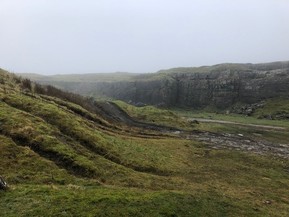
Respect our local habitat!
Since the beginning of the Covid-19 pandemic Cumbria Police have seen an increase in complaints involving:
- motorised vehicles including 4x4 and motorbikes off-roading illegally (see image above of Caldbeck).
- camp fires
- burning of gorse and scrub
- mountain bikers building ramps and cycling in areas that are restricted to walkers
- littering and Anti-social behaviour.
Before you decide to visit an area to do any of the above please be mindful of the following offences you could be committing:
SSSI – Site of Special Scientific Interest. The county of Cumbria have over 250 SSSIs. Land notified as SSSI under the Wildlife and Countryside Act 1981 (primarily amended by the Countryside and Rights of Way Act 2000) are the finest sites for wildlife and natural features in England, supporting many characteristics such as rare and endangered species, habitats and natural features.
Natural England will take enforcement action on those who:
- Intentionally or recklessly damage the SSSI
- Destroy any of the features of special interest
- Disturb wildlife for which the site is notified
- Carry out listed operations without consent
Offences do carry fines up to £20,000 in Magistrates, or unlimited in Crown Court for carrying out works without permission, or for causing damage to a SSSI.
SAC – Special Area of Conservation areas protected under the Conservation of Habitats and Species Regulations 2017.
Also enforced by Natural England.
Public Rights of Way
Footpaths are meant for pedestrians only (prams, pushchairs and wheelchairs). Dog walkers should not allow their dogs to stray from the footpath as it can constitute trespass. It is an offence under Section 29 Road Traffic Act to cycle on a road/bridleway or footpath without due care and attention. There is also a second offence of cycling without reasonable consideration.
Bridleways are for walkers, horseriders and cyclists. Cyclists are expected to give way to walkers and horseriders.
Byways open to all traffic (BOAT) should normally be marked as such. Under-age or banned drivers, quads, mini-motos, non-road-legal scramblers and quads are not allowed on a BOAT. There are offences under Section 34 Road Traffic Act 1988 for byways and restricted byways.
Restricted Byways created under NERC (Natural Environment and Rural Communities Act 2006). Cars, motorbikes, quads, mini-motos, non-road-legal scramblers are not allowed on restricted byways.
Whilst we welcome visitors to the countryside we ask that rules are adhered to so that we can all enjoy the wonderful outdoors.
|
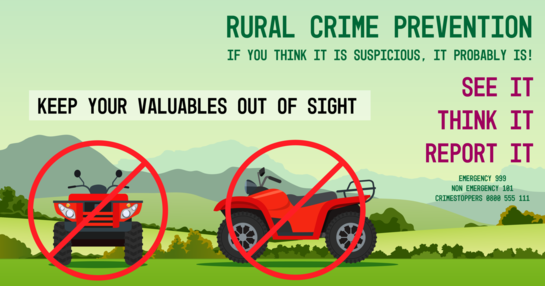 |
Since our winter 2020 bulletin we have been working to keep our rural communities safe. This is just some of the work we have done to target those that would commit rural and wildlife crime.
OUR ANIMAL OF THE SEASON!
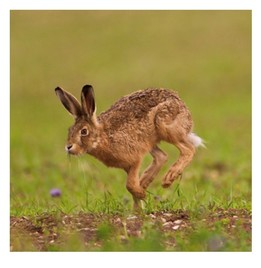
Brown Hare
(Lepus Europaeus)
Brown hares aren't actually a native species, they are thought to have been introduced by the Romans, if not before. They are golden-brown in colour, with a pale tummy and white tail. Hares are larger than rabbits, with very powerful hind legs and long ears with black tips.
|
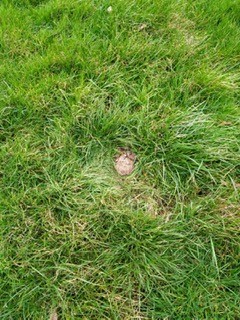
Unlike rabbits they do not dig burrows choosing to shelter in 'forms' (a shallow depression in the ground or grass.
If you look closely at the picture above you'll see two leverets (young hare) well camouflaged in a 'form'.
Hares are at their most visible in early spring, when they can be seen 'boxing' in the fields. It is commonly believed that it is two male hares boxing over the right to mate with a female, however, it is usually the females warding off unwanted advances from a male hare. Female hare can produce three to four litters of leverets, with two to four young a year.
Hares are protected in the UK under the Wildlife & Countryside 1981, they are also classed as one of the UK's wildlife priorities due to the hare being in decline, and a rise in persecution, particularly in the form of 'hare coursing'.
Hare coursing is a cruel sport whereby lurcher types dogs chase a hare until it is exhausted, catch it and rip it apart. Hare's are victims of this cruelty due to their speed, they will run around in a wide circle while being chased by the dogs.
Interesting fact: the brown hare is Britain's fastest land mammal, clocking speeds of up to 40mph.
|
Thanks for taking the time to read our bulletin. We hope you find it interesting and informative.
|
Cumbria Police want you to report all wildlife and rural and crime
Please report any incidents to us, to help us keep Cumbria safe.
If a crime is in progress then please use 999. If it's non-emergency please call 101 or email use our non-emergency online form.
|
|
|
|