|
Welcome to Cumbria Constabulary's Wildlife and Rural Affairs Bulletin. The bulletins will be released quarterly and will provide advice and crime prevention for our rural communities, along with news and stories of interest. Each edition will feature an article from a Wildlife or Rural Crime expert in a specific field.
WILDLIFE & RURAL CRIME PRIORITIES
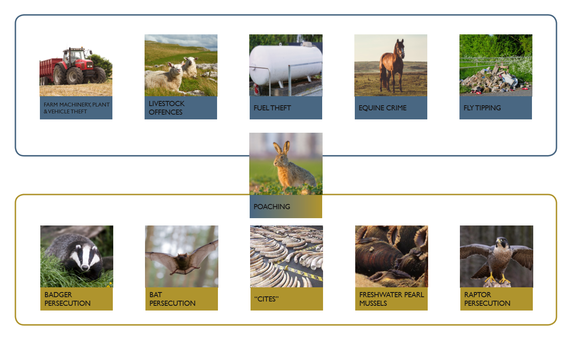
The National Wildlife Crime Unit set out a list of national priorities based on wildlife and rural crime. These are set out below. In addition to these Cyber Crime has recently been introduced to this list.
Cumbria Police are committed to working with partner agencies to reduce wildlife and rural crime in all areas.
 MEET THE TEAM
In each addition we will introduce you to different members of our team and their roles within it.
|
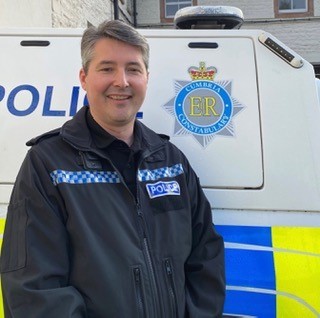
Superintendent Carl Patrick
Cumbria Constabulary's Wildlife, Rural and Environmental Crime Lead
|
|
 |
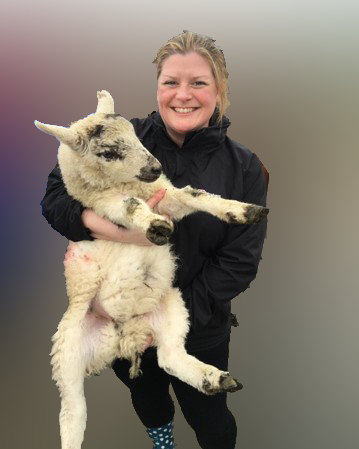
PC 1375 Samantha O'Key
Wildlife, Rural and Environmental Crime Co-ordinator
|
 KEEPING OUR COMMUNITIES SAFE
DEER POACHING, IT'S EFFECT ON THE DEER POPULATION AND OUR COMMUNITIES
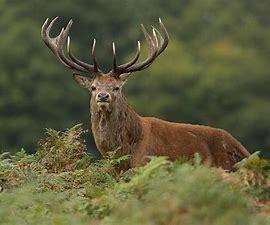
Jon Beardsley, Deer Stalker and Wildlife Ranger for Forestry England gives an insight.
“There’s plenty of them about”.
“People should have the right to take game to feed themselves”.
“Why should rich landowners be the only ones with rights”.
“They’re going to be killed anyway, so what’s the problem, no harm done really”.
In my 20 plus years involved in deer management I have heard statements like these many times. I will talk mainly from the perspective of deer, as that is what I know, but some of the following is equally applicable to fish, game birds, and other wild game.
At its base level, poaching is theft. Landowners/managers may rely on the proceeds generated by the shooting of deer as an income. It may be a small component compared to the revenue generated on a large, diverse estate, but on marginal estates, or a tenant who has purchased the deer rights to run a small sporting business, poaching could be the difference between making a living and going under.
Wild deer belong to no one while alive, but the carcase becomes the property of the landowner/owner of the rights once the deer has been killed. The meat has a monetary value and, in the case of sporting businesses, so does the opportunity to sell the shooting of the animal. All in, a single trophy animal may be worth several thousand pounds.
The poaching of animals denies the rightful person the opportunity to benefit from those animals taken and many of the individuals involved in poaching do not confine their sights to animals; it is no coincidence general thefts are usually up in areas frequented by poachers.
Deer are not just managed as a source of income. In my role as a Wildlife Ranger for Forestry England I control deer numbers in order to maintain a population that does not cause excessive damage to trees and habitat. While the fewer deer the better from a tree growing point of view, deer are native and belong in the forest as part of the ecosystem.
I see it as my duty to manage the deer as responsibly as possible. Culls are set according to estimated population densities and the outcomes of culls from previous years. I also try to ensure that, given the opportunity, poorer animals are culled first, and the best animals left to pass on their genes.
Poaching means deer managers may unknowingly end up taking more animals than required, and it is known that certain poachers specifically target the best breeding males for the bragging rights. This can then see a deer population deteriorate in terms of numbers and quality that may take years to correct, if ever.
The image of a poor man, down on his luck, poaching to provide for his family is a romantic and out of date one. The modern motivation for poaching is either money, enjoyment, or both. Poachers who primarily use firearms, more often than not, are interested in making money. This can range from the small scale ‘pocket money’ type poaching to organised gangs feeding in to supply chains, gambling and making tens of thousands of pounds. No doubt many of these individuals get a kick out of it too, and that is the primary motive for those who use dogs to bring down deer, though they too will often sell on venison to make money.
As the poaching of animals is illegal it should be no surprise that the methods used are also in contravention of the law. For deer, the law dictates the type of weapon and ammunition that may be used, the times of day they may be shot, and the times of year when they may not (depending on species and sex). This is to ensure the maximum chance of a quick and humane death. Poachers, however, will use whatever they have at their disposal, often sub calibre and under-powered firearms, that can and do lead to deer suffering horrendous injuries. Shotguns, rimfires, bows, and even airguns are sometimes used by these individuals.
Of course, dog men do not even use projectile weapons. With red deer weighing up to 250kg, being taken down by dogs is an extremely cruel experience, where death is certainly neither swift nor painless. The advocates of this method seem to revel in the suffering they cause and the more fight the animal puts up for its life the better. Dogs will often grab the deer by the back leg in an attempt to damage/sever the hamstring, which slows the deer down and allows the dog, or dogs, to catch up to the front end before grabbing the neck. A stag’s neck can be as thick as your waist, meaning the dogs struggle to kill it on their own; that’s when knives and even baseball bats are used.
The law stipulates that deer may not be taken from one hour after sun set to one hour before sun rise, yet night time is the poacher’s preferred time for operating so as to go undetected and take advantage of deer’s nocturnal habits. Unfortunately, the proliferation of sophisticated technology, such as night-vision and thermal imagers, means the poacher’s signature of a lamp flashing about is all but a thing of the past. However, dog men still need to use a lamp to allow the dogs to see, but often the lamp comes on at the last minute after the deer first being spotted with night vision/thermal imaging. The lamp also serves to dazzle the deer somewhat, so the deer struggle to see the incoming dogs.
The seasons written into law for females are there to protect pregnant animals and vulnerable young who are dependent on their mothers for survival (females may not be shot between 1st April and 31st October), but increasingly poachers are showing little or no regard for this. Those looking to make money from poaching will tend to stick to the seasons, as it can be more difficult to move carcases that are out of season.
Those in pursuit of thrills do not have the same considerations, and again tend to be the dog men. Dogs are sometimes run on heavily pregnant deer as they are slower and lack stamina, making them easier for young dogs in training to catch. We even had an incident this summer where a hind was killed either during or immediately after giving birth; this is somehow called ‘sport’. This year is the worst I have known for the level of poaching using dogs through what would normally be the quiet period of the summer. Between April and August there was evidence of poaching within a few miles of Grizedale almost every weekend, and therefore extended beyond the period of females being pregnant into the period where the calves/kids are left by the mothers while they go off to feed. The young of mothers taken by poachers are then condemned to starve to death.
If theft and cruelty were not enough then it must also be remembered much of the meat produced by poaching ends up in the human food chain. As a Forestry England Wildlife Ranger both myself and the organisation have many hoops to jump through regarding handling of carcases, their preparation, storage, and traceability. I would be surprised if any of the carcases sold on by poachers met even the most basic of legal requirements, such as checking for notifiable diseases at point of death.
The measures I undertake are to ensure carcases entering the food chain are fit for human consumption, the risks of not following best practice and legal requirements should be of serious concern. Not only for those who may end up suffering illness as a result, but also the huge damage that could be done to the venison and wild game industry by the bad publicity a health scare would cause.
|

PC Samantha O'Key:
Poaching has a devastating effect on our communities and deer population. Unfortunately, Cumbria has seen an increase in this type of crime, particularly in the South Lakes, Brampton and Millom areas.
This year Cumbria Police have stationed Rural Officers into Millom, Brampton and the South Lakes area and they are tackling issues affecting the local community.
From early Autumn leading up to Christmas poaching is always on the increase nationally in-line with the demand for venison and other meat and fish.
This is a lucrative business for organised crime gangs and thieves benefitting from the proceeds of crime.
We would encourage anyone that witnesses suspicious behaviour to report it.
How to recognise and report illegal poaching:
- Taking 4x4 vehicles off-road without the landowners permission causing damage to the land, crops, fences and gates.
- High powered lamps on vehicles shining them into fields have traditionally been used, but now equipment is more sophisticated and readily available. Many poachers will have access to night version and thermal imaging which is less noticeable.
- Bull Lurcher type dogs may be present. It is becoming increasingly popular to bring down deer with long dogs. Often the individuals involved will allow their dogs to practice on livestock and heavily pregnant female deer causing horrific injury and/or death of the animal.
- Evidence of sheep worrying and kills could also be a result of hunting deer with dogs.
- Poachers will often leave their kill to collect at a later date. If you find a deer carcase, do not remove it or touch it. Report it directly to the Police on 101.
Remember these individuals may be armed. Do not approach and call 999.
|
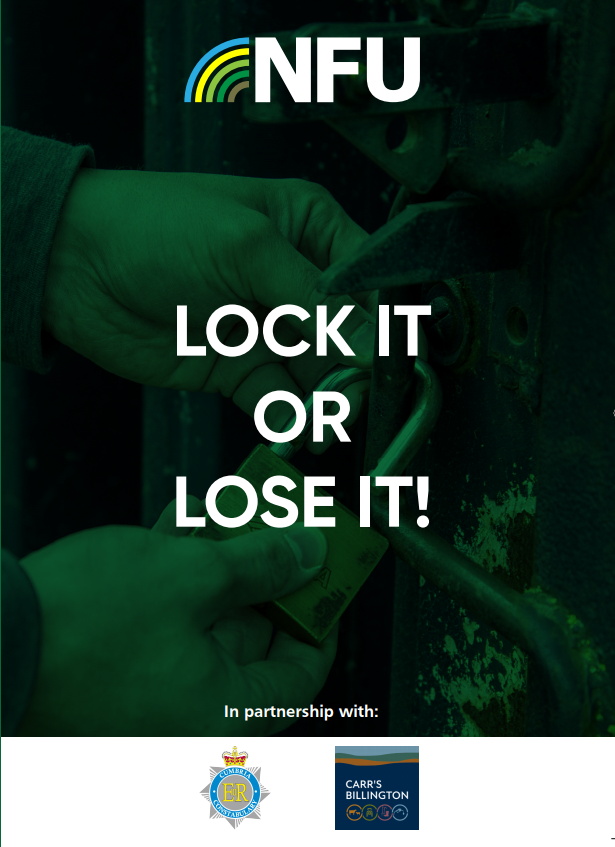 The NFU working in partnership with Cumbria Constabulary and Carrs Billington have launched their 'Lock it or Lose it' campaign.
104 quad bikes were stolen in Cumbria in the months between November 2019 and October 2020, with 27 taken in 1 month alone!
Alongside the NFU and Carrs Billington we are urging farmers to protect themselves by taking steps to ensure that property is protected. Simple measures such as ensuring outbuildings are locked and tools and machinery kept out of sight can deter thieves.
Other security measures to consider are the installation of tracking devices and property marking.
Police Community Support Officers are specially trained to undertake crime prevention surveys and farmers can book a survey by calling 101, or e-mailing 101@cumbria.police.uk.
For further information please click on the following links:
https://www.nfuonline.com/about-us/our-offices/north-west/north-west-must-read/nfu-lock-it-or-lose-it-campaign-launched/
Here is a short video with further information.

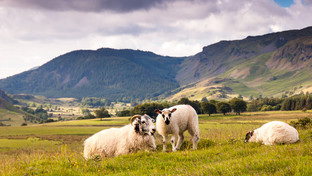
SHEEP THEFT
Sheep theft, also known as 'sheep rustling' not only has a financial impact, it can also be devastating for farmers and their families.
Cumbria along with the rest of the country has seen a rise in sheep thefts over the last year, particularly during the Covid-19 pandemic. Concern is that the stolen animals are slaughtered in unregulated abattoirs and the meat then sold on the black market, undermining welfare standards. This could in turn, pose a threat to human health.
Unfortunately, many of those involved in these illegal activities are well organised, using quads and sheep dogs to load large numbers of sheep on to trailers late at night.
We have also seen an increase in sheep being killed and butchered in farmers fields. This can be extremely distressing for farmers.
Preventing sheep rustling is no easy task. However, there are measures that can be put in place by farmers to reduce the risk of theft and also trace stolen livestock.
- Ensure stock is clearly marked and records are up to date
- Check stock regularly and vary the times of feeding/checks
- Where possible graze livestock in fields away from roads
- Consider marking systems such as Tec Tracer
- Join Cumbria Constabulary Countrywatch on Facebook
Report any suspicious sightings to the Police on 101, this can be done by following the link or anonymously to Crimestoppers on or the Rural Crime Hotline 0800 783 0137.
Remember to always call 999 in an emergency.
Cumbria Constabulary are currently devising a new form for reporting livestock theft. This will give farmers and livestock owners a quick way to report theft and record all information required in a timely manner. Details on how to access this form will be posted on our Countrywatch websites over the next few weeks and on Cumbria Constabulary's social media pages.
|
FOX HUNTING
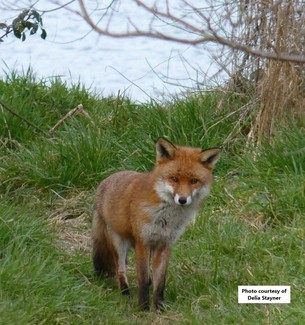
The Hunting Act 2004 is the main legislation covering illegal hunting.
It became illegal to hunt foxes with dogs in 2004.
If you believe you are witnessing an illegal hunt taking place, please contact 101 or 999 in an emergency.
|
NOT FORGETTING CUMBRIA'S COAST!
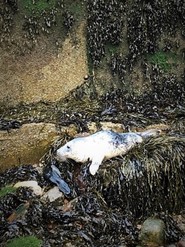
Marine Mammal Awareness
There have been a number of reports of seal pups on Cumbria's beaches this year. In the majority of cases the pups are just taking a rest and want to be left alone.
Unfortunately, we have had reports of dogs attacking resting or injured seals and children throwing stones at them.
It is essential that these mammals are not disturbed or distressed.
If you come across a seal pup or any other marine mammal on any of our beaches please call the BDMLR (British Divers Marine Life Rescue) on 01825 765546, who will offer advice and if necessary allocate a trained Marine Medic to attend. The attending Medic will assess for injury and/or malnutrition and decide if any intervention is required. You can also visit their website bdmlr.org.uk for further information.
Never try to return a seal or other marine mammal to the water. Please leave that to the experts. Seals have a nasty bite and can cause 'Seal Finger' which requires specific anti-biotics to treat. Also, you could cause the mammal more harm by damaging it's flippers, causing other injury and/or stress.
|
OUR ANIMAL OF THE MONTH
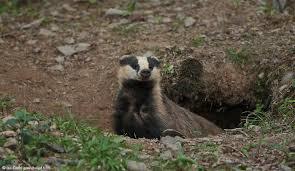
Badgers - how much do you know?
Badgers (Meles meles) are meticulously clean, nocturnal animals with poor eyesight, but have keen hearing and sense of smell. They are sociable living in mixed groups known as clans in underground tunnels and chambers called Setts. This usually consists of a large main sett and several smaller outlying setts.
Badgers are omnivores and eat a varied diet of worms, small mammals, fruit and invertebrates.
Sadly, they are also one of the UK's most persecuted animals and therefore one of our national wildlife priorities.
Badgers can grow up to a metre in size and they are the biggest land predator in the UK. Being thick set and powerfully built makes them a target of baiting (this is where dogs such as bull-lurcher types are pitted against them). There is no purpose for this other than to cause pain and suffering.
Not only do the badgers suffer horrific injuries and are eventually killed, the dogs pitted against them can also receive serious injury, particularly to their lower jaws and face. These injuries are known as de-gloving injuries.
The main legislation protecting Badgers is The Protection of Badger's Act 1992, although they are also afforded further protection under the Wildlife & Countryside Act 1981 and Animal Welfare Act 2006.
Trivia:
Did you know that in Harry Potter the Hufflepuff House Mascot is a Badger, chosen for it's gentle nature, strength, loyalty, courage and persistence!
|
BRINGING OFFENDERS TO JUSTICE
Cumbria Constabulary are working hard with partnership agencies to bring those individuals that would inflict cruelty to our wildlife and commit rural crime to justice.
Here are a few of those positive results.
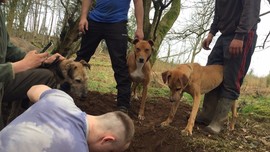
Five men have been disqualified from keeping dogs and handed suspended sentences for 'inflicting pain and suffering on innocent wildlife'. Including badgers and deer.
Badger baiting (dogs being pitted against badgers) was banned in 1835 and badger digging (dogs sent into a sett to locate a badger and hold it there whilst the handler digs into the tunnel to remove the badger) in 1973. Badgers are killed and suffer serious injuries, this is also the case with the dogs used to bait and dig.
Warrants were executed Cumbria Police and the RSPCA in September 2019 and January 2020 and they were sentenced at Workington Magistrates’ Court in July and September 2020.
Callum Frew (DoB: 25/06/97) of Flimby, Cumbria appeared at Workington Magistrates’ Court in September 2020. He received jail terms of 120 days on each offence (concurrent), suspended for 18 months, and was ordered to complete a community order with a 26-week curfew and 100 hours of unpaid work. He was ordered to pay costs of £2,000 and a victim surcharge of £122.
Callum Frew was also disqualified from keeping all animals for life and his mobile phones were seized and destroyed. The court applied a deprivation order (under Section 35 of the Animal Welfare Act) for two lurcher type dogs that were seized.
Sentencing him, the court said the offences would appal anyone.
John Thompson (DoB: 25/7/1992) of Harriston pleaded guilty to two offences under the Protection of Badgers Act 1992 for killing a badger (Section 1(1)) and damaging a sett or causing a dog to enter a sett (Section 3).
He was sentenced to a four-month prison term suspended for 18 months and was ordered to complete 100 hours of unpaid work. He was also disqualified from keeping dogs indefinitely and ordered to pay costs of £750 plus a victim surcharge of £115.
Kai Cartwright (DoB: 27/9/1997) of Workington, pleaded guilty to two offences under the Protection of Badgers Act 1992 for killing a badger (Section 1(1)) and damaging or causing a dog to enter a sett (Section 3).
He was sentenced to four months suspended for 18 months and ordered to complete 100 hours of unpaid work. He was disqualified from keeping dogs indefinitely and ordered to pay costs of £750 plus a victim surcharge of £115.
Scott Walpole (DoB: 9/4/1990) pleaded guilty to three offences under the Protection of Badgers Act 1992 and three offences under the Deer Act 1991.
He was sentenced to a total of six months, suspended for 18 months, and 150 hours of unpaid work. He was also disqualified from keeping dogs indefinitely and ordered to pay costs of £750 plus a victim surcharge of £115.
Dillon Broderick (DoB: 25/10/1996) pleaded guilty to three offences under the Protection of Badgers Act 1992 and three offences under the Deer Act 1991.
He was sentenced to a total of six months, suspended for 18 months, and 150 hours of unpaid work. He was also disqualified from keeping dogs indefinitely and ordered to pay costs of £750 plus a victim surcharge of £115.
This is a great example of partnership working at its most effective.
|
 |
Cumbria Constabulary have three Country watch FB sites. North, South and West. All three have useful information relevant to that area.
|
Cumbria Police want you to report all wildlife and rural and crime
Please report any incidents to us, to help us keep Cumbria safe.
If a crime is in progress then please use 999. If it's non-emergency please call 101 or email use our non-emergency online form.
|
|
 |
 |
|
Thank you for taking the time to subscribe and read our bulletin. The next one will be out in March 2021.
Have a Merry and Safe Christmas from Cumbria Constabulary's Wildlife, Rural and Environmental Crime Team
|
|