 This week, Monday 1 June - Sunday 7 June 2026, is Child Safety Week.
Child Safety Week is the Child Accident Prevention Trust’s annual community education campaign, acting as a catalyst for thousands of safety conversations and activities, across the UK.
The aim of Child Safety Week is to help families build confidence and skills in managing the real risks to children’s safety.
Making Prevention Possible
The theme for Child Safety Week 2026 is Making prevention possible.
Building capacity for safety behaviour and empowering families to make simple changes without feeing overwhelmed.
|
|
 |
The Child Accident Prevention Trust provide safety advice and resources for parents, carers and professionals working with children and young people. Listed below are some key risks, which could lead to an accident occurring, and how to prevent them:
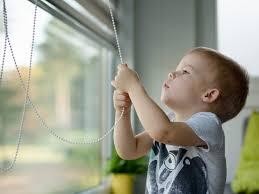
Shockingly, around two children every year lose their lives due to strangulation after becoming entangled with the looped cord from a window blind.
A toddler can lose consciousness in as little as 15 seconds if a blind cord becomes wrapped around their neck, and they can die in just two-three minutes.
Why are toddlers at greatest risk?
Toddlers and young children are at greatest risk of being killed by window blind pull cords. This is because:
- Proportionally their heads weigh more than their bodies and their muscle control isn’t fully developed. This means it’s hard for them to free themselves if they’re caught in a blind cord.
- A young child’s windpipe is narrow and soft so they can suffocate very quickly when their necks are constricted.
- They can climb up onto furniture or a window sill but can struggle to steady themselves if they wobble.
How to make blind cords safe
- Get into the habit of tying up your blind cord every time.
- If your blind doesn’t have a safety device, do some quick DIY and fix one.
- Move cots, beds, highchairs and playpens away from looped blind cords.
- If there’s space, move other furniture away from looped blind cords too, as young children love to climb.
For peace of mind, consider buying blinds without cords or chains, particularly for children’s bedrooms.
If you have Roman blinds, check if the back is connected with a safety device that will break under pressure.
For more information on blind cord safety, please visit Child Accident Prevention Trust/Blind Cord Safety
|
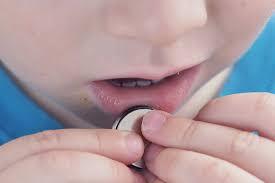
Button batteries, especially large, powerful lithium coin cell batteries, can badly injure or kill a small child if they swallow one and it gets stuck in their food pipe.
Five Top Tips
-
Look - look around your home for button batteries. Think toys, lights, remote controls and more.
-
Check - check for products with loose backs and button batteries that have dropped out.
-
Store - store button batteries in a safe place, up high and out of your child's reach.
-
Dispose - dispose of used button batteries as soon as you can. They are still unsafe.
-
Act - if you think your child may have swallowed a button battery, go straight to A&E or call an ambulance.
What you need to know
-
The risks - most button batteries pass through the body without a problem, however, if a lithium coin cell battery gets stuck in the food pipe, energy from the battery reacts with saliva to create caustic soda. This is the same chemical used to unblock drains. This can burn through the food pipe to the main artery and lead to catastrophic internal bleeding and death.
-
Where are they? - know where button batteries are in your home, so you can keep your children safe. They are used in an increasingly wide range of toys, novelty items, gadgets and other everyday objects you'll find around the house.
-
Used batteries - recycle while you shop. It's easier than ever at supermarkets and bigger shops.
-
In an emergency - if you suspect your child has swallowed a button battery, act fast. Take them straight to A&E, tell the doctor what they have swallowed, do not let you child eat or drink, do not make them sick. Trust your instincts and act fast.
For more information on button battery safety, please visit Child Accident Prevention Trust/Button Battery Safety
|

Although we may trust our own family dog not to bite, it is really important to recognise that any dog can bite if they feel they have no other choice.
Top Tips to keep them safe and happy together
The bond between your child and dog can bring fun and happiness to family life. While we don’t expect our own dog to bite, it’s important to remember any dog can bite if they feel they have no other option.
In fact, children are most likely to be bitten at home, by a familiar dog. Last year, over 1,700 children were admitted to hospital with dog bites.
Dogs Trust and RSPCA both recommend two essentials for keeping your child/ren safe.
-
Close supervision when dogs and children are together
- Understanding your dog's body language
Close Supervision
Close supervision can feel like a big ask. But Dogs Trust breaks it down into three key things:
-
Stay close – watch, listen and stay close so that you can respond before anything bad happens.
-
Step – in – intervene if your dog or your child is behaving unsafely or if either one looks uncomfortable.
-
Separate – keep children and dogs separate when you know you’re likely to be distracted, like during the morning rush, making the dinner, or answering the front door. You can use a safety gate, put your dog in another room, or take your child or dog with you.
Your dog's body language
Your dog’s body language tells you how they’re feeling. Being able to spot the signs early and separate your dog and your child helps you to stop a situation from becoming risky.
The RSPCA outlines distinct behaviours that dogs show when they are worried and when they are angry or very unhappy. Examples include:
- A worried dog may have their head low and ears back with tail tucked.
- An angry dog may have a tense body, weight forward with their ears and tail up, looking directly at you.
Remember every dog is an individual and may have different ways of showing that they are uncomfortable, worried or anxious. We need to get to know these signs in our own dog so that we can step in early.
For more information on dog safety, please visit Child Accident Prevention Trust/Dog Safety
|
While warm summer weather creates many chances for outdoor fun, it also introduces additional risks for young children. Here are some of our top tips to help keep them safe this summer.
Watch out for open windows
It’s great to open windows and balcony doors and let the fresh air in. But please remember that a small child’s head is heavy compared to their body. That means they can easily topple. Plus, they have no real understanding of danger. So,
- Keep low furniture away from open windows so that children can’t climb up and fall out – even on the ground floor
- If you can, install window catches (to limit how far they can open) and locks
- If you opt for a lock keep the keys somewhere you can find them in case there’s a fire and you need to get out
- If your window won’t lock or you need to open the window wider because of heat or cooking, don’t leave young children alone in the room
Learn more about the dangers and how to keep children safe
In the garden
If you’re lucky enough to have outdoor space to play it can be great fun for the children in the summer. But not all gardens are child-friendly and it’s important to be aware of the dangers.
- Make sure chemicals like weed killer and fertiliser are kept away from curious youngsters and garden tools are locked away in a shed.
- Avoid children of very different weights jumping on trampolines together. It can cause accidents. And, use a net to prevent falls.
- Supervise young children around water at all times whether that’s a hot tub, paddling pool or pond
Learn more about staying safe in the garden this summer
Swim safely
Splashing around is a great way to cool down but remember that babies and toddlers can drown in very little water so they need you to stay with them near water at all times.
Even older children who can swim can easily get into difficulties. So, teach them to choose safe places to swim like public pools or beaches with lifeguards. And, explain the dangers of swimming in open water, including strong currents, deep, cold water and things under the surface they can’t see.
Visit our drowning page for more tips and resources on water safety this summer.
Be burns aware
BBQ season is here and we can’t wait to enjoy eating outside again. Just remember a BBQ and the ground underneath it can stay hot enough to cause a serious burn for a long time after it’s been used.
So, stay alert and keep children well away from the cooking area until it’s completely cooled.
The same can be said about fire pits. They may even still be hot enough to burn the next day!
If you’re heading to the beach beware if you or other people are using disposable BBQs on the sand. If not properly cooled, the sand can hold the heat well after the BBQ has been removed.
In recent years we have seen lots of cases of children with severe burns from on their feet from unknowingly stepping on scorching hot sand while playing.
Discover more about preventing burns and scalds including what to do in an emergency
Keeping babies cool
It’s important to keep your baby cool and out of direct sun. But remember that buggies and prams should never be covered with blankets, cloths or any cover that prevents the air from circulating. This can lead to overheating and increases the chance of SIDS.
Instead:
- Stay in the shade as much as possible
- Use a clip-on parasol or sunshade to protect your baby from the sun, but make sure that air can circulate and you are still able to see your baby
- Monitor their temperature to avoid overheating. You can do this by feeling their chest or back of their neck, if their skin feels clammy, this is a sign they are getting too hot.
For more top tips on keeping your baby cool this summer visit Lullaby Trust
On holiday
It might sound obvious, but it’s important to remember to use the same caution in your holiday accommodation that you do at home. On arrival it’s always worth taking a quick look for any potential dangers. Here are a few simple checks and precautions to remember:
- Move any cleaning products or medicines out of reach
- Check window blind cords are safely secured out of reach and that window locks work
- If you have a balcony ensure young children are supervised
- Check the smoke and carbon monoxide alarms are working
- Be alert to any water nearby
Discover more top tips on staying safe on holiday
Be a savvy shopper
With the long summer holiday and cost-of-living pressures, it can be tempting to buy cheap toys online to keep children entertained on a budget. But it’s important to remember that many cheap toys from online marketplaces come from abroad and haven’t been safety tested.
High-risk toys best avoided from unknown brands and sellers include those with:
-
Super-strong magnets that can rip through your child’s belly
-
Easy-access button batteries that can kill your child if swallowed
- Long cords that can strangle your child or small parts that can choke them
- Chargers that can catch fire or wires that can cause electric shocks.
If you buy a toy that looks unsafe, trust your instincts and send it back.
Take a look at this post for 6 dangerous products to avoid this summer.
|
The Child Prevention Trust have created a Parents’ Pack, which includes a range of bite-sized facts, safety tips and advice for parents on the main accident risks to children. Professionals are encouraged to share this Parents’ Pack with the families they work with: The Child Prevention Trust – Parents’ Pack.
For more information about Child Safety Week or to access the range of resources that the Child Prevention Trust have created for families and professionals, please visit the Child Prevention Trust’s website: Child Safety Week | Child Accident Prevention Trust
|