|
View as a webpage / Share
 Welcome to the May edition of the Cumberland Safeguarding Children Partnership (CSCP) Newsletter.
Within this newsletter, you will find useful information from across the partnership and from our partner agencies relating to safeguarding, which is aimed to support practitioners and professionals in their role.
The Children’s Social Care Reforms began with the Stable Homes, Built on Love Strategy (2023) and have been expanded through the Keeping Children Safe, Helping Families Thrive Policy and the Children’s Wellbeing and Schools Act (introduced as a Bill in 2024 and received Royal Assent in April 2026). This Act embeds the key reforms into law, including Family Help, Multi-Agency Child Protection Teams, and Family Led Decision Making (FLDM). These changes are widely regarded as the most significant overhaul since the Children Act 1989.

The Families First Partnership Programme (FFPP) is the delivery mechanism for these reforms. Its aim is to create a joined-up, family-focused system that intervenes earlier, strengthens families, and improves child protection. The FFPP places much stronger emphasis on early intervention and aims to build on the strengths of our local community networks - across voluntary, community, youth sectors, and statutory services, such as health and schools - rather than duplicate them.
FFPP Roadshows
You may be aware that the FFPP Team have been out within Cumberland’s localities delivering FFPP Roadshows. These have allowed practitioners who work with children, young people and their families in Cumberland to find out more about the FFPP, how this is being implemented in Cumberland and, importantly, what it means for their service.
To finish the delivery of the Roadshows, the FFPP Team are hosting a Virtual Roadshow, details of which are provided below:
- Monday 1 June, 4pm – 5pm, via Microsoft Teams
To book your place, please click on the link below
Families First Partnership Roadshow - Online Tickets, Monday 1 June • 4 PM - 5 PM GMT+1 | Eventbrite
If you were unable to attend an in-person Roadshow, the FFPP Team would be delighted to see you on the Virtual Roadshow. By attending, you’ll help shape how we work together, influence the support model, and make sure your service is represented in the decisions that will affect families across our area.
Should you have any questions or queries about the delivery of the FFPP in Cumberland, please do not hesitate to contact the FFPP Project Team: FFP@cumbria.gov.uk
|
Child Safety Week (1 - 7 June 2026)

Child Safety Week 2026 runs from, Monday 1 June to Sunday 7 June and is organised by the Child Accident Prevention Trust (CAPT) under the theme "Making Prevention Possible"
Keep an eye out for our 5 minute briefing being published.
|
Drowning Prevention Week (13 - 20 June 2026)
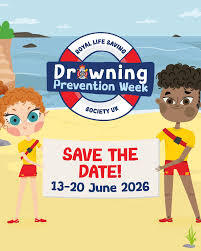
We are launching a 5-day Water Safety Briefing Series to support Drowning Prevention Week (13–20 June) and national campaigns including Respect the Water and Be Water Aware.
This series focuses on understanding risk, responding safely, and preventing incidents.
In Cumbria, lakes, rivers and open water are a key part of our local environment. While they offer great opportunities for recreation, they also present real and often underestimated dangers. National data shows that many water-related incidents are preventable and frequently occur when people did not intend to enter the water.
We want to make colleagues aware that this series is coming up and encourage you to plan ahead and prepare to share these key messages within your schools, settings, and wider networks during the week.
Throughout the series, we will be sharing practical advice across the following themes:
-
Day 1: Water Safety Code & Cold Water Shock
-
Day 2: Emergency response – Float, Call, Tell, Throw
-
Day 3: Open water hazards (jumping, waterfalls, currents)
-
Day 4: Safer participation in outdoor water activities
-
Day 5: Home water safety and safer swimming environments
Please keep an eye out for each day’s update and support us in sharing these important safety messages.
|
CSCP TRAINING

Cumberland Safeguarding Children Partnership have a range of training sessions on offer.
Please visit our training page on the website for all eLearning, virtual and face to face courses offered to professionals and volunteers working with children, young people and their families who live in Cumberland.
|
Westmorland and Furness Safeguarding Children Partnership (WFSCP) and Cumberland Safeguarding Children Partnership (CSCP) are pleased to welcome Recovery Steps to deliver Parental Substance Misuse Training, which follows on from learning identified in recent local reviews.
Brief Description / Summary of Training content:
This session explores the impact of parental drug and alcohol use on children and young people, drawing on learning from recent local reviews. It aims to strengthen practitioners’ understanding, confidence and multi‑agency responses when supporting families affected by substance use.
Who the training is aimed at:
Practitioners within the children’s workforce, including early help, education, health, social care, police and voluntary/community sector colleagues, across the whole of Cumbria.
Session date:
- Thursday 11 June (9.30am-12.30pm) - Microsoft Teams
As this is Pan-Cumbria training, Westmorland & Furness Safeguarding Children Partnership (WFSCP) are taking all bookings.
Therefore, to book your place or for any queries, please email WFSCPTraining@cumbria.gov.uk, including the following details:
- Your full name
- Job title
- Organisation
- Email address
Child Sexual Abuse: The Response Pathway
The Centre of Expertise for Child Sexual Abuse are delivering specific CSA training sessions over the coming weeks.
For more information for each session and how to book your place, please see below.
One in ten children in England and Wales will experience some form of child sexual abuse before the age of 16, yet most of this abuse is currently not identified or responded to. While surveys indicate that sexual abuse is as common as other forms of childhood abuse, it is much less likely to be identified by professionals.
Those working with children need a clear understanding of the specific actions and processes they should follow when they have concerns of child sexual abuse. To support professionals in this, the CSA Centre has created the Child Sexual Abuse Response Pathway (Response Pathway), an interactive online resource to guide them through how they can protect and support children and their families when there are concerns of sexual abuse.
This one-hour webinar will help professionals learn how to start using the Child Sexual Abuse Response Pathway | CSA Centre in practice, and empower them to understand the role they, and their colleagues, can play to best protect and support children. The session gives advice and examples of how to use the Response Pathway and explains how it supports professionals to meet the needs of children and their families.
Session date:
An introduction to Intra-familial child sexual abuse, taking a multi-agency approach
This one-day introductory course is designed for professionals who work in collaboration with other agencies, to provide an overview of the key issues to support them in identifying and responding to cases of intra-familial child sexual abuse.
Target audience as above and including front line practitioners.
The training aims are to achieve a better understanding of:
- the scale and nature of child sexual abuse
- how the impact of child sexual abuse presents in children and young people
- how children communicate their experiences of sexual abuse and the professional role in helping them do this how and why sexual abuse happens in families.
- Greater confidence in identifying and responding to concerns of intra-familial child sexual abuse.
- Improved ability to identify the potential signs and indicators of sexual abuse and sexually abusive behaviour.
Session dates:
Child Neglect

The Child Safeguarding Practice Review Panel has published a thematic analysis examining multi-agency responses to child neglect in cases of serious harm or death in England. The paper draws on a literature review, and analysis of 100 rapid reviews and 34 child safeguarding practice reviews. It explores the prevalence and impact of neglect; how definitional ambiguity delays interventions and contributes to fragmented responses; systemic barriers; the relationship between poverty and neglect; and children’s lived experiences. The literature review looks at the nature and impacts of child neglect, exploring neglect across the childhood spectrum, as well as protective and risk factors. The Panel has also produced an animation highlighting key learning from the analysis.
Read the thematic analysis: Child neglect: a thematic analysis
Watch the animation: Neglect: video explainers
|
Children's Wellbeing and Schools Act 2026
The Children’s Wellbeing and Schools Bill received Royal Assent on 29 April 2026 and has now become law. The Act primarily applies to England with some measures extended to Wales. Key measures introduced to strengthen safeguarding include: statutory multi agency child protection teams in each council area; a system of Single Unique Identifier numbers for children across services to assist information sharing; access to family group decision-making meetings for all families with children at risk of entering the care system; and registers of ‘children not in school’ in each local authority.
Read the press release: Families to save up to £1,000 as children’s reforms become law
Read the Community Care news story: Children's Wellbeing and Schools Bill becomes law
Child Safeguarding Practice Review Panel - New learning hub website
The National Child Safeguarding Practice Review Panel has officially launched their new learning hub.
The learning hub brings together learning and insights from child safeguarding reviews to support stronger practice for children.
Learning hub | Child Safeguarding Practice Review Panel
|
Safeguarding Incidents
The Child Safeguarding Practice Review Panel has published its annual report on serious child safeguarding incidents in England. Drawing on evidence from rapid reviews and the Panel’s national programme of work, the report aims to provide a system wide picture of where children are most at risk, the complex circumstances many families face, and the improvements needed to strengthen safeguarding practice. The report examines learning from serious incidents notified to the Panel between 1 April 2024 and 31 March 2025 involving 360 children who died or were seriously harmed due to abuse or neglect. Of the 274 rapid reviews considered, 47% involved the death of a child, 60% included neglect as a factor and 51% included domestic abuse. Key themes identified include: babies under one were most affected; many children faced complex, overlapping challenges; and strong multi agency working is critical to reducing risk.
Read the report: Annual report 2024 to 2025
Southport Inquiry Briefing
NSPCC Learning has published a CASPAR briefing summarising the phase 1 report of the inquiry into the circumstances surrounding the Southport attack by 17-year-old Axel Rudakubana at a children’s dance club in Southport on 29 July 2024. The briefing focuses on the fundamental problems around how agencies understood and managed risk in the lead up to the attack. These fundamental problems include: the failure of any organisation or multi-agency arrangement to take ownership of the risk; poor information management and information sharing; and limited oversight and intervention around online behaviour.
Download the briefing: Summary of the Southport inquiry: phase 1 report
Childline Posters
NSPCC Learning has published a new series of Childline posters to encourage children to use Childline if they need support. There are posters for primary and secondary schools, available in English and Welsh. There are also new posters which highlight support available to young people, such as the Calm Zone and Report Remove service. The posters can be downloaded and shared digitally or printed for display.
Access the posters: Childline posters
|
Child Sexual Abuse
Online Safety
Internet Matters has published a report evaluating the impact of the Online Safety Act from the perspective of children and parents. Based on surveys and focus groups with children aged 9-16 -years-old and their parents, the report explores whether the Act has helped to make children in the UK safer online. It finds early evidence of progress with positive changes including families seeing more visible safety features and age checks becoming more common. However, the report also finds that children are continuing to encounter harmful content; age verification is widely seen as easy to bypass; and many of the issues most important to families, such as managing the amount of time children spend online and the risks of AI, remain unaddressed. Families in the study agreed that stronger action to keep children safe online is needed and that more should be done by government and platforms.
Read the report: The Online Safety Act: are children safer online?
See also on NSPCC Learning: Preventing online harm and abuse
|