Hello and welcome to our Environment and Climate Newsletter!

Welcome to the Climate and Environment newsletter, where we share the latest updates, projects and partnerships supporting a greener, safer and more sustainable Cumberland.
In this edition, we highlight major progress on electric vehicle infrastructure, with over £3.4 million of government funding secured to significantly expand EV charging across Cumberland. New on‑street, car park and community‑based charge points will help ensure fairer access to charging, particularly for residents without off‑street parking and those in rural areas.
We also look at how innovation is improving recycling, with new AI‑powered sorting technology at the Carlisle Materials Recycling Facility now enabling cartons to be accepted at the kerbside, supporting preparations for Simpler Recycling.
You’ll also read about tree planting milestones across the county, including the ceremonial Trees for Climate planting at Hammond’s Pond, and the essential highways maintenance work taking place to keep our roads, pavements and green spaces safe, accessible and well maintained for everyone.
We hope you enjoy this edition and continue to stay involved in the many initiatives helping to protect our environment, support local communities, and build a more sustainable future for Cumberland.
With kindest regards
Bob Kelly
Executive Member for Cumberland Policy and Regulatory Services
Image is of Cumberland Councillor Bob Kelly, Executive Member for Cumberland Policy and Regulatory Services
|
 The option to pay for additional garden waste bin collections for 2026 is now live.
Cumberland residents who want additional garden waste collections are being encouraged to sign up soon.
All householders with garden waste bins continue to have one bin collected every fortnight, however there is a yearly charge of £42 per additional bin that residents request to be emptied.
You can now make a payment for extra bins on our website.
Image reads: Waste Matters
Alternatively, contact our customer contact team.
Collections are fortnightly between March and November each year. We will collect a maximum of three garden waste bins from a property.
Please keep on checking www.cumberland.gov.uk/wastechanges for the most up to date information.
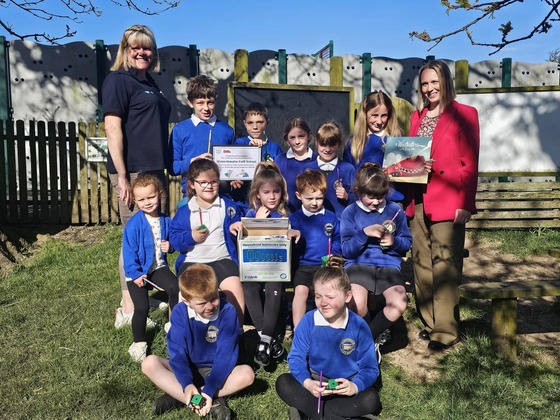 At this year’s Cumberland schools’ battery recycling competition, Waberthwaite C of E School once again took first place, collecting the highest number of batteries for recycling per pupil.
Now in its second year, the competition aims to raise awareness among young people about the importance of recycling batteries separately, rather than placing them in general waste or household recycling bins. Batteries, particularly lithium‑ion types, can ignite if crushed, posing a serious fire risk in waste collection vehicles and recycling facilities. Correct disposal is therefore essential.
The competition was supported by national compliance scheme Valpak, which provided free battery collection boxes to schools and arranged free collection at the end of the challenge, alongside waste contractor Biffa.
In total, 201 primary schools from across Cumbria took part, collectively recycling 1.573 tonnes of batteries, helping to keep hazardous waste out of the general waste stream.
The winners in Cumberland were as follows:
|
Cumberland – Primary Schools
|
Total Kg batteries collected
|
Kg of batteries collected/pupil
|
Position
|
|
Waberthwaite CofE School
|
139
|
2.78
|
First
|
|
Walton & Lees Hill CofE School
|
13
|
1.08
|
Second
|
|
Broughton Moor Primary School
|
43
|
0.84
|
Third
|
Waberthwaite CofE school received £300 of book tokens for winning the competition; Walton & Lees Hill and Broughton Moor will receive £200 and £100 of book tokens respectively for coming second and third. Well done to all the schools which participated in the competition.
Image shows pupils form Waberthwaite CofE School with left Judith Bradshaw, Waste Reduction Officer, Cumberland Council and right Hayley Slack, Community, Education and Liaison Officer, Biffa
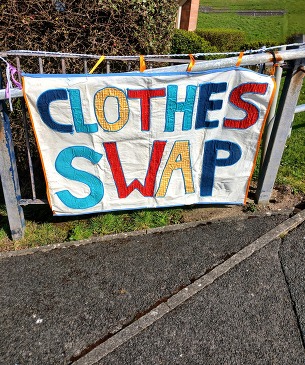
The Oval Paint Pot & Upcycling CIC (Community Interest Company) hosted its first ever clothes swap on 7 April at the Oval community centre on Salterbeck, Workington, and it was a fantastic success.
The free event invited people to bring along clothes they no longer needed and take away donated items, giving pre-loved clothing a new lease of life. With brilliant support from STAR CIC, who opened the café for refreshments and homemade cakes, and The Radical Recyclers, who sorted and hung nearly 600 items of clothing, the day was a real team effort.
The Cumbria Clothing Collective CIC also lent shop-sized rails and shared their experience from running previous swaps.The community centre was buzzing throughout the day, and plans are already underway for a market stall and a future clothes swap.
To top it all off, the group has been named winners of the Travis Perkins Better Together Awards 2026 (Environment).
A well‑deserved recognition, well done to all involved.
Image shows a sign that says 'Clothes Swap'
|
Cumberland Council and Westmorland and Furness Council have funded Cumbria Clothing Collective CIC, to create a Repair Directory to bring together details of clothing and shoe repair businesses in Cumbria. The aim is to create a “one stop shop” for all your clothing and shoe repair needs.
Clothing or shoe repair businesses can register before the end of June 2026 for a free full year’s entry in the directory.
So, if you have an item of clothing or shoes that need repair, all you will need to do is add your postcode and what repair you need into the directory, and the nearest business details will be shown.
 Every five years, the Solway Coast team and partners carry out a full review of the statutory Management Plan for the Solway Coast National Landscape. Over several months, they will work together to produce a new plan setting out priorities for the next five‑year period, in this case 2026–2031.
The Management Plan provides the strategic framework for conserving and enhancing the natural beauty of the Solway Coast. It covers landscape, wildlife, geology, soils and built heritage, as well as how people can better explore, understand and enjoy this special place.
The plan is required under the Countryside and Rights of Way Act 2000, which places a statutory duty on local authorities to prepare, publish and review management plans for designated landscapes. The Solway Coast team carry out this work on their behalf.
The plan sets a long‑term vision, identifies key challenges and sets out actions for organisations, communities and individuals across the area. The team are currently finalising the first draft, which will soon be published for public consultation. Find out more at www.solwaycoast‑nl.org.uk.
Image shows an aerial shot of the Solway Coast
 This summer the Solway Coast National Landscape team will be joining the West Cumbria Ringing Group for a couple of sessions to take a closer look into bird ringing.
There is an opportunity to come along to these sessions, open to anyone who is keen to learn more about bird ringing, what species we see on our coastline, what habitats the birds are using and much more.
Please see the available dates and booking link below.
- Wednesday 6 May 2026
- Saturday 11 July 2026
- Thursday 13 August 2026
Bird Ringing Demonstration Events - Book your place
These are informal sessions where you can observe the group with birds in hand, see the equipment that’s used to record information, watch as the birds are released and learn more about the habitats at Crosscanonby Carr that make this place a haven for birdlife. This really is a wonderful opportunity to learn more about the wildlife and nature on the Solway Coast National Landscape.
These events are weather dependent and MUST be booked in advance – places are limited so be quick!
For more information please contact info@solwaycoast-nl.org.uk
Image shows a hand holding a small bird
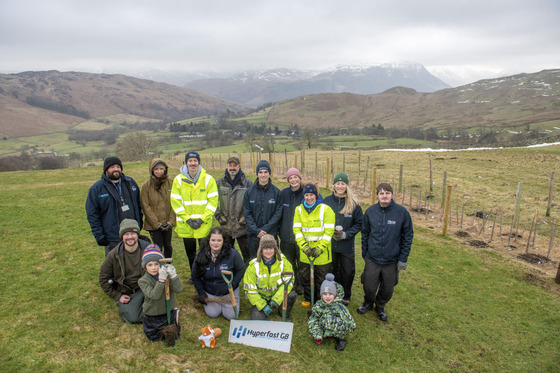 Thousands of trees have been planted in Cumbria’s Ullswater Valley as part of a native hedgerow project, thanks to volunteers from local councils and full‑fibre broadband provider Hyperfast GB, delivered by Fibrus. The volunteer day brought together teams from Hyperfast GB, Westmorland and Furness Council and Connecting Cumbria, as part of a wider commitment to supporting local communities and environmental initiatives.
The planting was organised with Ullswater Catchment Management CIC (UCMCIC), which received a £2,000 grant from the Hyperfast Cumbria Connection Fund. Founded after Storm Desmond in 2015, UCMCIC works with local farmers and communities to restore the landscape and reduce flood risk.
The Dockray project will create 1.5km of native hedgerow using species suited to the upland environment. It forms part of a wider ambition to restore habitats, support wildlife, slow water flow and balance conservation with sustainable farming.
Hyperfast GB, through Project Gigabit, continues to support community and environmental projects while connecting rural communities to fast, reliable broadband.
Image shows some volunteers from local councils taking part in the Hedgerow Project
 Recycle Now, the national recycling campaign, has launched a new Refill Locator. The tool helps households across the UK search for nearby refill locations for food, personal care and cleaning products. The Refill Locator aims to break down barriers to refill shopping by showing people where to shop and how to use refillable packaging.
Recycle Now has mapped the locations of 675 refill stores throughout the UK from Brighton to Edinburgh. Local authorities with refill stores in their area are welcome to embed the widget on their own webpages - contact PartnerEnquiries@wrap.org.uk for more information.
Image shows a refill store
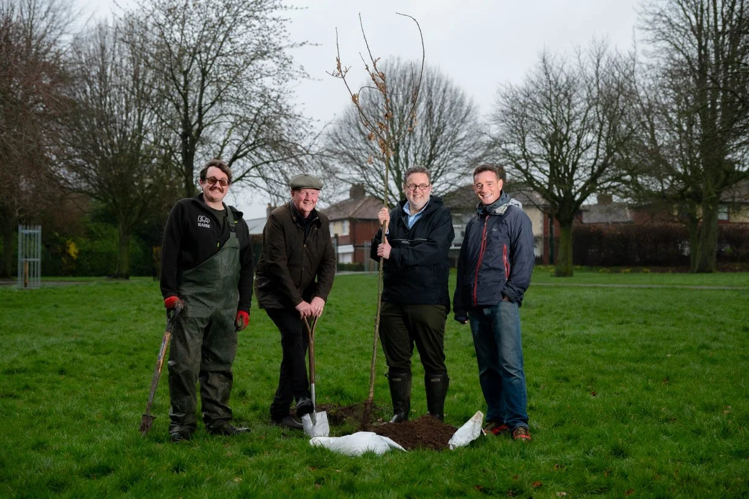 A major milestone has been reached in England, with 10 million trees planted through the Trees for Climate programme. To mark the achievement, a ceremonial 10 millionth tree was planted in each of England’s 15 Community Forests, including Cumbria.
Cumbria’s ceremonial tree was planted at Hammond’s Pond in Carlisle in March, celebrating the vital role local communities play in the programme’s success. The planting brought together Cumberland Council, Raise and Cumbria Community Forest partners, highlighting collaboration to enhance local green spaces.
Since 2020, Trees for Climate has supported woodland creation across England, improving biodiversity, capturing carbon and making green spaces more accessible. Further planting is planned at Hammond’s Pond over the coming years as part of the ongoing development of the Cumbria Community Forest.
Raise focuses on creating accessible green spaces, supporting climate resilience and encouraging inclusive participation through a neurodivergent‑led approach. Cumbria Community Forest can also support landowners and farmers with advice, funding and practical help to create new woodland across Cumbria.
Image shows a shot taken from the planting of the 10 millionth tree at Hammond's Pond
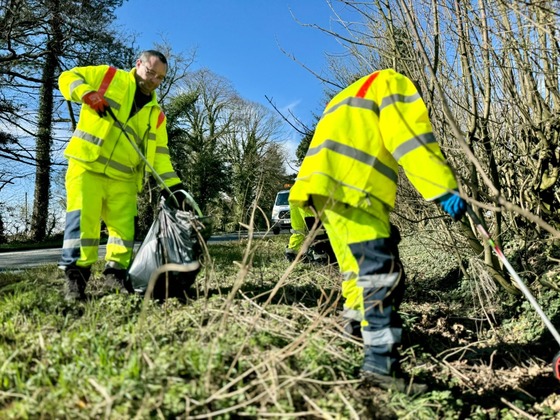 Throughout March, our Street Cleaning team has been out across Carlisle tackling litter on grass verges identified as hotspot areas. Their hard work and dedication have made a real, visible difference.
Over the course of a two‑week litter‑picking programme, the team achieved some impressive results:
• 94 miles of grass verges litter‑picked
• 1,500 black bags filled
• 3.4 tonnes of litter collected
• 6 car tyres removed
• 1.1 tonnes of fly‑tipping cleared
The effort, resilience and pride our teams show in keeping our shared spaces clean does not go unnoticed, and we are incredibly grateful for all the hard work they do, whatever the weather.
Image shows our street cleaning team litter picking

We are stepping up our crackdown on littering and fly‑tipping with new Variable Message Signs (VMS) appearing across popular routes, displaying the bold reminder: ‘Don't be a TO55 3R – take your litter home!’
This hard‑hitting initiative aims to send a clear message: littering and fly‑tipping are unacceptable. These behaviours aren’t just illegal, they are anti‑social, damaging to wildlife, harmful to the environment, and cost local taxpayers thousands of pounds each year in clean‑up operations.
Public spaces, parks, lay‑bys, and high‑footfall routes will all feature campaign materials designed to challenge attitudes towards litter and prompt positive behaviour change.
Image reads 'Don't Be a TOS53R'
|
Tetra Pak recently invited the Cumberland waste team to visit the Cumbria Waste Management Materials Recycling Facility (MRF) in Carlisle, where they saw new AI‑powered sorting equipment in action. The technology, the first of its kind in the UK, has been installed to help sort cartons such as juice and milk cartons from mixed recycling.
Funded by Tetra Pak and developed with British technology start‑up Recycleye, the new system uses AI and cameras to identify cartons. Once detected, cartons are separated using air jets so they can be sent on for recycling. The system is easier to train than traditional methods and is achieving over 98% purity in carton sorting.
This investment allows Cumbria Waste Management to sort cartons more efficiently and means the council can now accept cartons at the kerbside, collected with plastics, cans and glass. The upgrade also supports preparations for the Government’s Simpler Recycling requirements, helping ensure consistent recycling services for residents.
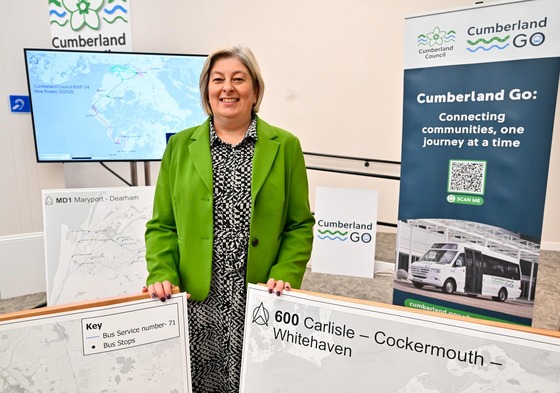 This is a good opportunity to remind people about Cumberland Go, a simple, affordable way to travel more sustainably, save money on petrol and enjoy everything Cumberland has to offer without relying on the car.
Cumberland Go recently launched 18 new bus routes across the area, supported by Reays and Stagecoach. These routes have been introduced alongside wider improvements to the commercial bus network, offering more frequent, better connected and more reliable travel options.
The expanded network is helping people reach workplaces, healthcare appointments, colleges, shops and leisure destinations more easily, while supporting the priorities of the Cumberland Plan by encouraging healthier travel choices and reducing carbon emissions.
Whether it’s commuting, visiting friends or exploring the area, hopping on the bus is an easier way to travel.
Find out more and check timetables using the buttons below.
Image shows Cumberland Councillor Denise Rollo, Executive Member for Sustainable, Resilient and Connected Places, holding signs and maps for Cumberland Go routes
Snip, spray and stay safe: highways maintenance gets under way across Cumberland
We are highlighting the essential highways maintenance work taking place across the area to keep roads, pavements and public spaces safe, accessible and welcoming for everyone.
Following an update to the Highways and Transport Strategic Board on 23 April, we have set out how activities such as verge cutting, weed control and tree management form a key part of its statutory duty as the local highways authority, while also supporting residents’ health and wellbeing.
Verge cutting helps maintain clear sightlines for drivers, cyclists and pedestrians, particularly at junctions, bends and near road signs. In rural areas this is mainly carried out using specialist tractor‑mounted equipment, while council teams undertake work by hand in some urban locations.
Weed control focuses on kerbs, pavements and paved areas to reduce trip hazards, prevent damage and manage harmful weeds. The main programme runs from late April to September, with additional visits where issues are reported.
Tree management is also vital, with regular inspections carried out to manage risks, including addressing the ongoing impact of ash dieback.
Residents are encouraged to report any concerns about overgrown verges, weeds or trees through the council’s website or phone the Highways Hotline: 0300 373 3736. This helps teams prioritise work and respond quickly where action is most needed
Image shows some of our highways vehicles in a local park

We have secured more than £3.4 million in government funding to expand electric vehicle (EV) charging across the Cumberland area. Awarded through the Local Electric Vehicle Infrastructure (LEVI) programme, the funding will support the installation of new, publicly accessible charge points on streets, in council car parks and at community locations.
In addition, we have also received £703,000 in pilot funding to explore innovative charging solutions, including the cross‑pavement ‘Gully’ project, which enables residents without driveways to charge electric vehicles safely at home.
Funding has also been provided to establish a dedicated EV team within the council, responsible for planning charging locations, overseeing installation and managing contracts.
The LEVI programme supports the council’s Electric Vehicle Strategy, focused on improving access to charging for residents without off‑street parking, supporting rural communities and ensuring fair access across the area. At least 671 EV charge point sites are expected to be delivered within the first five years, with priority given to areas where charging provision is currently limited.
Image shows someone charging an electric vehicle
|

Did you know Cumberland Council is using innovative technology to make reporting highway issues quicker and more accurate? If you spot a problem with roads, traffic lights, streetlights, drains, or pavements, let us know so we can fix it fast!
You can report issues online at https://bit.ly/ReportAProblemCumberland or call our Highways Hotline on 0300 373 3736. The sooner we know, the sooner we can help, so #HelpUsToHelpYou and get reporting!
For precise locations, try using What3Words, a smart tool that gives every location a unique three-word address. This helps our teams find and fix problems quickly. Learn more at https://bit.ly/What3WordsInfo
We also use One.Network, a platform that provides real-time roadwork and traffic updates, helping us keep Cumberland moving.
Together, we can make our roads safer and more efficient, one report at a time!
|